A university invention meets a troubled offshore market
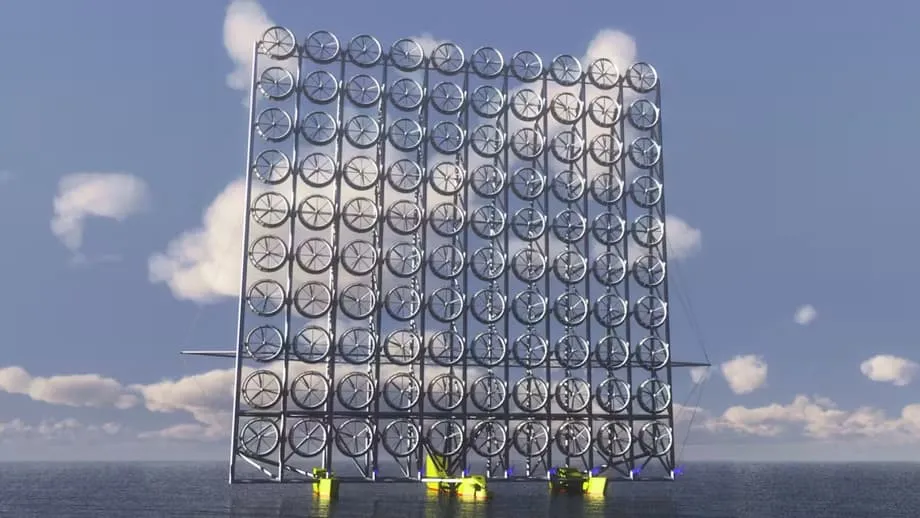
Kyushu University's wind turbine wall technology could potentially triple power output compared with conventional offshore wind turbines, offering Japan a new way to draw electricity from the ocean. Its development comes as the country tries to reduce dependence on imported fuels while offshore wind projects face financial difficulties, supply shortages and an uncertain auction system.
Contents
- A university invention meets a troubled offshore market
- Why Japan needs more domestic energy
- How a turbine wall could capture more wind
- What floating projects have already achieved
- The dates behind Japan's offshore push
- Why developers are struggling to build
- The price problem behind the projects
- Stronger anchors could make installation cheaper
- Materials and supply chains add pressure
- Japanese investors seek experience in Europe
- Solar spheres and rock storage broaden the effort
- Local cooperation and industrial confidence matter
- Key Points
As of January 21, 2026, the central challenge is turning promising engineering into electricity that can be supplied reliably and affordably. Japan has targets of 10 gigawatts of offshore wind capacity by 2030 and 45 gigawatts by 2040, against current installed capacity of about 0.3 gigawatts. Meanwhile, Mitsubishi Corporation's withdrawal from three projects involving 1.7 gigawatts has exposed the pressure on developers.
Kyushu University's Research and Education Center for Offshore Wind (RECOW), established in April 2022, has been designing several offshore turbine configurations. The university's work combines turbine and floating structure engineering with computer analysis of wind and the forces acting on structures.
Ju Tanimoto, Kyushu University's Executive Vice President and Senior Vice President, described that combination in October 2024:
Kyushu University is the only university in Japan capable of developing wind turbines, combining its unique wind turbine & floating structure technology (hardware) and wind analysis & fluid structure analysis technology (software).
The proposed wall changes how turbines are arranged to capture offshore wind. Specific technical details remain under development, and no commercial deployment date was given. Its promise sits alongside other Japanese inventions addressing foundations, energy storage and solar generation, each tackling a different part of the country's energy transition.
Why Japan needs more domestic energy
Japan's energy self-sufficiency rate fell from 20.2% in 2010 to 15.2% in 2023, leaving it second lowest among the 38 members of the Organisation for Economic Co-operation and Development (OECD). Self-sufficiency describes how much of a country's energy needs it can meet from its own resources rather than imports.
The shutdown of nuclear power plants after the 2011 Great East Japan Earthquake and the Fukushima nuclear accident was the main reason for that decline. Thermal electricity generation, which burns fuels to produce power, rose from 65.4% of Japan's electricity mix in 2010 to 72.8% in 2022, the highest share among G7 countries.
Japan's reliance on imported oil, coal and liquefied petroleum gas leaves its electricity supply exposed to geopolitical disruption, changing resource prices and exchange rates. Even when fuel is available, a weaker currency can make purchases from abroad more expensive.
The government approved the Strategic Energy Plan in February 2025 alongside the GX2040 Vision for decarbonization. The frameworks aim to make renewable energy the primary power source, with nuclear power serving as a supplementary option. Economy, Trade and Industry Minister Muto said the intended electricity mix would avoid excessive dependence on any particular energy source or fuel.
Japan aims to raise energy self-sufficiency to 30% by 2030 and increase renewable energy's electricity share from 20% to 36-38%. The latter target represents a rise of 16-18 percentage points. Offshore wind is part of that effort, with an installed capacity target of 5.7 gigawatts by 2030, compared with 0.15 gigawatts in March 2024. The country also has the broader offshore wind development targets of 10 gigawatts by 2030 and 45 gigawatts by 2040.
How a turbine wall could capture more wind
Kyushu University's wind turbine wall departs from the conventional offshore arrangement by rethinking how turbines can be configured to maximize energy capture. Its potential increase in output comes within Japan's wider effort to develop floating offshore wind, particularly suited to coastlines where the seabed drops rapidly into deep water.
Conventional offshore turbines stand on foundations fixed into the seabed in relatively shallow seas. Floating turbines instead rest on buoyant structures, including concrete and steel keels, that keep them upright much like a fishing bobber. Mooring cables connect them to anchors on the ocean floor.
Floating structures allow developers to reach waters up to half a mile deep, where some of the strongest and most consistent winds blow. They can also be installed beyond the horizon, out of sight of coastal residents, reducing the visual concerns that have held back some developments near shore.
Ocean space beyond the reach of conventional offshore turbines accounts for 80% of the world's maritime waters. The turbine wall appears to represent a further step in floating offshore design, with the aim of producing substantially more electricity from its arrangement of turbines.
Frank Adam, a wind energy technology expert at Germany's University of Rostock, described the broader potential of floating wind:
Floating wind power has enormous potential to be a core technology for reaching the climate goals in Europe and around the world.
Power capacity and electricity output describe different things. Capacity measures the generating power equipment can deliver under suitable conditions; output is the electricity it actually produces over time. Stronger and steadier winds help turbines use their capacity more often.
What floating projects have already achieved
Hywind Scotland, the first floating wind energy array, began operating with five turbines standing 574 feet tall, 15 miles offshore. Norwegian company Equinor owns 75% of the project. The array has operated through Hurricane Ophelia and winter storms bringing winds of 100 miles an hour and waves reaching 27 feet.
Hywind Tampen began operating in August 2023 with 88 megawatts of capacity and was recognized as the world's largest floating offshore wind farm. Portugal's WindFloat Atlantic project, expected to supply electricity for 60,000 homes, provides another example of the technology's expansion.
Global floating wind capacity reached 245 megawatts in October 2024, while the worldwide future project pipeline stood at 266 gigawatts. That pipeline describes projects under development or proposed, whereas the capacity figure describes equipment already installed.
Walt Musial, an offshore wind energy expert at the National Renewable Energy Laboratory, said nearly 60% of suitable offshore wind locations in the United States lie in waters deeper than 200 feet, beyond the practical reach of conventional offshore turbines.
Po Wen Cheng, who heads an international floating wind research project at the University of Stuttgart, explained that deeper waters offer more powerful winds and that flexible, suspended structures can support larger turbines:
The bigger the turbine, the more energy they can produce in the right conditions,
Cheng suggested floating turbines could eventually have blades reaching 400 feet and towers nearly 1,000 feet tall, comparable to the Eiffel Tower. Turbines of that size could generate three times the electricity of today's most advanced turbines on land. Both that prospect and Kyushu University's turbine wall point toward greater output, through different approaches to turbine size and arrangement.
Worldwide renewable electricity has also expanded. Renewables supplied 19% of global electricity in 2000 and 30% in 2023, an increase of 11 percentage points, with solar power leading the growth. Wind recorded an 11% growth rate, and total wind capacity reached 1.2 terawatts in late 2024. Offshore development offers stronger, more consistent winds for meeting substantial commercial and industrial electricity demand.
The dates behind Japan's offshore push
Japan's offshore wind effort has developed through research institutions, government policy and commercial auctions. The milestones show progress in engineering alongside setbacks in building projects.
- 2010: Japan's energy self-sufficiency stood at 20.2%, and thermal generation supplied 65.4% of its electricity mix.
- 2011: The Great East Japan Earthquake and Fukushima nuclear accident led to nuclear plant shutdowns.
- April 2022: Kyushu University established RECOW to advance offshore wind research and education.
- August 2023: The 88 megawatt Hywind Tampen floating wind farm began operating.
- March 2024: Japan had 0.15 gigawatts of installed offshore wind capacity.
- October 2024: Tanimoto described Kyushu University's combined engineering and analysis capabilities; global floating wind capacity stood at 245 megawatts.
- February 2025: Japan approved the Strategic Energy Plan and GX2040 Vision, while Mitsubishi paused offshore wind plans.
- August 2025: Mitsubishi abandoned three offshore wind projects totaling 1.7 gigawatts.
- October 2025: Japan postponed its fourth offshore wind auction indefinitely to reassess the framework.
- 2030: Japan targets 30% energy self-sufficiency, renewable electricity of 36-38%, and expanded offshore wind development.
- 2040: Japan's broader offshore wind development target reaches 45 gigawatts.
The government has secured areas for demonstration tests with agreement from local fishery associations off Akita Prefecture and off Toyohashi and Tahara City in Aichi Prefecture. It has also invested JPY 123.5 billion through the Green Innovation Fund.
Why developers are struggling to build
Japan's first three offshore wind auction rounds have generated more cautionary experiences than operating turbines. The sole winner of Round 1 withdrew, while winners in Rounds 2 and 3 face severe financial difficulties. The fourth auction's indefinite postponement in October reflected the need to reassess the system.
Mitsubishi Corporation abandoned three major projects in August, choosing to pay £20 billion in penalties rather than proceed. The projects represented 1.7 gigawatts of capacity, enough to supply electricity for 1.3 million homes.
Japan's current offshore capacity of 0.3 gigawatts contrasts with the 8 gigawatts China added in 2024 alone. Taiwan, South Korea and Vietnam are also pursuing ambitious expansion, increasing competition for investment and industrial capacity across Asia.
Takeshi Matsuki, Japan Country Manager at the Global Wind Energy Council (GWEC), described the stakes:
Japan holds vast offshore wind potential and cannot afford to miss its chance to become an offshore wind leader, especially within the Asia-Pacific region.
GWEC's white paper, Unlocking Japan's Offshore Wind Potential, identifies three areas for reform: the auction framework, revenue arrangements and other market obstacles. Its assessment links the problems facing developers to the rules governing projects, rather than turbine technology alone.
The price problem behind the projects
Japan's auction framework places substantial weight on price, encouraging developers to submit unrealistically low bids. Once a project is selected, the company still has to buy equipment, arrange construction and meet financing costs, making the original bid difficult to sustain when costs rise.
The revenue system uses a Feed-in Premium (FIP), which links support to electricity market prices. Those prices averaged ¥9-16 per kilowatt-hour in 2025, while early offshore wind projects needed about ¥12-15 per kilowatt-hour to be economically viable. A kilowatt-hour measures the amount of electricity used by a device consuming one kilowatt for one hour.
The two price ranges overlap, but the market can fall below the level a project needs. Developers therefore face uncertainty over income while committing to expensive equipment and construction.
Permitting is complex, certification requirements lack transparency, and regions with strong wind resources face grid curtailment without compensation mechanisms. Curtailment means electricity production is reduced because the grid cannot take all the power being generated. Developers have warned that they are at the brink of whether the business can continue.
Masataka Nakagawa, Japan Country Manager at offshore wind consultancy OWC, set out the required changes:
To enable stable and scalable deployment, Japan needs to address three critical areas: auction framework, offtake mechanisms, and other market bottlenecks.
Offtake mechanisms are arrangements for selling the electricity a project produces. Predictable sales terms help companies judge whether future income can cover construction, borrowing and operating costs. Government agencies have expressed strong interest in the GWEC recommendations.
Stronger anchors could make installation cheaper
Obayashi Corporation's Skirt Suction technology addresses another offshore challenge: securing foundations and anchors. The structure consists of a top slab and a cylindrical vertical wall, called a skirt, extending downward into the seabed.
The skirt penetrates the seabed foundation to hold a turbine more firmly in place. Installation does not require large equipment such as pile drivers, with potential reductions of approximately 20% in construction costs and 40% in construction time.
Tests in marine areas with sandy soil, common around Japan, showed approximately three times the pullout resistance of conventional foundations. Pullout resistance describes how strongly a foundation resists forces trying to lift it from the seabed.
Applied to anchors for floating turbines, especially the Tension Leg Platform (TLP) design, Skirt Suction can reduce installation costs by approximately 20% and foundation work costs by approximately 30%. TLP structures use tensioned connections to hold floating equipment in position.
Other floating designs include semisubmersible and spar platforms, with different advantages for particular depths and ocean conditions. Japan's geography and seismic activity require suitable engineering choices. Skirt Suction tackles installation and securing structures, while the turbine wall concentrates on capturing more wind energy.
Materials and supply chains add pressure
Wind turbines require steel, fibreglass and rare earth elements, exposing developers to volatile material markets and geopolitical risks. Steel can account for up to 90% of a turbine's mass, making its price and availability central to construction costs.
China dominates global steel production and wind equipment manufacturing, competing through cheap and heavily subsidised exports. Trade tensions and geopolitical developments have added to instability in the global steel supply chain.
Markus Zeitzen, ESG senior business development manager at wind energy service provider Det Norske Veritas (DNV), described a way to reduce dependence on any single supplier:
Selecting two or three suppliers from different areas can give you resilience in your supply chain through competition.
Four of the 17 classified rare earth elements are primarily used in wind turbines: neodymium, praseodymium, dysprosium and terbium. They are used in permanent magnets involved in electricity generation and maintaining turbine integrity. China controls 60% of global mined rare earth production and roughly 90% of processing output.
In December 2023, China introduced an export ban on separation and extraction technologies used in manufacturing permanent magnets. Restrictions subsequently extended to export controls on seven rare earth elements. The European Union has invested in innovations to secure critical raw materials as supply risks have encouraged more active planning.
Supply shortages already affect bidding decisions. In December 2024, Ørsted cited supply chain bottlenecks as a key reason for declining to enter Denmark's offshore wind tender, which received no bids. Mitsubishi also pointed to supply chain issues when it paused Japanese offshore wind plans in February 2025.
Japanese investors seek experience in Europe
Japanese companies are investing in European renewable energy projects while domestic developments face difficulties. Norway has become a destination for investors seeking stable conditions in energy and sustainability industries.
Nick Wall, a Tokyo based partner at A&O Shearman, explained the attraction:
Norway offers Japanese investors the stability they're looking for—strong property rights, a transparent legal system, and access to the EU single market through the EEA. As geopolitical and regulatory uncertainty grows in markets like the US and parts of Asia, we're seeing Japanese investors increasingly diversify into stable European jurisdictions like Norway to mitigate legal and operational risks.
Oil and gas and utility transactions accounted for eight of the 23 Japanese investment deals in Norway between 2020 and 2025. Japanese exploration and production companies see growth potential in floating offshore wind, supplying offshore facilities with electricity from shore, and carbon capture and storage (CCS), which involves capturing carbon dioxide and storing it.
INPEX Corp, Japan's largest oil and gas exploration and production company, treats Europe as a core business area and is pursuing development opportunities there. An INPEX spokesperson cited the company's participation in Hywind Tampen, whose 88 megawatts supply electricity to oil and gas facilities and reduce carbon dioxide emissions by about 200,000 tons annually.
Participation in established overseas projects gives Japanese companies experience that can inform domestic deployment. That work proceeds alongside university research, including the turbine wall, and efforts to resolve Japan's regulatory and infrastructure problems.
Solar spheres and rock storage broaden the effort
Kyosemi Corporation's Sphelar technology uses tiny spherical solar cells to collect light from multiple directions. Typically one to two millimeters in diameter, the cells are wired together into modules. Their shape captures light arriving at different angles throughout the day, addressing the limitations of flat panels that work most efficiently when facing the sun directly.
Engineer Shuji Nakata's observation that sunlight rarely travels in a straight line helped initiate the development. Microgravity conditions at the Japan Microgravity Center (JAMIC) were used to form almost perfectly round silicon beads. The resulting cells could be embedded in transparent materials and curved surfaces, creating applications in dense cities.
Toshiba Energy Systems and Chubu Electric Power Company are developing rock thermal storage. Rocks absorb heat and release it later to heat water and drive a turbine that generates electricity. The system avoids rare metals such as cobalt and nickel used in battery storage, while offering a long lifespan and relatively few site constraints.
Japan is also pursuing domestically produced next generation solar cells that can be installed on roofs and walls. It produces 30% of the world's iodine, a key material for perovskite solar cells, giving the country a strategic advantage in their production.
The government has allocated JPY 64.8 billion to the Next Generation Solar Cell Development Project, aiming for widespread use by 2030. Solar generation and thermal storage address different energy needs from offshore wind, expanding the range of domestic technologies available.
Local cooperation and industrial confidence matter
The Ministry of Agriculture, Forestry and Fisheries (MAFF) promotes renewable projects connected to local industries: forestry with biomass energy, fisheries with offshore wind, livestock farming with biogas, and agriculture with solar power. The approach aims to limit environmental effects, return energy benefits to communities and avoid problems involving outside developers without local ties.
Fishery association agreements for demonstration waters off Akita and Aichi show the role of community cooperation in offshore development. Engineering, access to suitable ocean areas and acceptance by people using those waters all form part of project delivery.
International investors can move capital toward markets with clear, stable rules, while manufacturers need confidence in future demand before investing in local production. Other Asian markets are building renewable infrastructure rapidly, narrowing Japan's opportunity to secure an industrial leadership position.
Japan pioneered hybrid cars and led solar deployment before feed-in tariffs lapsed. Its turbine wall, stronger foundations, spherical solar cells and storage research show continuing invention, but commercial success also depends on viable prices, reliable supplies, workable rules and grid access.
The International Energy Agency has estimated that offshore wind could theoretically meet the electricity needs of Europe, the United States and Japan many times over. Kyushu University's wall offers one possible way to capture more of that resource. Japan's task is to connect such engineering potential with conditions that allow projects to be financed, installed and operated.
Key Points
- Kyushu University's wind turbine wall could potentially triple output compared with conventional offshore turbines; technical details remain under development.
- Japan's energy self-sufficiency fell to 15.2% in 2023, while thermal generation supplied 72.8% of electricity in 2022.
- Floating turbines can reach deeper waters with strong winds; global installed floating wind capacity reached 245 megawatts in October 2024.
- Japan targets 30% energy self-sufficiency and a renewable electricity share of 36-38% by 2030.
- Mitsubishi withdrew from three projects totaling 1.7 gigawatts, and Japan postponed its fourth offshore wind auction indefinitely.
- GWEC recommends changes to auctions, electricity sales arrangements and other market obstacles.
- Obayashi's Skirt Suction foundations could lower construction costs and time while increasing resistance to pullout forces.
- Japanese companies are gaining floating wind experience overseas, including through the 88 megawatt Hywind Tampen project.
- Government investment includes JPY 123.5 billion through the Green Innovation Fund and JPY 64.8 billion for next generation solar cells.
- Community agreements, material supplies and reliable project income remain central to offshore deployment.