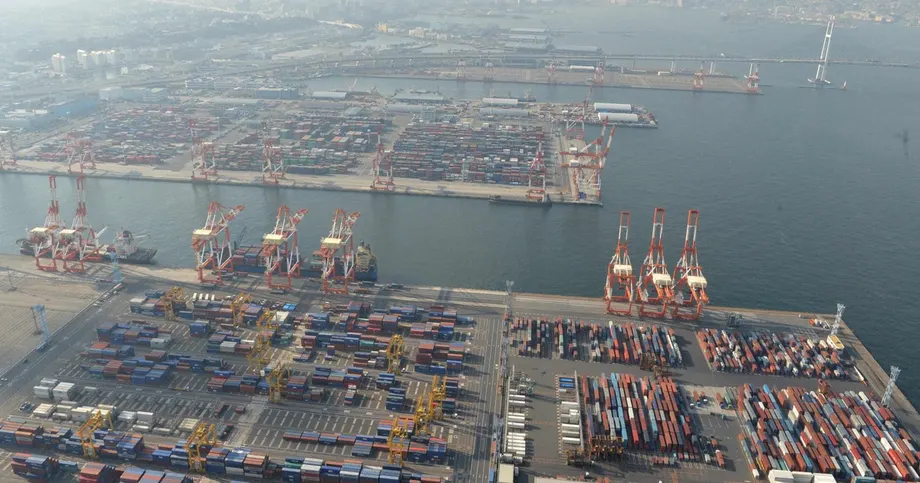
Japan pays more for oil even as shipments shrink
Japan spent 60.5% more on crude oil imports in October 2026 despite buying 0.7% less oil, helping push the country into a sixth consecutive monthly trade deficit. Preliminary Finance Ministry figures released on November 18 put the shortfall at 476.5 billion yen, about $3 billion.
Contents
- Japan pays more for oil even as shipments shrink
- A smaller gap, with imports still growing faster
- Why the crude oil bill rose so sharply
- American oil grows as Middle Eastern volumes fall
- Cars and chip demand keep exports moving
- Higher values tell only part of the story
- The United States and China pull the balance in opposite directions
- A weak economy faces the next policy tests
- Key Points
The Finance Ministry's October 2026 preliminary trade totals give the headline export, import and balance figures and link to detailed materials.
Exports rose 20.5% from a year earlier to 11.7688 trillion yen, supported by automobiles, semiconductors and machinery used to make chips. Imports climbed faster, increasing 21.6% to 12.2453 trillion yen as expensive energy and electronic components lifted the bill. Both values reached records for October in comparable statistics dating to 1979.
The deficit narrowed from September's revised 556.5 billion yen and was roughly half the 956 billion yen shortfall expected by economists. Yet it was 58% larger than in October 2025, showing how the monthly improvement sits alongside a heavier trade burden than a year earlier.
Japan's figures capture two forces pulling its economy in different directions: overseas demand for cars and technology products is supporting manufacturers, while high oil prices and a weak yen make imports more expensive. Households and businesses face those costs even when exporters are recording strong sales.
A smaller gap, with imports still growing faster
October's trade deficit was 80 billion yen smaller than September's, a reduction of about 14.4%. A trade deficit means the value of goods entering Japan exceeded the value leaving it. These customs figures cover merchandise, rather than the full range of Japan's international earnings and payments.
Exports had grown from a year earlier for 14 consecutive months, while imports had risen for nine. Export growth accelerated from September's revised 16.5%, ending two months of slowing gains. Import growth also accelerated, from 18.5% in September, but remained below forecasts of about 25.8% to 25.9%.
The smaller than expected import bill explains much of the surprise in the headline balance. Export growth of 20.5% was close to expectations of about 20%, while imports undershot forecasts by more than four percentage points.
After adjustment for regular seasonal patterns, such as recurring changes in production and shipping, the deficit was about 770 billion yen. That measure also came in below expectations, although it remained larger than the unadjusted shortfall.
Why the crude oil bill rose so sharply
Crude oil imports cost Japan 1.27 trillion yen in October, even though the volume fell to 11.27 million kiloliters. The average import price reached 113,055 yen per kiloliter, up 61.6% from a year earlier. Measured in dollars per barrel, the price rose 53.1% to $113.9.
The difference between those price increases shows the added burden of the weaker yen. Oil is commonly priced in dollars. When the yen loses value against the dollar, Japanese buyers need more yen to pay the same dollar price, on top of any increase in the price of the oil itself.
Mineral fuels, a broader category that includes crude oil, totaled 2.52 trillion yen, up 36.5%. Using the published totals, those fuels accounted for about one fifth of Japan's merchandise import bill. Crude oil alone made up roughly one tenth.
The war involving the United States, Israel and Iran has disrupted Japan's traditional supply routes. The Strait of Hormuz, through which much of its Middle Eastern oil previously traveled, had effectively closed amid the conflict. Japan imports virtually all its oil, leaving buyers with a pressing need to secure alternative deliveries.
American oil grows as Middle Eastern volumes fall
Japan's crude oil imports from the United States increased 738% by volume, meaning deliveries were more than eight times their level a year earlier. Their value rose by more than 1,100%. A Finance Ministry official described the increase as part of efforts to diversify procurement sources.
Crude oil volumes from the Middle East fell 16.5%, although purchases from the United Arab Emirates increased. The value of Middle Eastern petroleum imports still rose 37.7%, illustrating how higher prices can lift spending even while the quantity purchased falls.
The government had expected October crude procurement to recover toward the previous year's level as tankers routed through the Suez Canal arrived. The total volume ultimately came close to that level, declining just 0.7%, but the cost was much higher.
Japan's broader trade with the Middle East also became more expensive. Imports from the region rose 27.9% to about 1.23 trillion yen, while exports fell 15% to 387.8 billion yen. The resulting regional deficit was about 846.1 billion yen.
For Japanese refiners and other energy buyers, replacing disrupted supplies has therefore meant changing suppliers while managing a sharply larger bill. The October figures show both parts of that adjustment: a surge in American deliveries and continued heavy spending on Middle Eastern imports despite lower oil volumes.
Cars and chip demand keep exports moving
Motor vehicle exports rose 19.9% to about 1.96 trillion yen, with automobiles shipped to the United States among the main contributors. Transport equipment, which also includes other vehicles and vessels, was Japan's largest export category at about 2.59 trillion yen, up 18%.
Semiconductor manufacturing equipment shipments increased 49.7% by value. Demand linked to investment in artificial intelligence supported sales of chips and the machines needed to produce them. Electrical machinery exports rose 33.6% to about 2.23 trillion yen, while machinery exports reached approximately 2.05 trillion yen, up 21.2%.
Singapore was a destination for increased exports of integrated circuits and other semiconductor components. Export gains also extended to computer parts, ships and machinery, giving Japan support beyond automobiles alone.
Japan imported more electronic components as well, including semiconductors from Taiwan. Imports of semiconductors and other electronic parts rose by about 60%, while the wider electrical machinery category increased 20.4% to 2.22 trillion yen. Technology demand was therefore lifting both sides of the trade ledger.
Higher values tell only part of the story
Japan's export volume increased 5.8% from a year earlier, compared with the 20.5% increase in export value. Import volume slipped 0.2%, even as import value rose 21.6%. The large gap between money spent and quantities shipped is central to understanding October's results.
Trade value is the price of goods multiplied by the amount sold. A rise can come from more shipments, higher prices or changes in the mix of products. Exchange rates also affect the value recorded in yen. Companies passing higher costs on to customers helped lift export receipts alongside stronger demand for chip related goods.
For imports, the volume decline means Japan paid much more while bringing in slightly fewer goods in aggregate. Crude oil offers the clearest example, with a small drop in quantity accompanied by a rise of more than 60% in spending.
Exporters gained from higher overseas sales, but businesses buying imported fuel, materials and components faced rising costs. Those pressures can reach households through transport charges, product prices and energy bills, depending on how much companies pass on to customers.
The United States and China pull the balance in opposite directions
Exports to the United States rose 23.9% to about 2.17 trillion yen. Imports from the United States increased 19.7% to roughly 1.48 trillion yen, leaving Japan with a bilateral surplus of 690.5 billion yen.
China presented the reverse picture. Exports rose 13.3% to about 1.94 trillion yen, but imports increased 14.7% to around 2.84 trillion yen. Japan's deficit with China reached 905.3 billion yen, extending that deficit streak to 67 months.
China's bilateral deficit exceeded Japan's surplus with the United States by 214.8 billion yen. The comparison helps explain why strong automobile and other sales to American customers could coexist with a deficit in Japan's total goods trade.
Asia as a whole remained a surplus market. Exports to the region rose 22% to about 6.41 trillion yen, producing a surplus of 188.3 billion yen. Asia accounted for roughly 54.5% of Japan's exports, calculated from the regional and national totals.
Exports to the European Union increased 22.1% to about 1.11 trillion yen, while imports rose 20.1% to about 1.22 trillion yen. Japan recorded a deficit of 113.7 billion yen with the bloc. Export growth also extended across North America, South America and other Asian markets.
A weak economy faces the next policy tests
Japan's economy contracted 0.1% at an annualized rate in the July to September quarter, as higher living costs weighed on consumer spending. Annualized growth expresses what a quarter's pace would look like if it continued for a full year. October's trade figures point to stronger overseas sales alongside continuing pressure on domestic purchasing power.
Bank of Japan Governor Kazuo Ueda said the central bank would continue raising interest rates in line with economic, price and financial developments. The policy rate stood at 1.25%, and markets expected another increase in December. No December rate decision had been made when the trade figures were released.
The yen traded around 159.5 to the dollar following the release, while the Nikkei 225 rose about 0.91%. The currency's weakness remained a source of higher import costs. Strong exports offered support to the economy, but energy prices continued to weigh on households and companies buying from abroad.
The recent sequence and next scheduled tests are:
- July to September 2026: Japan's economy contracted 0.1% at an annualized rate.
- September: The revised merchandise trade deficit was 556.5 billion yen.
- October: The deficit narrowed to 476.5 billion yen as exports rose 20.5% and imports increased 21.6%.
- November 18: The Finance Ministry released the preliminary October trade figures.
- November 20: National inflation data were due, providing the next reading on price pressures.
- December: Markets expected a Bank of Japan rate increase at its next policy meeting.
Key Points
- Japan recorded a sixth consecutive monthly trade deficit, totaling 476.5 billion yen in October.
- The deficit narrowed about 14.4% from September but was 58% larger than a year earlier.
- Exports rose 20.5% to 11.7688 trillion yen; imports increased 21.6% to 12.2453 trillion yen.
- Crude oil spending jumped 60.5% even as import volume fell 0.7%.
- American oil deliveries surged as Middle Eastern crude volumes declined.
- Cars, semiconductors and chipmaking equipment supported exports, while expensive energy and a weak yen raised import costs.