Game sales lift profit and the annual outlook
Square Enix Holdings announced on November 11, 2026, that operating profit rose 42.2% to 38.793 billion yen in the six months through September, as stronger game sales prompted the company to raise its annual operating profit forecast by 10 billion yen. Sales of older games reached 12.59 million copies, up from 8.48 million a year earlier, making the existing catalog a major part of the improvement.
Contents
- Game sales lift profit and the annual outlook
- What the profit figures tell readers
- More platforms help console and PC games
- Older games account for most copies sold
- Online and mobile games add to growth
- Arcades and publishing rise as licensing falls
- A higher forecast still allows for a slower second half
- Key dates separate results from upcoming releases
- The strategy links catalog sales with overseas reach
- Key Points
The Japanese company behind Final Fantasy and Dragon Quest reported revenue of 163.179 billion yen for April 1 through September 30, an increase of 21.9%. Net profit attributable to shareholders of the parent company reached 28.566 billion yen, up 184.2%.
Digital Entertainment, its main games business, supplied the largest push. Revenue increased 33.7% to 97.681 billion yen, while operating profit climbed 63.5% to 32.854 billion yen. Console and PC games, online role playing games, and mobile and browser games all recorded higher sales and operating profit.
Square Enix now expects revenue of 310 billion yen and operating profit of 59 billion yen for the financial year ending March 31, 2027. Its previous targets were 298 billion yen and 49 billion yen, respectively.
The results bring together several changes in the business: more releases across different gaming platforms, stronger sales of existing titles, and improved activity in Final Fantasy XIV. The annual forecast also points to a slower second half, with much of the expected profit already earned by September.
What the profit figures tell readers
Operating profit measures earnings from the company's business activities after operating expenses. Square Enix increased that profit faster than revenue, lifting its group operating margin from about 20.4% to 23.8%. In simple terms, it retained more operating profit from each yen of sales.
Ordinary profit, a Japanese accounting measure that also includes recurring financial items such as interest and foreign exchange effects, rose 41.3% to 40.336 billion yen. The much larger rise in net profit partly reflected a comparison with a period that included an exceptional expense: Square Enix booked 9.849 billion yen in restructuring costs a year earlier.
The company figures give revenue growth of 21.9%, operating profit growth of 42.2%, ordinary profit growth of 41.3%, and net profit growth of 184.2%. Alternative published percentages attached to the same current totals were 11.1%, 7.7%, 10.0%, and 35.8%, respectively. The prior September figures of 133.895 billion yen in revenue, 27.278 billion yen in operating profit, 28.553 billion yen in ordinary profit, and 10.052 billion yen in net profit support the company's higher growth rates.
July through September showed a more mixed pattern within the strong first half. Revenue rose 13.6% to 84.756 billion yen and operating profit increased 19.3% to 21.785 billion yen, while ordinary profit slipped 0.4% to 21.570 billion yen. The quarter's operating margin improved from 24.5% to 25.7%.
More platforms help console and PC games
Square Enix's HD Games business, the category covering its major console and PC releases, generated approximately 35.6 billion yen in revenue, compared with 24.0 billion yen a year earlier. Operating profit rose from about 5.0 billion yen to 13.0 billion yen.
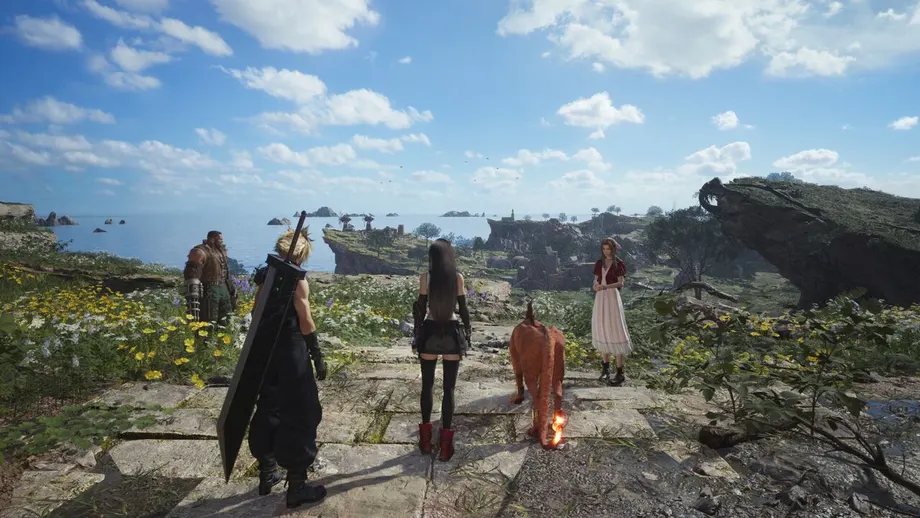
Final Fantasy VII Rebirth contributed through releases for Nintendo Switch 2, Xbox Series X|S, and Windows. The Adventures of Elliot: The Millennium Tales also supported sales. Making games available across more platforms gives the company access to players who own different machines.
Existing titles received wider distribution too. Final Fantasy X/X-2 HD Remaster, Octopath Traveler, and Octopath Traveler II were among the games brought to Nintendo Switch 2. Those releases helped turn games already in the catalog into fresh sales opportunities.
The HD Games figures show a substantial improvement in profitability. Revenue grew by roughly 48%, while operating profit increased by about 160%, using the rounded divisional figures. Its operating margin consequently rose from about 20.8% to 36.5%.
Older games account for most copies sold
Catalog sales increased by 4.11 million copies, from 8.48 million to 12.59 million, a rise of about 48.5%. Square Enix attributed the increase to strategic promotions, alongside the broader platform releases described in its results.
The company's management plan progress report published in May 2026 shows catalog sales rising from 14.66 million copies in the year ended March 2024 to 16.84 million in the year ended March 2025 and 19.10 million in the year ended March 2026. It says the company pursued strategic promotions to maximize the effects of its "multi-platform strategy for both new and catalog titles," expanding customer contact points and increasing catalog unit sales.
Combined unit sales for HD Games and massively multiplayer online games reached 14.87 million, compared with 9.93 million a year earlier. That represents an increase of 4.94 million copies, or approximately 49.7%. Catalog titles accounted for about 84.7% of the current total.
Digital downloads made up 13.35 million copies, against 1.52 million physical copies. Downloads therefore represented about 89.8% of units sold across those two game categories. The figures describe copies purchased; revenue also depends on the prices paid and the mix of products.
North America and Europe together accounted for 9.20 million copies, compared with 2.88 million in Japan and 2.79 million in Asia and other regions. North America and Europe supplied about 61.9% of the total, showing why overseas distribution is central to the company's plans.
Online and mobile games add to growth
Revenue from massively multiplayer online games rose from approximately 19.9 billion yen to 25.7 billion yen, an increase of about 29%. These are games in which large numbers of people share an online world, with activity sustained through updates and expansions.
Square Enix linked the improvement to stronger player activity following the announcement of Final Fantasy XIV's next expansion. Version 8.0 is scheduled for February 23, 2027, placing its launch near the end of the company's current financial year. Dragon Quest X Online also received its Version 8.1 update on October 16, after the September reporting period ended.
Smart Devices and PC Browser revenue rose from approximately 29.0 billion yen to 36.3 billion yen, an increase of about 25%. Dissidia Duellum Final Fantasy and Dragon Quest Smash/Grow contributed to sales, while the business also recorded higher operating profit.
Square Enix is reviewing the costs of operating its existing mobile and browser titles while developing new games. On November 10, it announced the smartphone title Dragon Quest RPG: Makaiju to Michibikareshi Shima, planned for release in 2027. A specific launch date was not given.
Arcades and publishing rise as licensing falls
Square Enix's Amusement business recorded revenue of 39.147 billion yen, up 13.2%, and operating profit of 5.446 billion yen, up 29.1%. Sales at existing locations and sales of prizes supplied to amusement facilities both exceeded the previous year's levels.
Publishing revenue increased 9.9% to 15.844 billion yen, while operating profit rose 12.7% to 5.393 billion yen. Stronger sales of collected comic volumes supported the improvement. Games therefore supplied the largest boost, with amusement and publishing adding growth from other activities.
The Rights and Properties business moved in the opposite direction. Revenue fell 9.6% to 11.489 billion yen, and operating profit declined 39.5% to 4.111 billion yen. The previous year's results had benefited from royalty income connected to a major intellectual property.
Royalties are payments for permission to use a company's characters, brands, or other creative property. The decline in that business, alongside gains in games, amusement, and publishing, shows how the timing of different income streams shaped the group's results.
A higher forecast still allows for a slower second half
Square Enix raised its annual revenue target by 12 billion yen, or about 4.0%, and increased both its operating and ordinary profit targets from 49 billion yen to 59 billion yen, a rise of approximately 20.4%. It expects annual net profit of 37 billion yen, compared with the previous forecast of 31 billion yen.
The May 2026 management plan progress report also set out the earlier annual operating profit forecast of 49 billion yen for the year ending March 2027.
The revised operating profit target would be 7.8% above the previous financial year's 54.736 billion yen. Ordinary profit would be 8.5% below the previous year's 64.469 billion yen. Operating and ordinary profit include different items, allowing their annual growth rates to move in different directions.
By September 30, the company had earned 65.8% of its revised annual operating profit target, 68.4% of its ordinary profit target, and 77.2% of its net profit target. Revenue had reached 52.6% of the annual plan.
Subtracting the first half results from the revised annual forecast leaves 146.821 billion yen in revenue, 20.207 billion yen in operating profit, and 18.664 billion yen in ordinary profit for October through March. Those implied figures are approximately 10.3%, 26.4%, and 48.0% below the corresponding period a year earlier. They are calculations from the annual plan and first half results, rather than separately announced company targets for the second half.
Key dates separate results from upcoming releases
Square Enix's September results cover six months of trading, while several updates and announcements came after that period. The calendar helps explain which developments contributed to the reported earnings and which belong to the remaining months or later.
- April 1 to September 30, 2026: The reporting period for the first half of the financial year ending March 2027.
- October 16, 2026: Dragon Quest X Online received its Version 8.1 update.
- November 10, 2026: Square Enix announced Dragon Quest RPG: Makaiju to Michibikareshi Shima for smartphones, with release planned in 2027.
- November 11, 2026: The company announced its first half results and raised its annual forecast.
- December 2026: Dragon Quest Monsters: The Withered World is scheduled for release.
- February 23, 2027: Final Fantasy XIV's Version 8.0 expansion is scheduled for release.
- March 31, 2027: The current financial year ends.
The February expansion falls within the current financial year, while the smartphone game's broader 2027 release window extends beyond it. That timing matters when considering how upcoming games fit into the company's earnings calendar.
The strategy links catalog sales with overseas reach
Square Enix's update on its medium term management plan places distribution across multiple platforms and expansion of catalog sales at the center of its approach. The company intends to extend major properties such as Final Fantasy and Dragon Quest across more platforms, revive existing properties, and create and develop new ones.
The medium term management plan covers the financial years ending March 2025 through March 2027 and targets a consolidated operating margin of 15% in its final year. Its May 2025 update identifies bundles of new and catalog titles and stronger digital sales promotions as measures that increased catalog sales. It also describes a strong push to bring HD and Smart Devices titles to PC, with code sales used to reach the mainland Chinese market. The May 2026 progress report states that "multi-platform deployment of major titles has been completed."
The current sales figures give that approach a concrete foundation. Catalog purchases supplied most HD Games and MMO unit sales, downloads accounted for nearly nine in every ten copies, and North America and Europe together bought more than three times Japan's total of 2.88 million copies.
Square Enix also outlined work on organizational arrangements and guidelines for artificial intelligence, alongside stronger overseas sales and distribution. Its stated aim is to build a structure capable of delivering new releases regularly while continuing to sell its existing games.
The May 2026 progress report gives a specific AI example: the creation and introduction of a tool to reduce the work involved in specifying typesetting in manga production, intended to support creative work and accelerate sales promotion. It does not provide the wording of AI usage guidelines. The May 2025 plan also describes several research and development projects using AI to improve development efficiency.
For players, that strategy means more opportunities to buy both new and older Square Enix games on their preferred machines. For the company, the immediate task is to turn the remaining release schedule and catalog demand into the 20.207 billion yen of operating profit implied by its revised plan for October through March.
Key Points
- Square Enix reported first half revenue of 163.179 billion yen and operating profit of 38.793 billion yen, up 21.9% and 42.2%, respectively.
- Net profit rose 184.2% to 28.566 billion yen, partly reflecting the comparison with restructuring costs booked a year earlier.
- Digital Entertainment operating profit increased 63.5%, with console and PC, online, and mobile games all improving.
- Catalog sales reached 12.59 million copies, up from 8.48 million, out of 14.87 million combined HD Games and MMO units.
- The annual operating profit forecast increased from 49 billion yen to 59 billion yen, while the revenue forecast rose to 310 billion yen.
- The revised plan implies lower revenue and profit in October through March than in the corresponding period a year earlier.
- Final Fantasy XIV's next expansion is scheduled for February 23, 2027, before the financial year ends on March 31.