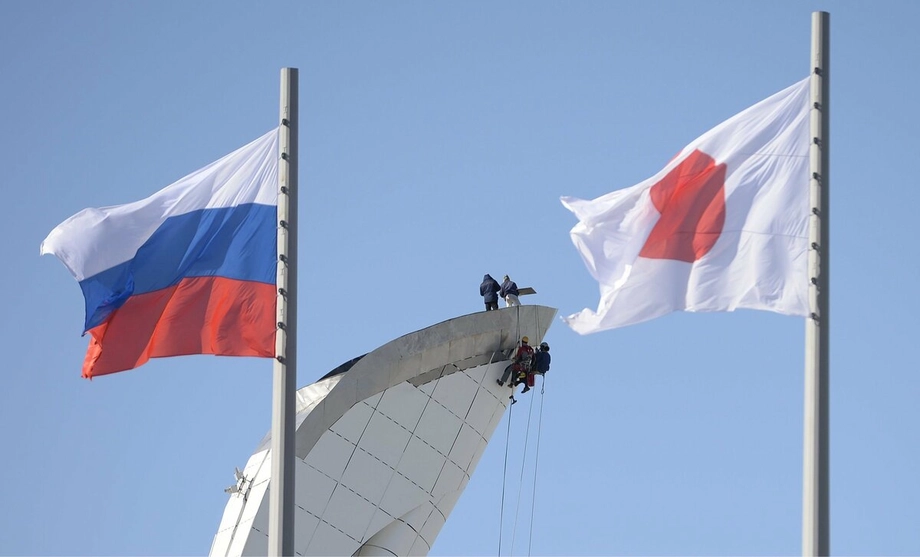
Four Russian Units Placed Under Local Management
Japan has demanded that Moscow withdraw a presidential decree placing four Russian units of Japan Tobacco under local management, putting a business responsible for about 10 percent of the group's revenue and roughly 25 percent of its operating profit outside its direct control.
Contents
- Four Russian Units Placed Under Local Management
- Tokyo Takes Its Protest Through Diplomatic Channels
- What the Russian Order Changes
- Why Russia Matters So Much to Japan Tobacco
- Shares Signal a Sharp Market Reaction
- Japan Tobacco Reviews Its Options
- A Dispute Within Worsening Relations
- How the Events Unfolded
- Key Points
Russian President Vladimir Putin ordered the operations placed under the temporary management of Industrial Assets, a Russian company. Japan Tobacco employs about 4,000 people across four manufacturing facilities in Russia, where it has operated since 1999.
Kimitake Nakamura, director general of the Japanese Foreign Ministry's European Affairs Bureau, protested to Russian Ambassador Nikolay Nozdrev and called for the decree to be withdrawn. Finance Minister Satsuki Katayama also said Tokyo had asked Moscow to reverse the measure.
The immediate change concerns who manages the businesses. A Russian appointed administrator takes control of their management, while legal ownership does not automatically transfer. For Japan Tobacco, that means losing authority over a substantial operation even though the arrangement is described as temporary.
No reason was given for the decree. The action follows other Russian interventions involving businesses from countries that imposed sanctions over Moscow's invasion of Ukraine.
Tokyo Takes Its Protest Through Diplomatic Channels
Katayama said the government would follow developments closely and coordinate its response with the relevant ministries and Japan Tobacco. She framed the dispute around the protection of Japanese businesses and citizens.
Speaking at a press conference, Finance Minister Satsuki Katayama said:
Japan has repeatedly urged Russia to protect the legitimate interests of Japanese citizens and businesses,
Chief Cabinet Secretary Minoru Kihara announced a formal protest at a morning press conference on November 6. He said senior officials visiting Russia, including representatives of the Ministry of Economy, Trade and Industry and the Foreign Ministry's European Affairs Bureau, had joined Japan's ambassador in approaching Russian authorities.
Kihara described the demand made by the visiting officials and the ambassador:
The senior officials currently visiting Russia, together with our ambassador, have protested to the Russian government and demanded that the measure be withdrawn immediately,
Japan's response therefore involved approaches both to Russia's ambassador in Japan and to authorities in Russia. Tokyo's stated objective is withdrawal of the measure, which would allow the company to recover management control.
What the Russian Order Changes
The decree covers businesses belonging to JT International, the subsidiary that brings together Japan Tobacco's international operations. The designated manager is identified as JSC Industrial Assets, also referred to as Industrial Assets.
The affected entities are listed as Donskoy Tabak, Pereslavl-Tabak, JTI Yelets and Kres Neva, with their stakes ordered placed under the Russian company's temporary management. A different published list names Petro instead of Pereslavl-Tabak and uses the name JTI Donskoy Tabak. Japan Tobacco has confirmed that four units are covered.
Temporary management separates ownership from the power to run a company. An owner may retain its legal interest while an appointed manager exercises authority over the business. The practical issue for Japan Tobacco is who can direct its Russian operations and make decisions about them.
Russia created a mechanism in 2023 allowing assets belonging to companies from countries it considers unfriendly to be placed under temporary management by the Russian government or Russian companies. The Kremlin has used that description when explaining similar interventions involving European businesses.
Japan Tobacco's financial response, the duration of the arrangement and any route to restoring its control have not been announced.
Why Russia Matters So Much to Japan Tobacco
Russia contributes about one tenth of Japan Tobacco's revenue but approximately one quarter of its operating profit. Operating profit is the money a business earns from its operations after operating costs, before items such as interest and taxes.
Those figures show why the Russian business matters beyond its sales alone. Its reported share of group operating profit, 25 percent, is about two and a half times its 10 percent share of revenue. The operation therefore carries more weight in the group's earnings than its share of sales might suggest.
Japan Tobacco began operating in Russia in 1999 and had become the country's largest tobacco company by 2007. Its four manufacturing facilities include sites in the Leningrad and Lipetsk regions.
About 4,000 employees work across those facilities. For them, the immediate issue is a change in who directs the businesses. Japan Tobacco has placed employees and other stakeholders at the centre of its stated response.
The company continued operating in Russia after the full scale invasion of Ukraine in 2022, while other Japanese companies withdrew. The decree now puts management of that continuing business in the hands of a Russian administrator.
Shares Signal a Sharp Market Reaction
Japan Tobacco shares were indicated at 6,269 yen at 11:30 a.m. Tokyo time on Friday, compared with Thursday's record closing price of 7,769 yen. The difference was 1,500 yen, or 19.3 percent.
The figure came from bid and ask prices, which show the prices buyers and sellers are quoting. An indicated price can signal a sharp expected move before an actual trade occurs at that level.
The wider Japanese market was also falling. The Nikkei 225 was down 5.7 percent by midday, meaning Japan Tobacco's indicated percentage decline was more than three times the broader index's fall.
The company's Russian profit exposure helps explain the scale of the financial concern. Japan Tobacco was still assessing the corporate impact, leaving investors without a company estimate of any resulting earnings loss or accounting charge.
Japan Tobacco Reviews Its Options
Japan Tobacco confirmed in a statement issued Friday that the decree applied to four Russian units. The company said it was examining the order, possible responses and the consequences for the group.
In that statement, Japan Tobacco said it was:
reviewing details of the matter, options we can take and the potential impact on our corporate group.
The company also expressed concern for the people and organisations connected to its Russian business. Japan Tobacco said:
We are closely assessing the situation and possible future courses of action, placing the highest priority on our employees and other stakeholders,
For the group, the review brings together several practical concerns: the management of factories, the interests of employees and the financial contribution of the Russian business. Tokyo's diplomatic effort is proceeding alongside that corporate assessment.
A Dispute Within Worsening Relations
Japan has imposed sanctions on Russia over the war in Ukraine. Moscow has expanded its use of temporary management measures against businesses associated with countries supporting those sanctions.
Similar Russian action was taken against European companies in recent months, including businesses associated with Swiss food group Nestle in September. The intervention involving Japan Tobacco extends that pressure to a major Japanese corporate operation.
Relations between Tokyo and Moscow have also worsened over territorial and security disputes. Putin visited Etorofu in August, an island controlled by Russia and claimed by Japan as part of its Northern Territories.
Russia's Federal Security Service detained a journalist from the Hokkaido Shimbun newspaper in October on suspicion of espionage. The detention and the island visit form part of the strained diplomatic setting in which Japan is seeking the return of management control to Japan Tobacco.
How the Events Unfolded
Japan Tobacco's long presence in Russia and Moscow's more recent asset management rules provide the timeline for the dispute. The key developments are:
- 1999: Japan Tobacco began operating in Russia.
- 2007: The company had become the largest tobacco business in the Russian market.
- 2022: Russia launched its full scale invasion of Ukraine, followed by Japanese sanctions.
- 2023: Russia enabled temporary management of assets belonging to companies from countries it considers unfriendly.
- November 5: The decree is dated November 5 in one description of the action; other descriptions place Putin's order on Thursday.
- November 6: Chief Cabinet Secretary Minoru Kihara announced Japan's formal protest and demand for immediate withdrawal.
- Friday: Japan Tobacco confirmed that four units were affected, while Finance Minister Satsuki Katayama said Tokyo had called for reversal.
The central developments are the transfer of management authority, Japan's demand for withdrawal and the company's review of its response. Those processes will determine how a Russian business employing thousands of people fits into Japan Tobacco's operations.
Key Points
- Russia placed four Japan Tobacco units under the temporary management of Industrial Assets.
- Japan demanded withdrawal through diplomatic approaches in Tokyo and Russia.
- The Russian business accounts for about 10 percent of group revenue and 25 percent of operating profit.
- Japan Tobacco employs about 4,000 people across four Russian manufacturing facilities.
- Shares were indicated 19.3 percent below the previous close on Friday morning.
- Japan Tobacco is reviewing its options and the financial impact while prioritising employees and other stakeholders.