More than 30,000 investors face an uncertain recovery
A Japanese property investment business that attracted about 200 billion yen by advertising high returns has lost its operating permits, leaving more than 30,000 investors facing uncertainty over the return of their money. By the end of June 2026, its operator had 18.8 billion yen in overdue repayments and another 172.4 billion yen scheduled to fall due, against just 92.41 million yen in cash and deposits.
Contents
- More than 30,000 investors face an uncertain recovery
- How the Narita investment attracted household savings
- Unpaid rent was missing from sales disclosures
- The repayment gap in numbers
- How the dispute developed
- What the companies say
- What losing the permits changes
- Households are waiting for money, not new products
- Key Points
Osaka Prefecture and the Tokyo Metropolitan Government revoked the permits of the two companies behind Minna de Ooyasan on September 1. The action was the first permit revocation under Japan's framework for specified joint real estate enterprises since the system began in 1995.
Osaka authorities found that the operator continued selling investments after learning that rental income had gone unpaid. Documents given to prospective investors still described the section covering rent payment problems as having nothing applicable to disclose.
The consequences extend well beyond the companies. A woman aged 53 in Fukuoka invested 16 million yen across the products, while a man aged 44 in Kanagawa committed 10 million yen. Both now face the possibility that much of their investment will not come back.
The companies have apologized for anxiety caused by delayed distributions and repayments. They dispute parts of the authorities' findings and say their remaining work will focus on preserving assets, selling property and securing money for existing investors. No timetable for full repayment has been announced.
How the Narita investment attracted household savings
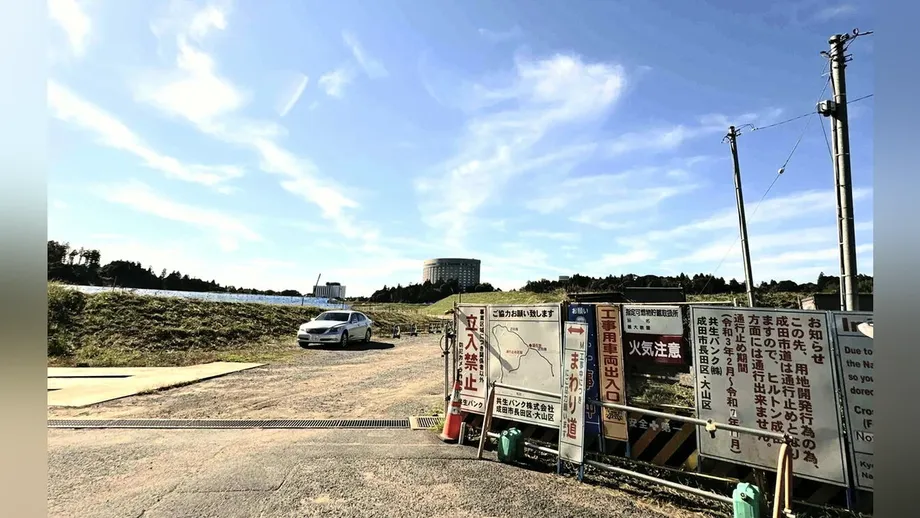
Minna de Ooyasan offered investors a way to pool their money into property projects without buying and managing buildings themselves. One of its main products involved land near Narita Airport in Narita, Chiba Prefecture, where Tokyo property group Kyosei Bank planned a development including hotels and exhibition facilities.
The proposed development covered land roughly equivalent to 10 Tokyo Domes. Sales began in 2020, with an advertised annual return of 7 percent and an investment unit costing 1 million yen. At that rate, one unit would generate 70,000 yen a year if distributions were paid as advertised.
Two companies within the group divided the work. Toshi Soken Invest Fund, based in Suita, Osaka Prefecture, managed and operated the property investments. Minna de Ooyasan Sales, based in Tokyo's Chuo district, handled sales.
The Fukuoka investor put 12 million yen into the Narita product in 2023 after being attracted by the return. She received distributions amounting to tens of thousands of yen a month, then invested another 4 million yen in 2024 in a product tied to different property. She said the payments suddenly stopped in July 2025.
The woman, whose total investment reached 16 million yen, described her uncertainty about recovering her savings:
Do I have no choice but to give up on getting my investment back?
The Kanagawa investor also expressed regret. Looking back, he said, the explanation of exactly how the money would be used had lacked detail. His concern now is that most of his 10 million yen investment may be lost.
Unpaid rent was missing from sales disclosures
Osaka Prefecture's findings put the handling of unpaid rent at the center of the case. From April 1, 2025, Toshi Soken Invest Fund continued selling nine products, including Narita No. 13, even though rent from a tenant within the same corporate group had not been paid.
Rental income mattered because it supported the investment business and its payments to participants. Prospective investors needed to know when that income had stopped arriving. The documents supplied before contracts were signed continued to show no applicable issue in the section where delayed or unpaid rent should have been recorded.
A total of 280 people invested a further 643 million yen through the sales identified by the authorities. Investors in the Narita series were informed about the unpaid rent and the suspension of distributions on July 31, 2025.
Kyosei Bank group representative Kenichi Yanase told Osaka authorities that he understood sales to have ended when recruitment advertising stopped on April 4. He said employees who did not know the circumstances had continued selling the products. Osaka rejected that explanation, treating it as his personal understanding rather than an adequate account of the sales that continued.
The prefecture judged the circumstances of the legal violations especially serious. For households deciding whether to invest, the missing information concerned a basic part of the transaction: whether the rent expected to support the investment was actually being paid.
The repayment gap in numbers
Toshi Soken Invest Fund's financial position shows why investors face such uncertainty. At the end of June 2026, repayments were overdue on nine products, including Minna de Ooyasan No. 34, totaling 18.8 billion yen. Another 29 products carried scheduled repayments of about 172.4 billion yen.
Together, those obligations amounted to about 191.2 billion yen across 38 products. The company's 92.41 million yen in cash and deposits represented roughly 0.05 percent of that amount, or about 1 yen in cash for every 2,000 yen due or scheduled to become due.
Cash is only one part of a property company's resources. Land and other assets can also be sold to raise money. However, properties remaining with the operator have faced attachments and provisional attachments, legal measures that can restrict how assets are dealt with while creditors pursue claims.
The company's business report for the financial year ending March 2026, submitted to Osaka on July 28, showed liabilities exceeding assets by 288.1 billion yen. In simple terms, the recorded value of what the company owed was much greater than the recorded value of what it owned.
Osaka said the company no longer met the legal requirement that net assets remain at least 90 percent of its stated capital. The prefecture judged full repayment by the relevant deadlines extremely difficult and considered the risk of losses to investors substantial.
How the dispute developed
The permit revocations followed earlier regulatory action, continued sales during a period of unpaid rent, and a worsening financial position. The main dates show how the problems moved from disclosure failures to a broader struggle to repay investors.
- 2020: Sales began for the Narita development investment, advertising an annual return of 7 percent.
- June 2024: The two companies received business suspension orders over legal violations, including incorrect descriptions of land parcels. They challenged those orders in court.
- April 1, 2025 onward: The operator continued sales of nine products despite unpaid rent from a group tenant.
- July 9, 2025: The companies say they voluntarily suspended new solicitations and contracts.
- July 31, 2025: Investors in the Narita series were informed of unpaid rent and the suspension of distributions.
- End of June 2026: Overdue repayments reached 18.8 billion yen, with another 172.4 billion yen scheduled for repayment.
- July 28: The operator submitted its report for the financial year ending March 2026, showing liabilities exceeding assets by 288.1 billion yen.
- August 18: A hearing was held at which the companies proposed continuing their suspension of new business under supervision.
- September 1: Osaka and Tokyo revoked the operating permits.
The court proceedings over the June 2024 orders remain ongoing. The companies' objections to those earlier orders are part of a dispute that predates the permit revocations.
What the companies say
Toshi Soken Invest Fund and Minna de Ooyasan Sales issued a statement on September 1 saying they took the administrative action extremely seriously. They apologized for the concern and anxiety caused by delays in distributions and the return of invested money.
The companies also said they disagreed with some of the authorities' factual findings and legal assessments. They stated that they had voluntarily stopped new solicitations and contracts on July 9, 2025, and had no plans to restart new business.
At the August 18 hearing, they proposed keeping that suspension in place, making regular reports under supervision, responding to existing investors and concentrating on repayments and the orderly conclusion of operations.
The group warned that further damage to its credibility could make it harder to sell assets, raise funds and maintain the organization needed to handle existing contracts. Its stated position is that these difficulties could reduce its ability to carry out the investor protection duties required by regulators.
Yanase published the hearing minutes and a written submission running to 45 pages while arguing against the action. The companies also released the revocation notices and their written and oral submissions from the hearing.
What losing the permits changes
The revocations prevent the operator from recruiting investors or selling new funds. Its remaining business is limited to work necessary to fulfill existing contracts, such as handling assets and seeking money for repayments.
The companies cited Article 65 of Japan's Real Estate Specified Joint Enterprise Act, which allows necessary operations to conclude existing contractual business after a permit is revoked. That provision gives them a legal basis to continue dealing with existing investments while closing the business.
Investors are waiting for two different kinds of payment. Distributions are the periodic payments made during an investment, generally from the income generated by the business. Redemption is the return of invested capital when the contract reaches its repayment stage. Both have been delayed in this case.
The company's immediate cash shortage and its deficit require different responses. Selling property could bring in cash for repayments, while the gap between liabilities and assets concerns the business's wider ability to meet what it owes. The value obtained from asset sales, and the claims affecting those assets, will matter to how much money becomes available.
Households are waiting for money, not new products
For the Fukuoka woman and the Kanagawa man, the central issue is now the recovery of savings already committed. The end of new sales leaves existing investors dependent on the management of remaining assets and the collection of money that can be used for repayments.
The figures also show why stopping distributions and delaying capital repayments have different effects on a household. Losing regular distributions removes expected income. Delayed redemption keeps the original savings tied up, potentially disrupting plans that depended on getting that money back.
The companies say they will preserve and sell assets and secure redemption funds. Osaka's assessment points to the scale of that task: about 191.2 billion yen in overdue and scheduled repayments, very little cash, and liabilities far above recorded assets. Investors now await concrete progress on those asset sales and repayments.
Key Points
- Osaka and Tokyo revoked the permits of the operator and seller behind Minna de Ooyasan on September 1.
- The investment business attracted about 200 billion yen and more than 30,000 investors.
- Osaka found that nine products continued to be sold despite unpaid rent, bringing in another 643 million yen from 280 investors.
- Overdue and scheduled repayments totaled about 191.2 billion yen at the end of June 2026, against 92.41 million yen in cash and deposits.
- The companies dispute parts of the authorities' findings and say they will focus on asset sales and existing investors.
- New sales are barred, while necessary work on existing contracts can continue. No timetable for full repayment has been announced.