Price pressure spreads despite cheaper rice and energy
Japan's core consumer inflation rose to 2.1% in September 2026, moving above the Bank of Japan's 2% target for the first time in nine months as higher food prices, household goods and water charges outweighed falling rice and energy prices.
Contents
- Price pressure spreads despite cheaper rice and energy
- What the inflation measures tell households
- Why cheaper rice did not bring grocery inflation down
- Water bills and household goods add pressure
- Why energy bills fell while fuel costs squeezed businesses
- Wages and services complicate the policy decision
- October pause expected, with December in focus
- Food tax relief brings a second policy choice
- The dates and decisions to watch
- Key Points
The Ministry of Internal Affairs and Communications put the index excluding fresh food at 102.3 against a 2025 base of 100. Prices rose for the 61st consecutive month compared with a year earlier. The figures, released on October 23, increased expectations of another interest rate rise in December, following September's increase to 1.25%.
Food prices excluding fresh items rose 2.9%, with increases affecting 150 of 181 categories. That is about 83% of the categories measured. Rice, meanwhile, fell 20.6% as inventories grew, showing how a sharp decline in one staple can coexist with a rising grocery bill.
Higher import costs, a weak yen and the effects of conflict in the Middle East added to business expenses. Government subsidies cushioned household energy bills, while the end of Tokyo's waiver of basic water fees pushed charges higher.
The policy challenge now reaches beyond the inflation rate itself. Households face rising everyday expenses, businesses are passing on both material and labour costs, and the central bank must decide how quickly to raise borrowing costs without putting too much pressure on economic activity.
What the inflation measures tell households
Headline inflation, which includes all items in the consumer price basket, reached 2.1%, up from 1.9% in both July and August. Consumer prices were unchanged from August to September, following a monthly increase of 0.1% in August. Prices can therefore be flat over one month while remaining higher than a year earlier.
The ministry's September CPI release put the headline index at 102.2 and the index excluding both fresh food and energy at 102.8, against a 2025 base of 100. On a seasonally adjusted basis, headline prices rose 0.4% from August, while both measures excluding fresh food rose 0.5%.
Japan's core measure excludes fresh food, whose prices can move sharply with weather and harvest conditions, but includes energy. September's 2.1% reading compared with an August increase of 1.7% in the ministry's September tables, rather than the previously cited revised figure of 1.8%. The core index rose from 102.0 in August to 102.3 in September.
The narrower measure excluding both fresh food and energy reached 2.4%, compared with 1.9% in August in the ministry's September tables, rather than the previously cited revised figure of 2.0%. Its index rose from 102.5 to 102.8. A competing estimate put September's narrower measure at 2.5%. The 2.4% figure was the widely cited reading associated with the ministry's release.
The ministry's detailed tables showed annual price increases of 2.8% for food, 1.1% for housing, 0.8% for fuel, light and water charges, 6.5% for furniture and household utensils, and 1.2% for clothing and footwear. Medical care rose 2.8%, transport and communication 2.5%, culture and recreation 3.9%, and miscellaneous expenses 1.2%. Education prices fell 3.8%.
Removing fresh food and energy helps policymakers examine price changes elsewhere in the economy. Businesses can still pass electricity, transport and fuel expenses into the prices of meals, manufactured goods and services, so those costs can reach consumers indirectly.
Why cheaper rice did not bring grocery inflation down
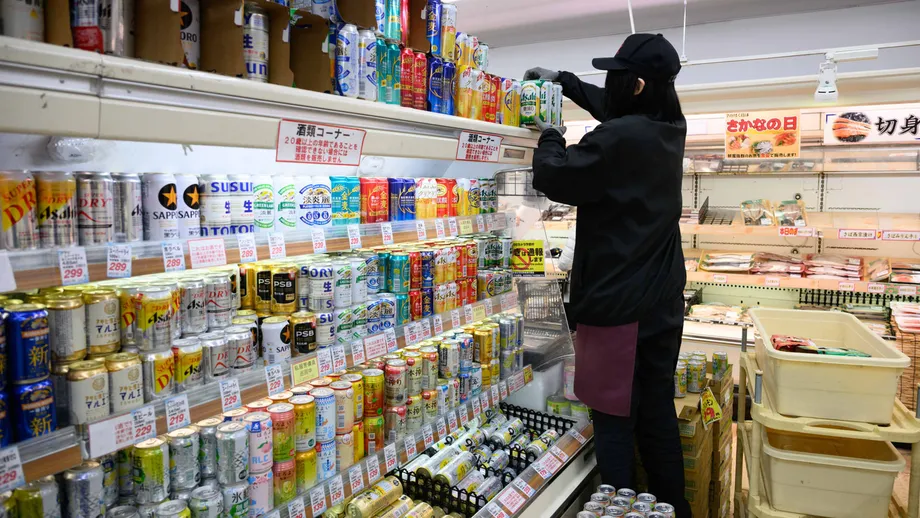
Food inflation excluding fresh items accelerated from 2.7% in August to 2.9% in September, its first acceleration in 14 months. Prepared foods, restaurant meals and confectionery were among the categories becoming more expensive.
Prepared food prices rose 4.2%, up from 3.3% in August, while confectionery rose 4.3%, compared with 5.0% in August. Overall food inflation slowed from 3.1% to 2.8% as fresh food inflation eased from 6.0% to 2.1%. Food industrial products rose 4.0%, up from 3.7% in August, in the ministry's separate goods and services classification.
Restaurant meals rose 2.5% as businesses faced higher raw material and labour costs. Imported beef increased 13.1%, partly because of drought in the United States. For consumers, that meant pressure on both meals bought outside the home and ingredients purchased for cooking.
The food-category tables put restaurant meal inflation at 2.5%, up from 2.1% in August. The separate goods and services table recorded a 4.9% increase for eating out, compared with 4.5% in August.
Rice prices fell 20.6%, the largest decline in the comparable historical series, after the steep increases recorded a year earlier. Growing inventories helped bring prices down. The annual comparison also measured September against a period when rice was unusually expensive.
The ministry's tables showed that the rice decline deepened from 15.7% in August to 20.6% in September. Non-glutinous rice excluding Koshihikari fell 21.1%, while cereals overall fell 5.0%, compared with 3.4% in August.
The breadth of the increases explains why grocery inflation accelerated despite rice becoming cheaper. A household buying rice, prepared meals, sweets and other groceries would experience several different price movements within the same shopping trip. Its own spending pattern determines how closely its bill follows the national average.
Water bills and household goods add pressure
Water charges rose 4.9%, partly because Tokyo ended a programme waiving basic fees. Restoring a charge that households had temporarily avoided raised the amount they paid, even without an equivalent change in the cost of supplying water.
The increase followed a 3.5% annual fall in water charges in August. The shift added 0.07 percentage points to the change in headline inflation between August and September.
Toilet paper prices climbed 17.8%. Household durable goods, including refrigerators and vacuum cleaners, increased 6.2%. These products are bought less frequently than food, but a replacement appliance can make a substantial difference to a household budget in the month it is purchased.
Household durable goods inflation accelerated from 3.9% in August, while recreational durable goods rose 7.4%, up from 4.5%.
Goods inflation accelerated to 2.8% from 2.6% in August. Within that broad category, inflation for other industrial products reached 3.9%, its highest rate in 13 months, according to Abhijit Surya, senior Asia Pacific economist at Capital Economics.
The ministry's detailed goods and services table recorded 3.9% inflation for industrial products overall, up from 3.4% in August, and 4.8% for other industrial products, up from 4.0%.
Accommodation charges during the holiday period also contributed to the increase, while rents and automobile expenses added pressure. Surya said rent inflation matched its highest rate in nearly 25 years. Together, the figures showed price increases extending across daily necessities, larger purchases and housing costs.
Accommodation charges rose 4.6% in September after falling 1.4% in August, adding 0.07 percentage points to the change in headline inflation.
Why energy bills fell while fuel costs squeezed businesses
Consumer energy prices declined 0.6% from a year earlier, following a 0.7% fall in August. Gasoline fell 2.6% and electricity bills dropped 2.4%, with government support helping to contain what households paid.
The annual declines in gasoline and electricity prices were unchanged from August. Propane gas prices rose 6.3%, easing from 6.9% in August, while kerosene rose 15.3%, compared with 15.5%.
City gas moved in the opposite direction, rising 0.2% after falling 0.8% in August. Fuel adjustment arrangements, which pass changes in fuel costs into bills after a delay, partly offset the protection provided by subsidies.
Japan's reliance on imported oil and gas leaves it exposed to higher international energy prices. Middle East conflict disrupted supply arrangements and encouraged purchases from more expensive sources, including the United States. A weaker yen increased the Japanese currency cost of imports priced in dollars.
Factories, transport operators and restaurants also buy energy. When those expenses rise, businesses may increase the prices of other products and services. Government help with household electricity or gasoline bills can therefore soften direct energy inflation while food and manufactured goods continue becoming more expensive.
Wages and services complicate the policy decision
Services inflation increased to 1.5% from 1.2% in August. Because many services depend heavily on workers, their prices help the Bank of Japan assess whether rising wages are feeding into a lasting cycle of income growth, spending and price increases.
Finance Minister Satsuki Katayama told parliament that Japan was approaching a period in which wages would play a stronger role in inflation, while acknowledging the contribution from higher import costs. Services inflation remained below 2%, however, even as the broader measures crossed that level.
Takeshi Minami, chief economist at the Norinchukin Research Institute, described a combination of demand and rising business expenses:
Domestic demand is neither particularly strong nor weak, but both demand and rising costs are contributing to higher prices.
Minami said higher raw material costs, yen depreciation and wage growth were pushing prices beyond the restraint provided by government measures. At the same time, an October business survey showed hiring slowing to its weakest pace in 14 months, with services businesses cutting staff for the first time in more than a year.
Economy Minister Minoru Kiuchi said conditions had not yet been met for the government to declare an official end to deflation, meaning a persistent decline in prices. The government wants confidence that Japan can sustain stable price growth rather than return to falling prices when temporary cost pressures fade.
October pause expected, with December in focus
The Bank of Japan was widely expected to keep its policy rate at 1.25% at its meeting ending October 30. September's increase had taken the rate to its highest level in about three decades. The bank had raised rates by a cumulative 0.50 percentage points during the year.
Masato Koike, senior economist at Sompo Institute Plus, expected rising energy costs and their later effects on other prices to push core inflation higher. He nevertheless projected the next increase for December, judging that prices were not accelerating fast enough to require another move immediately after September.
Many economists expected a December increase to 1.50%, with the eventual peak around 1.75% or 2%. Those are forecasts; the Bank of Japan had not announced its next rate decision.
Marcel Thieliant, head of Asia Pacific at Capital Economics, saw a risk that the bank would have to go further than his firm's forecast:
With little evidence that the tightening delivered so far has slowed the economy, the risks are shifting towards a higher peak in the policy rate than our forecast of 2%.
Higher policy rates tend to increase borrowing costs over time, affecting mortgages, business loans and investment. They can also improve returns on savings. The October meeting's updated growth and inflation forecasts will help explain how the bank balances those effects against continued price pressure.
Food tax relief brings a second policy choice
Japan's Lower House began debating legislation on Tuesday to reduce consumption tax on food from 8% to 1% for two years. The proposal also included support payments to workers based on income. The government intended the food tax reduction to begin in April 2027.
The Cabinet approved the bill and submitted it to the Diet on Friday. The Lower House Financial Affairs Committee was scheduled to begin detailed deliberations the following Friday. The ruling party aimed to pass the bill during the current Diet session with support from opposition parties; it had not yet become law.
Eligibility for the income-based payments and the amounts would be set by government ordinance. A task force to arrange the payments was to be established within the Cabinet. Prime Minister Takaichi Sanae said the two-year tax reduction would bridge the period until the support-payment programme was fully introduced, noting the burden of food and beverage costs on low-income earners.
The proposed tax cut and support payments were expected to require about 5 trillion yen annually. The government said it would seek funding without deficit-covering bonds, reviewing subsidies, special taxation measures, non-tax income, expenditures and revenues. Details were to be worked out during year-end budget compilation, leaving the financial backing unresolved. The proposal followed a large economic stimulus package adopted at the end of 2025 and support aimed at energy expenses.
Takaichi estimated that household burdens would be reduced by around 36,000 yen per person. She said the lower food tax would basically be reflected in prices, while cautioning that retail prices could change for various reasons and that a firm outlook was difficult.
For a food item priced at 1,000 yen before tax, an 8% tax produces a bill of 1,080 yen. At 1%, the bill would be 1,010 yen if the underlying price stayed unchanged and the reduction reached the customer in full. The saving would be 70 yen, about 6.5% of the previous bill.
Takaichi said the immediate priority was strengthening measures to address rising prices worldwide. Opposition parties were pressing for alternatives and greater clarity on the bill. Komeito lawmaker Isa Shinichi questioned proceeding without first clarifying who would receive the income-based benefits, how much they would receive and how the payments would be funded.
The Democratic Party for the People submitted a proposal for a resident tax cut and cash benefits intended to save workers up to 50,000 yen each annually. Komeito proposed payments of about 80,000 yen per person over two years instead of a tax cut. The Constitutional Democratic Party of Japan called for cash aid this fiscal year for low-income households exempt from resident tax, while the Democratic Reform Party proposed a prompt payment of 40,000 yen to each citizen.
The tax plan and potential interest rate increases address different pressures. Tax relief would lower the tax included in qualifying food purchases. Higher rates would make borrowing more expensive and seek to restrain spending and price growth across the economy. Parliament still had to decide on the legislation.
The dates and decisions to watch
September's inflation figures arrive between a recent rate increase and the central bank's next assessment of the economy. The immediate focus is its October outlook, followed by the December meeting that many economists expect to bring another increase.
- End of 2025: The government adopted a large economic stimulus package.
- August 2026: Core inflation was 1.7% in the ministry's September tables, rather than the previously cited revised figure of 1.8%.
- September 2026: The Bank of Japan raised its policy rate to 1.25%, while core consumer inflation reached 2.1%.
- October 23, 2026: September's nationwide inflation figures were released.
- October 30, 2026: The Bank of Japan's next policy meeting concludes, with updated growth and inflation forecasts expected.
- December 2026: Many economists forecast a rate increase to 1.50%.
- April 2027: The government intends the proposed temporary food tax reduction to begin for two years, subject to legislation.
Households will be watching whether relief on rice, energy and potentially food taxes is enough to offset increases elsewhere. Businesses and borrowers will be watching how strongly the Bank of Japan signals further increases in financing costs.
Key Points
- Japan's core inflation reached 2.1% in September, above the Bank of Japan's target for the first time in nine months; the ministry's September tables put August's rate at 1.7%.
- Food prices excluding fresh items rose 2.9%, with increases across 150 of 181 categories.
- Rice fell 20.6%, while water charges, household goods and restaurant meals became more expensive.
- Energy prices declined 0.6% as subsidies cushioned household bills.
- The Bank of Japan was expected to hold its rate at 1.25% on October 30; many economists forecast 1.50% in December.
- Parliament was considering a temporary cut in food consumption tax from 8% to 1% for two years from April 2027, alongside support payments based on income. Lower House debate had begun, with detailed committee deliberations scheduled for Friday.
- The tax cut and support payments were expected to require about 5 trillion yen annually, with the government seeking funding without deficit-covering bonds.