Tokyo's AI retreat spreads across the market
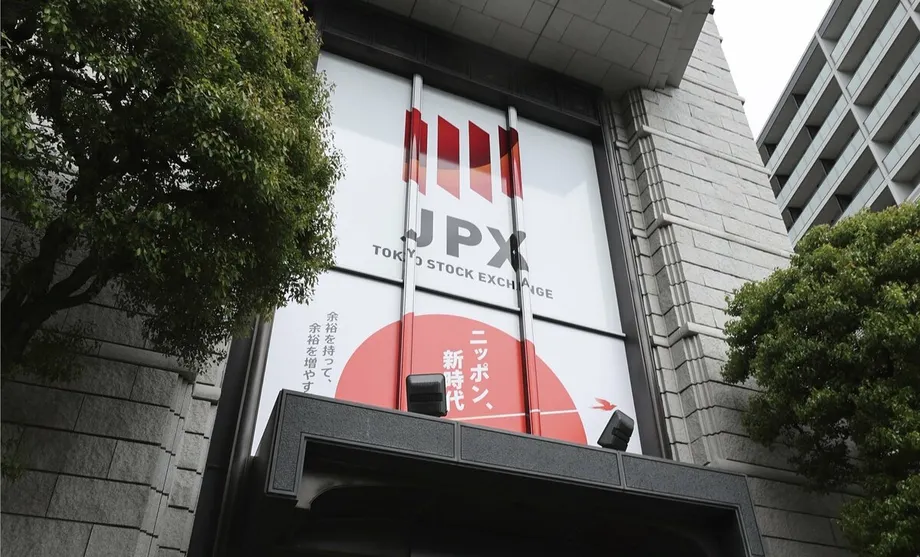
Japan's Nikkei Stock Average briefly plunged more than 7% on Friday, November 6, falling by over 4,300 points as investors feared that Democratic gains in the U.S. midterm elections could slow the construction of artificial intelligence data centers. By the morning close, the index had recovered some ground but remained down 3,219.29 points, or 5.27%, at 57,858.61.
Contents
- Tokyo's AI retreat spreads across the market
- Why the election unsettled AI investors
- How the selling gathered pace
- Japan's chip suppliers take another hit
- Expensive shares meet doubts about returns
- The American supply chain feels the pressure
- South Korea halts trading as Asia retreats
- Oil and currencies add another layer of uncertainty
- The retreat reaches beyond technology
- Key Points
The broader Topix index fell 213.89 points, or 5.43%, to 3,726.50. More than 90% of shares on the Tokyo Stock Exchange's Prime Market declined, turning a retreat led by semiconductor companies into a selloff reaching well beyond technology.
The Nikkei dropped below 60,000 for the first time since May and touched its lowest level since April 13. Against its June 22 record of 72,831.73, the morning closing level represented a decline of about 20.6%, crossing the conventional threshold for a bear market.
Investors faced two pressures at once: doubts about whether spending on AI would produce enough profit, and a rebound in oil prices amid uncertainty over the war involving Iran. The first threatened expectations for technology earnings. The second added to concerns about energy costs.
Why the election unsettled AI investors
Democratic victories in Tuesday's U.S. midterm elections raised expectations of closer scrutiny of data center development, including possible government pauses on construction. Candidates in some states had campaigned against large projects, while voters across party lines had expressed concern about AI and rising electricity bills.
Data centers are buildings filled with computers that store information and run digital services. Facilities used for AI need powerful chips and large amounts of electricity. A decision to delay construction can therefore affect chip suppliers, equipment manufacturers and electricity businesses at the same time.
Investors were reacting to the possibility of tighter restrictions. No specific new regulation, construction pause or implementation date was identified. The immediate concern was that a less welcoming political environment could reduce or delay expected spending.
Maki Sawada, a strategist in the Investment Content Department of Nomura Securities Co., described the breadth of the reaction:
Japanese stocks were sold across the board amid growing uncertainty over the economic and political outlook following the U.S. midterm elections,
The election added political uncertainty to an investment debate already troubling markets: whether companies would earn enough from AI to justify the cost of building the infrastructure behind it.
How the selling gathered pace
AI and semiconductor shares had been falling globally since November 4. Thursday's sharp losses in the United States then carried into Asian trading on Friday, with Japan and South Korea suffering some of the largest declines.
The sequence shows how quickly concerns about American construction projects reached manufacturers and investors elsewhere:
- November 3: U.S. midterm elections delivered Democratic gains, increasing expectations of scrutiny of data center development.
- November 4: Selling spread through semiconductor and other AI shares worldwide.
- November 5: The Philadelphia Semiconductor Index plunged 12.3%, while Japanese chip shares also suffered steep losses.
- November 6: The Nikkei briefly fell more than 7%, and South Korea's stock market triggered a temporary trading halt.
The Philadelphia index's fall was its steepest intraday decline since March 2020. The Nasdaq Composite lost more than 5% on Thursday, while the Dow Jones Industrial Average shed more than 1,800 points. The S&P 500 suffered its worst session since President Donald Trump's April 2025 tariff announcement.
U.S. stock futures moved higher during Asian trading on Friday, offering some relief after the previous session's losses. Tokyo's partial recovery from its morning low also showed that prices were moving rapidly rather than falling in a straight line.
Japan's chip suppliers take another hit
Advantest, SoftBank Group and Kioxia were among the hardest hit Japanese stocks on Friday. During morning trading, Advantest fell about 9%, SoftBank Group dropped 11%, and Kioxia lost 10%.
Those declines followed heavy selling on Thursday, when Advantest fell 15%, semiconductor equipment maker Lasertec dropped 14%, and Kioxia lost 13%. Semiconductor manufacturing equipment and electronic components were central to Friday's retreat.
The losses compounded quickly. A share worth 100 before a 15% fall would be worth 85. A further 9% decline would reduce it to 77.35. Using Advantest's reported percentage moves, that amounts to a combined fall of roughly 22.7% across the two trading periods.
Japan's exposure extends across the production chain. Equipment makers depend on customers investing in chip factories, while memory suppliers depend on demand for the chips that help computers handle data. Slower expansion of AI facilities could weaken orders at several stages, which helps explain why investors sold different kinds of technology companies together.
Expensive shares meet doubts about returns
Investors were also questioning the prices they had paid for expected AI growth. Technology shares had risen on the belief that large infrastructure investments would eventually generate substantial revenue and profit.
A valuation is the price investors place on a business relative to measures such as its earnings or expected growth. When a share price assumes rapid expansion, even a possible delay in that expansion can lead investors to offer much less for the same share.
High borrowing costs had already made data center projects more expensive to finance. Political resistance added another potential source of delay, leaving investors to reassess both the cost of construction and the timing of future income.
Profit taking and institutional investors reducing borrowed positions accelerated the selling. Reducing borrowing, often called deleveraging, can require funds to sell assets quickly. That can increase pressure on prices while other investors are already trying to leave the same trade.
Qualcomm faced an additional business concern: its shares fell nearly 10% after smartphone chip sales missed analyst expectations. The weakness in that part of the industry added to pressure on semiconductor stocks already struggling with doubts about AI spending.
The American supply chain feels the pressure
Nvidia, Advanced Micro Devices, CoreWeave and GE Vernova all declined sharply in the U.S. session. Their different businesses show how far expectations for data center growth had spread through the stock market.
Nvidia and AMD supply chips used in advanced computing. CoreWeave rents customers access to AI chips through cloud services. GE Vernova supplies equipment connected with generating and delivering electricity, making it another business exposed to demand from expanding data centers.
A construction slowdown would therefore reach beyond the companies designing AI software. It could affect purchases of processors, demand for computing services and orders for power equipment.
Nvidia's size also gives its share price unusual influence over the S&P 500. The index gives larger companies more weight, so a 1% change in Nvidia has a greater effect than the same percentage move in most smaller constituents. Heavy selling in a few large technology companies can consequently pull down a broad market benchmark.
South Korea halts trading as Asia retreats
South Korea's Kospi fell as much as 8.8% to 4,911.28 in early trading, reaching its lowest level since early February. The Korea Exchange activated a circuit breaker after the decline crossed 8%, suspending stock and derivatives trading for 20 minutes.
A circuit breaker is a temporary pause designed to interrupt exceptionally fast market moves. Trading later resumed, and the Kospi recovered part of its losses, although it remained sharply lower during the session.
Samsung Electronics and SK Hynix were among the major technology shares under pressure. Taiwan's benchmark fell about 4.1%, with Taiwan Semiconductor Manufacturing Co. also losing more than 4%.
Losses elsewhere were smaller but widespread. Australia's S&P/ASX 200 declined about 1%, Singapore's Straits Times Index fell 2.4%, and shares in Hong Kong and mainland China also retreated. The particularly steep falls in Japan, South Korea and Taiwan placed Asian semiconductor businesses at the center of the regional selloff.
Oil and currencies add another layer of uncertainty
West Texas Intermediate crude rebounded above $90 a barrel as investors weighed uncertainty surrounding Iran and the outlook for energy supplies. Higher fuel costs added another concern for businesses already facing questions about demand and investment.
Japan imports much of its energy, so oil prices and the yen matter together. When oil becomes more expensive in dollars, Japanese buyers face higher costs. A weaker yen can increase the amount of Japanese currency needed to pay those bills.
The dollar briefly strengthened into the upper 158 yen range in Tokyo. At noon, it traded at 157.87 to 157.89 yen, compared with 157.62 to 157.72 yen in New York and 158.18 to 158.20 yen in Tokyo late Thursday.
Those figures show why the comparison point matters: at noon, the dollar was higher than its New York quotation but lower than its previous Tokyo afternoon level. The euro traded around $1.1206 and 176.91 to 176.93 yen.
U.S. Treasury yields also fell as stocks tumbled, consistent with investors seeking the relative safety of government bonds. Bond prices and yields move in opposite directions, so stronger demand for existing bonds generally pushes their yields lower.
The retreat reaches beyond technology
Toyota shares declined sharply after the automaker reported lackluster profits the previous day. Nintendo also fell after releasing earnings, while Sony Group slipped despite strong results supported by its latest Spider-Man movie.
The breadth of the decline mattered as much as the biggest individual losses. With more than nine in every ten Prime Market shares falling and the Topix down 5.43%, investors were reducing exposure across Japanese equities rather than concentrating their selling solely on chip companies.
The Nikkei's move below the bear market threshold captured the scale of the reversal since June. That term describes a decline of at least 20% from a recent peak. At 57,858.61, the index stood about 14,973 points below its June record of 72,831.73.
For investors, the immediate change was a sharp reduction in the value of holdings across several markets. For businesses tied to AI infrastructure, attention turned to whether expected construction, equipment purchases and financing would proceed at the pace previously built into share prices.
Key Points
- The Nikkei briefly fell more than 7% on November 6 and ended the morning down 5.27% at 57,858.61.
- The Topix lost 5.43%, while more than 90% of Prime Market shares declined.
- Democratic election gains increased investor concerns about restrictions on U.S. data center construction.
- The Nikkei's morning closing level was about 20.6% below its June 22 record.
- South Korea's Kospi fell as much as 8.8%, triggering a trading halt lasting 20 minutes.
- Oil above $90 a barrel and uncertainty over Iran added pressure alongside doubts about AI investment returns.