A vast nutrition promise enters a harder phase
Indonesia's Free Nutritious Meals programme had reached about 58 million people by 20 November 2026, according to Badan Gizi Nasional (BGN), the National Nutrition Agency. Its head, Sudaryono, said the government was aiming for 77 to 78 million recipients, leaving roughly 20 million people still to be reached. Remote and frontier communities, together with districts where many children are stunted, are meant to move to the front of the queue.
Contents
- A vast nutrition promise enters a harder phase
- What WFP changed behind the scenes
- How free lunches became a national system
- Why remote and high stunting areas come first
- What the poisoning figures show
- Protests forced food safety onto the national agenda
- Why rice reserves and fortification are only part of the job
- Drought planning moves before the rains fail
- The economic and nutrition pressures behind the policy
- Key dates in the programme
- What to Know
The expansion comes after a turbulent period for the programme, known as Makan Bergizi Gratis (MBG). Thousands of children suffered food poisoning, mothers protested with kitchenware and satirical posters, a regional governor suspended meals in four affected areas, and the government announced a reduction in the programme's scale in March 2026 because of fiscal efficiency concerns following the fuel crisis. An August 2026 instruction subsequently required meals to be eaten within four hours of cooking.
Food delivery is only one part of the story. The World Food Programme (WFP) reported in September 2026 that it was helping Indonesia with fortified rice policy, the cost of school meals, decisions about who should receive assistance, and the readiness of cooperatives. WFP was also helping villages and district governments prepare for drought before water and harvests run short. These efforts connect two basic questions: how to put nutritious food on millions of plates safely, and how to protect food supplies when the weather turns against farmers.
What WFP changed behind the scenes
WFP's role is technical, while BGN implements MBG through a network of central kitchens. During September, WFP provided guidance to cooperatives, supported work on fortified rice policy and costing, and joined consultations on targeting beneficiaries. Cooperatives are businesses owned and run by their members. Preparing them to participate reliably matters because a kitchen cannot serve lunch if suppliers fail, safety procedures break down or food does not arrive on time.
The government accepted WFP's proposed approach for a fortified rice costing study, and institutions made commitments for the next phase. Fortification adds vitamins or minerals to a widely eaten food. Rice can therefore carry nutrients to many people, but the policy still needs an agreed price, clear responsibilities and a dependable route from millers and suppliers to kitchens. WFP also supported learning among developing countries with Brazil and other partners. No publication date was given for the costing study or for completion of the next phase.
How free lunches became a national system
Indonesia's school feeding efforts began long before MBG. Pilot projects launched in 1991 provided snacks to pupils in underdeveloped villages as part of a poverty reduction strategy. By 1996, the effort reached more than 2 million students, but the 1997 Asian financial crisis largely halted it. In 2016, the Ministry of Education and Culture introduced the Nutrition Programme for School Children, or PROGAS, providing nutritious breakfasts in regions with high stunting rates.
Stunting means that a child is too short for their age after prolonged nutritional or health problems, and it can be accompanied by difficulties in development and learning. Indonesia's stunting rate was approximately 21.5 percent in 2022. Prabowo Subianto and Gibran Rakabuming Raka made free lunches a central promise of their 2024 election campaign. After their victory, the planned coverage expanded beyond schoolchildren to pregnant women, breastfeeding mothers and toddlers, and the name changed from Free Lunch to Free Nutritious Meals.
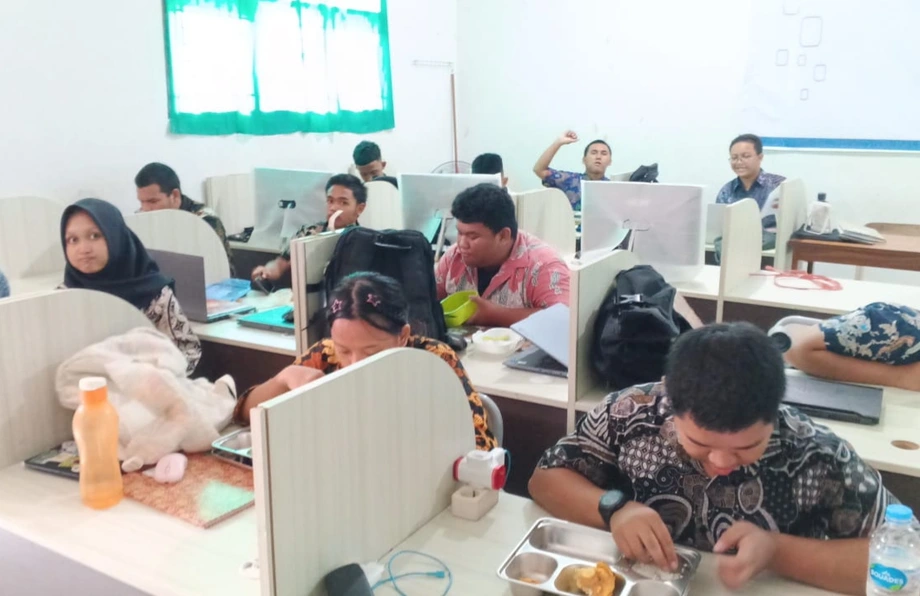
BGN was established in August 2024. Pilot projects in Tangerang and Sukabumi tested logistics and meal costs, estimated at about IDR 15,000 per portion. The nationwide launch followed on 6 January 2025, with an initial target of approximately 15 to 20 million beneficiaries and an IDR 71 trillion budget. Meals are cooked in hubs called Satuan Pemenuhan Pelayanan Gizi (SPPG) and distributed to schools and other recipients.
Why remote and high stunting areas come first
The programme's stated budget reached IDR 335 trillion, about US$21 billion, by January 2026. Two months later, the government said it would be scaled down because of fiscal efficiency concerns arising from the 2026 fuel crisis. BGN's November announcement nevertheless set out a substantial expansion in coverage, with an initial goal of 77 to 78 million people and a longer term national ambition of 82.9 million beneficiaries by 2029.
Sudaryono gave the latest figures while visiting SDN 07 Jambi, a public primary school, on 20 November. He explained both the remaining gap and the order in which BGN intended to close it.
Only around 58 million people have been reached, so around 20 million have not. We are accelerating this and prioritizing difficult areas, 3T regions and areas with high stunting first. Expansion must take account of people's needs in each region. We want the places most in need to receive attention and services first.
The Indonesian term 3T stands for tertinggal, terdepan and terluar: underdeveloped, frontier and outermost areas. Distance, limited transport and weak access to food or public services can make distribution harder in these places. Of the approximately 78 million people in BGN's breakdown, about 57 million are students from PAUD, Indonesia's early childhood education level, through SMA, or senior high school. The remaining 21 million are pregnant women, breastfeeding mothers and children younger than five. Sudaryono said expansion would be gradual so that geography and limited local services would not prevent intended recipients from obtaining meals.
What the poisoning figures show
The first reported mass illness came on 16 January 2025 in Sukoharjo, just 10 days after the national launch, when 10 students fell sick. Incidents then appeared across several provinces. By late September, 6,452 children had been affected nationwide. BGN separately recorded 4,711 suspected cases among one billion portions served, while a later tally counted 16,109 affected pupils as of 31 October. Those figures cover different dates and categories: nationwide children, suspected cases within BGN's portion total, and a subsequent pupil count.
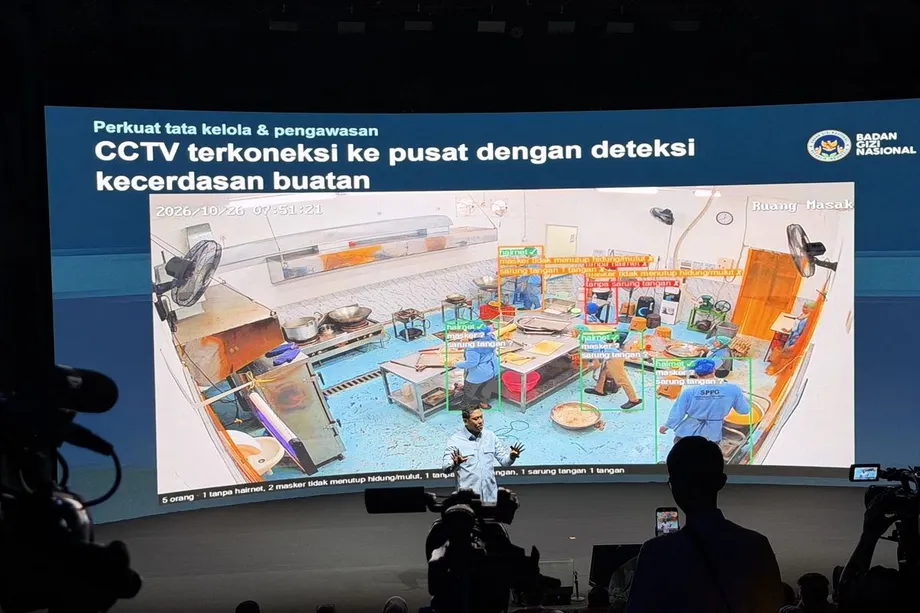
The Ministry of Health attributed the incidents to bacterial and viral contamination associated with poor kitchen sanitation. Health Minister Budi Gunadi Sadikin identified unsanitary kitchens among the causes. For a central kitchen system, the risk extends beyond cooking itself: food must be prepared in clean conditions, packed, transported and served while it remains safe. The August 2026 instruction setting a four hour limit between cooking and consumption addressed that final stretch of the process.
President Prabowo defended the programme on 5 May and suggested that students eating with their bare hands might contribute to illness, while also saying that standard operating procedures had been tightened. On 15 October, he acknowledged flaws and cited a food poisoning incident rate of 0.0007 percent. The absolute counts show why kitchen managers and parents were still concerned: even a small rate across an enormous meal service can mean thousands of sick children.
Protests forced food safety onto the national agenda
The Center for Indonesia's Strategic Development Initiatives and the Network for Education Watch, known as CISDI and JPPI, urged a temporary suspension of the programme after hundreds of students contracted food poisoning. At the time, they described it as an IDR 171 trillion programme, about US$10 billion. JPPI's head called the outbreaks a systematic failure during a parliamentary hearing.
Public anger also moved into the streets. On 27 September, hundreds of concerned mothers gathered in Sleman and made noise with kitchenware to protest the number of poisoning cases. Mothers staged a similar demonstration at Monas in Jakarta, near the State Palace, carrying posters with satirical comments about MBG. Their protests turned kitchen sanitation and children's confidence in school food into national political issues.
Zulkifli Hasan, the Coordinating Minister for Human Development and Culture, said the government was giving very serious attention to the programme and that its success would help determine the success of Prabowo's administration. He said the president had formed a coordination team involving 13 ministries and government agencies. The team was to meet daily at the Coordinating Ministry for Food Affairs to monitor and evaluate MBG.
Habiburokhman, chairperson of House Commission III, compared the logistical task with coordinating a national celebration every day. He also defended the programme in these words:
Every program is bound to have issues.
West Java Governor Dedi Mulyadi responded more directly to local illnesses, suspending MBG in four affected areas after hundreds of people fell sick in West Bandung and Sukabumi. He said the government needed to evaluate the programme and address trauma among students who had become ill after eating the meals.
Why rice reserves and fortification are only part of the job
Indonesia's rice supply illustrates the difference between having food and delivering good nutrition. The country recorded record rice reserves of 5,000,198 tons on 23 April 2026, almost twice the previous record of 2.6 million tons set in 1984. The state logistics agency Bulog holds the reserve as an emergency buffer and a source of rice for social assistance. The milestone followed heavy imports of approximately 7 million tons during 2023 and 2024, costing roughly Rp 100 trillion, and came as Prabowo pursued zero rice imports for 2026.
Storage and prices exposed the remaining difficulties. Bulog's roughly 3 million tons of owned warehouse capacity was well below the reserve total, another 2 million tons of rented capacity was already full, and the agency planned to rent space for a further 1 million tons. Consumer rice prices had reached records during 2025 despite rising production, prompting releases from government stocks and investigations into milling companies.
WFP's fortified rice work therefore deals with more than the nutrient content of a grain. A costing study can show what fortification adds to the bill, while cooperative preparation and supply continuity determine whether enriched rice can keep reaching kitchens without interruption. Large reserves provide raw material, but safe school meals still depend on storage, transport, kitchen hygiene and timely service.
Drought planning moves before the rains fail
WFP's second major area of work is Anticipatory Action, which means taking agreed steps after a forecast or warning but before a disaster has caused its worst losses. In Indonesia, the approach is called Aksi Merespon Peringatan Dini (AMPD), or Early Warning Response Action. WFP supported work on the National AMPD Strategy and Guideline so that preparation could become part of regular government practice at national and local levels.
Gunungkidul district put its drought protocol into operation and obtained legal clearance for a draft regulation governing its financing. Harmonization was still pending, meaning that the draft needed to be aligned with other legal and administrative requirements. No date was given for that process or for the regulation to take effect. A financing rule matters because a warning can trigger little practical help if officials have no authorized way to pay for the response.
East Nusa Tenggara (NTT) provided another test. WFP and its partners assessed readiness in six priority districts, supported guidance for protocols, began collaboration on forecasting and started village training for drought preparedness. The brief did not name the six districts. The combined work connects forecasts to local decisions and village capacity, giving communities an opportunity to act before drought damages crops and reduces food availability.
The economic and nutrition pressures behind the policy
Indonesia entered this expansion with annual gross national income of USD 5,120 per person, according to World Bank figures for 2025, and with considerable progress against hunger. Undernourishment, the share of people unable to obtain enough dietary energy regularly, fell from 7.2 percent in 2024 to 6.3 percent in 2025. Indonesia ranked 70th among 123 countries in the 2025 Global Hunger Index.
National averages coexist with sharp local needs. The 2025 Food Security and Vulnerability Atlas identified 62 of Indonesia's 514 districts and municipalities as vulnerable to food insecurity, roughly one in eight. That helps explain BGN's emphasis on geography and stunting rather than treating every new kitchen or recipient group as identical.
Economic conditions add another constraint. Gross domestic product grew by 5.29 percent in the second quarter of 2026 compared with the same period a year earlier, while inflation had reached 4.76 percent by February 2026. Prices remained under pressure, especially for volatile food commodities. At the same time, ongoing El Niño conditions raised the risk of drought, threatening agricultural production and food availability. El Niño is a climate pattern involving unusual warming in the Pacific Ocean that can contribute to drier conditions in Indonesia.
The disaster figures show the scale of that exposure. Indonesia experienced about 4,727 environmental and extreme weather disasters in 2025, 36 percent more than in 2024. Most resulted from climate anomalies, and more than 12 million people were affected. School meals, fortified rice and drought preparation consequently share a practical purpose: protecting nutrition before rising prices, failed harvests or unsafe delivery interrupt access to food.
Key dates in the programme
The national meals programme has developed through rapid expansion, emergency corrections and parallel work on nutrition and climate preparedness.
- 1991: School feeding pilots began, expanding to more than 2 million students by 1996 before the Asian financial crisis largely halted them.
- August 2024: BGN was established to manage the new national programme.
- 6 January 2025: MBG launched nationwide after pilots in cities including Tangerang and Sukabumi.
- 2025: Repeated food poisoning outbreaks prompted protests, suspension demands and daily government monitoring.
- March 2026: The government announced a reduction in scale because of fiscal efficiency concerns after the fuel crisis.
- August 2026: Authorities instructed that meals be consumed within four hours of cooking.
- September 2026: WFP reported agreement on the fortified rice costing approach and progress on drought protocols and financing.
- 20 November 2026: BGN said MBG had reached about 58 million people and was targeting 77 to 78 million.
- 2029: The government's stated ambition is to reach 82.9 million beneficiaries.
What to Know
- BGN reported about 58 million MBG recipients in November 2026, with roughly 20 million more needed to reach its immediate target.
- Underdeveloped, frontier and outermost areas, along with districts with high stunting, are intended to receive priority.
- Food poisoning counts rose from 6,452 affected children by late September to a later tally of 16,109 pupils on 31 October.
- The government responded with tighter procedures, daily monitoring involving 13 institutions, local suspensions and a four hour limit for consuming cooked meals.
- WFP secured agreement on how to cost fortified rice and supported cooperative readiness, targeting and learning with Brazil and other partners.
- Gunungkidul activated its drought protocol, while NTT began district assessments, forecasting cooperation and village preparedness training.