Test results behind the withdrawals
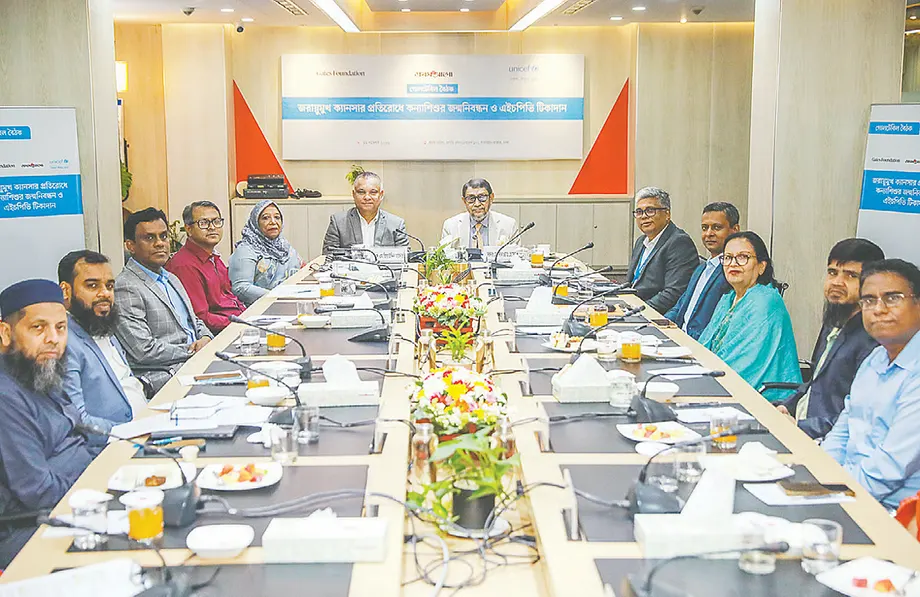
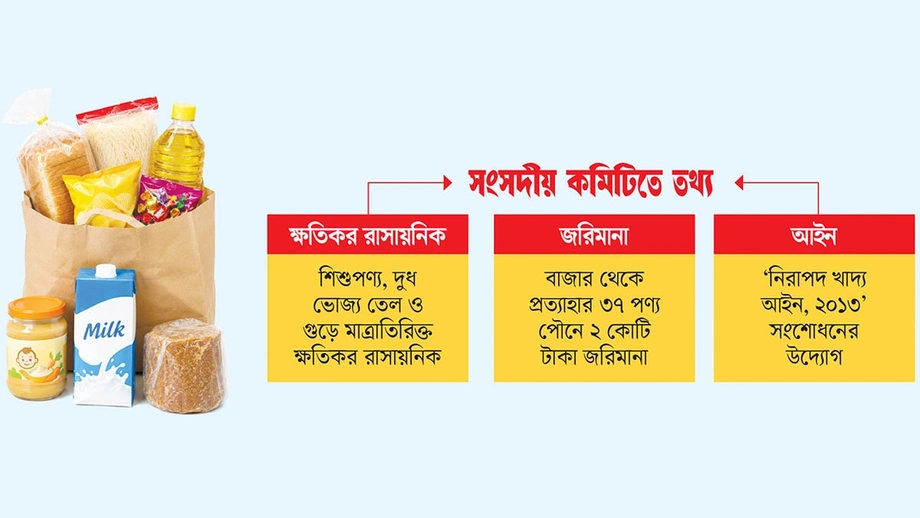
Bangladesh food safety officials flagged 6,928 of 25,521 samples tested between February and October 2026, meaning about 27 percent fell outside specified limits. The Bangladesh Food Safety Authority presented the figures on Tuesday to the parliamentary standing committee on the Ministry of Food, meeting at the Jatiya Sangsad Bhaban in Dhaka.
Contents
- Test results behind the withdrawals
- Why thousands of irregular results led to 37 withdrawals
- How a recall reaches shop shelves
- Raids, fines and the limits of testing
- Milk and baby food allegations in Pabna
- Death penalty debate exposes limits of current law
- Fines, closures and rewards in the amendment package
- Laboratory expansion and the next decisions
- What to Know
The Ministry of Food also reported that 37 low quality or risky products had been withdrawn from the market during the current 2026 to 2027 fiscal year. The findings have prompted proposals for larger fines, wider powers to close businesses and a ministerial suggestion that the death penalty be added to the main food safety law for the gravest adulteration cases.
Three kinds of laboratories produced the combined testing figure. Their results were:
- Government recognised laboratories tested 1,617 samples. While 999 were within approved limits, 618 fell outside them, a rate of 38.21 percent.
- Mini laboratories conducted rapid tests on 14,225 samples and found 5,409 outside the prescribed limits, approximately 38 percent.
- Mobile laboratories tested 9,679 samples and identified 901 with excessive ingredients or adulteration, a rate of about 9.3 percent.
The combined figures leave 18,593 samples within the approved limits. They also show a considerable difference between the mobile laboratory rate and the rates recorded by the other two testing settings. The committee report did not provide a breakdown by food category, location, brand or contaminant that would explain that difference.
Why thousands of irregular results led to 37 withdrawals
The withdrawn products include edible oil, bread, cake, gur or molasses, chanachur savoury snack mix, pickles, kewra water, rose water, baby food, semai or vermicelli, chocolate, beverages and powdered milk. These are product types rather than a public list of 37 brands.
Shafiqul Islam, chairman of the Bangladesh Food Safety Authority, said every irregular result does not lead to the same enforcement action. Officials consider the level of contamination, how many people use the product and the group for which it is intended. Food for children and older people receives particular attention, while a product distributed across the country presents a different scale of exposure from one sold in small quantities locally.
Speaking after the meeting, Shafiqul explained the varying contamination levels in his own words.
Contamination exists at different levels. In some places it is low, in others it is high.
Depending on that assessment, the authority can order a withdrawal or destruction, warn or fine the business concerned, and bring a regular criminal case in serious instances. This explains why the number of withdrawals is far smaller than the number of samples flagged, although the ministry report did not give an action by action account of the remaining cases.
Section 43 of the Safe Food Act, 2013 already places a duty on a producer or seller that has reasonable grounds to believe its food is substandard or contains harmful ingredients. The business must inform the public, arrange withdrawal from the market and notify the authority. The same section empowers the authority to order the withdrawal of food it considers risky.
How a recall reaches shop shelves
A company commonly manufactures the same product in different batches at different times. When testing identifies a problem, Shafiqul said, officials identify the affected batch instead of automatically withdrawing every item sold under the brand.
The authority first writes to the company. Copies of the instruction then go to its 72 local offices, whose staff monitor whether the product is being removed from shops. Some products are destroyed as part of the process. For consumers, the batch number printed on a packet is therefore central: a recall directed at one production run does not cover every packet carrying the same brand name.
Asked how withdrawal information is made public, the chairman described the authority website as one channel.
We often put these on our website.
The report presented to the committee did not identify the 37 withdrawals by brand or batch, state the quantities recovered or give individual withdrawal dates. Without those details, a shopper cannot match the broad categories in the ministry list to a particular packet on a shelf.
Raids, fines and the limits of testing
Food producers faced 143 mobile court operations between February and October, according to the ministry report. Those operations produced 137 cases, fines totalling Tk 19,590,000 and prison sentences for seven people. The fine total is nearly Tk 20 million.
A mobile court allows an executive magistrate and accompanying officials to inspect premises and conduct summary legal proceedings rather than waiting for a conventional court case. During the food operations, officials seized and destroyed products whose samples fell outside prescribed limits. Producers and restaurants also received warning notices.
Joint operations addressed pesticide and chemical residues in fruit and other food. Participants included the Directorate of National Consumer Rights Protection, the departments responsible for livestock and fisheries, the Bangladesh Standards and Testing Institution and city corporations.
Shafiqul acknowledged that large numbers of products remain outside the testing net. Thousands of kinds of food are sold in Bangladesh, and his authority is not the only body taking samples. The standards institution and government agencies covering agriculture, fisheries and livestock also conduct tests within their own areas. The figures presented to Parliament consequently describe the samples selected by these testing systems, not every product available in the market.
Milk and baby food allegations in Pabna
The second committee meeting followed a tense first session on 15 October. Abu Taleb Mondal, the Jamaat-e-Islami member of Parliament for Pabna 4, alleged that harmful chemicals were being mixed into baby food and milk in Baghabari, Santhia, Shahjadpur and other areas.
Mondal told the committee that adulterated milk made with harmful chemical mixtures was taking the place of genuine milk in some areas, creating dangers for children and public health. He described food adulteration as a major national problem and voiced concern about cancer. These allegations helped turn the committee discussion toward conditions at production sites as well as products already in shops.
Shamsunnahar Begum, a Jamaat-e-Islami member holding a reserved seat for women, recommended stronger supervision at the point of production alongside market raids. She called for strict punishment of people producing and selling adulterated food and cancellation of licences held by the businesses involved. Other members, including Abul Kalam, also expressed anger over the allegations.
State Minister for Food Md Abdul Bari promised stronger action against adulteration. The first meeting recommended mobile courts at production sites, more laboratory activity and continued market monitoring. Tuesday's report on tests, seizures and prosecutions was presented as an account of subsequent enforcement.
Death penalty debate exposes limits of current law
Food Minister Afroza Khanam Rita told Tuesday's meeting that the Safe Food Act should be made stricter and include the death penalty if necessary to stop adulteration. Her suggestion came alongside a broader Ministry of Food amendment package.
Shafiqul said the existing Safe Food Act provides a maximum prison sentence of five years, so adding a more severe punishment would require amending the law.
This law does not allow imprisonment for more than five years.
A separate law already contains much heavier penalties. Section 25(Ga) of the Special Powers Act, 1974 provides for capital punishment when food or drink intended for sale is adulterated in a way that makes it harmful to health. It also covers knowingly selling such food, with possible sentences of death, life imprisonment or up to 14 years of rigorous imprisonment. Rigorous imprisonment can include hard labour.
Shafiqul said adding capital punishment to the Safe Food Act would require a new section and a government decision. He also raised the question of which courts could impose a harsher sentence. Executive magistrates conducting mobile courts can imprison someone for no more than two years, while food court judges also have sentencing limits.
His suggested options included establishing a special tribunal or giving higher courts at district level jurisdiction over such cases. In practical terms, a new maximum sentence would need courts legally empowered to use it.
Fines, closures and rewards in the amendment package
The Ministry of Food has proposed an administrative fine of up to Tk 1 million when a consumer complaint or an authority inspection reveals a serious irregularity. Section 78 of the existing law allows a maximum administrative fine of Tk 300,000, under specified conditions, for failure to comply with an authority direction.
A complainant would receive 25 percent of an administrative fine collected under the proposal. At the maximum Tk 1 million penalty, that reward would be Tk 250,000. Section 62 already allows a complainant to receive 25 percent of a fine imposed by a court, except when the complainant is an officer or employee of the food safety authority. The new proposal would extend the reward principle to money collected administratively.
Other proposals would alter enforcement across the food business:
- The authority could restrict or close a business, or impose both measures, following repeated convictions, failure to correct irregularities within a stipulated period after official notices, or activity posing an immediate threat to public health.
- Officials could seize adulterated, expired, substandard or otherwise harmful food, as well as products whose packaging deliberately supplies misleading information.
- The law would expressly cover production, imports, exports, processing, storage, supply, marketing and sales. Food business registration and licensing, laboratory accreditation, registration of institutions that verify food safety and monitoring according to risk are also included.
- Minimum jail terms and minimum fines would be removed for certain offences while their maximum limits would remain. This would give courts greater discretion at the lower end of sentencing.
- The Pure Food Court would be renamed the Safe Food Court. Membership of the food safety authority would increase from four to six, while fees, charges, rents and fines would be added to its revenue sources.
Rita urged everyone involved in the food system to take greater responsibility for giving consumers safe, good quality and unadulterated food. The amendment package remains a proposal. No date was given for introducing a bill in Parliament or holding a vote.
Laboratory expansion and the next decisions
Three large laboratories are planned for Dhaka, Chattogram and Khulna to increase testing capacity. Abdul Bari has also described initiatives to establish smaller laboratories at district level and put mobile laboratory vehicles into service.
Imported food would face mandatory testing and require clearance before entering the domestic market under another planned measure. The ministry did not give dates for opening the new laboratories, deploying the vehicles or starting the import clearance system.
The committee discussion also reached farm prices. Rita called for the government to buy paddy directly from farmers so that intermediaries could not deny them a fair return. Committee chairman Md Abdus Salam Pintu directed officials to deal firmly with any syndicates or irregularities at local level and stressed protection of the rights and fair interests of both farmers and consumers.
The main developments leading to the latest proposals were:
- February 2026: The nine month testing and enforcement period covered by the report began.
- 15 October 2026: The committee's first meeting heard allegations about milk and baby food in Pabna and recommended stronger action at production sites.
- End of October 2026: The reported testing total reached 25,521 samples, while mobile court operations at food factories reached 143.
- November 2026: The second meeting received the test results, heard that 37 products had been withdrawn in the current fiscal year and considered the proposed legal changes.
What to Know
- Tests on 25,521 food samples between February and October found 6,928 outside specified limits, about 27 percent.
- Government recognised and mini laboratories each recorded irregularities in roughly 38 percent of their samples, compared with 9.3 percent in mobile laboratories.
- Thirty seven products were withdrawn in the current fiscal year, including baby food, powdered milk, edible oil, bread, cake and beverages.
- Withdrawals generally target identified batches and are monitored through 72 local offices of the food safety authority.
- Officials conducted 143 mobile court operations, filed 137 cases, imposed Tk 19,590,000 in fines and secured prison sentences for seven people.
- The Safe Food Act currently carries a maximum prison term of five years, although the Special Powers Act separately allows much heavier penalties for harmful adulteration.
- Proposed amendments include administrative fines of up to Tk 1 million, rewards for complainants, business closure powers and wider authority over the food supply chain.
- New laboratories and mandatory clearance for imported food are planned, but no implementation dates were announced.