A vaccination result, and a wider cancer plan
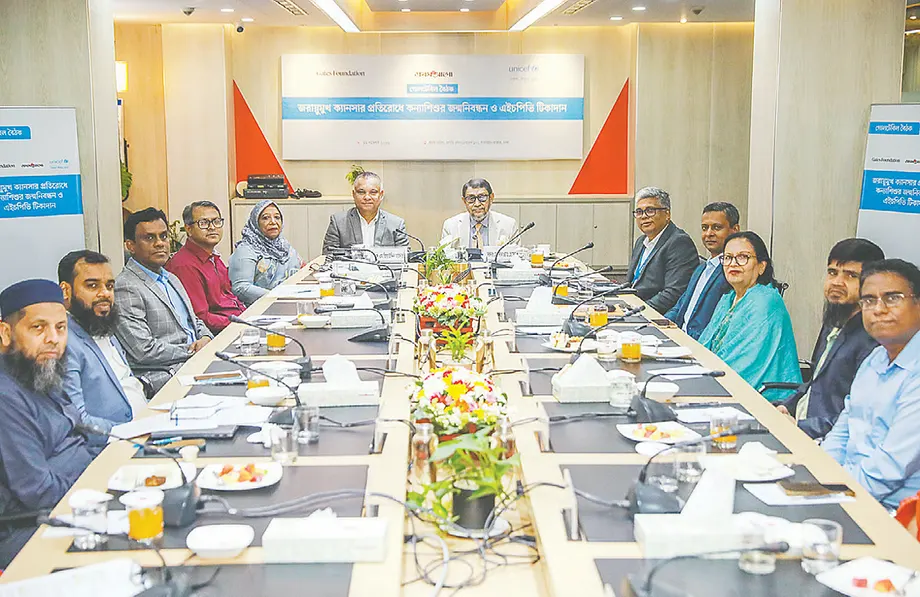
Bangladesh is giving the human papillomavirus vaccine to girls aged 10 through its Expanded Programme on Immunization, Health Minister Sardar Md Sakhawat Hossain said, while announcing a broader effort to find and treat cervical cancer. The plan includes HPV DNA testing at hospitals at the upazila level, recruitment of skilled staff and supplies of testing equipment. An upazila is an administrative subdistrict, so the intended change would bring services closer to women than central hospitals can.
Contents
- A vaccination result, and a wider cancer plan
- How 5.6 million girls were reached
- Why vaccination cannot replace screening
- What 17 machines and cancer corners would change
- Sylhet sets a December target
- What a screening pilot involving 19,000 women adds
- Why birth records matter to vaccination
- Trust must reach beyond the school gate
- Key Points
Speaking at a Dhaka roundtable held on Thursday, Sakhawat Hossain said the government had achieved nearly 90% of its HPV vaccination target and needed to sustain that performance. UNICEF health manager Riad Mahmud gave the result an international context: 164 countries now administer the vaccine, and Bangladesh is among 16 countries that have reached 90% coverage. The Expanded Programme on Immunization, commonly called EPI, is the public system that delivers routine vaccines to children across Bangladesh.
Riad also connected vaccination to a national target of eliminating cervical cancer by 2030. His explanation came with a practical condition. Girls need protection before they are exposed to the virus, while women beyond the vaccination age need screening and treatment. Vaccinating children alone cannot find abnormal cells or cancer that may already be developing in an adult woman.
UNICEF organised the roundtable with support from the Gates Foundation. Its discussion joined subjects that are often handled separately: birth registration, school vaccination, public understanding of cancer, laboratory testing and hospital treatment. The resulting picture is of a programme whose next challenge is not simply obtaining more doses, but making each part of cervical cancer prevention work for the same families.
How 5.6 million girls were reached
The routine service grew from a phased introductory campaign supported by Gavi, the Vaccine Alliance, UNICEF and the World Health Organization. The UN launch announcement set out the campaign's main stages.
- October 2023: More than 1.5 million girls in Dhaka division received a single dose during the first phase.
- 24 October 2024: The final phase opened in Barishal, Chattogram, Khulna, Mymensingh, Rajshahi, Sylhet and Rangpur. It aimed to protect 6.2 million girls aged 10 to 14, including pupils in classes V to IX and girls outside educational institutions.
- December 2024: Early government data indicated that 93% of eligible girls had been vaccinated.
- After the campaign: The vaccine entered routine delivery for girls in class V and for girls aged 10 who were outside the education system.
Gavi's campaign review later said the phased introduction had protected 5.6 million girls. That was a completed total, while the 6.2 million figure announced at the final launch was a target. Gavi supported the procurement of 6.2 million doses in 2024. Vaccination was free after registration through the VaxEPI app or its dedicated website, with sessions generally running from 8:00 AM to 3:30 PM except on weekends and public holidays.
M A Akmall Hossain Azad, then Senior Secretary of the Health Service Division, explained the purpose of the single dose schedule at the launch.
A single dose of HPV vaccine will prevent cervical cancer, protect women's health and help to build a healthy nation.
Local experience showed why counselling mattered. Health assistant Kazi Sumon Mahmud said families in Sujanagar, Pabna, initially hesitated because of religious misconceptions and fear of side effects, but turnout rose after health workers counselled girls and guardians. Md Ali Mazrui Rahman, the area's health and family planning officer, subsequently reported 99% coverage.
Tayba Sayeda, a class IX student in Pabna, also described initial anxiety before deciding that the vaccine offered valuable protection. Her mother, Shamsunnahar Khatun, an assistant teacher, welcomed the free service.
We are happy that the government has provided the vaccine for our girls free of cost. Now we are tension free that our girls are protected from the HPV by taking the vaccine.
Why vaccination cannot replace screening
Riad told the roundtable that about 9,000 Bangladeshi women develop cervical cancer and 5,000 die from it each year. Gavi's review, using figures for 2023, gave an annual count of 8,300 diagnoses and 4,900 deaths. Both accounts describe a heavy burden from a disease that Gavi identifies as Bangladesh's second most common cancer in women.
The cervix is the lower part of the uterus. Persistent infection with high risk types of HPV causes 95% of cervical cancer cases, according to Gavi. HPV infection itself is common, and most infections clear without causing cancer. Danger arises when certain infections remain in the body long enough to change cells. Vaccination prepares the immune system before exposure, which is why medical guidance commonly recommends it for girls aged 9 to 14. Bangladesh's EPI service currently focuses on girls aged 10.
Studies cited at the United Nations launch found an almost 90% reduction in cervical cancer among girls who received the HPV vaccine. Protection still does not cover every viral type that can cause the disease. Screening therefore remains necessary for vaccinated women as well as those who never received the vaccine.
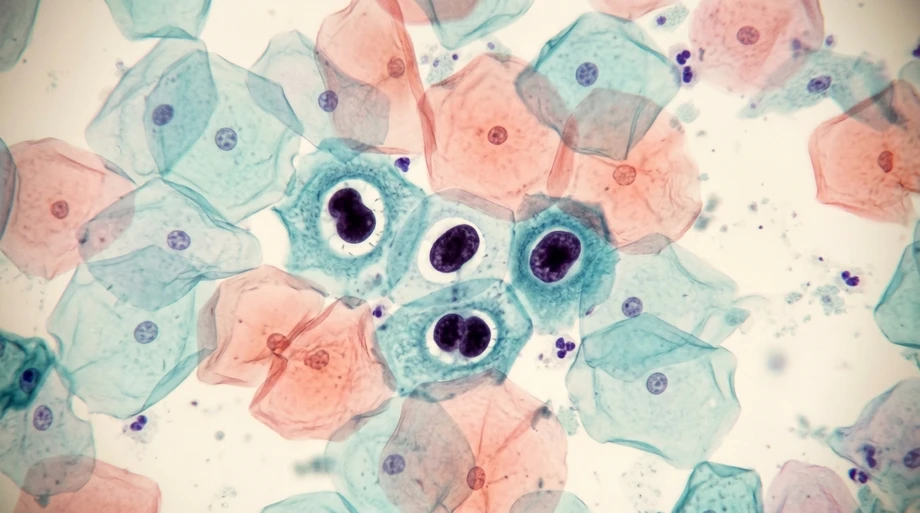
Two tests have different roles. An HPV DNA test looks for genetic material from high risk virus types, while a Pap smear examines cervical cells for abnormal changes. Early cancer and changes that precede cancer can produce no noticeable symptoms. When symptoms do appear, medical guidance identifies several warning signs that deserve prompt assessment:
- Vaginal bleeding after sexual intercourse, between menstrual periods or after menopause.
- Persistent vaginal discharge, especially if it has an unusual smell.
- Continuing pain in the lower abdomen, pelvis or lower back, or pain during sexual intercourse.
- Weight loss without an explanation or swelling of the legs.
These changes can have other causes, but waiting without seeking medical advice can lose valuable time. Surgery, radiotherapy and chemotherapy can be used according to the stage of disease, and detection at an early stage improves the opportunity for successful treatment.
What 17 machines and cancer corners would change
Sakhawat Hossain said 17 new linear accelerator radiotherapy machines would be installed across Bangladesh. These machines direct carefully controlled radiation at tumours. Their value will depend on trained people to operate them, and the minister called for the necessary recruitment alongside a larger allocation for health. No installation timetable or district breakdown was announced at the roundtable.
SM Ziauddin Haider, the prime minister's special assistant for health, described a connected service for cervical and breast cancer. Every upazila health complex is to have a special cancer corner, with stronger detection arrangements in primary and secondary care. District and medical college hospitals are expected to expand treatment capacity. The government is investing in the initiative and seeking money from development partners.
For a patient, the intended pathway is easier to understand as a sequence: a woman could receive an initial assessment closer to home, undergo testing to identify viral infection or abnormal cells, and be referred to a hospital with suitable treatment facilities. Ziauddin Haider also called for monitoring the quality of every vaccine, including HPV, so that storage and handling maintain its effectiveness.
Sylhet sets a December target
Sylhet City Corporation has a more immediate numerical goal: free vaccination for 7,000 girls aged 10 by December 2026. The single doses are to be delivered through a special EPI campaign. Officials announced the plan at a workshop at Sylhet Medical University, chaired by Sylhet health division director Dr Mahbubul Alam, with a keynote presentation from Dr Zahidul Islam, the city corporation's chief health officer.
Professor Dr Ziaur Rahman Chowdhury, the university's vice chancellor, said the Sylhet region lagged in nearly every health indicator, including maternal mortality, child mortality and malnutrition. He urged organisers to include every educational institution and suggested using paediatric and gynaecology specialists to support acceptance. Officials did not announce how many of the 7,000 girls had already received their doses.
What a screening pilot involving 19,000 women adds
A separate discussion at the Bangladesh International Cancer Congress 2026 supplied evidence about screening at scale. Its presidential symposium brought together participants from Bangladesh, India, Nepal and Pakistan two days after World Cervical Cancer Elimination Day. First Lady Dr Zubaida Rahman and State Minister of Health Dr M A Muhit gave remarks during the session.
Lacy Hubbard, founding president and chief executive of the Elekta Foundation, said a pilot in Bangladesh had screened 19,000 women for HPV in four months. She described it as the country's largest screening programme based on HPV testing. The figure concerns women screened, rather than confirmed cases, and demonstrates how quickly testing can be organised when staff, equipment and referral systems are available.
Hubbard contrasted that early experience with Rwanda. Four years after Rwanda's Ministry of Health invited the foundation to support national screening, half of that country had reached the World Health Organization's 70% screening target. She drew a direct lesson for Bangladesh.
Bangladesh has a real opportunity to build on this momentum.
The pilot offers operational experience for the 2030 elimination goal, but Hubbard did not announce a budget or timetable for turning it into a national service. That leaves the planned upazila testing network and the government's cancer corners as important details to watch.
Why birth records matter to vaccination
Digital registration already connects millions of children to health services. Health workers used VaxEPI to register recipients in three EPI campaigns, including HPV and typhoid vaccination. More than 20 million children and adolescents have received digital health ID cards using numbers from their birth registration certificates.
Md Mehedi Hasan, assistant registrar general for birth and death registration at the Local Government Division, identified weaknesses that can affect this system. Some parents do not register a birth unless compelled, while others understate a child's age. A girl whose recorded age is wrong could be missed when health workers identify children eligible at age 10. He called for greater public awareness rather than treating registration as paperwork with no practical consequence.
SM Moazzem Hossain, director of CHIPS at Independent University, cautioned that higher birth registration would not automatically produce higher vaccination coverage. He cited Iraq's three legal connections: a birth certificate is required for BCG vaccination, the relevant records are required for school admission, and parents can face court action if they fail to enrol a child in school. He presented Iraq as an example of linking services; the roundtable did not announce equivalent legislation for Bangladesh.
The practical lesson is that a certificate, a digital ID and a vaccination record can help health workers find a child, but families still need an accessible session and clear information. Girls outside school require community registration and local vaccination arrangements rather than reliance on a classroom list.
Trust must reach beyond the school gate
Firdausi Qadri, a senior scientist at icddr,b, said rumours about HPV vaccination had been less widespread than rumours about some other vaccines because mothers were relatively aware of its purpose. She urged organisers to ensure that no girl was missed, including in the hill tracts. Professor Firoza Begum, president of the Obstetrical and Gynaecological Society of Bangladesh, said gynaecologists could counsel mothers who already visit them. She identified a persistent misconception that vaccination could prevent a woman from having children later. There is no reliable scientific evidence that HPV vaccination causes infertility.
Adolescent representative Avantika Karmakar revealed a different communication gap. She received the vaccine at school but knew little about cervical cancer, and said a teacher told her she would understand when she was older. Islamic Foundation director Shahana Afroz argued that vaccinators should first explain the uterus and cancer in simple language to the child receiving the dose. She also said trained imams could support awareness through Friday sermons and other community work.
The 2024 campaign already recognised that schools alone were insufficient. Its plans included girls in informal and religious education, girls living on the streets and those outside education, with more female teachers in Qawmi madrasas and English medium schools and additional health workers in communities where registration was difficult.
A regional comparison shows the size of that task. The Khyber Pakhtunkhwa campaign targeted 2.9 million girls aged 9 to 14 in November 2026, including 1.3 million outside school, about 45% of its total. India's vaccination drive passed 8 million vaccinations by 11 September 2026, yet Delhi had reached about 20% of its target group by 12 October while Rajasthan had reached 71.8% by 17 October. For Bangladesh, these figures reinforce the value of checking coverage community by community, particularly where poverty, distance or school attendance can hide eligible girls from a national tally.
Key Points
- Bangladesh routinely offers HPV vaccination to girls aged 10, with the health minister reporting nearly 90% achievement of the programme target.
- The introductory campaign protected 5.6 million girls, and early government data put coverage of eligible girls at 93% in December 2024.
- UNICEF's Riad Mahmud cited about 9,000 new cervical cancer cases and 5,000 deaths annually; Gavi's 2023 figures were 8,300 diagnoses and 4,900 deaths.
- Planned measures include HPV DNA testing at upazila hospitals, cancer corners, stronger district treatment services and 17 new radiotherapy machines.
- Sylhet City Corporation aims to vaccinate 7,000 girls aged 10 by December 2026.
- A pilot screened 19,000 women for HPV in four months, but no budget or timetable for national expansion was announced.
- Birth records, accurate ages, counselling and screening remain essential to the target of eliminating cervical cancer by 2030.