Latest count adds seven deaths in 24 hours
DHAKA, 27 November 2026: The Directorate General of Health Services (DGHS) recorded seven more deaths from measles symptoms in the 24 hours to 8am on Friday, taking the combined total of confirmed and suspected measles deaths to 1,378 since March 15. The DGHS classified all seven latest deaths as suspected measles deaths. Three were in Dhaka division, three in Sylhet division and one in Khulna division, according to the Health Emergency Operation Centre bulletin dated 27 November 2026. It covers 8am on 26 November to 8am on 27 November 2026 and says today's report had not yet been published; the latest data source was 2026-11-27. No death from confirmed measles was recorded in that period.
Contents
- Latest count adds seven deaths in 24 hours
- How the outbreak grew from April warnings to November
- Why young children carry most of the burden
- How measles moves and what families should notice
- Vaccination gaps built the pool of susceptible children
- The response reached millions, but children were still missed
- Crowded settlements and refugee camps need close attention
- Reading the daily categories clearly
- Why India and neighbouring countries are watching
- Accountability and earlier warnings
- What families and hospitals can do as cases continue
- Key Points
The cumulative toll is made up of 1,272 suspected deaths and 106 confirmed deaths. Suspected cases are people with symptoms that fit measles, such as fever and rash, while confirmed cases have laboratory support. Bangladesh does not test every patient during a large outbreak, so the daily total combines two ways of recording illness. A case fatality ratio, used in early WHO figures, is the share of reported cases that ended in death.
The same 24 hours brought 1,273 new suspected cases and 78 newly confirmed cases, a combined 1,351. Nationwide totals since March 15 reached 262,808 suspected cases and 26,554 confirmed cases. Hospitals admitted 1,202 suspected measles patients and discharged 1,172 in the period, leaving cumulative figures of 235,482 admitted and 226,440 recovered.
Compared with the 26 November update, the death total rose by seven, suspected cases by 1,273, confirmed cases by 78, admissions by 1,202 and recoveries by 1,172. The 26 November figures were 1,371 deaths, 261,535 suspected cases, 26,476 confirmed cases, 234,280 admissions and 225,268 recoveries.
How the outbreak grew from April warnings to November
The WHO outbreak notice, published on 23 April 2026, says Bangladesh's National International Health Regulations focal point, the country's official contact for WHO alerts, notified the agency on 4 April. By 14 April, WHO had recorded 19,161 suspected cases, 166 deaths related to measles with a case fatality ratio of 0.9%, and 30 confirmed deaths with a ratio of 1.1%.
The detailed section of that notice counted 2,973 cases confirmed by laboratory tests, while its opening summary gave 2,897. WHO reported 12,318 admissions and 9,772 discharges by 14 April. Cases had reached 58 of 64 districts across all eight divisions, meaning 91% of districts were affected at that stage.
The spread was already national in scope. The highest early suspected case totals were in Dhaka with 8,263, Rajshahi with 3,747, Chattogram with 2,514 and Khulna with 1,568. WHO placed many Dhaka cases in Demra, Jatrabari, Kamrangirchar, Korail, Mirpur and Tejgaon, where crowded housing and workshops give the virus many chances to pass between people.
Key dates trace the rise:
- 15 March: The start date used for national case, death and hospital totals.
- 30 March: The National Immunization Technical Advisory Group approved an emergency measles and rubella campaign.
- 4 April: Bangladesh notified WHO.
- 5 April: Vaccination began in 30 upazilas, or subdistricts, of 18 districts.
- 20 April: The campaign expanded nationwide.
- 22 November: The toll reached 1,352, with nine deaths in one day.
- 27 November: The toll reached 1,378.
Why young children carry most of the burden
WHO found that 79% of reported cases were children younger than five, including 66% younger than two and 33% infants younger than nine months. Most early deaths were among unvaccinated children younger than two. The notice also said 91% of cases occurred among children aged one to 14, which it used as evidence of immunity gaps in that group.
The UNICEF Bangladesh measles FAQ, answered by health experts and published on 7 April 2026, said 676 infections had been confirmed and more than 38 children had died by March 2026. It said children younger than five faced special concern, and that unvaccinated adults older than 30 and children with malnutrition also faced higher risk.
Measles can leave the body less able to fight other infections. UNICEF listed pneumonia, severe diarrhoea and dehydration, ear infection and deafness, blindness, and encephalitis, which is swelling of the brain. An analysis of outbreak data found 72% of cases among children who had received no measles vaccine and 16% among children who had received only part of the schedule.
How measles moves and what families should notice
The FAQ says measles is about twice as contagious as COVID-19 and chickenpox, also called varicella. The virus can remain in air or on surfaces for about two hours. That means an infected person can leave a room, and the virus can still be there when someone else enters.
Symptoms usually appear 10 to 14 days after infection. Early signs last about four to seven days and can look like a cold: high fever, cough, runny nose, red or watery eyes, and tiny white spots inside the mouth called Koplik spots. The rash generally appears seven to 18 days after infection. It starts at the face and neck, spreads over about three days and fades after five or six days.
An infected person can spread measles from about four days before the rash until four days after it appears. That is why measles moves quickly through classrooms and clinics before adults know what is happening. There is no specific antiviral cure, so treatment helps the body while it fights the virus and prevents complications.
Parents should seek medical care for a child with fever and rash, keep the child away from well people until a doctor advises otherwise, help the child rest, continue breastfeeding, give fluids and nutritious food, and use oral rehydration salt solution, often called ORS, when diarrhoea or vomiting causes fluid loss. Malnourished children need help from health workers. WHO recommends two doses of vitamin A, given 24 hours apart, for every child with measles; a doctor provides them. Vitamin A lowers the risk of eye damage, blindness and death.
Vaccination gaps built the pool of susceptible children
The IFRC DREF operation update says an evaluation by Bangladesh's Expanded Programme on Immunization, or EPI, in 2023 put national measles and rubella vaccine coverage at 86.1% for the first dose and 80.7% for the second dose. Measles needs about 95% coverage with two doses to stop steady spread, a form of shared protection that leaves the virus fewer chances to find a child.
WHO noted that reported first dose coverage was 89% in 2000 and 118% in 2016, while reported second dose coverage rose from 22% in 2012 to 121% in 2024. Figures above 100% can occur when recorded doses exceed the estimated number of children in the target group. The emergency campaign aimed for 99.25% coverage, but administrative coverage reached 60.57%. Administrative coverage counts doses recorded as given; it is not a survey of children protected.
Low coverage was concentrated in several districts. As of 29 April, the update listed Brahmanbaria at 37.13%, Manikganj at 38.27%, Noakhali at 39.99%, Chattogram District at 41.61%, Faridpur at 46.63%, Habiganj at 47.24% and Joypurhat at 47.24%. The Bangladesh Red Crescent Society was asked to scale up work in those districts.
For years, Bangladesh was viewed as a vaccination success. The BMJ commentary was written by Rubhana Raqib, a senior scientist at icddr,b in Dhaka, and Mahmudur Rahman, a former director of the Institute of Epidemiology, Disease Control and Research. They traced the crisis to the absence of a nationwide measles and rubella campaign since 2020, depleted vaccine stocks, slow approvals, delayed funds and 45% vacant health worker positions in more than half of districts in 2025. A four year cycle was skipped during the interim government that held office from August 2024 to February 2026, and strikes among remaining staff added pressure.
The authors also noted that routine vaccination data were collected from public facilities but not the private sector, a large part of Bangladesh's health system. They said policymakers had not acted early enough on global measles rises in 2024 and the risk of imported cases. They reached a blunt conclusion:
this outbreak was entirely preventable
Campaigns in Bangladesh are generally supported by Gavi, UNICEF and WHO, and the authors said such work should continue during political crises. They also called for stronger disease tracking, research on reaching remote communities, work against vaccine hesitancy and trust building with families.
The response reached millions, but children were still missed
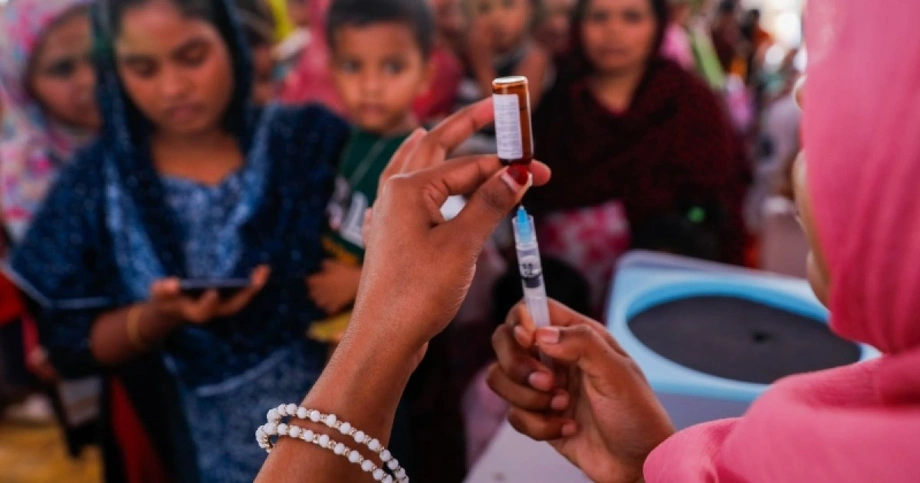
Bangladesh's National Immunization Technical Advisory Group, or NITAG, approved a measles and rubella campaign on 30 March 2026. It started on 5 April in 30 upazilas, or subdistricts, of 18 priority districts and expanded nationwide on 20 April. The first phase targeted 1.3 million children aged six months to younger than five. The nationwide phase targeted 21.9 million children in that age range and included vitamin A supplementation.
WHO says the campaign included children aged six to 59 months, with expanded coverage for six to eight months. The lower age reflects the risk that infants in high transmission settings can be exposed before the routine first dose at nine months. In countries where measles is less common, the first dose is usually given at 12 to 15 months, and the second at 15 to 24 months.
The response activated district rapid response teams, sped up vaccine procurement, prepared hospitals, expanded isolation space, improved infection control, trained health facilities to detect cases and produced weekly situation reports. National and divisional guidelines covered vaccination, clinical care, patient pathways and supplies. Vitamin A was given to suspected and confirmed cases as part of standard care.
The IFRC upgraded its crisis classification from Yellow to Orange on 4 May and requested more funds. With an initial allocation of 500,000 Swiss francs, the Bangladesh Red Crescent Society mobilised more than 1,000 volunteers for household visits, referrals of children who had received no vaccine or too few doses, crowd management, printed materials, loudspeaker announcements and direct talks to counter misinformation.
Crowded settlements and refugee camps need close attention
The same IFRC update says the outbreak had reached the Cox's Bazar Rohingya camps by early May. By 4 May, it recorded 41,793 suspected cases, 5,567 cases confirmed by laboratory tests and 28,842 admissions since March 15. As of 6 May, the camps had recorded 490 suspected cases and four suspected deaths. Tests had been done for 232 patients, with 60 confirmed positive. The virus had spread across 13 camps: 2E, 7, 8E, 9, 10, 11, 15, 16, 17, 18, 21, 24 and 26, in both Ukhiya and Teknaf.
By May, WHO said all 64 districts were affected, including the camps. More than 166,000 young children were vaccinated in the camps during the response. Camp outreach combined vaccination, surveillance and referral because families live close together and children can pass the virus quickly. In Dhaka, WHO identified Demra, Jatrabari, Kamrangirchar, Korail, Mirpur and Tejgaon as early clusters.
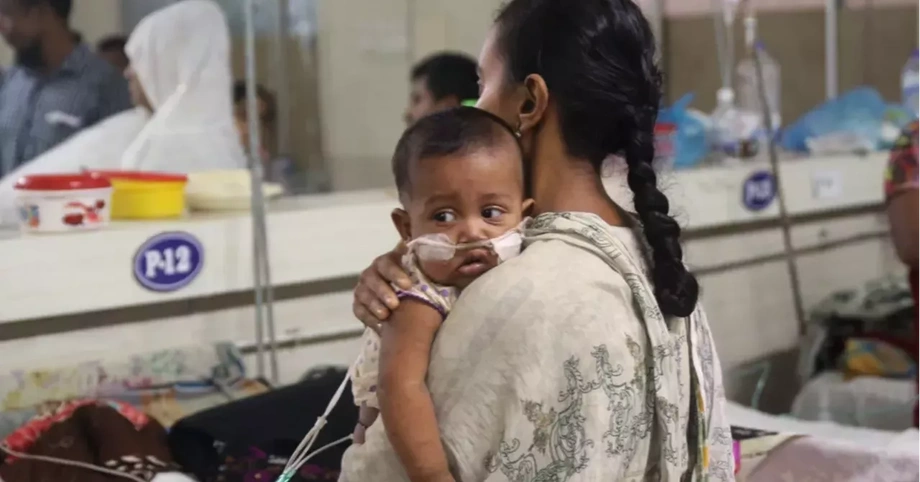
Hospital figures show the continuing load on services. Since March 15, DGHS has recorded 235,482 admissions among suspected measles patients, with 226,440 discharged after recovery. That means about 96% of admitted patients had been discharged by 27 November. The latest 24 hours alone added 1,202 admissions and 1,172 discharges.
Reading the daily categories clearly
The national total of 1,378 combines confirmed and suspected measles deaths. No death from confirmed measles was added in the latest period, so the entire rise of seven was in the suspected category. The suspected death count stood at 1,272, while confirmed deaths remained at 106.
The Health Emergency Operation Centre bulletin listed suspected deaths from 10 April, while cases and confirmed deaths were counted from 15 March. That bulletin gave division totals for suspected deaths: Dhaka 566, Sylhet 231, Chattogram 130, Mymensingh 97, Rajshahi 93, Barishal 71, Khulna 64 and Rangpur 20. Confirmed deaths were listed as Dhaka 69, Barishal 19, Chattogram 10, Sylhet three, Rajshahi three and Mymensingh two.
The latest new suspected cases were recorded in every division: Dhaka 538, Chattogram 196, Sylhet 173, Barishal 144, Mymensingh 86, Khulna 72, Rajshahi 45 and Rangpur 19. The 78 confirmed cases were listed as Sylhet 31, Dhaka 27, Chattogram 10 and Khulna 10.
Some same day figures were presented differently. The official bulletin settles the conflict: it recorded 1,378 deaths, split into 106 confirmed deaths and 1,272 suspected deaths, and cumulative totals of 235,482 admissions and 226,440 recoveries. A tally based on DGHS figures gave 245,482 admissions and about 200,000 recoveries. The toll also appeared as 1,376 deaths with 105 confirmed, but the 27 November bulletin recorded 1,378 deaths with 106 confirmed. The bulletin did not give the ages or vaccination status of the seven children who died.
Why India and neighbouring countries are watching
WHO assesses the national and regional risk as high and the global risk as moderate. It pointed to continuing spread in several divisions, many susceptible children, immunity gaps and suspected measles deaths. Bangladesh shares long land borders with India and Myanmar, and WHO says population movement can carry the virus across them.
WHO named Dhaka, Chattogram, Sylhet and Cox's Bazar as important travel and transit centres. It drew attention to Jashore and Chapainawabganj, busy crossings near the Indian border. Myanmar has many children who have received no vaccine, and conflict and a humanitarian crisis limit surveillance there. India has reported a rise in cases over the previous six months.
WHO and UNICEF estimates put India's 2025 coverage at 98% for the first measles dose and 95% for the second. Those national figures give broad protection, but local pockets of missed doses can still allow imported infections to spread. WHO recommends stronger surveillance at border areas, rapid response teams, vaccination for health workers, transport workers and travellers, and quick checks of contacts.
Contact care after exposure, called prophylaxis, can include a measles vaccine dose within three days, or normal human immunoglobulin within six days for people who cannot receive the vaccine. WHO does not recommend travel or trade restrictions based on the current outbreak.
Accountability and earlier warnings
The toll had reached 1,299 deaths by 12 November, with more than 218,000 admissions since March. Earlier in November, it stood at 1,361 deaths, with 105 confirmed and 1,256 suspected; suspected cases were 259,190. By 20 October, it had reached 1,204 deaths with 215,768 suspected cases. The increase to 1,378 by 27 November added 174 recorded deaths in 38 days.
A vaccine inquiry ordered on 4 November 2026 under the Commission of Inquiry Act, 1956 gave a three-member commission 60 working days from that notification to submit its report. Former High Court Division Justice Mamnoon Rahman chairs it; Prof Dr Mawdud Hossain Alamgir, president of the Bangladesh College of Physicians and Surgeons (BCPS), and ANM Moinul Islam, additional secretary to the Health Services Division, are members. The notification says the commission will identify the liability of those who held responsibility from 8 August 2024 to 17 February 2026; 17 February 2026 is the end of the period under investigation, not the report deadline. Because the report is due within 60 working days of the 4 November 2026 notification, that period ends in 2027. It sets three terms of reference: "identifying the causes and liabilities for delays, irregularities, and administrative failures in measles vaccine procurement and distribution"; "providing recommendations on measures to prevent such untoward occurrences in the future"; and "any other recommendation deemed appropriate by the commission in this regard." No hearing date was given.
An antibody study led by IEDCR in September found that 85 of 309 vaccinated children, or 27.5%, had no detectable measles antibodies. Antibodies are proteins the immune system makes to recognise a virus. Health Minister Sardar Md Sakhawat Hossain said the study was small and a larger investigation was needed before a final conclusion.
What families and hospitals can do as cases continue
Families should make sure children receive both doses of measles vaccine, even during an outbreak. A single dose can leave a child exposed, and the second dose protects many children whose first dose did not produce a strong response. Babies younger than nine months are too young for the routine first dose in countries with a high burden, so people around them need full vaccination to reduce exposure.
Health services need high coverage in every community, not just a national average. WHO recommends at least 95% coverage with both doses in all municipalities, surveillance in public hospitals, private clinics and social security facilities, isolation rooms for suspected cases and rapid investigation of every alert. Bangladesh's current data gap matters: routine vaccination information is collected from public facilities but not from the private sector.
Hospitals are also treating dengue while measles admissions continue. The 26 November DGHS update recorded one dengue death, taking the 2026 dengue toll to 527. It also recorded 1,003 dengue admissions that day, 178,140 admissions this year and 172,752 recoveries. Last year Bangladesh recorded 102,861 dengue infections and 413 deaths, so the 2026 death count was 114 higher by 26 November.
Key Points
- DGHS counted seven more deaths in the 24 hours to 8am on 27 November, all suspected, taking the toll to 1,378.
- Suspected cases reached 262,808 and confirmed cases 26,554 since March 15.
- Vaccine stockouts, routine gaps and no nationwide measles and rubella campaign since 2020 helped the outbreak grow.
- WHO rates national and regional risk high, with border movement linking Bangladesh to India and Myanmar.
- Vaccination, vitamin A, surveillance and hospital isolation are central to the response, but campaign coverage stayed below target.
- The vaccine inquiry has 60 working days from the 4 November 2026 notification to report; 17 February 2026 is the end of the period under investigation.