Heat accounts for most of the estimated economic loss
Bangladesh loses an estimated $20.7 billion a year through climate-sensitive health risks, with heat alone accounting for $15.8 billion in lost working capacity, according to a study by the Knowledge Hub Institute (KHI). The annual burden is equivalent to 4.6 percent of the country's gross domestic product in 2024.
Contents
- Heat accounts for most of the estimated economic loss
- Farmers bear the largest loss of working time
- Hot days have become more frequent
- Warmer weather offers a warning signal for dengue
- Dengue care must reach beyond Dhaka
- Floods and cyclones damage the care people need
- Air pollution adds another major health burden
- Families pay while public allocations go unused
- What needs to happen before the next hot season
- Key Points
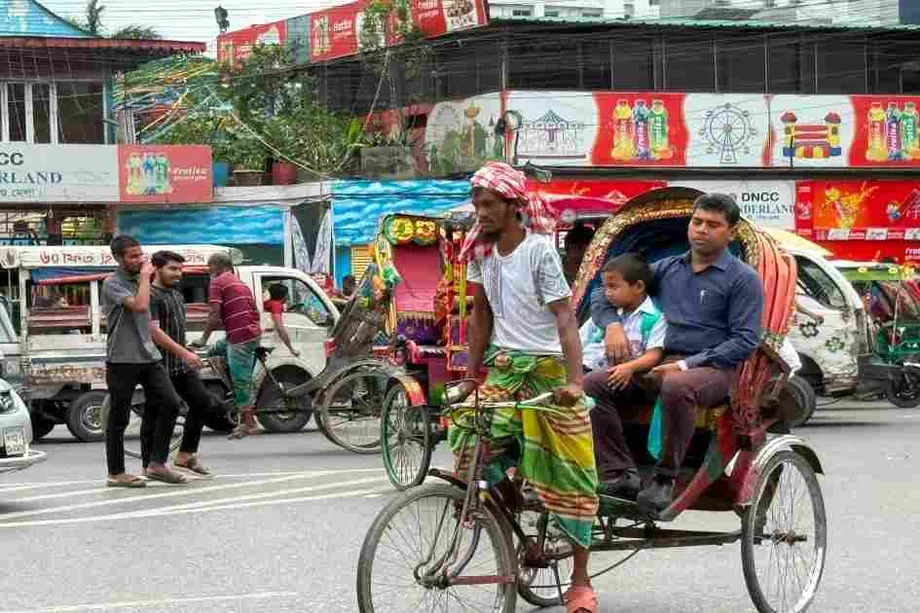
The study, presented at BRAC Centre in Dhaka on October 29, estimates that heat exposure cost Bangladesh 29.3 billion potential working hours in 2024. Agriculture accounted for about 64 percent of those hours, placing farmers and agricultural workers at the centre of a health crisis that also threatens household income.
KHI's report, titled Multi-Dimensional Health Impacts of Climate Change in Bangladesh: Pathways, Costs and Policy Implications, brings together lost working capacity, premature deaths and selected costs of disease. Its $20.7 billion estimate excludes air pollution and the broader costs of illness that does not cause death.
Researchers attributed between $1 billion and $3.3 billion of the annual burden specifically to observed warming. The larger figure measures the burden from health risks that respond to climate conditions, while the smaller range estimates the portion linked to the warming already experienced.
KHI recommends a national heat and health action plan before the 2027 hot season, with initial interventions in 16 highly vulnerable districts. Its findings also point to a financing problem: families paid about 79 percent of current health expenditure in 2023, while the Health Services Division used only 24 percent of its allocation for climate activities in the 2024-25 fiscal year.
Farmers bear the largest loss of working time
Heat accounts for about 76 percent of the study's estimated annual economic burden, based on the $15.8 billion estimate against the $20.7 billion total. This makes protection at work a central part of the proposed health response.
Agriculture's 64 percent share of the 29.3 billion lost potential working hours amounts to roughly 18.8 billion hours. Construction workers and others doing strenuous work outdoors also face substantial exposure.
Potential working hours describe the capacity to work safely and effectively under the conditions being measured. High temperatures can force people to slow down, take longer breaks or stop work. The economic estimate assigns a value to that reduced capacity.
Agricultural workers face a particularly difficult combination: physically demanding tasks, direct sun and work tied to planting and harvesting schedules. When heat reduces the amount of work someone can complete, a health risk can quickly become an income problem.
KHI President Dr Khondaker Golam Moazzem called for guidance tailored to different sectors. Recommendations include access to drinking water and shade, regular rest and changes to working hours, rather than a single rule for every workplace.
Hot days have become more frequent
Weather records from Bangladesh's eight divisional headquarters show that days reaching at least 36°C roughly doubled between the 2000s and the 2020s. Rising humidity adds to the strain because it makes it harder for sweat to evaporate and cool the body.
The health effects extend beyond heatstroke. Modelled estimates cited by KHI link high temperatures to around 16,000 deaths in 2023, including deaths associated with cardiovascular, kidney and respiratory conditions. Research reviewed in the study also found higher levels of diarrhoea and heat exhaustion on very hot days.
Bangladesh lacks a systematic mechanism for recording illnesses and deaths related to heat. The proposed national plan therefore needs both protective measures and a way to track the people becoming ill, so health services can respond as temperatures rise.
Warmer weather offers a warning signal for dengue
Districts experiencing temperatures 1°C higher over a period of four weeks recorded about 21 percent more dengue hospital admissions two weeks later, the study found. That interval gives health authorities a practical reason to combine weather information with disease surveillance.
An early warning system could use rising temperatures alongside admission records to trigger preparations before hospitals become busier. KHI recommends linking alerts to specific actions in hospitals and upazila health complexes, which provide care at subdistrict level.
Dengue treatment for hospitalised patients cost an estimated $154 million in 2023. That estimate excludes outpatient care, meaning treatment received without a hospital admission falls outside that particular calculation.
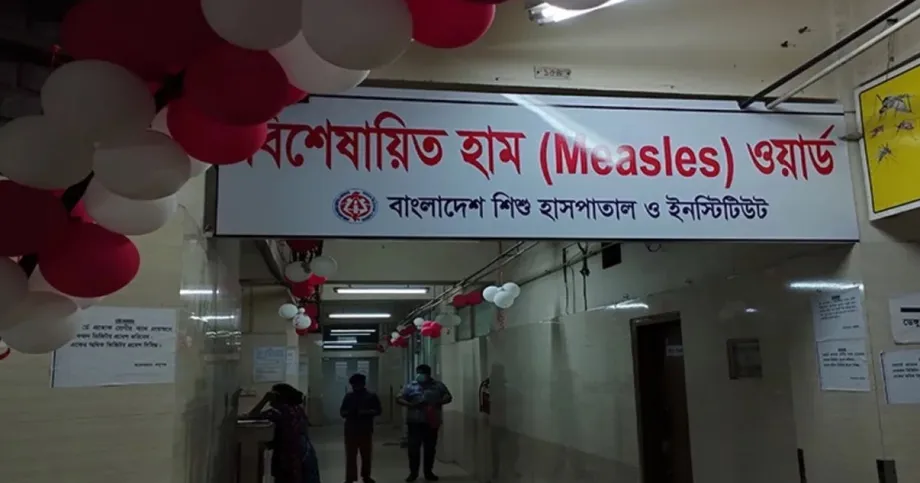
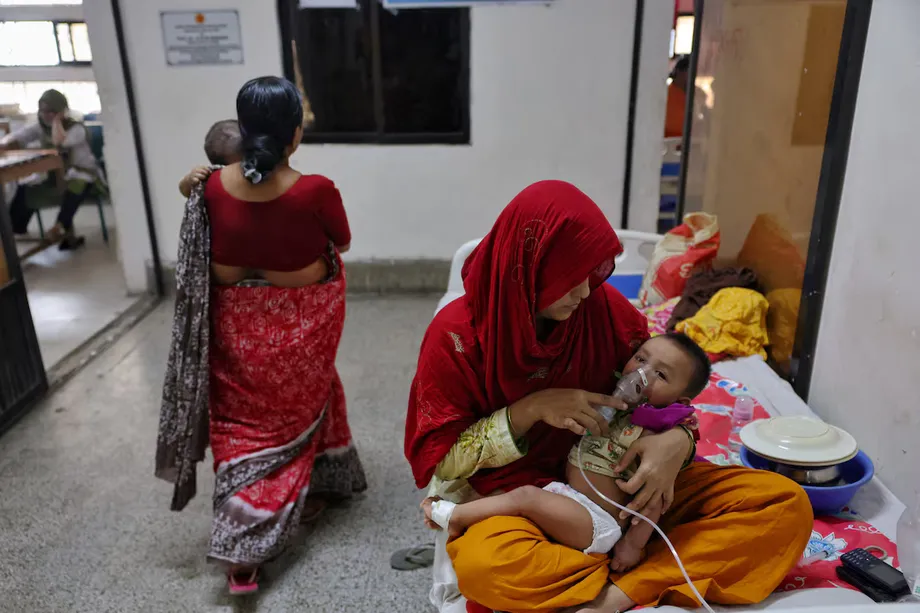
The study arrives during another period of heavy pressure on hospitals. Bangladesh's October 11 dengue update recorded 99,275 admissions and 303 deaths in 2026. By the October 22 hospital update, the totals had reached 118,502 admissions and 368 deaths, with 6,023 patients still receiving hospital care.
Those figures represent an increase of 19,227 admissions and 65 deaths in 11 days. They give a current measure of the demand for beds, testing and clinical care that the proposed warning systems are intended to help hospitals prepare for.
The Dhaka North dengue dashboard says its hospital admission and death figures are sourced live from daily reports by the Directorate General of Health Services (DGHS). Dhaka North City Corporation (DNCC) says it verifies the DGHS data and maps patient addresses to wards and zones using Google geocoding.
Dengue care must reach beyond Dhaka
Since 2023, about two-thirds of dengue admissions have occurred outside Dhaka, according to the study. Yet between 57 and 64 percent of deaths were recorded in Dhaka city hospitals.
These figures describe two different locations: where much of the hospital workload occurs and where deaths are recorded. For planning purposes, authorities need treatment capacity across districts as well as sufficient resources in the capital's hospitals.
Among hospitalised dengue patients, women were 1.8 times as likely to die as men. Patients aged 61 and above were 4.5 times as likely to die as children. Those findings make differences in patient outcomes an important part of preparedness, alongside the number of beds available.
State Minister for Health and Family Welfare Professor Dr M. A. Muhit called for targeted protection for women, children and people with disabilities. He also urged coordination among health authorities, meteorological agencies and other government bodies.
Floods and cyclones damage the care people need
Floods and cyclones damaged 824 health facilities in Bangladesh in 2024. Natural disasters caused an average of 416 deaths annually between 2019 and 2024, according to figures included in the study.
Flooding can contaminate drinking water, damage sanitation systems and interrupt treatment. A community can therefore face more illness at the same time that its usual clinic or hospital is struggling to function.
KHI recommends stronger hospital emergency preparedness and better readiness for floods and disease outbreaks. Connecting weather alerts to action at local facilities would make warnings useful for the people responsible for keeping services running.
The study's figures span several years and types of risk. The main milestones are:
- 2019 to 2024: natural disasters caused an average of 416 deaths a year.
- 2023: modelled estimates linked high temperatures to around 16,000 deaths, while hospital treatment for dengue cost about $154 million.
- 2024: heat reduced potential working time by 29.3 billion hours, and floods and cyclones damaged 824 health facilities.
- Fiscal year 2024-25: the Health Services Division spent 24 percent of its allocation for climate activities.
- Before the 2027 hot season: KHI recommends completing a national heat and health action plan.
Air pollution adds another major health burden
Air pollution sits outside the $20.7 billion cost estimate, but KHI also reviewed evidence of its health effects. Modelled estimates associated particulate pollution with approximately 263,000 deaths in Bangladesh in 2023.
Particulate pollution consists of tiny particles suspended in the air. Fine particles can travel deep into the lungs and affect the heart and other organs, helping explain why its health effects extend beyond breathing problems.
A separate estimate linked pollution from fossil fuels to about 30,600 deaths in 2022. The two estimates use different pollution categories and years, with fossil fuels contributing to the wider mixture of particles people breathe.
Cleaner fuels are among the recommended measures. Alongside heat protection and disaster preparedness, reducing harmful pollution would address another source of illness and pressure on healthcare services.
Families pay while public allocations go unused
Households covered approximately 79 percent of current health expenditure in 2023, leaving families responsible for nearly four out of every five dollars spent. Heat and disease can therefore put pressure on both sides of a household budget: earnings may fall while medical expenses rise.
The Health Services Division's spending record points to another problem. It used only 24 percent of its climate allocation in the 2024-25 fiscal year, leaving roughly three-quarters unspent.
KHI's recommendations address both the amount of funding and the ability to put it to work. Moazzem called for better use of health budgets and dedicated financing for the Health National Adaptation Plan, which is intended to help health services prepare for climate risks.
Regular publication of spending on climate and health is another proposed step. Clear spending records would allow authorities and the public to track how much money reaches activities such as heat protection, outbreak preparation and more resilient healthcare.
Moazzem also called for health risks to receive greater attention in international climate finance negotiations, including COP31. The economic estimates give Bangladesh figures to bring to those discussions, alongside the immediate task of using domestic allocations more effectively.
What needs to happen before the next hot season
KHI's proposed national plan would connect weather warnings, workplace protection and healthcare readiness. The recommended deadline is before the 2027 hot season, with early interventions focused on 16 highly vulnerable districts.
The priority districts were not named in the announcement. The recommendations set out a sequence of work: establish national guidance, turn it into district action plans, prepare hospitals and subdistrict facilities, and fund implementation through the Health National Adaptation Plan.
For workers, the proposed changes are concrete: drinking water, shade, rest and safer schedules. For health facilities, they mean responding to alerts before patient numbers rise and preparing to keep care available during floods and other emergencies.
Muhit's call for coordinated warning systems and Moazzem's call for sector guidance address different parts of the same task. Weather agencies can identify dangerous conditions, but employers, local authorities and health facilities need agreed actions when those warnings arrive.
Key Points
- KHI estimates that climate-sensitive health risks cost Bangladesh $20.7 billion annually, equivalent to 4.6 percent of 2024 GDP.
- Heat accounts for $15.8 billion in losses and 29.3 billion potential working hours lost in 2024. Agriculture bears about 64 percent of those lost hours.
- Researchers attribute between $1 billion and $3.3 billion of the annual burden specifically to observed warming.
- Higher temperatures were associated with more dengue admissions, while floods and cyclones damaged 824 health facilities in 2024.
- Families paid about 79 percent of current health expenditure in 2023. The Health Services Division spent 24 percent of its climate allocation in fiscal year 2024-25.
- KHI recommends a national heat and health action plan before the 2027 hot season, starting with interventions in 16 highly vulnerable districts.