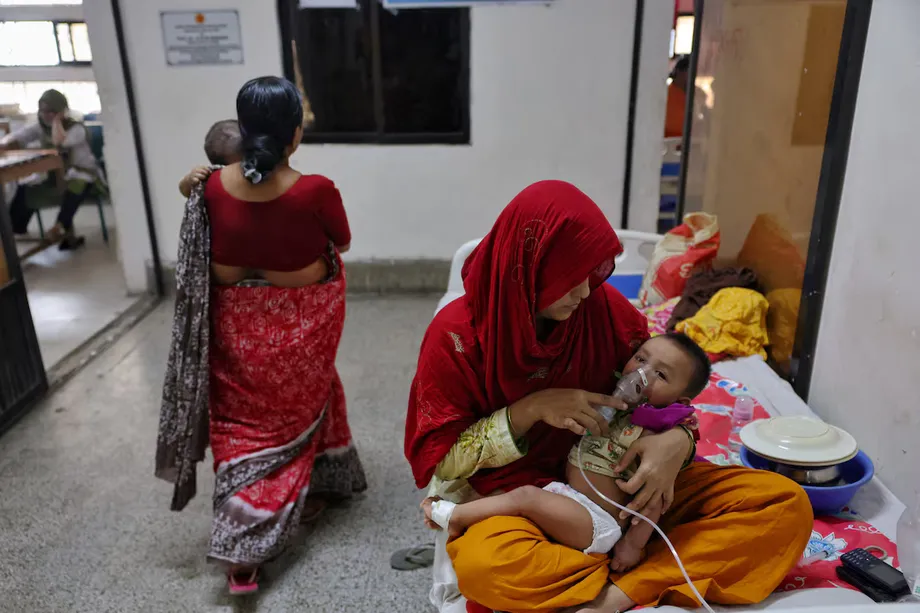
More than 215,000 suspected cases since March
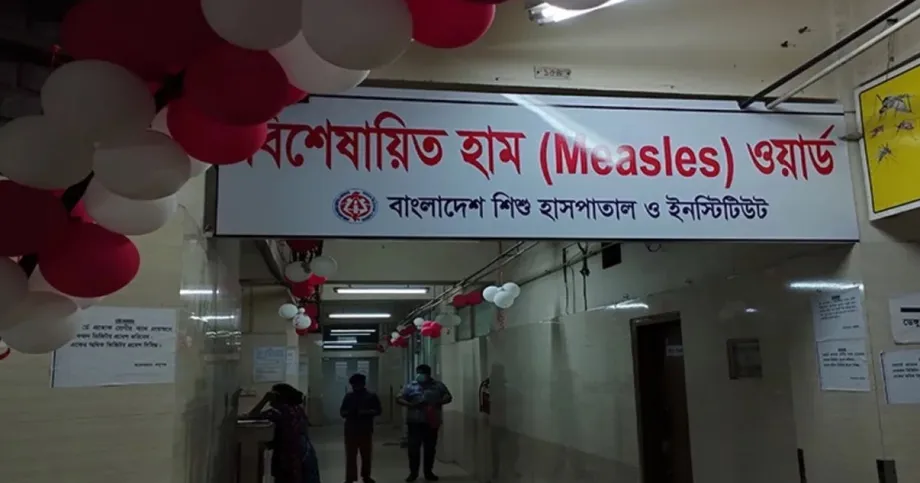
Bangladesh recorded 215,768 suspected measles cases and 1,204 deaths among confirmed and suspected cases between 15 March and 20 October 2026, according to the Directorate General of Health Services (DGHS). Months after an emergency vaccination campaign reached nearly 20 million children, the country is still struggling to protect children missed by routine services and earlier campaigns.
Contents
- More than 215,000 suspected cases since March
- How the outbreak spread across the country
- Why babies and young children are so vulnerable
- Vaccination fell below the level needed to stop spread
- Political disruption became a vaccine supply problem
- Why nearly 20 million vaccinations were not enough
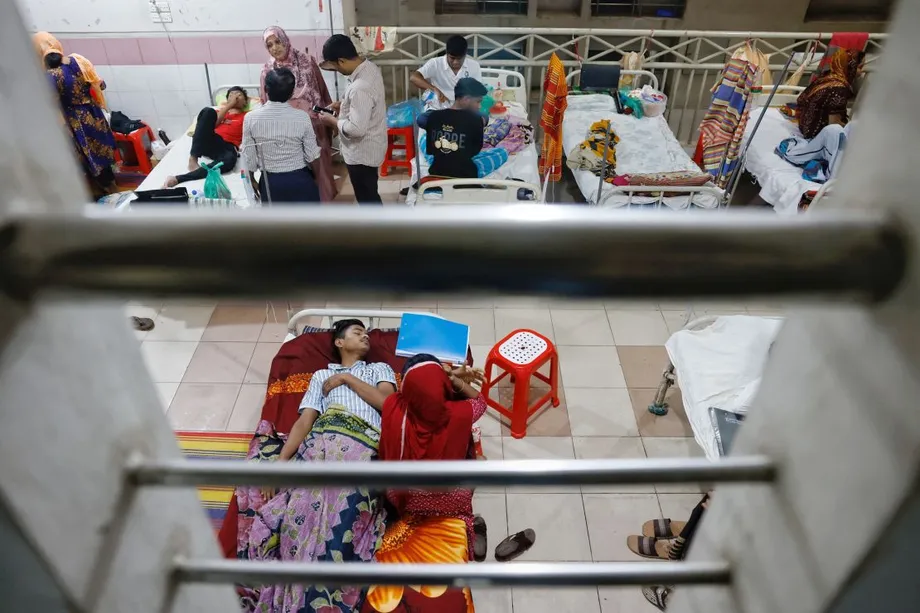
- Overcrowded hospitals and families facing impossible costs
- What the independent review wants changed
- Key Points
The DGHS recorded 23,199 laboratory confirmed infections by 20 October. Its death tally included 104 deaths from confirmed measles and 1,100 among suspected cases. In the latest 24 hours, authorities registered 1,217 suspected infections, 42 confirmed infections and three deaths among children with measles symptoms.
WHO figures through 9 October placed Bangladesh above every other country in reported suspected cases this year. At that point, 94 percent of reported deaths were among children younger than five. Infants, children living in crowded settlements and families far from reliable health services have carried much of the burden.
The crisis combines several failures: vaccine supplies ran out, a scheduled campaign was missed, health worker posts remained vacant and vaccination lists left out millions of children. Hospitals then faced more patients than they could safely accommodate.
Bangladesh's experience also shows why counting doses is only part of protecting children. A campaign can administer millions of vaccinations while still missing entire communities if its target lists are incomplete or families never hear when and where vaccines are available.
How the outbreak spread across the country
WHO's April outbreak assessment recorded 19,161 suspected cases by 14 April, with transmission in 58 of Bangladesh's 64 districts across all eight divisions. Dhaka had 8,263 suspected cases, followed by Rajshahi with 3,747, Chattogram with 2,514 and Khulna with 1,568.
Dhaka alone accounted for about 43 percent of that early national suspected case total. In the capital, infections clustered in densely populated informal settlements, including Demra, Jatrabari, Kamrangirchar, Korail, Mirpur and Tejgaon.
By late April, 61 districts were affected. An academic analysis covering the outbreak through September described transmission in all 64 districts. The following dates trace the expansion and the response:
- 15 March: The starting date used for the national outbreak totals.
- 30 March: Bangladesh's National Immunization Technical Advisory Group approved an emergency vaccination campaign.
- 5 April: Vaccination began in 30 priority subdistricts across 18 districts.
- 20 April: WHO recorded the start of nationwide campaign expansion.
- 20 May: The emergency campaign that began in April ended.
- Late September: A further campaign began, targeting 3.4 million children missed earlier.
- 20 October: The DGHS reported 215,768 suspected cases and 1,204 deaths among suspected and confirmed cases.
September brought an average of 1,198 new cases a day, the highest daily average since May. The renewed rise followed an initial slowdown after the April and May vaccinations.
Why babies and young children are so vulnerable
UNICEF's April situation report found that children under five accounted for 81 percent of cases in an early assessment. Infants younger than nine months accounted for 34 percent. WHO's subsequent April assessment recorded similar proportions: 79 percent under five and 33 percent younger than nine months.
Bangladesh normally gives the first measles and rubella vaccine at nine months and the second at 15 months. During the outbreak, many babies encountered the virus before reaching the normal age for their first vaccination.
Authorities lowered the emergency vaccination age to six months to reach some of these infants sooner. Protecting babies also depends on high vaccination coverage among people around them, reducing opportunities for the virus to reach those who are still too young for vaccination.
Measles spreads through the air and respiratory droplets. Symptoms include fever, cough, a runny nose, red eyes and a rash. An infected person can spread the virus from four days before the rash appears until four days afterwards, allowing transmission before families recognise the illness.
Pneumonia, severe diarrhoea, brain inflammation and blindness are among its complications. Malnutrition and vitamin A deficiency increase the danger. Bangladesh completed only one of its two planned vitamin A supplementation rounds in 2025, leaving another gap in protection before the outbreak.
Vaccination fell below the level needed to stop spread
WHO and UNICEF estimated that Bangladesh's coverage in 2025 was 90 percent for the first measles vaccine dose and 86 percent for the second. In 2024, their estimates were 96 percent and 93 percent respectively, representing declines of six and seven percentage points.
WHO recommends at least 95 percent coverage with both doses in every municipality. Measles is so contagious that an infected person can generate an average of 12 to 18 further infections in a susceptible population. Small gaps become dangerous when unvaccinated children live close together.
The second dose gives another opportunity for protection to children who did not develop immunity after the first. With second dose coverage at 86 percent nationally, Bangladesh was nine percentage points below WHO's recommended level in 2025.
Different vaccination measurements give different pictures of the decline. An academic outbreak analysis cited coverage falling from about 90 percent in 2020 to roughly 57 percent in 2025, much lower than the WHO and UNICEF estimate. Coverage measurements vary according to the population counted, the vaccine doses included and whether vaccination occurred at the correct age and interval.
UNICEF's early outbreak assessment found 72 percent of cases among children described as having received no vaccine doses and another 16 percent among partially vaccinated children. Together, those groups represented 88 percent of cases in that assessment, concentrating illness among children whom vaccination services had failed to fully protect.
Political disruption became a vaccine supply problem
WHO identified nationwide measles and rubella vaccine shortages during 2024 and 2025, gaps in routine services and the absence of a nationwide supplementary campaign since 2020 as contributors to the outbreak. By early April 2026, UNICEF said national vaccine stocks were depleted.
Researchers led by Saju Bhuiya, whose affiliations include the Dhaka research institution icddr,b, examined these failures in their measles resurgence analysis. They linked the disruption to political turmoil during 2024 and 2025, changes in vaccine procurement, delayed campaigns, staffing problems and the continuing effects of COVID-19 on routine services.
According to the researchers, the transition from procurement through UNICEF to an open tender system in 2025 contributed to delays and shortages. Administrative changes interrupted decision making, while health worker strikes and funding uncertainty disrupted delivery.
A supplementary campaign planned for 2024 was not carried out amid political unrest. Such campaigns are designed to find children missed by regular clinic appointments. Without that additional opportunity, children who missed vaccinations remained susceptible as younger, unvaccinated children joined them.
Staff shortages reduced the ability to repair those gaps. The academic outbreak analysis reported that 45 percent of health worker positions were vacant in more than half of districts in 2025. UNICEF also documented limited staffing, diagnostic capacity and referral services during the emergency.
Vaccine acceptance has generally remained high in Bangladesh. The academic analysis identified shortages, interrupted services and inadequate outreach as the main drivers of missed vaccination, placing the practical task of making vaccines available at the centre of the response.
Why nearly 20 million vaccinations were not enough
Bangladesh's April and May campaign vaccinated nearly 20 million children. The government initially said it had reached every child in the target age group, from six months to five years.
A routine health intervention in June then used a target list containing four million more children in the same age group. Compared with the roughly 20 million vaccinated, that difference was about one fifth, revealing a large gap in the population the measles campaign had planned to reach.
Vaccination coverage depends on two counts: how many children receive a vaccine and how many children need it. If the second count is too small, coverage can look reassuring while many children remain outside the programme.
WHO and UNICEF raised concerns about vaccination data for 2023 to 2025, including preliminary figures exceeding 100 percent of the target population. Unregistered children, families moving between locations and incomplete local lists make reliable counting harder.
Preparation was also compressed. Minutes of an April meeting recorded one round of readiness checks instead of the usual four because of time constraints. Those checks cover essentials such as refrigerators for vaccines and estimates of the number of eligible children.
Mahmudur Rahman, an epidemiologist and chair of Bangladesh's National Verification Committee for Measles and Rubella Elimination, described who suffers when preparation falls short:
When preparedness checks are not done properly, it is often the poorest and hardest-to-reach children who miss out on vaccination and pay the price,
By an August review, the proportion of confirmed cases among unvaccinated children was 85 percent after the campaign, compared with 82 percent beforehand. Authorities launched the campaign targeting 3.4 million missed children at the end of September.
Overcrowded hospitals and families facing impossible costs
UNICEF documented severe pressure at hospitals early in the emergency. Dhaka's Infectious Diseases Hospital recorded 573 admissions in March, compared with 69 during the same period in 2025, an increase of more than eight times.
At Cox's Bazar District Hospital, an isolation unit with eight beds was managing 30 to 40 children at a time. Kushtia Medical College Hospital recorded 84 paediatric admissions despite having only 57 beds.
Overcrowding makes it harder to separate infectious children, assess which patients need urgent treatment and provide oxygen or intensive care. Families arriving for treatment can also encounter other patients carrying the virus. WHO called for isolation rooms, safer patient pathways and stronger infection prevention.
In Sylhet, Amin Mia's son Arman Hossain died unvaccinated in July at the age of two, 24 hours after admission. His family had sold its autorickshaw to pay for treatment. Arman's four year old sister, also unvaccinated, survived.
Mia said health workers had not offered vaccination in their remote village before his son's death:
They came only after I buried my son,
In Chhatak, also in Sylhet, carpenter Humayun Rashid lost his nine month old daughter Labiba Akter in June. She had become eligible under the emergency programme when the minimum age was lowered to six months.
Rashid described the family's lack of information about vaccination:
No health worker came to tell us,
UNICEF also warned that fuel constraints could delay outreach, vaccine transport and access to treatment in remote communities. For families already facing lost income and medicine costs, each additional journey can make timely care harder.
What the independent review wants changed
A joint independent assessment involving 70 national and international specialists recommended prioritising unvaccinated children aged six months to nine years in districts with high transmission and many missed children. The team called for that targeted work to be implemented within two weeks of its recommendation; no calendar deadline was given.
The assessment also proposed raising the upper age limit for routine vaccination from two to five years, continuing vaccination at six months during the outbreak, vaccinating health workers and checking children's vaccination cards when they enter school.
Better records were another priority. Reviewers called for every suspected patient's name, address, age and sex to be recorded accurately, alongside active surveillance for new cases. Those details help teams identify which neighbourhoods and age groups need attention.
Bangladesh allocated Tk 604 crore, equivalent to US$49.3 million, for emergency vaccine procurement. UNICEF's April response request sought US$2.4 million for vaccination support, hospital care, nutrition and community outreach. Its plans included vitamin A supplementation for 23 million children and training for 1,370 health workers.
WHO assessed national and regional risk as high and global risk as moderate in April, citing movement across borders with India and Myanmar. It recommended stronger border surveillance and vaccination of vulnerable populations, while advising against travel or trade restrictions.
Dr Rajesh Narwal, WHO's deputy representative to Bangladesh, identified the continuing task beyond emergency campaigns:
Routine immunisation must become more effective and resilient so that these gaps do not develop again,
The independent assessment proposed timely planning for the next national measles and rubella campaign, possibly in 2029 or 2030. Its immediate priorities were reaching missed children, improving hospital safety and ensuring that local vaccination plans include families repeatedly left outside regular services.
Key Points
- Bangladesh recorded 215,768 suspected cases and 23,199 laboratory confirmed infections from 15 March to 20 October 2026.
- The DGHS reported 1,204 deaths: 104 from confirmed measles and 1,100 among suspected cases.
- WHO figures through 9 October showed children under five accounted for 94 percent of reported deaths.
- Estimated vaccination coverage in 2025 fell to 90 percent for the first dose and 86 percent for the second, below WHO's 95 percent target.
- Nearly 20 million children were vaccinated in April and May, but incomplete target lists and weak outreach left many children unprotected.
- A campaign launched in late September targeted 3.4 million missed children. Independent reviewers recommended further urgent vaccination through age nine in priority districts.