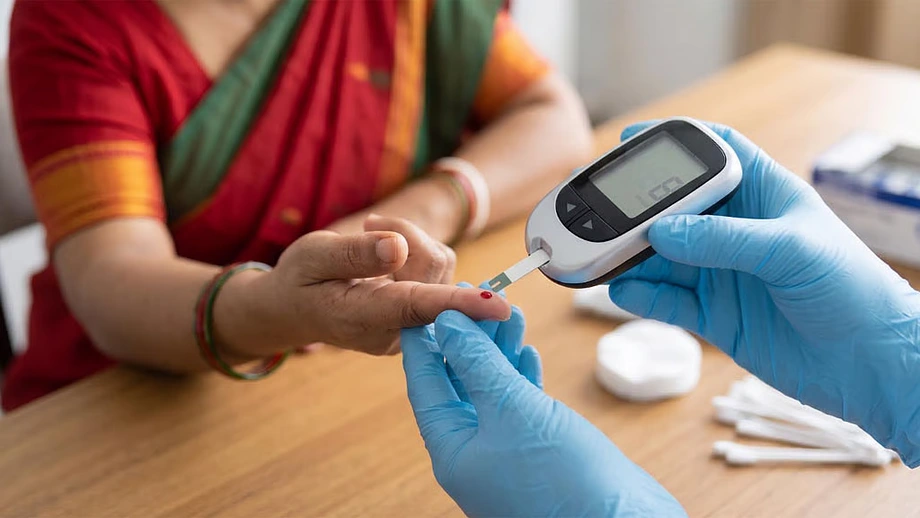
Most people with diabetes are missing a diagnosis
Bangladesh's 2022 national health survey found that 67 percent of women and 72 percent of men with diabetes did not know they had high blood glucose. Only 6 percent of women and 5 percent of men with the condition knew about it, were taking medication and had their glucose under control.
Contents
- Most people with diabetes are missing a diagnosis
- What the national survey measured
- A diagnosis gap stretching across years
- Testing is only the first missing step
- Urban and wealth gaps are pronounced
- Younger people are also going undiagnosed
- Complications can be present at diagnosis
- Household costs make regular care difficult
- Earlier screening and stronger local services
- Key Points
The Bangladesh Demographic and Health Survey (BDHS), conducted under the health ministry's National Institute of Population Research and Training (NIPORT), also found diabetes in 17 percent of women and 15 percent of men aged 18 and above. The corresponding figures in 2017–18 were 10 percent and 11 percent.
Shaheen Ahmed discovered what an overlooked diagnosis can mean in September 2020. A medical test before a major procedure revealed diabetes, forcing him to wait several days before the procedure could go ahead. Ahmed, now 54 and employed at a private organisation, had believed his long daily walks offered enough protection.
Ahmed said both his parents had diabetes, but he had never checked his blood glucose:
Although my parents had diabetes, I never checked my blood sugar levels because I never felt the need. I only came to know about it at a critical time.
Type 2 diabetes can develop for years with few noticeable symptoms. During that time, excess glucose can damage blood vessels and nerves, affecting the heart, kidneys, eyes and feet. Insulin, a hormone made by the pancreas, helps glucose move from the blood into cells for energy. Diabetes develops when the body produces too little insulin or cannot use it effectively.
What the national survey measured
The official 2022 survey profile records fieldwork from August to December 2022 across 30,018 households. NIPORT and Mitra and Associates implemented the survey, which included blood glucose testing and a chronic disease module. The household sample describes the survey's reach; glucose testing was a separate part of its work.
NIPORT's Key Indicators Report explains how testing worked. Participants fasted overnight before staff took blood from a finger and measured glucose using a HemoCue 201 RT analyser. The report used the World Health Organization threshold of fasting plasma glucose at or above 7.0 millimoles per litre to classify diabetes and refer participants to a local health facility.
Bangladesh's other surveys and estimates give different measures of the diagnosis gap. The International Diabetes Federation (IDF) estimated that 39.1 percent of adults with diabetes aged 20–79 were unaware in 2024, compared with the BDHS finding of 67 percent of women and 72 percent of men aged 18 and above in 2022. These estimates cover different ages and years and use different estimation methods.
The IDF Diabetes Atlas 2025 estimated about 13.9 million adults aged 20–79 had diabetes in Bangladesh in 2024. BADAS, the Diabetic Association of Bangladesh, has put the current burden at nearly 20 million. A precise national count is unavailable.
A diagnosis gap stretching across years
BDHS figures show that the share of people unaware of their diabetes rose from 59 percent to 67 percent among women between 2017–18 and 2022, and from 61 percent to 72 percent among men. Those increases amount to eight and 11 percentage points, respectively.
Academic analyses also found substantial gaps, although their estimates vary. A PLOS study published on June 1, 2022, using 11,952 adults from BDHS 2017–18, found 61.5 percent of people with diabetes were unaware. An earlier management study of 1,174 adults with diabetes from that survey estimated awareness at 30.9 percent, equivalent to 69.1 percent being unaware. The analyses used different samples and statistical treatment.
Bangladesh's surveys and patient records trace a problem that has persisted through successive years:
- 2014–15: BADAS recorded 3.061 million registered patients.
- 2017–18: BDHS recorded diabetes in 10 percent of adult women and 11 percent of adult men.
- 2018: The national STEPS survey found that only 25.1 percent of adults aged 18–69 had ever had glucose tested by a healthcare provider.
- August–December 2022: BDHS fieldwork documented higher diabetes prevalence and a larger share unaware of their condition.
- 2024: IDF estimated about 13.9 million adults aged 20–79 were living with diabetes.
- 2024–25: BADAS recorded 383,000 newly registered patients.
BADAS figures accompanying the latest account put total registrations at 6.937 million in 2024–25, up 127 percent over a decade; another figure attributed to the association puts the same fiscal year's total at about 6.3 million. Registration totals measure people enrolled in services, while population surveys seek to measure disease across the country.
Testing is only the first missing step
The STEPS 2018 survey found raised blood glucose or diabetes controlled through treatment in 8.3 percent of adults aged 18–69. Among those affected, 51.4 percent were unaware, 10.4 percent knew but were not receiving treatment, 24.7 percent were receiving treatment without control, and 13.6 percent were receiving treatment with controlled glucose.
Bayzid Khurshid Riaz, the survey's principal investigator, has described limited testing as a central weakness. Even among people aged 40–69, only 36.7 percent had ever had their glucose checked by a healthcare provider.
BDHS 2022 found another gap after diagnosis: 9 percent of both women and men with diabetes had elevated glucose but were taking no medication. Its very small shares who were aware, treated and controlled show how many people miss one or more stages of care.
The earlier management study found that 28.2 percent of people with diabetes were receiving treatment, and 26.5 percent of those treated had controlled glucose. The PLOS analysis estimated treatment at 35.2 percent, with control among 30.4 percent of those treated. Both identified losses between discovering diabetes, starting treatment and keeping glucose within the measured target.
For patients, this means a positive test needs to lead to an affordable consultation, a treatment plan, access to medicines and repeat monitoring. A prescription alone leaves the later steps unfinished.
Urban and wealth gaps are pronounced
BDHS 2022 found diabetes in 24 percent of urban women, compared with 14 percent of rural women. Among men, the figures were 21 percent and 13 percent. The urban excess was therefore 10 percentage points for women and eight for men.
Household wealth showed an even wider gap. Diabetes affected 26 percent of women in the wealthiest fifth of households, compared with 11 percent in the poorest fifth. Among men, the figures were 25 percent and 10 percent. Prevalence in the wealthiest group was more than twice that in the poorest for both sexes.
Prof Sharmin Jahan, chairman of the Endocrinology and Metabolism Department at Bangladesh Medical University, links rising diabetes to physical inactivity, diets rich in calories, urbanisation and inherited susceptibility. South Asians and people with a family history face particular risks, she said.
Jahan described how daily routines can contribute:
Modern lifestyles have become increasingly sedentary. People do very little physical activity but consume high-calorie foods that they don't burn off. This leads to obesity and insulin resistance, increasing the risk of diabetes.
Insulin resistance means the body's cells respond less effectively to insulin, leaving more glucose in the bloodstream. Jahan said motorised transport and technologies that reduce physical work are also changing village routines. She warned that the urban and rural gap could narrow as those habits spread.
Younger people are also going undiagnosed
A nationwide study collecting data from March to September 2024 examined 2,300 people aged 10–34 across Bangladesh's eight divisions. Researchers found diabetes in 104 participants, including 69, or about 66 percent, who had been unaware. Another 423 participants, or 18.4 percent, had prediabetes.
Prediabetes means glucose is above the normal range but below the threshold for diabetes. It offers an opportunity to reduce the risk of progression through appropriate care and changes in daily habits.
The study found diabetes in 7.5 percent of participants aged 19–34 and 1.3 percent of those aged 10–18. Prevalence was 6 percent in urban areas and 3.2 percent in rural areas. Higher blood pressure, high triglycerides, smokeless tobacco use and lower physical activity were associated with diabetes.
Dr Mashfiqul Hasan, the principal researcher and an endocrinology associate professor, said testing based on risk is uncommon among adolescents and young adults. He also said the lack of reliable earlier measurements makes it difficult to calculate how much diabetes has increased in these ages.
A separate nationwide study of 3,342 schoolchildren aged 5–17 found three cases of type 2 diabetes and 19 cases of prediabetes. Its principal researcher, BIRDEM paediatric specialist Prof Fauzia Mohsin, pointed to family history, obesity, food habits and physical inactivity as reasons to address risk during childhood.
Complications can be present at diagnosis
At BIRDEM General Hospital in Dhaka, a study of 311 patients newly diagnosed with type 2 diabetes found that 164, or 52.7 percent, already had at least one complication. The findings describe patients attending a specialist hospital, where people may arrive with more complex illness.
Nerve damage affected 20.6 percent of the patients, kidney damage 16.4 percent and damage to the retina, the light sensing tissue at the back of the eye, 8.03 percent. Coronary artery disease affected 6.4 percent. Small blood vessel complications were found in 40.2 percent, large blood vessel complications in 7.7 percent, and both in 4.8 percent.
Prof Tanjina Hossain, head of Endocrinology and Metabolism at Green Life Hospital, recommends assessing eyes, kidneys, nerves, foot circulation and cardiovascular risk from diagnosis. Such checks can identify problems requiring treatment alongside blood glucose management.
Hossain also highlighted pregnancy as a time for testing. Gestational diabetes, which develops during pregnancy, can affect both mother and baby and raises the mother's later risk of type 2 diabetes. The Bangladesh Endocrine Society has called for universal screening for gestational diabetes.
Household costs make regular care difficult
Patients describe monthly medicine bills of Tk 1,500–3,500, with another Tk 3,000–5,000 for tests every three months. Spread across a year, those amounts come to Tk 30,000–62,000 for medicines and tests, before consultations, transport or other expenses.
Lutfon Nesa, 55, of Mirpur, has lived with diabetes for 20 years. She said costs that once came to Tk 1,500 a month had risen to around Tk 3,000. Test strips and monitoring equipment had also become more expensive.
Nesa described the pressure on her household:
I cannot do everything according to the doctor's advice. And with the increasing price of medicine, the problem of diabetes has become a burden on my family.
Pakhi Akhter, from Raninagar in Naogaon, sometimes skips trips to the district town when she feels well because of the expense. She said delayed visits had repeatedly been followed by high glucose readings and a need for more expensive medicines.
Prof Feroz Amin of BIRDEM has recommended a government package of necessary tests at a lower price. Public health specialist Mushtaq Hossain has called for free diabetes screening at community clinics and free care across public facilities. Their proposals address the recurring costs that can interrupt treatment long after diagnosis.
Earlier screening and stronger local services
The American Diabetes Association's 2026 guidance recommends starting screening at age 35 for adults at general risk, with earlier testing considered when excess weight and other risk factors are present. For people of Asian ancestry, a body mass index of 23 is used as a lower threshold when assessing weight related risk. BMI relates weight to height.
Clinicians in Bangladesh also recommend earlier assessment for people with a family history, hypertension, polycystic ovary syndrome or previous gestational diabetes. Excessive thirst, frequent urination, unexplained weight loss or blurred vision warrant prompt medical advice rather than waiting for a scheduled screening age.
BADAS has used a Diabetes Risk Calculator app to assess nearly 25,000 people. About 50 percent were classified at high risk and 42 percent at moderate risk. The Community Clinic Health Assistance Trust authorised its use at 816 clinics in Narsingdi, Cumilla and Cox's Bazar. People identified as needing assessment must then receive blood glucose testing.
Prof Prabath Chandra Biswas, director general of the Directorate General of Health Services, said every upazila health complex has a noncommunicable disease corner providing routine checks and medicines for diabetes and hypertension. He said the government planned to strengthen them and had asked hospitals to use their own funds to maintain medicine supplies when shortages occur.
Prevention proposals extend to food policy. The advocacy organisation Pragya has called for mandatory warnings on the front of packages containing excessive sugar, salt or saturated fat, and faster completion of the draft packaged food labelling regulations for 2026. Endocrine Society leaders have also urged healthier school food, regular physical activity and more training for local doctors, nurses and dietitians.
Health Minister Sardar Md Sakhawat Husain said the government was taking steps to expand services and raise awareness. No implementation timetable was given for the promised service expansion or completion of the labelling draft.
Key Points
- BDHS 2022 found that 67 percent of women and 72 percent of men with diabetes were unaware of their condition.
- Only 6 percent of women and 5 percent of men with diabetes were aware, taking medication and had controlled glucose.
- IDF estimated about 13.9 million adults aged 20–79 had diabetes in Bangladesh in 2024.
- A study of 2,300 young people found 104 with diabetes, including 69 who had been unaware.
- Testing, affordable medicines, repeat monitoring and checks for complications are central gaps in care.
- The government has promised stronger local services, while clinicians and advocates seek cheaper tests and wider screening.