Paying with a phone when the signal disappears
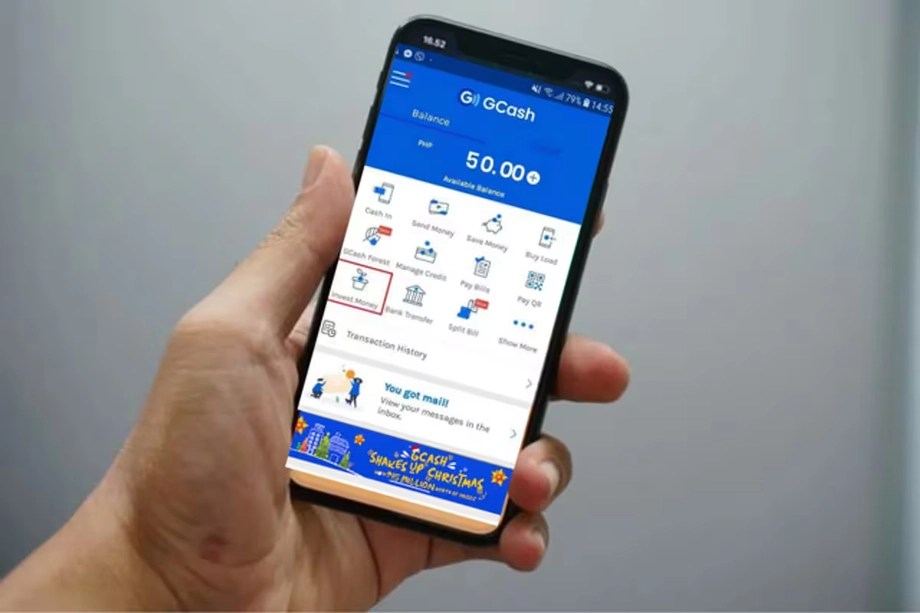
GCash is preparing a payment feature that would let customers unlock their smartphones and tap a compatible terminal without mobile data, cellular reception or opening the app. Called No Signal Pay, the service was previewed by Martha Sazon, president and chief executive of GCash operator Mynt, at the company's third quarter earnings briefing on November 10, 2026.
Contents
- Paying with a phone when the signal disappears
- How the tap would work
- Reaching people outside formal finance
- From September results to November's announcement
- More payments, but less payment revenue
- Small loans become a bigger business
- Household pressure shows up in costs and savings
- Government aid delivered to wallets
- Automation and scam prevention remain part of the plan
- Key Points
The feature is designed to work during weak connectivity and GCash application downtime, provided the customer has enough money in their wallet. Sazon cited buying food and riding the Metro Rail Transit as possible uses, putting everyday purchases and commuting at the centre of the announcement.
The proposal comes as GCash reports 42.1 million monthly active users and Mynt reports profit of PHP 16.45 billion for the nine months through September. Payments bring customers into the platform, while lending is becoming a larger source of revenue. No Signal Pay would address a practical problem for those customers: having money in a digital wallet but struggling to use it when a connection fails.
GCash has not announced a commercial launch date, initial rollout areas, supported phones and terminals, or whether all users will receive access at launch. Details of transaction limits, any setup requirements and whether the merchant terminal must remain connected were also not disclosed.
How the tap would work
GCash says No Signal Pay will use near field communication, or NFC, and tokenization. NFC lets a phone exchange information with a nearby payment terminal over a very short distance. It is the technology behind many payments made by tapping a phone or card.
Tokenization replaces sensitive payment credentials with a digital substitute called a token. In a payment system, that substitute can be used to process a transaction without passing the underlying credentials directly to the merchant.
Customers would unlock their phones and hold them near a compatible terminal. They would not need to open GCash or log into the application at the checkout, removing steps that can become difficult when an app is slow or a phone cannot connect.
Sazon, who leads Mynt and GCash, introduced the feature at the earnings briefing with a short description of its intended benefit:
No signal, no data, no problem.
A sufficient wallet balance remains a requirement. For customers, the intended change is access to money already in their GCash wallet through a payment process that does not depend on opening the app at that moment.
Reaching people outside formal finance
Sazon linked No Signal Pay to GCash's effort to reach Filipinos who have limited access to formal financial services. Speaking around the Mastercard ASEAN Inclusive Growth Summit, she described unreliable connectivity as one of the obstacles the company wants to remove.
Sazon said the company was targeting the 50 percent of Filipinos who still lacked formal financial accounts. That figure was part of her explanation of the opportunity; no underlying survey or measurement date was identified in the announcement.
GCash reported that 89 percent of its 42.1 million monthly active users came from socioeconomic groups C2, D and E, which the company described as reflecting its reach among people with lower and middle incomes. A service that can function when a phone loses reception could make wallet balances more useful for those users, particularly where network coverage is unreliable.
Sazon explained the company's approach to removing obstacles to digital payments:
What we're doing is we're trying to identify... the reasons that people struggle to adapt to digital, and we try to address that,
The practical reach of No Signal Pay will also depend on merchants having compatible terminals. A customer needs both a supported phone and somewhere to tap it, making merchant acceptance an important part of the planned service.
From September results to November's announcement
Mynt's product announcement followed a period of financial growth and a stock market listing. The sequence places No Signal Pay within a wider expansion of GCash's payment, credit and merchant services.
- January through September 2026: Mynt recorded PHP 67.08 billion in revenue and PHP 16.45 billion in profit. GCash handled PHP 15.15 trillion in payment transactions.
- October 2026: Mynt completed its listing on the main board of the Philippine Stock Exchange, with an initial public offering of PHP 60.9 billion.
- November 10, 2026: Sazon previewed No Signal Pay during the third quarter earnings briefing.
- By November 13, 2026: Sazon had also discussed the planned feature in a television interview and remarks around the Mastercard ASEAN Inclusive Growth Summit.
An initial public offering is a company's first sale of shares to public investors. Mynt's listing brought its financial performance into closer public view at the same time that GCash was outlining new ways to use its wallet.
The earnings update also described plans for GCash Overseas, remittances, more investment products and further work to bring merchants into digital payments. No Signal Pay fits the payment side of that programme by targeting a failure point at checkout.
More payments, but less payment revenue
Mynt's revenue rose 12 percent to PHP 67.08 billion in the first nine months of 2026, while profit increased 17 percent to PHP 16.45 billion from PHP 14.02 billion a year earlier. For the third quarter alone, the company reported revenue of PHP 24 billion and net income of PHP 5.6 billion, increases of 16.6 percent and 43.3 percent respectively.
GCash's payment activity also expanded. The value of payments processed reached PHP 15.15 trillion over nine months, up about 23 percent, while average daily transactions reached 64.4 million, an increase of 16 percent.
Payment solutions revenue, however, fell 2 percent to PHP 37.98 billion. Processing more money and earning more revenue are different measures: the transaction total counts money moving through the platform, while revenue counts what the company earns from its services.
Digital financial services supplied the stronger growth, rising 38 percent to PHP 29.1 billion. Calculated from the reported figures, that business generated about 43 percent of Mynt's PHP 67.08 billion in revenue. Payment solutions still contributed the larger share, at about 57 percent.
No Signal Pay therefore arrives at a time when GCash is seeking more everyday payment use, while its parent company's revenue growth is being driven mainly by financial services, especially credit.
Small loans become a bigger business
GCash's credit revenue grew 39 percent to PHP 28.55 billion in the nine months through September. Its loan portfolio increased 43 percent to PHP 79.28 billion, and the number of active borrowers reached 7.8 million.
Those borrowers represented about 19 percent of GCash's 42.1 million monthly active users, according to Mynt. The figures show that borrowing is already part of the service for roughly one in five people who use the platform each month.
Sazon described GLoan and lending through Fuse as ways for households and small businesses to obtain small amounts of credit rather than turn to informal lenders. Such borrowing can cover an immediate household expense or help a small shop purchase stock, although borrowers still need to account for repayment costs and deadlines.
Mynt's loan growth was much faster than its 5.1 percent increase in active borrowers. That means the total value of outstanding lending expanded more quickly than the number of people borrowing.
The company reported a nonperforming loan ratio of 4.8 percent, down from 4.9 percent in the preceding quarter. This ratio measures the share of loans classified as troubled because repayments have fallen behind under the lender's rules. Management said it could rise modestly as lending reaches more borrowers.
Household pressure shows up in costs and savings
Mynt's growth came alongside signs of strain on household finances. Sazon described rising living costs and slower economic growth, with Philippine growth in the third quarter cited at 2.1 percent.
Wealth management revenue fell 7 percent to PHP 546.2 million. Mynt attributed the decline to inflation and a weak peso, saying consumers were directing less money toward insurance and savings products as their purchasing power came under pressure.
The same financial results show that expanding credit carries costs for the lender. Mynt's direct costs increased 21 percent to PHP 18.45 billion. Provisions for credit losses rose 28 percent to PHP 12.29 billion, while loan funding costs increased 33 percent to PHP 1.38 billion.
Credit loss provisions are amounts recorded to cover expected losses when some borrowers fail to repay. Funding costs are what the lender pays to obtain money that it can then lend. Both become important as the loan portfolio grows.
Chief finance officer Evelyn Ng said Mynt was pursuing growth alongside profitability. Management expected net income margins in the high teens for the fourth quarter, reflecting expenses connected with the public offering and seasonal spending. The margin is the share of revenue left as profit.
Government aid delivered to wallets
GCash is also being used to distribute public assistance. Mynt said partnerships with the Land Transportation Franchising and Regulatory Board and the Department of Transportation had helped deliver fuel subsidies to more than 200,000 beneficiaries.
The company also said it supports the Department of Social Welfare and Development's UPLIFT Program. Sazon described social welfare payments of PHP 4,000 being sent directly to recipients' phones, alongside transport fuel assistance.
Sazon presented digital distribution as a way to spare recipients from spending long periods in queues and potentially losing a day's earnings. For a driver or someone paid by the day, collecting assistance can carry a cost in time away from work.
No Signal Pay addresses a later step in that process: using money after it reaches a wallet. If recipients have supported phones and local shops have compatible terminals, payments could become easier in places where a mobile connection is unreliable.
Automation and scam prevention remain part of the plan
Mynt is using artificial intelligence in customer service, operations and product development. Management said its AI assistant, Gigi, handles about half of customer inquiries and resolves roughly 90 percent of those without human help.
At GCash's reported scale of 42.1 million monthly users, customer support is a substantial operational task. Automating routine inquiries can reduce the number requiring staff attention, while more difficult cases still need a route to human assistance.
Sazon also said the company was working with cybersecurity firms and the government to educate users about online scams. Tokenization addresses how payment credentials are handled; scam education addresses situations in which criminals persuade people to reveal information or send money.
GCash's immediate promise is specific: let a customer with sufficient funds unlock a phone and pay at a compatible terminal even when the phone lacks a signal or the app is unavailable. Delivering that experience across merchants would make the wallet more dependable for ordinary purchases, while Mynt continues expanding the lending and financial services that now drive much of its growth.
Key Points
- GCash previewed No Signal Pay on November 10, 2026, for payments without mobile data, cellular reception or opening the app.
- The planned service uses NFC and tokenization. Customers would unlock their phones and tap compatible terminals, with sufficient wallet funds required.
- GCash has yet to announce a launch date, supported devices, rollout locations or detailed operating requirements.
- Mynt's profit rose 17 percent to PHP 16.45 billion in the first nine months of 2026, while revenue reached PHP 67.08 billion.
- Payment transaction value increased, but payment solutions revenue fell 2 percent. Digital financial services revenue rose 38 percent.
- GCash reported 42.1 million monthly active users, 7.8 million active borrowers and a loan portfolio of PHP 79.28 billion.
- Mynt said government partnerships helped distribute fuel subsidies to more than 200,000 beneficiaries.