Electricity choice would reach households in five years
The Philippines' Energy Regulatory Commission (ERC) is developing a roadmap to let every electricity user choose a supplier by 2031, backed by a nationwide smart meter rollout estimated to cost between P70 billion and P140 billion. The transition would extend a choice now available mainly to larger businesses to small shops and individual homes.
Contents
- Electricity choice would reach households in five years
- What the 100 kW change opens up
- How choosing a supplier would work
- The timetable from 2027 to 2031
- Smart meters carry a large investment bill
- Why a central data hub matters
- Residential groups would test collective switching
- Existing power contracts create a transition challenge
- Consumer protection will shape the result
- Key Points
The draft plan would lower the minimum electricity demand needed to qualify for retail competition from 100 kilowatts (kW) to 50 kW in 2027, keep it there through 2029, reduce it to 30 kW in 2030 and remove it in 2031. Household participation would also require a compatible smart meter.
The ERC described its goal in terms of both eligibility and the equipment and safeguards needed to make switching possible:
By 2031, every Filipino electricity end-user, from the largest factory to the smallest household, will have the right and the practical means to choose a supplier, supported by smart metering, trusted market data, and strong consumer protections.
The household timetable remains a proposed transition, while the reduction from 500 kW to 100 kW has already been approved, with an effective date of June 26, 2026. Later stages would depend on preparations across electricity suppliers, distribution utilities, meter providers and market systems.
What the 100 kW change opens up
The approved reduction covers Retail Competition and Open Access (RCOA) and the Retail Aggregation Program (RAP). The ERC estimates that moving from 500 kW to 100 kW brings another 12,000 medium sized commercial and industrial users within reach of competition.
Eligibility is measured through average monthly peak demand. Kilowatts measure how much power a customer needs at a particular time. Kilowatt hours, the units commonly shown on electricity bills, measure how much electricity is used over time. A demand threshold therefore concerns the size of a customer's power requirement, rather than simply the monthly bill.
ERC Chairperson and Chief Executive Officer Francis Saturnino C. Juan said the expansion was intended to give consumers more options and encourage suppliers to compete:
By expanding retail access to more end-users, we are promoting genuine consumer choice and driving competition that can lead to better prices, improved service quality, and innovation in the power sector.
Distribution utilities and retail metering service providers were given an eight month transition period to procure and install compliant metering facilities. Public consultations in Luzon, Visayas and Mindanao raised concerns about equipment availability, procurement schedules and electricity already committed under existing supply agreements.
How choosing a supplier would work
Households generally buy electricity through the distribution utility serving their franchise area. Customers who remain under that arrangement are described as captive customers. Eligible customers who can select a retailer are called contestable customers.
RCOA allows an eligible user to buy electricity from a chosen supplier instead of relying on the default supply arrangement. The local distribution network would still be needed to carry that electricity to the property. The change concerns who sells the power, rather than installing a separate set of wires to each home.
RAP gives smaller users another route: they can combine their demand to meet the participation threshold and select a supplier collectively. The ERC's planned comprehensive roadmap also covers the Green Energy Option Program, which allows participating customers to source their electricity fully from renewable energy.
The Electric Power Industry Reform Act of 2001 assigns the ERC the task of lowering the participation threshold. The commission says the next stages would carry forward a competitive retail market that began operating 13 years before the proposed household expansion.
The timetable from 2027 to 2031
Juan identified 50 kW in 2027 as the next target, with further reductions supported by industry readiness and faster approvals for metering investment. The roadmap combines eligibility changes with specific infrastructure milestones:
- 2027: Target a 50 kW threshold, strengthen protections for smaller customers and prepare distribution franchises for the transition.
- 2028: Keep the threshold at 50 kW, launch initial central registry services and deploy the first wave of smart meters.
- 2029: Maintain the 50 kW threshold while accelerating smart meter installations and piloting collective participation in residential communities.
- 2030: Lower the threshold to 30 kW if earlier stages meet performance targets, widening access for small businesses and some larger households.
- 2031: Remove the remaining demand threshold, with household participation supported by compatible smart meters and market systems.
The pause at 50 kW would give companies time to adjust while the technical systems expand. A lower eligibility threshold creates a larger pool of potential customers, but registrations, meter readings, bills and payments also have to work reliably for those customers to switch.
The ERC plans to prepare transition arrangements for selected distribution franchises. Local readiness matters because utilities differ in their customer mix, metering investment and commitments to buy electricity under existing contracts.
Smart meters carry a large investment bill
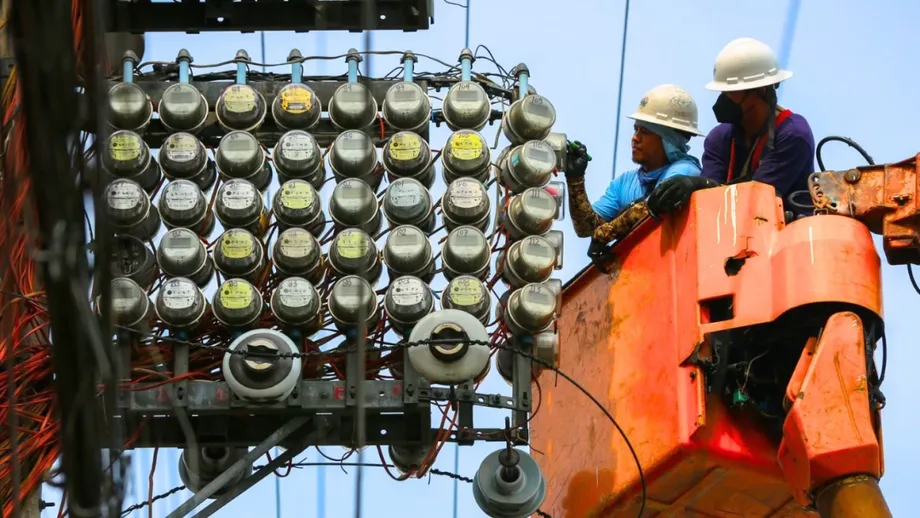
The ERC estimates that nationwide deployment of Advanced Metering Infrastructure (AMI) would cost P70 billion to P140 billion. AMI combines smart meters with communications and data systems, allowing electricity use to be recorded and transmitted remotely.
The approved AMI rules cover technical standards, cybersecurity and consumer data privacy. They allow distribution utilities and other entities authorized by the ERC to adopt systems capable of remote meter reading, managing electricity demand and detecting outages.
Consumers would be able to monitor their electricity use through the consumer meter data channel, or CMDC. More timely information could help a household see when consumption rises and adjust appliance use. Utilities could also use meter information to identify interruptions and investigate tampering or electricity theft.
The roadmap gives a broad investment estimate, but does not specify how the P70 billion to P140 billion would be divided among utilities, meter providers and consumers, or detail the final household protections and performance targets. Those decisions will help determine the cost and terms of participation.
Why a central data hub matters
The Independent Electricity Market Operator of the Philippines (IEMOP), which operates the Wholesale Electricity Spot Market, would integrate a centralized metering data hub. Initial registry services are planned for 2028.
The hub would provide a common record of customers, connection points, retailers, meter providers and electricity use. That information is needed to assign consumption to the correct supplier and calculate what each participant must pay.
The ERC explained why expanding to millions of smaller users changes the operational challenge:
When retail choice reaches millions of small customers, the market's main operational challenge is no longer generation or contracting but data: knowing which customer is at which connection point, who their retailer and meter provider are, and what they consumed in each interval.
The commission will coordinate with the Department of Energy and IEMOP on billing, registration and settlement systems. Settlement is the process of calculating and paying amounts owed between market participants. Accurate records are essential when a customer moves from one retailer to another.
Residential groups would test collective switching
Condominiums, subdivisions and housing cooperatives are identified for pilot programs in 2029. Residents would pool electricity demand and seek a supplier collectively, while smart meter installations accelerate in participating areas.
Aggregation can bring smaller consumers into the market before every household qualifies independently. A group can reach a demand requirement that an individual home cannot, allowing members to participate through a shared arrangement.
The proposed 30 kW stage would extend individual eligibility to users such as bakeries, smaller commercial establishments and some large households. Full removal of the threshold in 2031 would then open eligibility to homes with much smaller power requirements.
Participation has already grown under the existing framework. As of August 2026, 2,692 contestable customers and 311 retail aggregated groups had switched suppliers. Earlier enrollment figures stood at more than 2,300 RCOA customers and 37 aggregated groups representing nearly 31 megawatts of demand.
Existing power contracts create a transition challenge
Distribution utilities have agreements to buy electricity for the customers they serve. When customers move to other suppliers, the utilities may still have commitments under those agreements. The ERC's roadmap therefore tracks how much contracted supply could face competition as eligibility expands.
The commission places annual contract exposure at about P38.34 billion at the 100 kW threshold, around P56 billion at 50 kW and P77.06 billion under full retail choice. The final figure is roughly twice the first, showing how much larger the affected contract base becomes as households enter the market.
The 50 kW entry stage coincides with the expiry of about 2,063 megawatts of power contracts, most belonging to Manila Electric Co. (Meralco). Expiring agreements give utilities an opportunity to adjust future purchases as customers gain supplier choice.
The ERC said the remaining exposure would shift toward other distribution franchises after 2027:
So, after 2027, most of the exposure sits in the other franchises.
The actual effect would depend partly on how many eligible users switch. The commission described a scenario in which only half take up the option:
Not every eligible customer will switch; at a 50 percent take-up, the gross peso exposure halves and the captive rate impact falls by more than half… Captive customers are not the insurer of legacy contracts.
Consumer protection will shape the result
The ERC plans to strengthen protections for smaller contestable customers during the first three years. Its stated priorities include financially sound retailers, competitive metering services, reliable market data and safeguards suited to households.
For families, the practical result will depend on both the supply contract and the cost of joining the market. A competitive offer has to be considered alongside metering arrangements and the other charges associated with delivering electricity. Juan's statement presents better prices as a potential result of competition, rather than a promised reduction for every customer.
The commission says the pace of lowering thresholds must be supported by functioning equipment and institutions. Its assessment puts the focus on whether consumers can actually use their new choice:
Success depends less on the speed at which thresholds fall than on the strength of what stands behind them: smart meters in place, a trusted central data hub, competitive metering services, financially sound retailers, and consumer protections suited to households.
The next target is 50 kW in 2027. The milestones after that, including the 2028 registry and meter deployments and the 2029 residential pilots, would show how the proposed right to choose develops into a service households can use.
Key Points
- The ERC is developing a roadmap to extend electricity supplier choice to all users by 2031.
- The approved 100 kW threshold takes effect on June 26, 2026, expanding potential access to an estimated 12,000 users.
- The proposed next thresholds are 50 kW in 2027 and 30 kW in 2030, followed by removal of the demand requirement in 2031.
- Nationwide smart meter deployment is estimated to cost P70 billion to P140 billion.
- Residential aggregation pilots are planned for condominiums, subdivisions and housing cooperatives in 2029.
- Metering readiness, consumer safeguards and existing utility contracts will shape the transition.