Five centavos from P64 despite higher interest rates
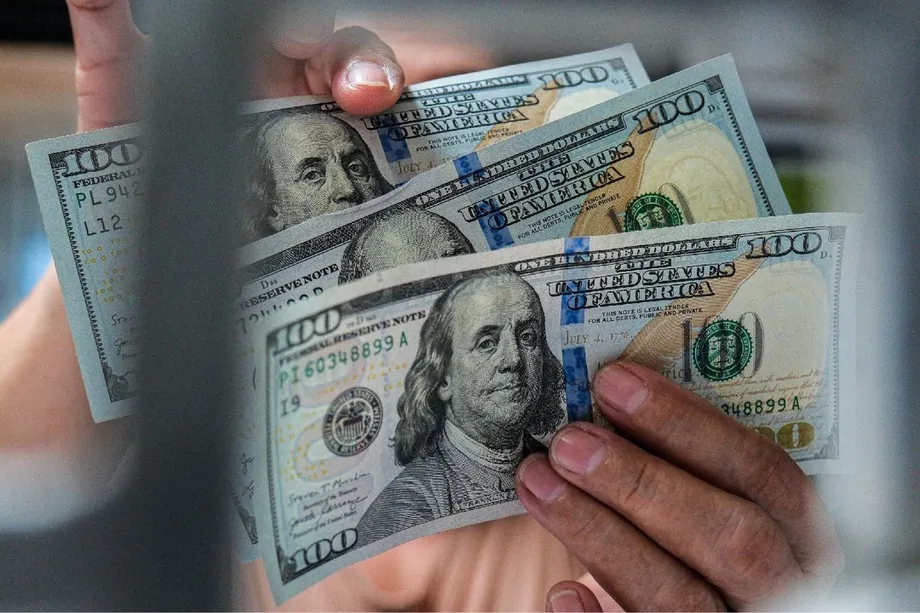
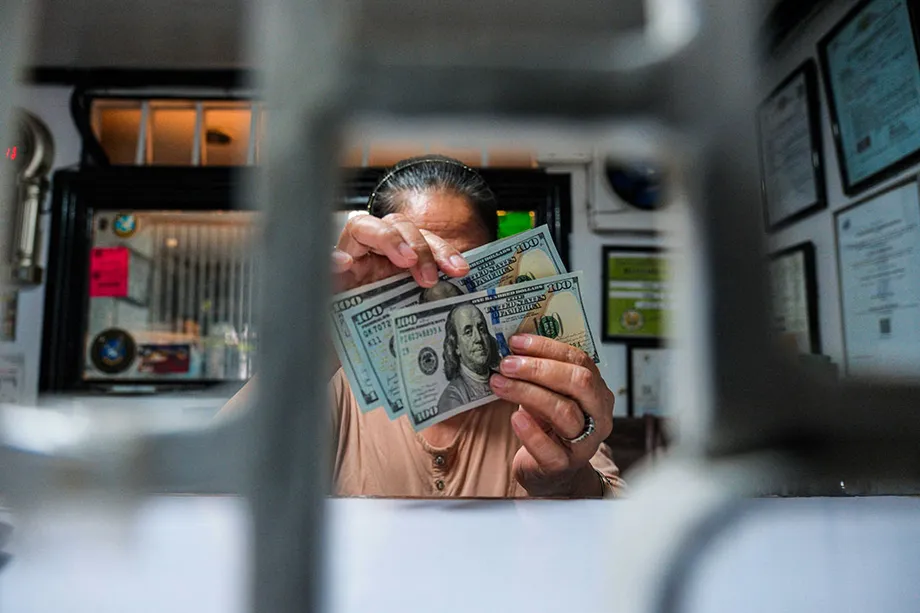
The Philippine peso closed at a record P63.95 against the US dollar on Monday, October 26, 2026, as rising oil prices, a widening external payments deficit and concern about weak economic growth outweighed the support from higher interest rates. The currency finished just five centavos from P64, four days after the Bangko Sentral ng Pilipinas (BSP) raised its benchmark rate by half a percentage point to 5.5%.
Contents
- Five centavos from P64 despite higher interest rates
- Why expensive oil puts pressure on the currency
- A payments deficit keeps demand for dollars high
- Foreign reserves provide a smaller cushion
- Why the BSP chose a larger rate increase
- Higher borrowing costs bring a difficult tradeoff
- Stocks and foreign debt add to the strain
- Remittances and exporters gain, with limits
- The dates and decisions markets are watching
- Key Points
Bankers Association of the Philippines data showed the peso weakened by 33.5 centavos from its October 23 close of P63.615. It opened at P63.535, briefly strengthened to P63.50 and ended at its weakest point of the session. Dollar trading increased to about $1.649 billion from $1.285 billion on Friday.
The peso has moved from P58.79 per dollar at the end of 2025 to P63.95, meaning buyers now need P5.16 more to purchase one dollar. That is an 8.78% increase in the peso price of a dollar, equivalent to an approximately 8.07% fall in the peso's dollar value. Both calculations describe the same exchange rate movement from different starting points.
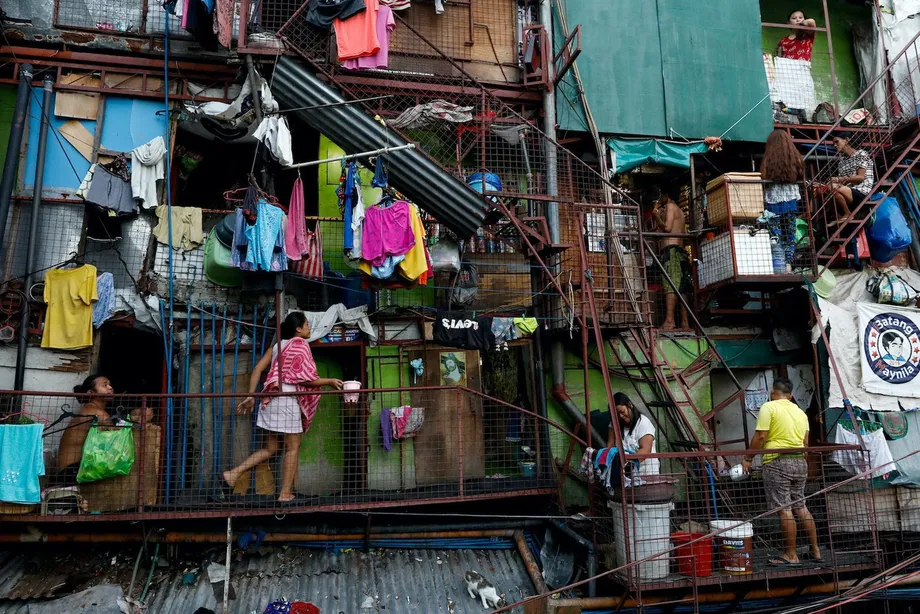
For households, the pressure reaches beyond currency screens. A weaker peso makes imported fuel, food, machinery and other goods more expensive in local money. Families receiving dollars from abroad gain more pesos when they exchange them, but higher living costs can absorb part of that gain.
Domini S. Velasquez, chief economist at China Banking Corp., linked the latest decline to higher oil prices, US President Donald Trump's remarks about possible renewed military action against Iran and deteriorating confidence in the Philippine economy.
"The peso's weakness also reflects eroding investor confidence amid growing concerns that the Philippines could face a period of stagflation," Velasquez said.
Why expensive oil puts pressure on the currency
Brent crude rose 3.14% to $116.72 a barrel on October 23, its highest settlement in nearly six months, before reaching about $117 over the weekend. Renewed attacks on Saudi energy infrastructure and commercial vessels, hostilities involving Yemen's Houthis and tensions around the Strait of Hormuz have added to concerns about supplies.
The Philippines imports much of its petroleum as finished products. Importers therefore face several moving costs at once: international fuel prices, freight charges and the exchange rate. When oil becomes more expensive in dollars and the peso weakens, the local currency cost rises from both directions.
Michael L. Ricafort, chief economist at Rizal Commercial Banking Corp., said a larger oil import bill could widen the country's trade deficit, current account deficit and balance of payments deficit. The trade deficit measures the gap between goods imports and exports. The current account also includes services and income flows, while the balance of payments records the broader movement of money between the Philippines and the rest of the world.
Philippine pump prices will move in different directions during the October 27 to November 2 adjustment period. The Department of Energy announced a P0.30 reduction per liter for gasoline and a P0.50 reduction for kerosene, while diesel will rise by P1.20 per liter.
Diesel had already increased by P2.60 per liter the previous week, taking the combined increase across the two adjustments to P3.80. That matters for transport operators and businesses moving goods. Executive Order No. 125, issued in September, suspended excise taxes on liquefied petroleum gas and kerosene; gasoline and diesel remain outside that relief.
A payments deficit keeps demand for dollars high
The BSP recorded a balance of payments deficit of $3.144 billion in September, more than five times August's $596 million shortfall and a reversal of the $82 million surplus a year earlier. September was the third consecutive month in deficit and the largest monthly shortfall since January 2025, when the deficit reached $4.078 billion.
A deficit means more money left the country through recorded international transactions than came in. Import payments, foreign investment movements and debt obligations all affect that balance, helping explain why demand for dollars can remain strong even after Philippine interest rates rise.
The January to September deficit reached $9.1 billion, compared with $5.3 billion during the same period in 2025. The BSP attributed the shortfall to the goods trade deficit and net outflows from foreign portfolio investments. Remittances, government borrowing abroad, services trade and foreign direct investment partly offset those pressures.
By September, the cumulative deficit was only about $100 million below the BSP's forecast of $9.2 billion for the whole of 2026. The central bank also projected an $8.5 billion deficit for 2027, citing elevated oil prices, transport costs and geopolitical tensions.
The currency had already reached P63.361 before the latest policy decision, during the slide before the rate decision. Monday's close shows how persistent external dollar demand has continued alongside tighter monetary policy.
Foreign reserves provide a smaller cushion
The Philippines' gross international reserves fell to $99.5 billion at the end of September from $104.8 billion in August, a decline of $5.3 billion in one month. The revised September figure was below the preliminary $99.997 billion announced on October 8 and was the lowest monthly reading since September 2023.
Foreign reserves are assets the central bank holds that can help meet international payments and manage sharp currency movements. The BSP attributed the decline to its foreign exchange operations, changes in the value of gold and other reserve assets, and government withdrawals for foreign debt payments and other requirements.
September's reserves covered 6.2 months of imports of goods and payments for services and primary income. They were also equivalent to 3.1 times external debt falling due within a year, measured by residual maturity. Those figures show the country still had a substantial payment cushion, although it had become smaller.
Reserves were roughly $13.77 billion below their February peak. Emilio Neri Jr., lead economist at Bank of the Philippine Islands, said before the October rate meeting that uncertainty about the duration of the Middle East conflict made maintaining an adequate buffer more important, particularly if the conflict continued into 2027.
Why the BSP chose a larger rate increase
The BSP's October 22 increase of 50 basis points took the benchmark interest rate to 5.5%, its highest level in nearly two years. A basis point is one hundredth of a percentage point, so the decision added half a percentage point. It was the fourth consecutive increase, bringing the total rise since April to 125 basis points.
BSP Governor Eli M. Remolona Jr. said the decision responded to the prospect of further price increases from energy, transport and weather conditions affecting food production.
"We took this decisive action because we forecast that inflation will accelerate further in the coming months due to oil prices, transport fares, and the potential effects of El Niño on food prices," Remolona said.
September inflation reached 7.2%, up from 6.1% in August and 1.7% a year earlier. It exceeded the upper limit of the BSP's 2% to 4% target range by 3.2 percentage points. Core inflation, which removes selected volatile food and energy items, reached 4.7%, indicating that price increases had spread beyond the most changeable items.
The central bank expected inflation to average 6.1% in 2026 and raised its forecast for 2027 to 6% from 5.4%. Its projection for 2028 remained 3.3%. Strong El Niño conditions could add pressure to food prices through disruption to agricultural production.
The larger increase followed a call for stronger tightening from former BSP officials Diwa Guinigundo and Wilhelmina Mañalac. Their argument focused on preventing an initial shock from food and energy costs from spreading into more persistent price increases across the economy.
Higher borrowing costs bring a difficult tradeoff
Philippine economic growth slowed to 2.3% in the second quarter, leaving the BSP to fight high inflation while activity was already weak. Higher interest rates can restrain borrowing and spending, and can make peso investments more attractive. They also increase financing costs for households and businesses.
Stagflation describes an economy experiencing rising prices alongside weak or stagnant growth, often with a difficult jobs market. Velasquez described concern about that outcome as a factor weighing on investor confidence. The immediate policy problem is concrete: restraining spending can ease inflation, while also slowing purchases, investment and hiring.
John Paolo R. Rivera, senior research fellow at the Philippine Institute for Development Studies, said external pressures were outweighing the support from higher Philippine interest rates.
"While monetary tightening can help stabilize expectations and moderate depreciation, it cannot fully offset these pressures," Rivera said.
Rivera said the concern extended beyond whether the peso crossed P64 to the inflation caused by prolonged currency weakness. Interest rate increases can influence demand and expectations, but rebuilding food supplies, reducing transport costs and improving electricity supply require other measures.
Stocks and foreign debt add to the strain
The Philippine Stock Exchange index fell 87.45 points, or 1.53%, to 5,641.18 on Monday, its lowest level since June 2026. All sectors declined, with conglomerates recording the steepest fall at 2.37%. Only five index members advanced.
Japhet Tantiangco, research manager at Philstocks Financial Inc., linked the losses to weak public infrastructure spending, elevated inflation and the possibility of further interest rate increases. Luis Limlingan, head of sales at Regina Capital Development Corp., also cited rising oil prices and infrastructure spending that had contracted for 14 consecutive months.
Net stock trading value was P4.61 billion, while foreign investors sold P45.06 million more than they bought. Across the broader market, 106 stocks declined, 61 advanced and 78 were unchanged.
The country's external debt stood at $154.9 billion in the second quarter of 2026. Borrowers with obligations in dollars need more pesos to service each dollar of debt when the exchange rate weakens. The burden depends on the currency of each obligation and whether the borrower also earns foreign currency.
Remittances and exporters gain, with limits
Families receiving money from overseas gain more local currency for every dollar exchanged. At P63.95, a $100 remittance converts to P6,395 before fees, compared with P5,879 at the end of 2025. That is P516 more, although rising prices reduce what the additional money can buy.
Aris Dacanay, senior economist at HSBC Global Research, said a weaker peso could also support manufacturing by making Philippine goods more affordable to foreign buyers and more competitive against imports. He cited export growth of 14% during the year to date and described 2026 as the first year since 2018 with material and sustained manufacturing growth.
HSBC's analysis found Philippine goods had become more affordable relative to goods from several Asian economies, with India, South Korea and Indonesia among the exceptions. Dacanay said stronger demand for local products could help narrow the trade deficit.
Manufacturers importing raw materials, components and machinery face a competing cost increase. Some may absorb those expenses through lower profits; others may raise selling prices. Dacanay called for lower inflation, reduced barriers to trade and action against smuggling, hoarding and cartels to help sustain manufacturing gains.
The dates and decisions markets are watching
The next currency moves will depend partly on US monetary policy, oil prices and incoming economic figures. Before Monday's session, federal funds futures indicated less than a 10% probability of a rate increase at the coming Federal Reserve meeting, but roughly an 80% probability of an increase in December.
A decision to hold US rates steady could provide some relief for the peso. A stronger signal that US rates will rise could support the dollar instead. Traders will also watch US jobs figures and Philippine trade data for signs of changes in growth and dollar demand.
The recent sequence shows how quickly the pressure has developed:
- October 22: The BSP raised its benchmark interest rate by 50 basis points to 5.5%.
- October 23: The peso closed at P63.615, while Brent settled at $116.72 a barrel.
- October 26: The peso closed at a record P63.95 and the main Philippine stock index fell 1.53%.
- October 27: Diesel rises by P1.20 per liter, while gasoline and kerosene prices fall.
- October 28: The Federal Reserve is due to issue its policy statement.
- December 17: The BSP holds its final scheduled policy meeting of 2026.
For Tuesday, a currency trader forecast a range of P63.70 to P64.20, while Ricafort expected P63.85 to P64.05. Jonathan L. Ravelas, senior adviser at Reyes Tacandong & Co., said persistent geopolitical risks could leave the peso vulnerable to P65. Ricafort also identified the usual increase in remittances during the fourth quarter as a potential source of support.
Remolona has left further rate increases open, while Neri expects another 25 basis points in December, potentially taking the benchmark to 5.75%. No further increase has been decided. The BSP's intervention policy focuses on large exchange rate movements that feed inflation rather than maintaining a fixed peso level.
Key Points
- The peso closed at a record P63.95 per dollar on October 26, weakening by 33.5 centavos.
- The BSP raised its policy rate to 5.5% on October 22, but expensive oil and persistent dollar demand continued to weigh on the currency.
- The payments deficit reached $9.1 billion through September, close to the $9.2 billion forecast for the full year.
- Foreign reserves fell to $99.5 billion, sufficient to cover 6.2 months of imports and related payments.
- September inflation was 7.2%, while second quarter economic growth slowed to 2.3%.
- Remittance recipients and some exporters gain from a weaker peso, while importers and borrowers with foreign currency obligations face higher costs.
- The Federal Reserve decision and the BSP's December 17 meeting are the next major scheduled policy events.