Fast border checks, slow roads home
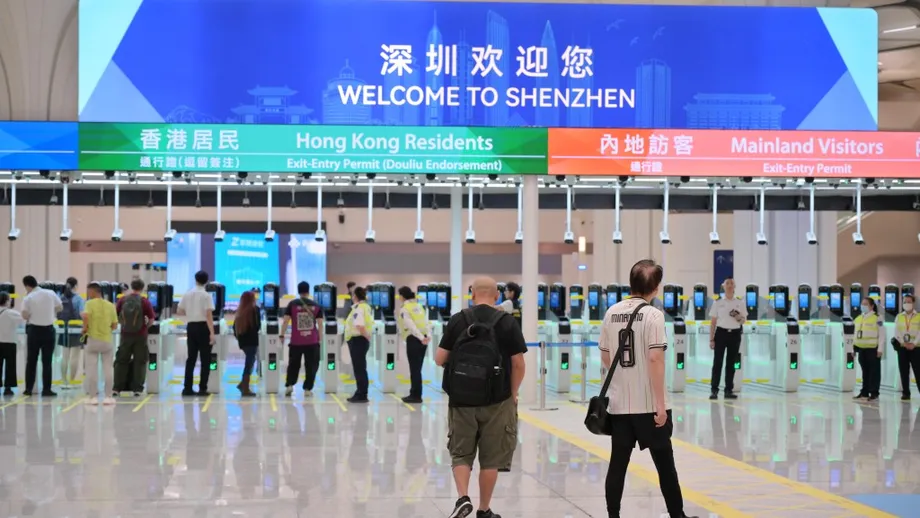
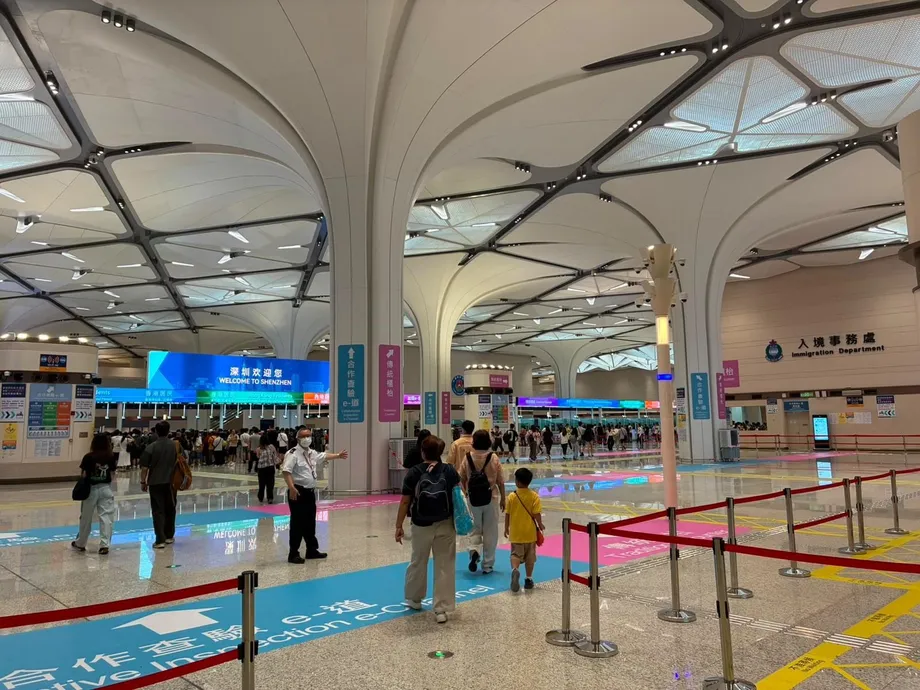
About 14,760 travellers crossed north through Hong Kong's redeveloped Huanggang Port between midnight and 2am on October 25, 2026, while roughly 1,200 vehicles headed towards the crossing, twice the usual weekend volume. Inside the passenger departure hall, the government said queues took about five to ten minutes. Outside, private cars faced waits of 45 to 50 minutes, and some travellers in the city waited around an hour just to board a bus.
Contents
- Fast border checks, slow roads home
- What happened over the weekend?
- Why more buses did not clear the queues
- Where the road system narrows
- What the government says it has changed
- An earlier surge tested the departure halls
- Bus lanes, extra boarding space and later crossings
- Private cars and illegal paid rides
- What travellers need to check
- Another test before the year end celebrations
- Key Points
The contrast explains the problem facing the new crossing: immigration officers can process passengers quickly, yet buses, taxis and private cars still have to reach the building through roads with limited capacity. A delay near the border can also keep buses from returning to collect their next passengers in Mong Kok, Prince Edward or Tsim Sha Tsui.
The weekend brought together concerts, including The Weeknd's performances at Kai Tak Main Stadium on October 24 and 25, events at AsiaWorld-Expo and early Halloween celebrations in Central and other districts. Many visitors wanted to return to Shenzhen after the railway and most other land crossings had closed.
Traffic became congested on two consecutive nights, prompting calls for stronger bus priority, changes to boarding areas and longer opening hours at other crossings. The government has announced another coordinated deployment for October 30 to November 1, when Halloween and further concerts are expected to bring fresh demand.
The immediate challenge is to move people through the whole journey, from an event venue to their destination across the boundary. A short queue at passport control is only one part of that trip.
What happened over the weekend?
Government figures put the busiest hour, from midnight to 1am on October 25, at 9,375 departures, an increase of 176% against the historical comparison for Huanggang and the former Lok Ma Chau Control Point. Across the first two hours, departures were up 212%, meaning passenger traffic was a little more than three times the earlier level.
Immigration Department figures also showed about 67,000 departures through Huanggang on the preceding Saturday. Mainland visitors accounted for approximately 16,000, compared with about 12,000 on the previous Saturday.
The sequence shows how quickly the pressure built and how it continued into another night:
- October 24, about 11.30pm: the government said taxi and private car arrivals began increasing sharply.
- October 25, midnight to 2am: 14,760 travellers crossed north and about 1,200 vehicles headed to the port.
- October 25, about 12.30am: private car waits from entry into the vehicle buffer area to completion of clearance reached about 45 to 50 minutes.
- October 25, by 2am: the government said queues at the vehicle departure level and the hall for accompanying passengers had cleared.
- The following overnight period: congestion returned, with an average wait of about 25 minutes to reach the drop-off area; cross boundary vehicle flow returned to normal at about 12.50am.
- October 30 to November 1: departments will maintain a forward command post and prepare extra staffing and transport capacity.
For concert visitors, operators arranged 63 coaches towards Huanggang and 48 towards Shenzhen Bay. The deployment illustrates the scale of transport required when thousands of people leave major venues within a short period.
Why more buses did not clear the queues
Tsai Shun-kei, chairman of the Hong Kong Non-Franchised Bus Association and a senior executive at a cross boundary coach operator, said his company's passenger numbers rose about 30% from the previous Saturday. It increased departures from every 15 minutes to every five minutes.
That change tripled the scheduled frequency, from four departures an hour to 12. Road delays then disrupted the operation. Tsai said a journey from Tsim Sha Tsui to Huanggang that normally took about 35 minutes required around 90 minutes at the peak, an increase of 55 minutes, or about 157%.
Tsai described a queue stretching roughly one kilometre back from San Tin Interchange. He said congestion began around 11.45pm and lasted until about 2am. With coaches taking longer to complete each trip, vehicles were slower to return to city boarding points.
Queues in Mong Kok extended around Arran Street and Portland Street, while passengers also waited at Prince Edward and Kai Tak. Some people had to watch six or seven buses depart before boarding. An unnamed visitor travelling with four companions said the group had missed the railway and considered a taxi unsuitable for all five people. Another visitor, identified as Ms Lee, waited more than half an hour after visiting Lan Kwai Fong.
Where the road system narrows
The Transport Department's October 7 transport arrangements announcement described dedicated public transport lanes from Fanling Highway and San Tin Highway directly to San Sham Road, bypassing San Tin Interchange. It also set out a buffer area where operators could hold backup buses near the port.
Tsai said the approach still became congested because traffic backed into the public transport access. He described vehicles changing lanes close to the double white lines and a connecting road with two lanes struggling to absorb the number of private cars approaching the building.
Chan Han-pan, chairman of the Legislative Council's transport panel, identified another problem: people can finish immigration faster than vehicles can reach them. Limited boarding space then leaves passengers waiting for transport after completing their checks.
Legislator and North District councillor Yiu Ming described an area where eight streams of traffic narrowed into one. He also alleged that private cars and taxis were occupying access intended for coaches. These are points raised by elected representatives as they press for changes to the layout and enforcement.
Other concerns include vehicles having to turn around after entering the Hong Kong boarding area and drivers being unfamiliar with the new roads. Together, the complaints point to several connected pressure points: the highway approach, vehicle inspection and the space where passengers get into or out of vehicles.
What the government says it has changed
The Security Bureau established a forward command post with border departments and the Transport Department before the weekend. Its task was to monitor traffic and passenger numbers in real time and coordinate action at the crossing.
Officials said all inspection facilities were opened ahead of the peak, including the L5 passenger departure hall, the L1 vehicle departure level and the L1M hall for people accompanying vehicles. Police opened vehicle buffer space to separate flows, and additional personnel helped manage travellers.
The government described traffic between 11.30pm and 1.30am as slow but moving. Its figures put the peak private car wait at 45 to 50 minutes, later falling to about 30 minutes. The accompanying passenger hall had waits of around 15 minutes, while L5 passenger queues took five to ten minutes.
Chief Secretary Eric Chan visited Huanggang and Shenzhen Bay and instructed departments to improve forecasting and open counters and vehicle lanes before surges arrived. He also asked transport officials to ensure operators reserved enough vehicles and staff.
For October 30 to November 1, the command post will continue operating, extra personnel will be assigned to L1 and L1M, and police will adjust road controls and buffer areas according to demand. The Security Bureau will publish waiting information through Easy Boundary, while Hong Kong officials remain in contact with Shenzhen about crossing arrangements.
An earlier surge tested the departure halls
Huanggang had already experienced heavy demand during the Chung Yeung holiday period. Immigration figures recorded 130,364 crossings on Saturday, 152,068 on Sunday and 116,667 on Monday. Their combined total was 399,099, averaging about 133,000 a day.
Security Secretary Chris Tang described holiday traffic as averaging around 130,000 daily trips, compared with about 83,000 on ordinary days. Using those rounded figures, holiday demand was about 57% higher. Tang said ordinary daily usage was already more than twice that of the old crossing.
The Security Bureau's October 18 passenger traffic update recorded about 19,000 northbound passengers between noon and 2pm, an increase of 835% against its historical comparison. The busiest hour, from 1pm to 2pm, recorded 9,728 departures, up 899%.
During that surge, passengers waited about 30 to 45 minutes under crowd diversion arrangements on L2, while queues inside the L5 departure hall stayed within 30 minutes. Controls on L2 ended at 2.10pm, and L5 waits fell below 15 minutes by 2.40pm. Those figures describe different stages of the journey, so a traveller could encounter more than one queue.
The bureau said a drill involving around 20,000 participants had prepared departments for crowd management. Tang said the port could open 60 automated channels and 30 manual counters, although manual processing required staff from both Hong Kong and the mainland to work simultaneously. Returning demand also needed attention: Sunday recorded 74,902 arrivals, and about 9,401 passengers arrived between 2pm and 4pm on Monday.
Bus lanes, extra boarding space and later crossings
Transport representatives want road priority to begin before the queues become established. Tsai proposed a bus lane on San Tin Highway from 11pm to 3am. Tourism industry representative Tsui Ting-pong suggested starting controls earlier, around 8pm or 9pm on busy days, with priority for buses and coaches on San Tin Highway and Fanling Highway.
Chan Han-pan proposed temporary boarding and drop-off areas and an early warning system for major events. Yiu Ming suggested using vacant roads around the former Huanggang and Lok Ma Chau facilities as temporary vehicle queues, keeping waiting traffic off San Tin Highway.
Legislator Perry Yiu called for a meeting across departments, better live crossing information and consideration of more ports operating around the clock. Cheung Kim-ping, vice-chairman of the Hong Kong Guangdong Boundary Crossing Bus Association, favoured examining road capacity and temporarily extending Shenzhen Bay's hours during concerts and festivals. He said operating another crossing all night would be difficult when ordinary overnight demand was limited.
Legislator Chan Yung proposed extending Shenzhen Bay and Liantang services until 2am on weekends, alongside bus lanes during major events. The government has announced its staffing and traffic management measures for the next peak; no approval or implementation date has been announced for these proposed road changes or longer crossing hours.
Private cars and illegal paid rides
Tsai said cars holding crossing permissions for Man Kam To, Sha Tau Kok, Heung Yuen Wai and Shenzhen Bay could use Huanggang during overnight hours. When other crossings close, those vehicles can join the same approach roads as coaches and taxis.
Bus industry representatives attributed much of the congestion to the volume of private cars. Cheung also alleged that illegal operators were adding hundreds of vehicles carrying relatively few passengers. Authorities have not published a count of illegal hire cars involved in the weekend queues.
The government said authorised cross boundary hire cars must hold a regular quota, a closed road permit and the relevant hire car permit. Police can investigate and prosecute illegal paid passenger services, while the Transport Department can revoke a vehicle's closed road permit for breaching its conditions.
Officials also warned passengers about insurance: when a vehicle is being used for an illegal transport service, third party cover may become invalid after a collision. Enforcement is therefore part of both the traffic response and passenger protection.
What travellers need to check
Huanggang operates 24 hours, but individual transport routes have their own schedules. The Transport Department's port access guide lists franchised buses, minibuses, taxis and coaches, with service times and fares.
The launch network included seven franchised bus routes, six green minibus routes and five short distance coach routes operating around the clock. The overnight 616S minibus runs from the port towards Mong Kok between 11.05pm and 6.30am; departures from Mong Kok towards the port run from 10.25pm to 5.30am. Its listed full fare is HK$28.50.
Regular coach fares include HK$45 to HK$50 for the Mong Kok shuttle and HK$50 to HK$55 for Yau Tsim. Some stops operate only at particular times. The Kai Tak B14 bus initially operates during specified morning and evening periods, making its timetable especially relevant for people leaving late events.
The Hong Kong port area has no public car park. Its interchange also has no pickup point for prebooked taxis outside registered fleets. Vacant taxis and booked fleet taxis must obtain queue tickets before entering their designated pickup areas.
For immigration, the new collaborative inspection system lets Hong Kong and mainland authorities complete their checks within one coordinated passage. Eligible travellers should arrange registration before using automated channels. Document reading channels have a minimum age of seven; facial recognition channels have a minimum age of 14 and additional eligibility conditions. Travellers must still carry valid documents, and the usual e-Channel QR code cannot be used in these collaborative channels.
Another test before the year end celebrations
The next planned deployment covers October 30 to November 1. Officials and transport representatives are also looking towards the Wine and Dine Festival, winter celebrations, Christmas and New Year concerts and countdowns, when large crowds may again seek transport at similar times.
Eric Chan encouraged visitors to travel outside the busiest periods or stay overnight after events. Legislator Yeung Wing-kit suggested packages combining accommodation and high speed rail tickets. Those ideas would spread departures across more hours, while bus priority and extra boarding space would address the journeys of people returning the same night.
The pressure also connects with the city's Halloween revival proposals, which called for celebrations to be coordinated with transport and local businesses. This weekend showed the practical consequence of that connection: visitors could enjoy a concert or a night in Lan Kwai Fong, then spend much longer than expected getting home.
For the next surge, the measures already announced focus on earlier staffing, traffic separation and flexible bus deployment. The longer debate concerns how quickly the roads and boarding areas can move passengers between a busy entertainment city and its busiest overnight crossing.
Key Points
- Huanggang handled 14,760 northbound travellers between midnight and 2am on October 25.
- About 1,200 vehicles approached during those two hours, twice normal weekend traffic.
- Passenger hall queues took five to ten minutes, while peak private car waits reached 45 to 50 minutes.
- Some city passengers waited around an hour for buses as road congestion delayed coach journeys.
- The government will maintain a command post, extra staffing and transport coordination for October 30 to November 1.
- Bus lanes, temporary boarding areas and extended hours at other crossings remain proposals.