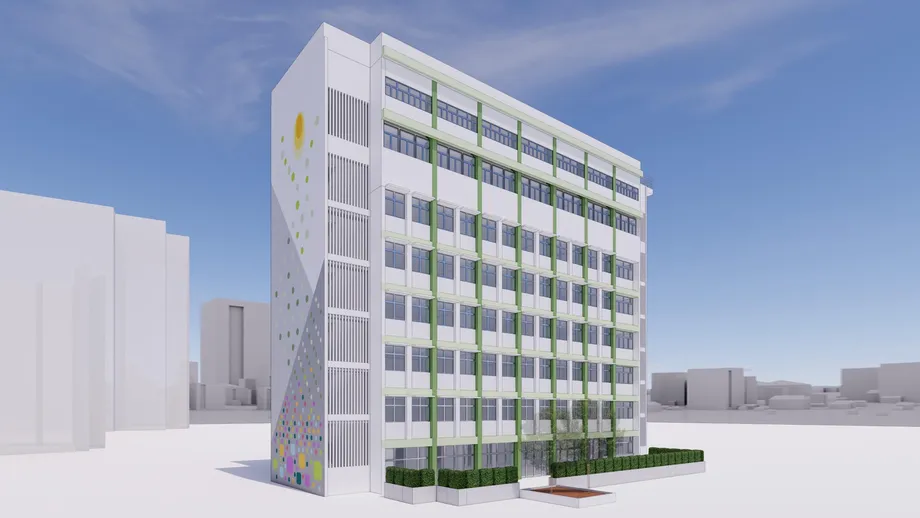
Applications open as the final 210 homes approach completion
Hong Kong opened applications for all 13 Light Public Housing projects on October 16, 2026, as the Housing Bureau set out plans to complete the programme's approximately 30,000 homes by the end of March 2027. Eligible applicants who return their forms by November 6 will receive priority processing, while applications will remain open after that date.
Contents
- Applications open as the final 210 homes approach completion
- Who gets priority for a home?
- What the two school conversions will provide
- Where the 13 projects are located
- How much residents may pay and save
- How to submit an application
- Why homes are becoming available again
- How demand and construction have progressed
- What the accelerated timetable means
- Support goes beyond the rent
- Key Points
The final two projects, both converted from school premises, will provide about 110 homes on Shun Lee Estate Road in Kwun Tong and about 100 on Chuk Yuen Road in Wong Tai Sin. They are scheduled for completion during the first quarter of 2027, with estimated monthly rents ranging from HK$1,390 to HK$3,330 across the two locations.
The Housing Bureau's October 16 announcement also describes a change in how the programme is operating. Alongside newly completed homes, units are becoming available when residents move into traditional public rental housing. Those homes can then accommodate other households with urgent housing needs.
More than 44,900 applications had been received by September 30, 2026. People who have already applied do not need to submit another application. For households still waiting for conventional public housing, the immediate opportunity is to seek a more affordable place to live while that wait continues.
The November 6 date matters because it gives applications priority processing. The bureau will continue accepting eligible applicants for every project afterward, allowing both new homes and homes vacated by departing residents to be allocated as they become available.
Who gets priority for a home?
General applicants for traditional public rental housing who have waited at least three years are the priority group. This includes families of two or more people and elderly people applying alone. The bureau says eligible applicants will receive application forms by post in stages.
The programme's eligibility rules and its allocation priorities perform different jobs. Eligibility determines who can apply. Allocation priority helps the bureau decide which applicants have the greatest need to move sooner.
Applicants may receive higher allocation priority if they live in inadequate housing, have special health needs, or have household members who are children, newborn babies or elderly people. For example, a family living in a subdivided flat with a young child may have circumstances relevant to that assessment.
The Housing Bureau says it will process applications and arrange allocations as quickly as possible. It has not given a single waiting time or move date covering all applicants; the two final projects are still awaiting completion.
What the two school conversions will provide
Shun Lee Estate Road will provide approximately 110 units, including homes for one or two people and homes for three or four people. Estimated monthly rents range from HK$1,390 to HK$2,670.
Shun Tin Bus Terminus is about five minutes away on foot, according to the bureau. Bus and minibus services connect the area with Choi Hung MTR station and other parts of Hong Kong Island and Kowloon.
Chuk Yuen Road will provide approximately 100 units. Its range includes homes for one or two people, three or four people, and four or five people. Estimated monthly rents are HK$1,470 to HK$3,330.
Bus and minibus stops on Chuk Yuen Road are about five minutes away on foot, with connections to Wong Tai Sin MTR station and other destinations. The larger household category at this project gives families of four or five another option within the final pair of developments.
Together, the conversions account for about 210 homes, or 0.7% of the programme's approximately 30,000 units. They are a small share of the total, but their completion will finish the full network of 13 projects.
Where the 13 projects are located
The Housing Bureau says the projects cover Hong Kong Island, Kowloon and the New Territories, with different sizes and local characteristics. The complete list is:
- Yau Pok Road, Yuen Long.
- Choi Hing Road, Ngau Tau Kok.
- Choi Shek Lane, Kowloon Bay.
- Tsing Fuk Lane, Tuen Mun.
- Olympic Avenue, Kai Tak.
- Sheung On Street, Chai Wan.
- Yan Po Road, Tuen Mun.
- Tsing Fat Street, Tuen Mun.
- Hang Kwong Street, Ma On Shan.
- Shun On Road, Kwun Tong.
- Choi Yuen Road, Sheung Shui.
- Shun Lee Estate Road, Kwun Tong.
- Chuk Yuen Road, Wong Tai Sin.
Location matters alongside rent. A household considering a move needs to weigh the journey to work, school connections and access to daily services. The bureau has highlighted transport links at the two final projects and says operators provide help with settling into a new neighbourhood.
School conversions are already part of the programme. Shun On Road and Choi Yuen Road, both included in an earlier application phase, also use former school premises. The final two developments extend that approach.
How much residents may pay and save
Monthly rents across the programme range from approximately HK$880 to HK$3,380, depending on the location and size of the unit. The estimates for the final two projects sit within that wider range.
The Housing Bureau says rents are set with reference to about 90% of the rent for newly completed traditional public rental housing in the same district. In simple terms, if the comparable public housing rent were HK$2,000, a rent set at 90% would be HK$1,800.
Traditional public housing rents are generally reviewed every two years, and Light Public Housing rents may also be adjusted accordingly. Applicants should therefore consider the published figures as estimates rather than a fixed price for their entire stay.
The bureau estimates that residents benefiting from the programme could collectively save HK$7.55 billion in rent over five years. Lower monthly housing costs would leave households with more money for food, transport, education and other expenses.
Moving itself brings costs. A Community Care Fund pilot scheme offers eligible Light Public Housing households a single special allowance ranging from HK$1,950 to HK$13,000 to help with relocation and adjustment. The bureau lists expenses such as changing schools, buying furniture or appliances, and rebuilding connections in a new community.
How to submit an application
Applicants can return completed forms by post, use designated document collection boxes or submit electronically if they meet the digital registration requirements. Those who have already submitted a form should keep their existing application rather than send a duplicate.
Postal applications should be addressed to the Housing Bureau Light Public Housing Task Force Office, P.O. Box 28222, Gloucester Road Post Office, Wan Chai, Hong Kong.
Document collection boxes are available at two locations:
- The Light Public Housing Information Counter, Level 2 podium, Hong Kong Housing Authority Customer Service Centre, 3 Wang Tau Hom South Road, Kowloon.
- The Light Public Housing Task Force Office, Room 801, 8th floor, Revenue Tower, 5 Gloucester Road, Wan Chai, Hong Kong.
The collection boxes operate during office hours, from 9am to 6pm, Monday to Friday, excluding public holidays.
Electronic submission is available when both the applicant and all family members have registered for iAM Smart+. They can scan the individual QR code printed on the application form to complete, sign and submit the electronic version.
Completed forms returned on or before November 6, 2026, qualify for priority processing. Questions about applications can be directed to 3464 0700 or [email protected].
Why homes are becoming available again
Some residents have already moved from Light Public Housing into traditional public rental housing. Their departure releases units for other eligible households, creating a continuing flow of available homes alongside the remaining construction.
The government's application update says units vacated through these moves will be offered to families with urgent housing needs. Keeping all projects open for applications allows the bureau to allocate those homes as turnover continues.
For a household living in a poor quality subdivided flat, this creates another route to a more affordable home before a traditional public housing allocation becomes available. For the programme, it means the same unit can serve successive households over time.
The 44,900 applications received by September 2026 amount to roughly 1.5 applications for each of the approximately 30,000 planned homes. The programme's capacity to help people also depends on how many units become available again as residents move on.
How demand and construction have progressed
The Housing Bureau's March 2025 briefing to the Legislative Council provides an earlier measure of demand. The first application phase covered about 4,440 units at Yau Pok Road and Choi Hing Road and had attracted about 14,300 applications by February 23, 2025.
The second phase covered about 5,060 units and opened on February 24, 2025. It included the first phase of the Olympic Avenue project, Tsing Fuk Lane, Shun On Road and Choi Yuen Road. About 6,600 applications had been received for that phase by March 24, bringing cumulative applications since June 2024 to about 20,900.
By September 2026, cumulative applications had grown to more than 44,900, an increase of about 24,000 from the March 2025 figure. The later total is more than twice the earlier count, showing sustained demand as more projects entered the application process.
The main dates chart the programme's expansion:
- 2022: The Policy Address proposed Light Public Housing.
- June 2024: Applications opened for the first phase.
- February 24, 2025: Applications opened for the second phase.
- September 30, 2026: Cumulative applications exceeded 44,900.
- October 16, 2026: All 13 projects opened for applications.
- November 6, 2026: Applications returned by this date receive priority processing.
- January to March 2027: The final two school conversions are expected to be completed.
- End of March 2027: All approximately 30,000 units are expected to be completed.
What the accelerated timetable means
The Housing Bureau's programme outline sets out the original goal: approximately 30,000 units over the five financial years from 2023/24 to 2027/28. The bureau now expects completion by March 2027, about a year before the end of that planned period.
The 2022 proposal called for using government and private land without settled plans for development in the near term. Standard designs and modular integrated construction were intended to speed delivery. Modular construction involves making building sections in a factory and assembling them at the site.
The programme also uses existing buildings, including the school premises being converted for the final two projects. The purpose is to fill a shortfall in public housing supply more quickly and improve living conditions for people in inadequate accommodation.
The March 2025 Legislative Council briefing shows how unevenly the homes are distributed: the first four projects account for about 17,000 units, while the remaining nine account for about 13,000. Completing every project therefore adds different amounts of housing, with several large developments providing most of the total.
Support goes beyond the rent
Project operators provide facilities and services according to local circumstances. The Housing Bureau lists possible facilities including laundries open around the clock, food outlets, convenience stores, fresh food shops, hairdressers, study rooms and activity rooms.
Support can include employment advice, help with school transfers, childcare, homework assistance, neighbourhood orientation and mobile Chinese medicine services. These services address practical disruptions that can follow a move, especially when a family changes district.
A lower rent can ease the household budget immediately, while school and childcare support can help parents manage work and family routines in an unfamiliar area. The facilities available at each project depend on its actual arrangements.
The next milestones are the November 6 priority processing date and completion of the final two developments in the first quarter of 2027. Applications will continue after November 6, while units released by residents moving into traditional public housing will remain part of the programme's supply.
Key Points
- All 13 Light Public Housing projects opened for applications on October 16, 2026.
- Forms returned by November 6 receive priority processing; applications remain open afterward.
- Previous applicants do not need to apply again.
- Priority applicants include general public housing applicants who have waited at least three years.
- The final two school conversions will provide about 210 homes in Kwun Tong and Wong Tai Sin.
- All approximately 30,000 units are expected to be completed by the end of March 2027.
- More than 44,900 applications had been received by September 30, 2026.
- Eligible households may apply for a special moving allowance of HK$1,950 to HK$13,000.