A reunion that became a lifetime of searching
Military doctor Tran Van Ban returned to his family in late 1976 to discover an altar dedicated to his own memory. His mother had received a death notice and spent seven years mourning him. Almost half a century later, the veteran, now 82, is helping recover soldiers whose families are still waiting for them to come home.
Contents
- A reunion that became a lifetime of searching
- The mother who kept checking by lamplight
- From wounded soldier to military doctor
- Other mothers needed a different kind of homecoming
- Five notebooks and a journey by train
- How an old photograph helped locate the graves
- The dates behind the recovery
- One recovered name shows the work involved
- Recovering remains and restoring identities
- A national campaign, with families still waiting
- Key Points
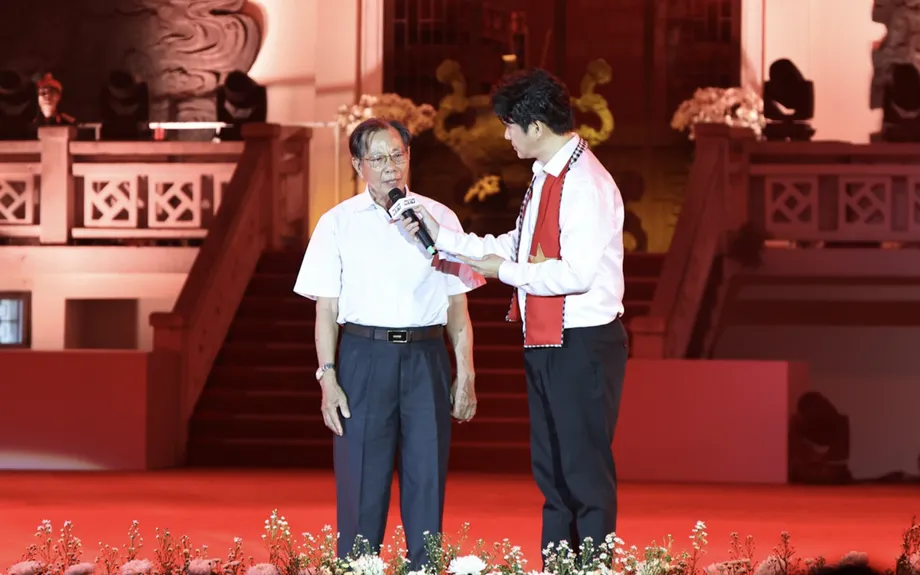
Ban recounted his extraordinary return at the Khuc tri an remembrance programme in Ho Chi Minh City's Le Thi Rieng Cultural Park on October 13, 2026. Beneath the park, recovery teams had found the remains of 731 people identified by authorities as fallen soldiers, most still without confirmed names or hometowns.
The programme took place before a memorial and burial planned for October 14. For Ban, the ceremony brought together two parts of his life: the son who unexpectedly returned to his mother and the survivor who has spent more than 40 years trying to bring other mothers' children home.
Since 1979, his work has included verifying more than 2,300 burial locations, helping return 134 sets of remains to their hometowns and checking information for more than 200 families. His experience now supports a much larger operation involving historical photographs, military records, witness memories and DNA testing.
Each method answers a different question. Photographs can suggest where to dig. A witness may remember who was buried there. A surviving document or a genetic match may finally give a family a name. Ban has spent decades trying to connect those pieces.
The mother who kept checking by lamplight
Ban enlisted in 1967 after leaving Vinh Bao in Hai Phong. Wartime communications with his family broke down while he served in southern Vietnam. At home, relatives received the notice saying he had died and established an altar.
When he finally returned in late 1976, neighbours gathered in astonishment. His two younger sisters embraced him and cried. He understood their reaction only after entering the house and seeing his own altar.
Relatives brought his mother home to see him. Even with her son standing before her, she struggled to accept that he was alive after nearly a decade apart.
That night, she carried an oil lamp to where he was resting. She examined him from head to foot and touched his body, then left and returned to do it again. On her third visit, Ban embraced her and told her that her son had come home alive. Only then did she break into tears.
Ban's return quickly became a source of hope for other mothers in the village. If a son officially declared dead could walk home, they hoped their own missing sons might also return.
From wounded soldier to military doctor
Ban's military service took him through Cu Chi, Ben Cat and Trang Bang, an area known as the Iron Triangle, as well as the wider Saigon and Gia Dinh battlefield. His medical career developed through the needs of wounded men around him.
Seriously wounded in 1970, he was taken to Military Medical Unit C10. He had received basic first aid training before leaving northern Vietnam and volunteered to help dress wounds, give injections and care for soldiers whose injuries were worse than his own.
He later spent two years studying military medicine in Cambodia before returning to the battlefield as a combat medic. After the war, he completed further medical studies and became a physician.
Ban, describing his responsibilities as a wartime medic, recalled the danger surrounding treatment:
A military doctor was also a soldier. Our field hospitals stood in the middle of bombs and artillery fire. There was none of the peace and safety of an operating room in peacetime.
His recollections describe devastating losses: a unit that grew from more than 600 personnel to nearly 1,000 through reinforcements had just over 100 survivors at reunification. Another account of his service records fewer than 50 survivors among 653 soldiers who travelled south with him.
Other mothers needed a different kind of homecoming
Twenty-nine men from Ban's hometown enlisted together on March 25, 1967. According to Ban, only two returned alive after the war, about seven percent of the group. Thirteen sets of remains from that group have since been brought home.
Among his closest comrades were Nguyen Ba Hoa and Nguyen Trung Kien. They shared childhood experiences, schooling, enlistment and service in the south. Both died in battle.
Ban's family received a death notice while he was alive. Hoa's and Kien's families initially lacked official confirmation of their deaths. When Ban came home, their mothers embraced him with renewed hope. Later, carrying confirmation that their sons had died, they asked him where the men were buried.
The accounts place those visits at different intervals after his return, ranging from days to a subsequent visit about a year later. Ban remembered their central request: they wanted to find their sons and bring them home.
He began his sustained search in 1979, returning to former battlefields, interviewing witnesses and comparing their memories with burial information. Early journeys were made on an old bicycle, sometimes starting at three in the morning. He used holidays and days away from work to keep looking.
Five notebooks and a journey by train
Ban preserved burial information in five worn notebooks filled with names, diagrams and maps drawn by hand. During the war, he also wrote comrades' names on paper, sealed the paper inside glass vials and placed the vials in their mouths before burial, hoping to identify them when he returned.
His notebooks later became practical tools for recovering the dead. He compared them with case files held by the Veterans of Foreign Wars? No, by Vietnam Veterans of America's Veterans Initiative, which exchanges information about people missing from the war.
Ban also helped American recovery teams locate missing United States personnel. His search therefore extended beyond his own former comrades, using shared battlefield information to help families on both sides.
His wartime experiences and recovery work became the subject of a literary account recognised with a major Vietnamese literary prize in 1997.
One search eventually led him to Hoa's remains. Bringing his friend north required another difficult journey. Ban recalled discovering that his train ticket prohibited carrying human remains, yet boarding with the small bundle held against him.
For three days and three nights, he carried Hoa along the railway toward home. When he arrived, he placed the remains on the family altar. Hoa's mother came back from the rice fields and reached toward the bundle containing the son she had waited so long to receive.
How an old photograph helped locate the graves
Le Thi Rieng Park occupies the site of the former Do Thanh cemetery. Historical research and witness testimony placed collective burials there after fighting during the 1968 Tet Offensive, when communist forces attacked cities and military positions across South Vietnam.
Architect Nguyen Xuan Thang and a research group spent nearly eight years examining historical photographs and comparing old structures with the modern park. A water tower visible in a photograph from 1968 provided a useful landmark.
The research also drew on American military aerial photographs from 1972, operational diagrams and memories from witnesses on both sides. Researchers estimated that three collective burial pits might contain about 900 people.
Nguyen Thanh Phuoc, who was 12 when he witnessed burials in 1968, remembered bodies laid in layers with wooden boards and white disinfectant powder. Later park renovations had exposed bones, rubber sandals and ammunition magazines.
At a June 8 workshop chaired by Deputy Prime Minister Pham Thi Thanh Tra, officials brought together historical evidence, witness testimony and survey findings. Deputy Defence Minister Nguyen Van Gau said those findings supported the assessment that the area contained collective graves of soldiers, cadres and civilians killed during the Tet fighting.
Radar that sends signals into the ground helped identify disturbed areas beneath the surface. Excavators moved large amounts of soil, while soldiers switched to careful manual work whenever possible remains appeared.
The dates behind the recovery
The park operation developed over months, from comparing historical clues to recovering remains and preparing a public farewell. Its main milestones include:
- June 8, 2026: A workshop brought together evidence concerning burials at the former cemetery.
- June 23: Teams found the first five sets of remains and associated belongings in Area A. Ban began volunteering at the site.
- July 6: Information about a document bearing the name Huynh Van Quen was made public.
- July 26: Ho Chi Minh City Military Command confirmed the identification of Quen's remains.
- September 8 and 9: Teams identified another burial trench in Area A.
- October 13: The Khuc tri an programme honoured the fallen before the planned burial of 731 recovered individuals.
- October 14: Memorial and burial ceremonies were scheduled, with interment at Ho Chi Minh City Martyrs Cemetery.
A campaign chronology also describes a July 6 launch followed by the discovery of an initial burial trench after two days of exploratory digging, while the detailed recovery chronology dates the first discoveries to June 23. The trench described in the campaign account measured 25 metres long and three metres wide.
One recovered name shows the work involved
Huynh Van Quen's identification began with a piece of paper wrapped in plastic and found beside remains on June 23. The surviving text included his name, the Southern Liberation Army and the unit number 962.
Huynh Van Muoi and Huynh Van Nho, in Vam Co commune in Tay Ninh province, believed the name could belong to their brother. The family had searched for him for decades.
One letter complicated the records. An old death notice gave his name as Huynh Van Quyen, while the family's national certificate honouring his sacrifice used Huynh Van Quen, matching the recovered document. Authorities reviewed the records before confirming his identity on July 26.
Nguyen Thi Le, who had pledged to marry him before he went to war and remained unmarried for 58 years, was recognised as his wife by the Tay Ninh Department of Home Affairs on July 18. On July 23, she received a reconstructed portrait at the park.
After the identification, his pen, comb, wallet and bottle of medicated oil were returned to the family. A corrected death notice restored his proper name. The case shows how belongings, family testimony and administrative records can work together to resolve a disappearance.
Recovering remains and restoring identities
Ban volunteers at the park without being a member of the officially assigned recovery force. He helps sort remains, recognise anatomical features and preserve fragments and teeth for testing.
His personal record includes more than 2,300 burial locations checked and 134 sets of remains helped home. A broader tally credits Ban and fellow veterans with finding more than 2,400 sets of remains through their collective work.
Forensic examiner Vuong Gia Bao of the Ho Chi Minh City Forensic Centre explained that teeth and bones can remain physically firm even when the DNA inside has broken into fragments. Heat, moisture, groundwater and microorganisms can damage that genetic material over decades.
DNA carries inherited biological information. Investigators can compare surviving genetic material from remains with samples from relatives, alongside records and other evidence. Samples must be labelled, sealed and stored separately to avoid mixups and contamination.
Ban described the emotional difficulty of recovering someone without being able to record a name:
The hardest part is holding a pen and not knowing my comrade's name.
At the remembrance programme, he also recalled remains he believed belonged to a woman, found with nails and material resembling bindings. He suggested she might have been a clandestine operative or courier who suffered torture. Her identity, role and circumstances of death remain unconfirmed.
A national campaign, with families still waiting
Figures updated to October 13 put recoveries under the national campaign lasting 500 days and nights at 3,611: 2,374 within Vietnam, 217 in Laos and 1,020 in Cambodia. The park's 731 accounted for about one fifth of that total. The campaign aims to recover about 7,000.
Thirty-two teams involving 1,588 personnel were conducting searches. The work also includes removing unexploded ordnance, collecting family DNA samples and building a database for identification.
Across 211,301 graves reviewed, 147,640 were suitable for sampling and 63,661 were unsuitable. Authorities had collected 265,761 biological samples from relatives, analysed 71,102 and entered 66,909 into the database. The campaign's goals include DNA examination of about 18,000 samples from remains.
Pham Thi Thanh Tra requested further collection of samples from relatives through the paternal line, following Ministry of Public Security guidance, with an additional month of concentrated work and an aim of completing that task during 2026.
The October 14 farewell was planned to begin with flower and incense offerings at 7:30 a.m., followed by visiting and memorial ceremonies at 8 a.m. The first convoy was expected to leave around 8:45 a.m. for the cemetery, about 26 kilometres away. The 731 recovered individuals comprised 698 recorded separately and a collective group of 33.
Ban appeared at the preceding evening's programme beside a portrait by artist Le Sa Long showing his recovery work. The event, organised by the city's Department of Culture and Sports, was attended by senior military political official Nguyen Trong Nghia and Deputy Prime Minister Pham Thi Thanh Tra.
The burial will provide a maintained resting place, while identification work continues through preserved samples, belongings and records. For Ban, ageing witnesses make that work increasingly urgent: every lost memory can remove a clue that a family still needs.
Key Points
- Tran Van Ban returned home in late 1976 after his family had mourned him for seven years.
- Since 1979, he has checked more than 2,300 burial locations and helped return 134 sets of remains to their hometowns.
- Recovery teams found 731 fallen soldiers at Le Thi Rieng Cultural Park, most still unidentified.
- Historical photographs, witness memories, personal belongings, military records and DNA testing support identification.
- A memorial and burial were scheduled for October 14, 2026, with identification work continuing afterward.