A new framework for a partnership already expanding at sea
Australia and the Philippines are preparing to sign a Defence Cooperation Arrangement that will replace their 1995 memorandum of understanding, bringing a relationship built around training and internal security closer to the territorial defence challenges facing Manila in the South China Sea.
Contents
- A new framework for a partnership already expanding at sea
- What changes under the arrangement?
- Five Luzon locations, with Philippine sovereignty retained
- The four countries are moving towards closer coordination
- How the partnership reached this point
- Why confrontations at sea drive the agreement
- Drones and patrols connect defence with daily maritime work
- Manila is building a wider network of partners
- ASEAN talks continue as wider tensions grow
- Key Points
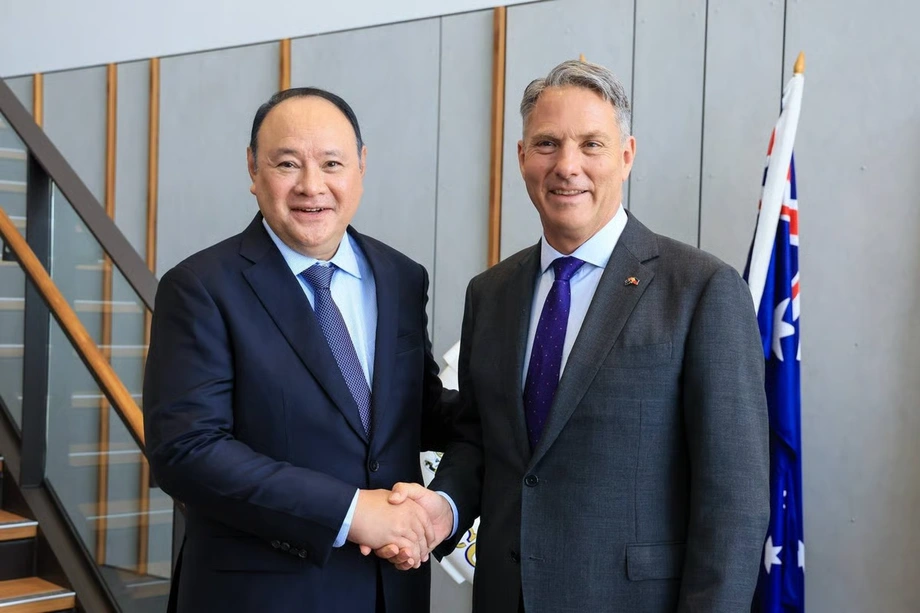
Philippine Defence Secretary Gilberto Teodoro Jr. and Australian Ambassador Marc Innes-Brown are scheduled to sign the arrangement on Sunday in Manila. The Philippine Department of National Defense says Australian Prime Minister Anthony Albanese will witness the ceremony ahead of the 49th ASEAN Summit.
The expected agreement brings together several practical commitments: broader reciprocal military access, more information sharing, cooperation on monitoring activity at sea, and support for Philippine defence infrastructure. Search and rescue operations are also expected to feature. The final wording and detailed access provisions have not been publicly set out.
The clearest official account of its purpose comes from the August ministerial statement, issued after Teodoro and Australian Defence Minister Richard Marles met in Darwin on August 7, 2026. They described the arrangement as the contemporary framework that would modernise and supersede the agreement signed three decades earlier.
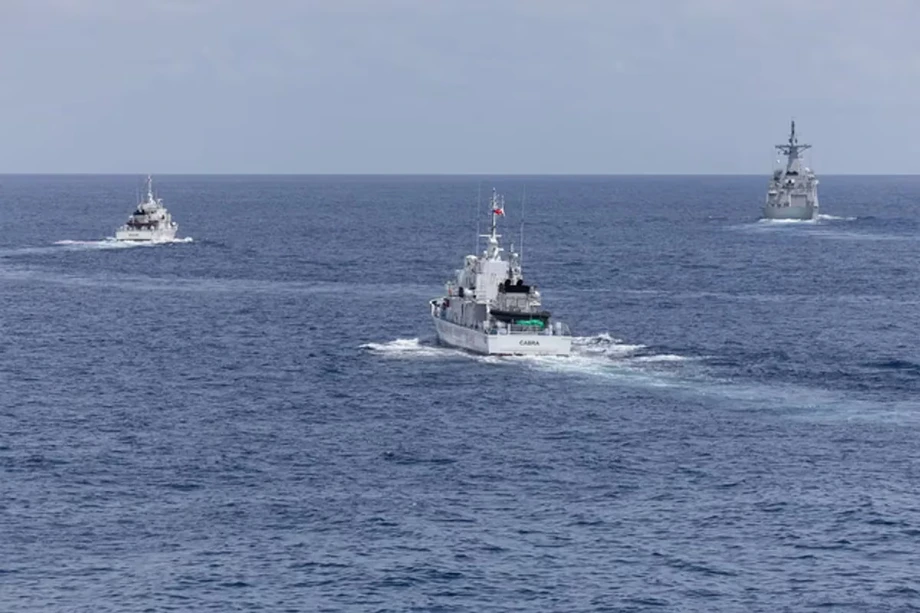
Australia is already supporting infrastructure at five locations on Luzon, participating in maritime activities with Philippine forces and providing drones and training to the Philippine Coast Guard. The agreement would give that expanding cooperation a more durable structure as Manila faces repeated confrontations with Chinese vessels.
What changes under the arrangement?
Australia and the Philippines already have a Status of Visiting Forces Agreement, which provides a legal framework for military personnel visiting each other's territory. The new arrangement is intended to expand the practical cooperation built on that foundation.
Reciprocal access means allowing each country's forces to enter and operate in the other's territory under agreed conditions. Australian officials have indicated that deployments of Australian personnel to the Philippines are likely to be the more frequent use of the expanded arrangements.
Information sharing is another central element. Ships, patrol aircraft and drones can each observe different parts of the same stretch of sea. Combining their observations can help authorities locate vessels, follow their movements and decide where to send a patrol or assistance.
The August statement already identified growing cooperation on intelligence, surveillance and reconnaissance, including Philippine support for Australia's MC-55A Peregrine capability. It also acknowledged Philippine cooperation on access arrangements.
Interoperability, another goal named by both governments, means making different armed forces able to work together effectively. Compatible communications, common procedures and repeated exercises can make it easier for a Philippine ship and an Australian aircraft to exchange useful information during the same operation.
Five Luzon locations, with Philippine sovereignty retained
Australia's infrastructure programme is concentrated on Luzon, the largest and most populated Philippine island. Its position beside the South China Sea and near Taiwan makes it important for logistics, maritime surveillance and the movement of forces.
Planning accounts describe eight infrastructure projects across five locations, while other descriptions refer to eight defence sites within those locations. Australia's Defence Department has identified logistics, training and fire safety as areas of work, with construction scheduled to begin in 2026.
The August ministerial statement welcomed progress on a first group of projects and discussed further potential works. Marles and Teodoro expressly reaffirmed that the Philippines would retain full sovereignty over every site.
The five project locations and their final cost have not been publicly confirmed. Clark Air Base, Fort Magsaysay and Camp Aguinaldo have hosted Australian personnel during exercises, but the infrastructure programme's approved locations remain undisclosed.
The United States provides a useful comparison of scale. It has spent more than $82 million modernising five Philippine military sites since 2014 under its Enhanced Defense Cooperation Agreement, with four more locations added in 2023. Australia's programme is expected to be smaller and focused on practical support for Philippine forces and combined activities.
The four countries are moving towards closer coordination
Australia's bilateral arrangement is developing alongside cooperation among Australia, the Philippines, Japan and the United States, an informal grouping often called the Squad. Their plans increasingly connect exercises, information sharing and investments in Philippine defence.
The August statement identified the four countries' defence cooperation council as an enabler of regular maritime activities in the Philippine exclusive economic zone. Terms of reference signed at the Shangri-La Dialogue in June 2026 established a basis for closer information sharing and faster progress towards forces that can work together.
The next step was an agreement to establish a Combined Coordination Centre in the Philippines. Following the four defence ministers' October 28 meeting in Cebu, Teodoro said on November 11 that a defence coordination mechanism was already operating.
Teodoro identified its work as maritime awareness, coordination, bringing information together and military interoperability. The centre's locations, organisational structure and formal establishment schedule remain undisclosed, along with its relationship to a separately announced coordination centre involving the Philippines and the United States.
The practical change is a move from occasional cooperation towards more regular coordination. Matching investments and sharing a common picture of activity at sea can help the Philippines make better use of ships, aircraft and surveillance equipment supplied or supported by different partners.
How the partnership reached this point
The agreement follows several stages of diplomatic and military cooperation. The official August statement places the current negotiations within a process begun through a Statement of Intent on Enhanced Defense Cooperation signed in 2025.
- 1995: Australia and the Philippines signed the memorandum of understanding that the new arrangement will replace.
- 2025: Both countries committed through a statement of intent to update their defence framework.
- June 2026: The four partners signed terms of reference for their defence cooperation council at the Shangri-La Dialogue.
- August 7, 2026: Marles and Teodoro reviewed progress on the arrangement and infrastructure projects in Darwin.
- October 28, 2026: The four defence ministers agreed in Cebu to establish a Combined Coordination Centre.
- November 11, 2026: Teodoro said the coordination mechanism was already operating.
- 2027: Australia and the Philippines plan Exercise ALON and their fourth defence ministers' meeting in the Philippines.
The exercise programme gives these institutional commitments a practical counterpart. The August statement named BALIKATAN, PITCH BLACK and CARABAROO in 2026, followed by ALON in 2027, and called for activities to become more complex.
Australia deployed its largest contingent to date for the 2026 Balikatan exercises. Since late 2023, it has also joined 12 maritime cooperative activities led by the Philippines, contributing Royal Australian Navy ships and Royal Australian Air Force P-8A Poseidon patrol aircraft.
Why confrontations at sea drive the agreement
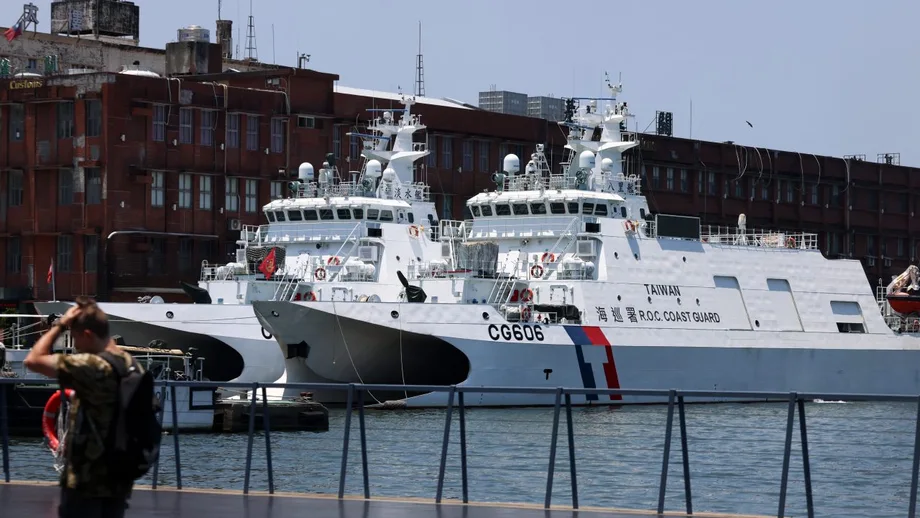
Chinese and Philippine vessels frequently confront one another around the Spratly Islands and Scarborough Shoal, west of Luzon. Manila faces pressure from water cannons, blocking manoeuvres and other forms of harassment while trying to supply personnel, monitor its waters and protect access to marine resources.
The August statement expressed concern about Chinese Coast Guard actions at Second Thomas Shoal that injured Philippine Navy personnel. Marles and Teodoro also warned that water cannon use and vessel ramming increased the danger of escalation and miscalculation.
Teodoro, the Philippine defence secretary, has described China's maritime actions as his country's greatest traditional security challenge. He said:
Its nine-dash line is the biggest threat to regional stability and peace.
China claims historic rights across much of the South China Sea through its nine-dash line. A tribunal constituted under the United Nations Convention on the Law of the Sea rejected the legal basis for those historic rights claims in its 2016 ruling. China rejects the ruling, which Australia and the Philippines reaffirmed as binding in August.
An exclusive economic zone extends up to 200 nautical miles, approximately 370 kilometres, from a country's coastal baselines. Within it, the coastal state has rights to resources such as fish, oil and gas. Other countries retain navigation rights under international law.
Manila has also pursued legal recognition of seabed rights beyond that standard zone through its South China Sea submission to the United Nations Commission on the Limits of the Continental Shelf. That process concerns the seabed and subsoil, while patrols and defence cooperation address the immediate challenges of operating at sea.
Drones and patrols connect defence with daily maritime work
Australia has provided more than $13 million in support to the Philippine Coast Guard since April of the preceding year, mainly through drones and training for their operators. The equipment helps extend surveillance beyond what crews can see from a ship.
Philippine personnel can use those capabilities to monitor Chinese naval and coastguard vessels, watch for illegal fishing, protect subsea cables and track drone activity. For a country spread across many islands, wider coverage helps authorities decide where limited patrol resources are most needed.
Search and rescue cooperation would add another practical use for shared maritime information. Knowing where vessels are and being able to communicate across different services can help crews coordinate assistance when a ship is in difficulty.
Australian participation also extends to patrols involving other partners. HMAS Ballarat has joined Philippine, American and New Zealand forces in the Philippine exclusive economic zone. An Australian P-8A patrol aircraft also experienced an encounter with a Chinese Su-35 fighter that Canberra described as unsafe and unprofessional.
David Dutton, a senior resident fellow at the Australian Strategic Policy Institute, has argued that the relationship has moved from a focus on counterterrorism and internal security towards territorial defence and deterrence. Deterrence means persuading a potential attacker that aggression would carry costs too high to justify.
Manila is building a wider network of partners
The Philippines is strengthening links beyond Australia and the United States. Philippine and Indonesian army planners discussed cooperation on security, information about transnational threats, leadership, training, communications and disaster response at their 32nd Army Working Group meeting.
Those discussions build on the Philippines and Indonesia's Agreement on Cooperative Activities in the Field of Defense and Security, signed on September 5, 2022. Manila has also called for closer maritime research and academic cooperation with India.
The Lowy Institute's defence partnerships study, covering data from 2017 to 2024, places these moves within a broader regional pattern. The Philippines had 27 defence dialogue mechanisms with the ten external partners examined, compared with Vietnam's 25 and Indonesia's 23.
Across Southeast Asia in 2023 and 2024, the United States participated in 161 of 369 combined military exercises, Japan in 134 and Australia in 104. Exercises could involve more than one external partner, so those figures overlap.
The study also found that Australia, India and Japan signed 38 new defence agreements with Southeast Asian countries during its study period, compared with 22 signed by the United States and China combined. Manila's expanding Australian relationship is part of a wider effort to gain more options for training, equipment, access and diplomatic support.
ASEAN talks continue as wider tensions grow
The signing is expected as ASEAN leaders gather in Manila, with the South China Sea high on the agenda. ASEAN and China have been negotiating a code of conduct for more than eight years to help manage disputes and reduce dangerous encounters.
The Philippines previously set a 2026 code target during preparations for its ASEAN chairmanship. Philippine officials now say they cannot confirm that negotiations will finish by the summit's conclusion. Disagreements have included the code's geographic coverage, whether it would be legally binding and how breaches would be handled.
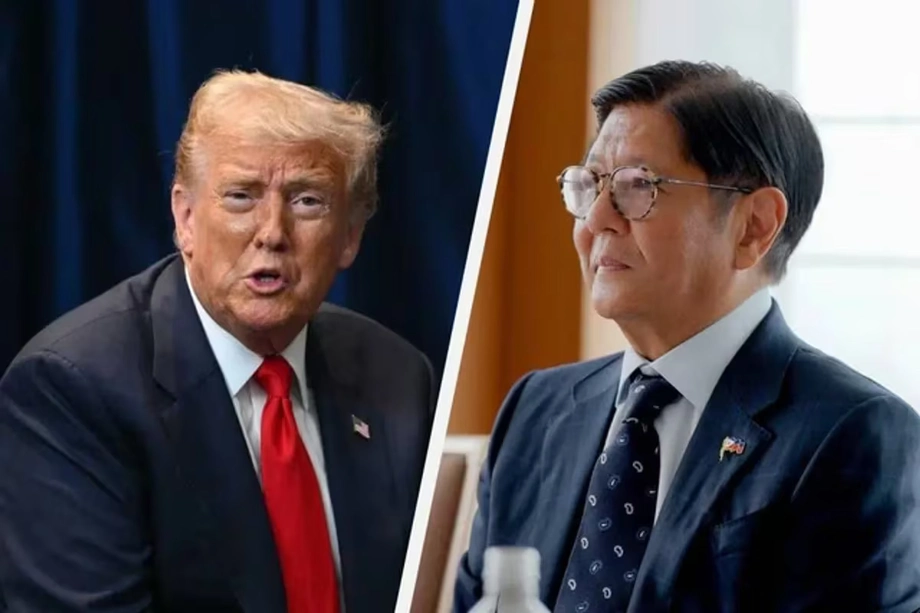
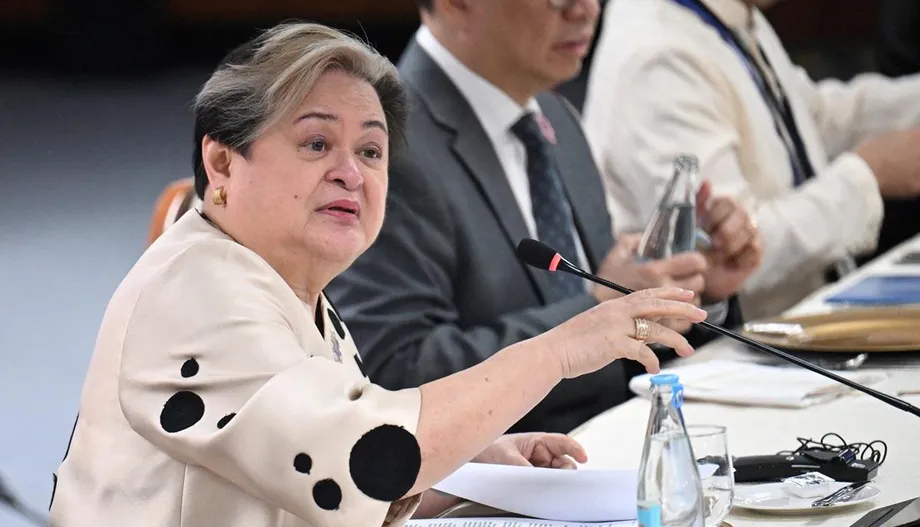
Diplomatic exchanges have also become sharper. President Ferdinand Marcos Jr. accused Chinese Ambassador Jing Quan of making a threat after the ambassador said China could "easily win" a conflict with the Philippines. Foreign Secretary Theresa Lazaro summoned Jing, who denied making a threat.
China's foreign ministry said Foreign Minister Wang Yi subsequently urged Manila to restrain politicians whom Beijing accused of attacking China. Australia has also faced Chinese criticism after Foreign Minister Penny Wong voiced concern about aggressive and destabilising conduct at sea.
Taiwan and the Middle East add pressure to regional planning. Maritime security specialist Jennifer Parker has warned that the movement of American naval resources towards the Middle East has reduced their presence in the region while Chinese activity around the Philippines and east of Taiwan has expanded.
The August ministerial statement also raised concern about a Chinese submarine missile test on July 6, 2026, describing a flight from the South China Sea over the Philippines and into the Pacific. Australia and the Philippines called for advance notification arrangements for affected states.
The next scheduled bilateral milestones are Exercise ALON and the defence ministers' meeting in 2027. Dutton has urged the governments to strengthen institutional ties before the Philippine presidential election in 2028, arguing that regular consultation and established defence arrangements can help sustain cooperation through political change.
Key Points
- Australia and the Philippines are scheduled to sign a Defence Cooperation Arrangement on Sunday ahead of the ASEAN Summit in Manila.
- The arrangement will replace the 1995 memorandum and is expected to expand military access, information sharing and maritime cooperation.
- Australia is supporting infrastructure at five Luzon locations, with Philippine sovereignty retained over all sites.
- Australia, Japan, the Philippines and the United States are developing a Combined Coordination Centre, with a coordination mechanism already operating.
- ASEAN talks with China on a South China Sea code of conduct continue without a confirmed agreement by the summit's end.
- Exercise ALON and another Australia–Philippines defence ministers' meeting are planned for 2027.