Cable protection brings Manila and Taipei closer
The Philippines is exploring closer cooperation with Taiwan to protect undersea communications cables in the Bashi Channel, while Taiwan has already established a coast guard liaison arrangement to improve communication between the two sides. The moves connect a shared concern about vulnerable internet links with growing tensions around vessels operating between Taiwan and the northern Philippines.
Contents
- Cable protection brings Manila and Taipei closer
- What cooperation could involve
- A liaison officer and a transferred ship
- Why the Bashi Channel matters
- Pressure below the level of war
- How cable damage affects island communities
- Surveillance, repairs and a United Nations proposal
- China challenges Manila's approach
- How the cable issue developed
- Key Points
Felipe F. Carino III, the Philippine deputy chief of mission in Washington, told a Center for a New American Security seminar that Manila and Taipei were pursuing knowledge sharing and capacity building. His remarks, reported on October 22, 2026, placed cable security within the wider problem of pressure at sea that falls short of open conflict.
Carino described the Philippine position in terms of protecting shared interests while maintaining its diplomatic policy toward China. Introducing the possibility of closer cooperation, he said:
These are very important features that should be protected, so much so that we are exploring deeper cooperation with our friends in Taiwan.
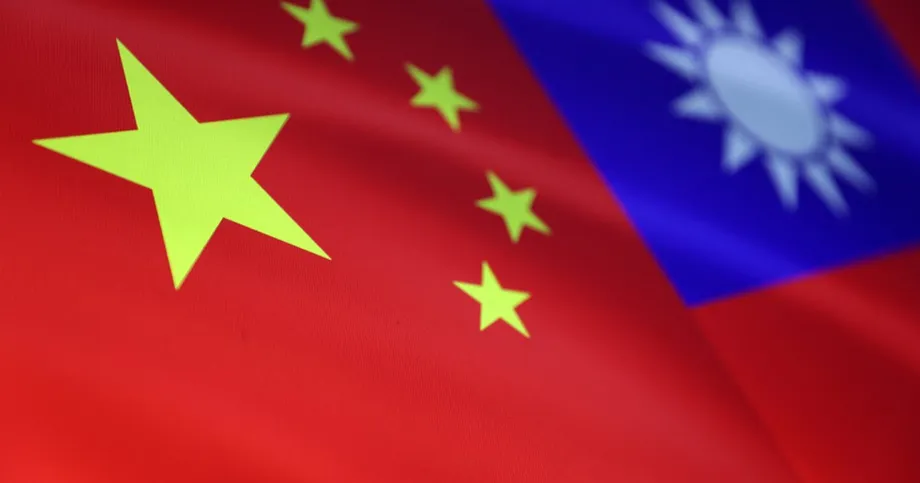
Taiwan's Coast Guard Administration Director General Chang Chung-Lung subsequently expressed openness to broader cooperation, including maritime law enforcement and humanitarian aid. China objected, urging the Philippines to uphold Beijing's position on Taiwan.
The practical stakes are substantial. Undersea cables carry nearly all intercontinental data traffic, Carino said. Taiwan's Ministry of Digital Affairs says its coastal waters have experienced an average of seven to eight cable incidents a year over the past four years. Damage can interrupt the connections that residents, businesses and public services use to communicate beyond their own islands.
What cooperation could involve
Carino identified knowledge sharing and capacity building as areas being explored, and described some work as already taking place. In everyday terms, these activities mean exchanging information and improving the skills, equipment or procedures needed to respond to a problem at sea.
Joint patrols and action against vessels that disrupt communications were raised in a question to Carino. He said he did not have details. Neither side disclosed an agreed cable protection operation, a schedule for joint patrols or a date for announcing further arrangements.
Chang, speaking to Taiwan's legislature's Foreign Affairs and National Defense Committee, described the coast guard's broader approach:
We always focus on the comprehensive level of cooperation, such as maritime law enforcement and humanitarian aid.
Chang declined to disclose specifics. The public positions therefore point to expanding practical contacts, with the operational scope still being worked out.
A liaison officer and a transferred ship
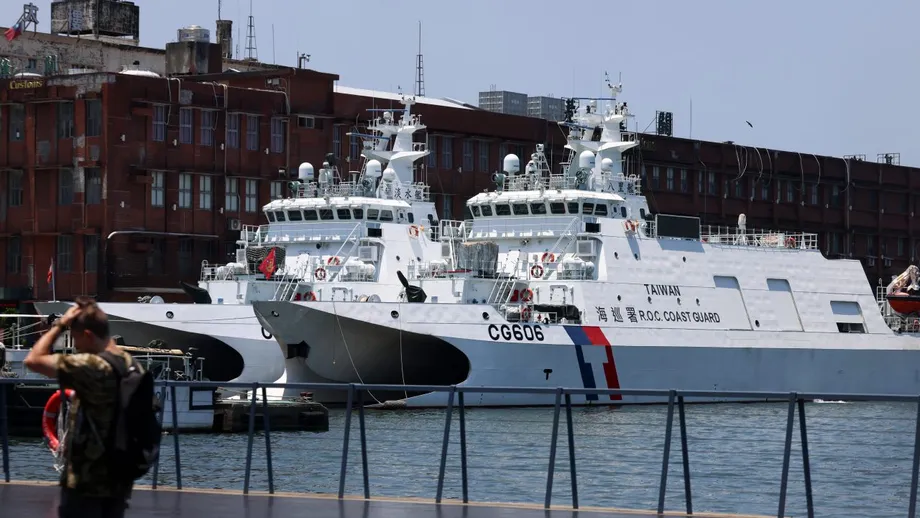
Taiwan and the Philippines already have concrete channels for maritime cooperation. Ocean Affairs Council Minister Kuan Bi-ling said on October 20 that Taiwan had stationed a coast guard liaison officer at the Philippine representative office in Taipei.
The officer is responsible for communication between the two sides, including reducing the risk of conflict during maritime enforcement operations. A direct contact can help officials clarify what their vessels are doing when both sides operate in nearby waters.
Taiwan has also transferred its former coast guard ship Kinmen to the Philippines, where it has entered service as the Sarangani. The transfer was the first of its kind between the two sides.
Those developments give the cable discussions an existing foundation: a person assigned to maintain communication and a vessel already transferred into Philippine service. They also show how cooperation can proceed through representative offices despite the absence of formal diplomatic relations.
Why the Bashi Channel matters
The Bashi Channel lies between Taiwan and the Philippines, within the wider Luzon Strait. It connects waters near the South China Sea with the Pacific and is important to commercial shipping, naval movements and submarine operations. Communications cables add another layer of infrastructure to this busy passage.
Earlier coverage of the Mavulis outpost described the Philippine island about 142 kilometers from Taiwan's southern tip, where a small rotating military detachment watches surrounding waters. Its position illustrates why events near Taiwan quickly become a Philippine concern.
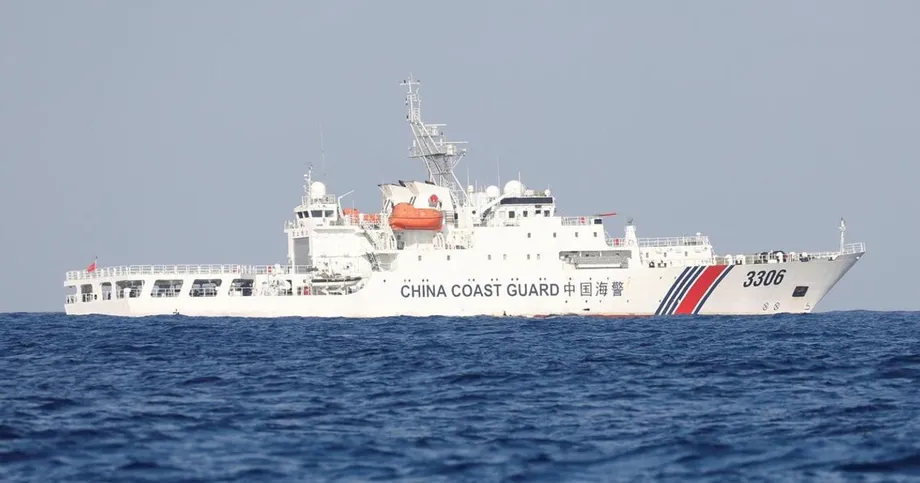
The Philippine Coast Guard said in October that it had deployed its largest vessel and an aircraft to challenge a Chinese research ship operating off Batanes province near undersea cable corridors. Batanes, the country's northernmost province, sits close to the same passage Carino identified as an area of shared interest.
Carino linked cable protection to South China Sea tensions without naming China. The geographic connection is direct: Manila's concerns about pressure in disputed waters and Taipei's concerns about communications links meet along the sea routes separating them.
Pressure below the level of war
The Philippines and Taiwan have repeatedly complained about Chinese activities intended to apply pressure without direct military confrontation. Officials often call this gray zone activity: actions that create security problems while keeping intentions, responsibility or the appropriate response uncertain.
A research vessel operating near cables, for example, presents authorities with questions about its purpose and movements. Tracking the vessel, communicating with its crew and deciding whether to deploy a coast guard ship can become immediate tasks even while other questions remain unresolved.
Jason Wang of geospatial intelligence firm ingeniSPACE said Chinese maritime militia vessels had escorted research ships in the Bashi Channel and east of Taiwan. Maritime militia refers here to vessels presented as fishing boats that also support Chinese state objectives at sea.
Wang identified the Haiyang Dizhi Ba Hao as one research vessel that had spent time over submarine cables southwest of Taiwan. It received escorts from maritime militia vessels and the Chinese coast guard before returning to Nansha, near Hong Kong.
SeaLight, an organisation monitoring Chinese maritime gray zone activity, also flagged the Comoros registered cargo vessel Neptune as suspicious. It lingered over an area containing several cables off northern Taiwan on October 1 and arrived at Keelung on October 2. ingeniSPACE described a pattern of prolonged activity around Taiwan rather than regular cargo transport between ports.
How cable damage affects island communities
Taiwan's outlying Matsu Islands experienced the consequences of cable disruption in 2023, when both cables connecting them to Taiwan's main island were severed within a week. Residents were left with extremely slow internet.
The Taiwanese government linked both incidents to Chinese vessels but made no formal accusation. For island communities, the immediate problem was the loss of usable communications capacity. When both links fail close together, there is less room to move traffic onto another cable.
Taiwan later changed its laws to make it easier to prosecute cases involving suspected deliberate cable damage. In 2025, a Chinese captain received a prison sentence of three years after his ship, registered in Togo, dragged its anchor and severed a cable connecting Taiwan's main island with the Penghu archipelago.
Andrea Yang, Taiwan's deputy representative in Washington, referred to that conviction at the seminar. The case brings a specific legal outcome into a discussion often dominated by vessel movements and diplomatic warnings: a captain was prosecuted and imprisoned over damage to communications infrastructure.
The Ministry of Digital Affairs' average of seven to eight incidents annually shows why Taiwan is treating cable resilience as a recurring operational task. Protecting links requires attention before damage occurs, while restoring service becomes urgent once a connection is lost.
Surveillance, repairs and a United Nations proposal
Yang said Taiwan would devote more resources to developing unmanned systems for maritime surveillance. Such systems operate without people aboard and can help authorities observe activity at sea.
Better surveillance could give officials a fuller picture of vessels approaching sensitive infrastructure, their movements and their conduct. The proposed cooperation with the Philippines would address a related need: exchanging knowledge and strengthening the ability to act on information.
Taiwan is also bringing domestic cable laying capabilities into service, but has no plans for a sovereign cable repair capability. Laying a cable and repairing a damaged one are different tasks. The first builds or extends a connection; the second restores an existing link after a fault or break.
Yang urged the United Nations to consider mechanisms to prevent interference with undersea cables. Her proposal extends the discussion beyond bilateral cooperation, toward international rules and responses for infrastructure that carries communications across national boundaries.
China challenges Manila's approach
China's Foreign Ministry spokesperson Mao Ning responded on Thursday by urging the Philippines to uphold the one China principle through its actions. Beijing sent Taiwan a similar message.
The Philippines maintains a one China policy that recognises Beijing rather than Taipei. China claims Taiwan as its territory and opposes official dealings that it regards as challenging that position. Manila conducts practical relations with Taiwan through representative offices.
Carino said cooperation was being pursued "notwithstanding our one China policy." His comments place cable protection within an existing Philippine effort to maintain diplomatic recognition of Beijing while managing direct interests shared with Taiwan.
The relationship already extends well beyond maritime security. Earlier coverage of expanding bilateral ties recorded nearly 200,000 Filipinos living and working in Taiwan, more than 600 Taiwanese companies operating in the Philippines and bilateral trade of about US$6.71 billion in 2024. Reliable communications help sustain those connections between workers, families and businesses.
Manila has faced similar Chinese objections over preparations for a possible Taiwan emergency. In August 2025, Marcos's Taiwan remarks prompted a diplomatic dispute after President Ferdinand Marcos Jr. said a war involving China and the United States would draw in the Philippines, partly because of the need to protect Filipinos in Taiwan.
How the cable issue developed
The latest discussions follow cable failures, a criminal conviction and new arrangements between the two coast guards. The main developments are:
- 2023: Both cables connecting the Matsu Islands with Taiwan's main island were severed within a week, leaving residents with very slow internet.
- 2025: A Chinese captain was sentenced to three years in prison after his ship dragged anchor and severed a cable linking Taiwan and Penghu.
- October 1 and 2: The Neptune lingered over a cable area off northern Taiwan before arriving at Keelung.
- October 2026: The Philippine Coast Guard said it deployed its largest ship and an aircraft to challenge a Chinese research vessel near Batanes cable corridors.
- October 20: Kuan Bi-ling disclosed Taiwan's coast guard liaison arrangement at the Philippine representative office in Taipei.
- In remarks reported October 22: Carino described efforts to deepen cooperation on cable protection, followed by Taiwan's expression of openness and China's objection.
Manila and Taipei are approaching the issue through several tools at once: communication between coast guards, stronger surveillance, legal accountability and discussion of international action. Their immediate shared interest is keeping vital links operating across waters where commercial infrastructure and regional security concerns overlap.
Key Points
- The Philippines is exploring closer cooperation with Taiwan on undersea cable protection, including knowledge sharing and capacity building.
- Taiwan has established a coast guard liaison arrangement and transferred a former coast guard vessel to Philippine service.
- Joint patrols were raised as a possibility, but no agreed operation or timetable was disclosed.
- Taiwan records an average of seven to eight cable incidents a year in its coastal waters.
- A Chinese captain was jailed for three years in 2025 over a severed cable between Taiwan and Penghu.
- Taiwan plans more investment in unmanned surveillance systems and has called for United Nations consideration of cable interference.
- China objected to the closer cooperation, while Manila said it was acting within its existing diplomatic policy.