A small Philippine outpost beside a strategic passage
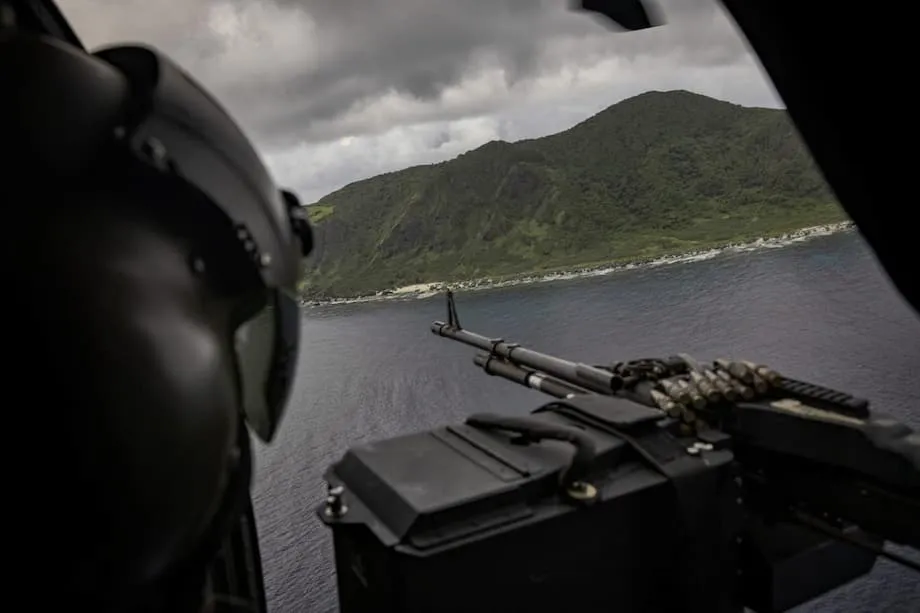
Mavulis Island, the northernmost point of the Philippines, lies about 142 kilometers from Taiwan's southern tip. A rotating detachment of roughly a dozen to 15 soldiers watches the surrounding waters from an isolated outpost whose importance reaches far beyond its size. In a conflict over Taiwan, the nearby Bashi Channel could help determine how ships, aircraft and information move between the South China Sea and the wider Pacific.
Contents
- A small Philippine outpost beside a strategic passage
- Why the Bashi Channel matters
- What the Mavulis garrison can do
- Manila shifts its defense focus north
- What the northern exercises are testing
- Bringing Filipinos home from Taiwan
- Cooperation with Taiwan within diplomatic limits
- China's activity and Philippine patrols
- How the preparations developed
- What this means for Batanes communities
- At a Glance
The island is an uninhabited wedge of rock and grass in Batanes province, apart from its military presence. A giant Philippine flag marks the country's sovereignty above turquoise waters. Getting there usually requires an overnight boat journey from Basco or a short helicopter flight when the weather permits. Distance, rough seas and unreliable supplies shape daily life for the troops stationed there.
The Philippine military began maintaining a rotating presence in 2016, after years in which the island was unoccupied. Soldiers act as first responders in the Luzon Strait, identify passing ships and aircraft, watch for foreign poachers and maintain a visible Philippine presence. Encounters with Chinese vessels are uncommon around Mavulis, although its location places it close to a possible regional flashpoint.
President Ferdinand Marcos Jr has said it is difficult to imagine a conflict over Taiwan leaving the Philippines untouched. Geography is one reason; the large Filipino community in Taiwan is another. Manila's longstanding defense treaty with Washington and expanded American access to bases in northern Luzon bring the outpost into a much larger network of preparations.
As of October 3, 2025, those preparations involve several connected tasks: watching a strategic waterway, defending Philippine territory, maintaining access for maritime traffic and planning how to bring Filipino citizens home if fighting interrupts normal travel.
Why the Bashi Channel matters
The Bashi Channel is one of the few deep passages through the first island chain, the arc of land stretching from Japan through Taiwan and the Philippines to Borneo. Commercial vessels, naval surface groups and submarines use it to move between the South China Sea and the western Pacific. Its depth and position make it an important route for both trade and military operations.
Beijing views control of waters north and south of Taiwan as a way to isolate the island and make outside intervention more difficult. Closing the Bashi Channel, or declaring areas off limits to ships and aircraft, could hinder supplies reaching Taiwan and slow a response by its partners. The Philippines frames the southern entrance to that passage.
Manila's coastal radar, island outposts and northern airfields would therefore have important roles in observing activity and potentially helping partners keep the corridor open. A blockade means restricting movement into or out of an area. Around Taiwan, such restrictions would place pressure on the sea and air routes used for supplies, communication and movement.
The Luzon Strait also presents practical obstacles to anyone trying to operate there. Strong currents, rough seas and frequent weather systems complicate navigation. The scattered, remote islands of Batanes make surveillance difficult, too. Mobile sensors and expeditionary units, forces able to deploy with their equipment to distant locations, have been tested across the islands during recent exercises.
Those drills aim to identify ships and aircraft early, share information quickly and discourage attempts to close the channel. Shipping and energy routes around the strait support regional trade, so a prolonged disruption could affect supply chains far beyond Taiwan and the Philippines.
What the Mavulis garrison can do
Mavulis has a small garrison with basic facilities, rather than the equipment of a major military base. Water and electricity are unreliable. Soldiers and volunteers supplement supplies by growing vegetables and raising chickens, while satellite internet, including Starlink, helps maintain communications when weather cuts other connections.
The troops maintain watch around the clock, report ship and aircraft movements, and coordinate with the Philippine Coast Guard on maritime domain awareness. In plain terms, that means building a useful picture of what is happening at sea: which vessels are present, where they are going and whether their activity needs attention.
The outpost lacks heavy weapons and advanced sensors able to monitor activity over long distances. Officers have called for radar upgrades and better docking facilities to support more frequent supply deliveries or emergency movements. Washington has discussed radar options and infrastructure work in Batanes that could serve routine surveillance and disaster response.
Mavulis is quieter than confrontation sites in the West Philippine Sea. Its military value rests largely on observation and communication: detecting a change in activity and alerting other units across northern Luzon quickly enough for them to respond. Its continued occupation also marks Philippine jurisdiction at the edge of the channel.
Manila shifts its defense focus north
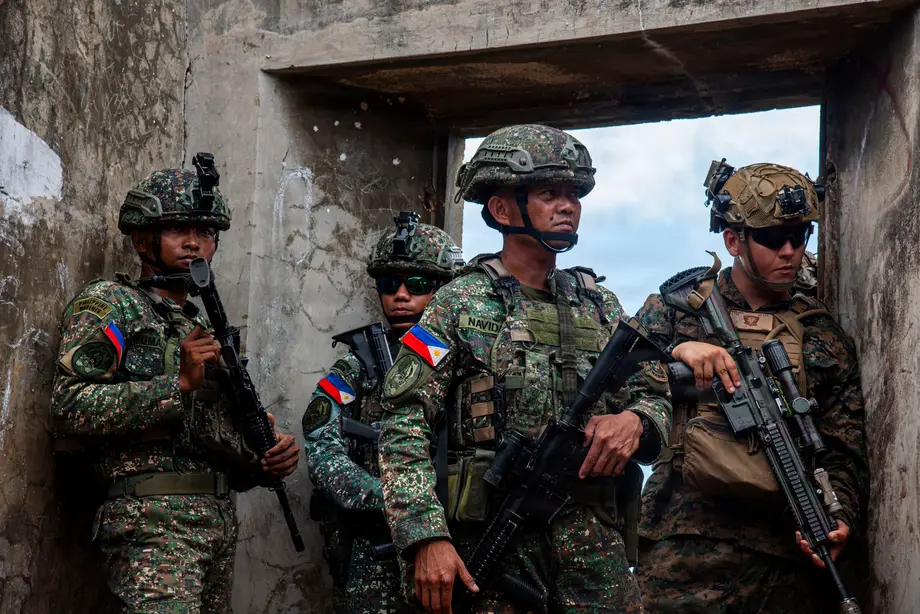
The Philippines has renewed its alliance with the United States while widening security relationships with Japan and Australia. Under the Enhanced Defense Cooperation Agreement, American forces have access to additional Philippine bases, several in northern Luzon within reach of the Bashi Channel. Those locations provide options for staging aircraft, supplies, radar and missile units.
Manila's military planning has also moved beyond its previous concentration on internal security and counterinsurgency. The Comprehensive Archipelagic Defense Concept, introduced in 2024, seeks to extend military awareness and the ability to act across the country's exclusive economic zone. It also aims to build strategic depth along the archipelago, giving forces more locations from which to observe, operate and respond.
The Armed Forces of the Philippines is training for external defense missions and adopting a one theater approach. This connects the East China Sea, the West Philippine Sea and the Luzon Strait in a shared operating picture, with close coordination among the Philippines, the United States, Australia and Japan. Events in one area can affect military movements and decisions elsewhere.
A new forward operating base at Mahatao on Batan Island has been activated to support territorial defense, maritime awareness and humanitarian relief. Together with investments in sensors and airfields, such facilities are intended to make Batanes a connected line of observation posts. Several linked locations can continue providing information when one becomes unavailable.
What the northern exercises are testing
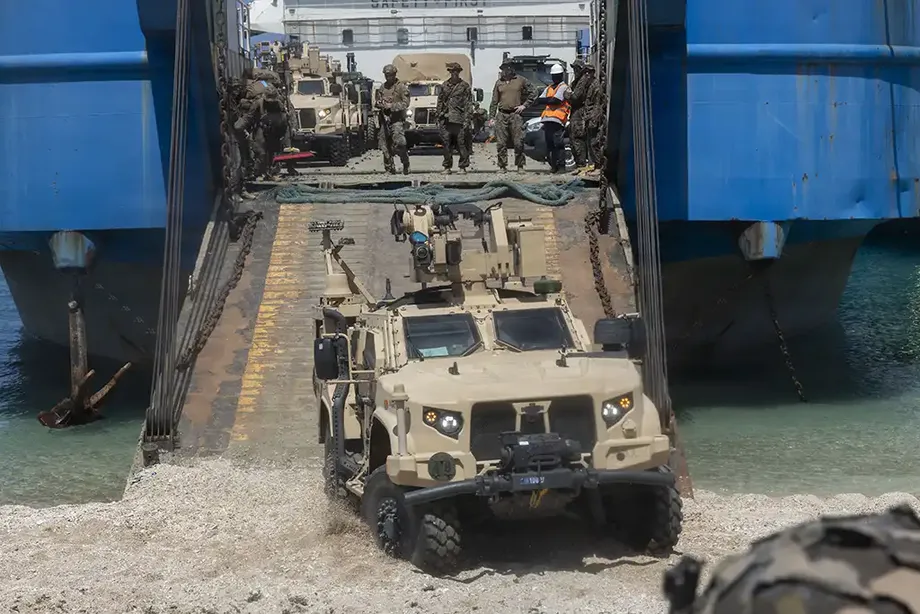
Recent joint exercises have shifted north and demonstrated the movement of mobile coastal missile batteries across rugged terrain. The systems involved include High Mobility Artillery Rocket Systems, the Navy Marine Expeditionary Ship Interdiction System and the Mid Range Capability Typhon system. Their deployment forms part of preparations to put ships at risk if they attempt to force passage through the channel.
Philippine and American forces have rehearsed dispersing mobile launchers and rapidly establishing sensor networks across several islands in Batanes. Spreading equipment among different locations makes an opponent's targeting more difficult. Sharing observations between those locations helps units build a broader picture than a single watch post can provide.
Access under the Enhanced Defense Cooperation Agreement allows the United States to bring aircraft, radar and missile systems into northern Luzon on short notice. From there, allied units could track vessels and aircraft in the Luzon Strait and place pressure on an amphibious force moving toward southern Taiwan. An amphibious force carries troops and equipment by sea for a landing ashore.
Australia and Japan regularly participate in northern exercises, contributing maritime patrol aircraft, coastal defense knowledge and humanitarian response skills. The Philippines has also expressed interest in a coordinating center covering the wider maritime theater, including the East China Sea, Taiwan Strait and West Philippine Sea.
The intended role for small islands such as Mavulis is to serve as observation posts and staging locations, rather than large bases. That approach seeks to limit their vulnerability while improving awareness. Training, shared information and mobile equipment connect the island's modest garrison to forces operating across a much larger area.
Bringing Filipinos home from Taiwan
Well over 150,000 Filipinos live and work in Taiwan, with some estimates approaching 250,000. Their safety gives Manila a humanitarian responsibility in any conflict. Evacuation planning places Northern Luzon Command at the center of efforts to move citizens to the Philippines, using staging areas in Cagayan, Ilocos and Batanes if air and sea corridors open.
Recent exercises have included elements of noncombatant evacuation operations. These involve processing people leaving a danger zone and moving them by ship or aircraft to safer locations. For the Philippines, military planning in the north therefore includes receiving civilians and organizing their onward movement as well as watching maritime traffic.
General Romeo Brawner Jr, chief of staff of the Armed Forces of the Philippines, has directed northern units to think beyond the country's last island outpost. In public remarks to Northern Luzon Command, he assigned the command closest to Taiwan responsibility for planning how to rescue Filipinos caught in fighting.
We must start planning for actions in case there is an invasion of Taiwan. Northern Luzon Command will have to think through how to bring our people to safety because the Philippines will inevitably be involved if conflict breaks out.
Evacuation could require Philippine ships and aircraft to approach or cross areas China claims to control during a crisis, including declared air or sea exclusion zones around Taiwan. A challenge to an evacuation convoy could produce a dangerous misunderstanding. Communication channels, extensive use of coast guard and civilian vessels, and arrangements with partners to keep operations from interfering with one another would help reduce that risk.
The timing and routes of any evacuation would depend on whether usable air and sea corridors were available. Preparations in northern Luzon are intended to give Manila options if normal commercial travel is interrupted.
Cooperation with Taiwan within diplomatic limits
The Philippines has recognized the People's Republic of China as the sole legal government of China under its One China policy since the 1970s. Manila acknowledges Beijing's claim to Taiwan without endorsing that claim or giving up its own interests. Its practical relationships with Taiwan continue through economic, cultural and unofficial security contacts.
Recent steps easing official travel for Taiwanese and Philippine officials indicate an interest in closer exchanges within that policy. Visa free entry for Taiwanese visitors and discussions on trade have expanded civilian links. Philippine and Taiwanese naval officers have also engaged informally, Taiwanese observers have watched parts of major exercises, and coast guard units have coordinated in Bashi Channel waters.
These contacts are intended to improve safety and awareness through limited, careful cooperation. They operate without a formal defense pact between Manila and Taipei.
At the opening of joint exercises in 2025, Major General Francisco Lorenzo Jr, a senior Philippine Army commander, stated the country's intention to avoid direct participation in a conflict over Taiwan.
We will not participate in any conflict over Taiwan.
Lorenzo's position also included action if Philippine territory came under threat or Filipino lives required protection. Manila is preparing to defend its territory and citizens while seeking to avoid escalation and preserve channels for humanitarian coordination. Brawner's evacuation instructions and Lorenzo's statement describe different responsibilities within that approach: preparing for spillover while seeking to stay out of the fighting itself.
China's activity and Philippine patrols
China has increased military activity around Taiwan, including large exercises launched at short notice by the Eastern Theater Command. The carrier group centered on the Shandong has passed through the Luzon Strait, and Chinese forces have practiced blockade maneuvers near Taipei. Such movements increase the importance of monitoring the approaches to Taiwan.
Chinese officials have criticized expanded American access to Philippine bases, arguing that the deployments seek to encircle China. Beijing has also warned Manila against closer ties with Taiwan. Philippine defense preparations therefore unfold alongside diplomatic pressure over the country's relationships with Washington and Taipei.
Manila has responded with more patrols and a visible presence in the north. Philippine forces conducted hundreds of patrols in Northern Luzon in 2024. During sensitive periods, the navy has sent a former United States Coast Guard cutter and a frigate to monitor the channel.
Philippine commanders also identify threats involving cyber activity, information and politics. Their response combines more training, wider information sharing with partners and continued ship and aircraft movements. Keeping watch across several domains is intended to make unexpected changes easier to detect.
How the preparations developed
Mavulis became a permanent point of attention through a series of changes in Philippine posture, rather than through a single decision. The dated developments connect the establishment of its rotating garrison with a wider shift toward external defense and preparations for protecting citizens in Taiwan.
- Since the 1970s: The Philippines has maintained its One China policy while continuing practical relations with Taiwan.
- 2016: The Philippine military began a rotating presence on Mavulis after years in which the island was unoccupied.
- 2024: Manila introduced the Comprehensive Archipelagic Defense Concept, and Philippine forces conducted hundreds of patrols in Northern Luzon.
- 2025: Northern exercises and public military statements addressed coastal defense, the protection of Philippine territory and preparations for a Taiwan contingency.
By October 3, 2025, the outpost's duties were connected to a broader network of bases, patrols, exercises and humanitarian planning. The same geography that makes Mavulis difficult to supply puts it close to a passage that military forces and commercial shipping both need.
What this means for Batanes communities
Batanes communities live beside waters used by fishing boats, commercial ships, coast guard cutters and naval groups. Close passes and radio challenges form part of maritime activity in the Luzon Strait. Misunderstandings can escalate even outside a wider crisis, particularly when vessels with different purposes share the same routes.
The Philippines and its partners are working to standardize communications and use coast guard vessels for many encounters at sea. Coast guard involvement can lower tension compared with direct encounters between naval forces. Clear exchanges become especially important if ordinary maritime traffic continues alongside military operations or evacuation movements.
Investments in ports, airstrips, electricity and communications have direct uses for residents as well as the military. Better infrastructure supports disaster response and could help receive evacuees from Taiwan if commercial routes close. The new Mahatao base and proposed improvements elsewhere in Batanes connect territorial defense with those practical needs.
Mavulis is likely to remain a small outpost whose principal strengths are its location, its watchkeepers and its ability to communicate. Its roles as an early warning station, a marker of sovereignty and a potential support point for humanitarian operations depend on links to the rest of northern Luzon. For the soldiers stationed there and the communities farther south, readiness includes keeping those links working through difficult weather as well as during a security emergency.
At a Glance
- Mavulis is the Philippines' northernmost outpost, about 142 kilometers from Taiwan's southern tip, beside the Bashi Channel.
- A rotating garrison of roughly a dozen to 15 soldiers watches maritime activity, protects Philippine jurisdiction and monitors foreign poaching.
- The channel connects the South China Sea with the western Pacific and is important to commercial shipping, submarines and naval forces.
- The outpost has basic facilities and lacks heavy weapons and advanced sensors able to monitor activity over long distances.
- Manila's 2024 defense concept, expanded American base access and exercises with partners connect Batanes to wider external defense preparations.
- Well over 150,000 Filipinos live and work in Taiwan, with some estimates approaching 250,000, making evacuation a major planning concern.
- Philippine commanders are preparing to protect territory and citizens while stating an intention to avoid direct participation in a Taiwan conflict.
- Ports, airfields, communications and shared surveillance support defense, disaster response and possible humanitarian operations.