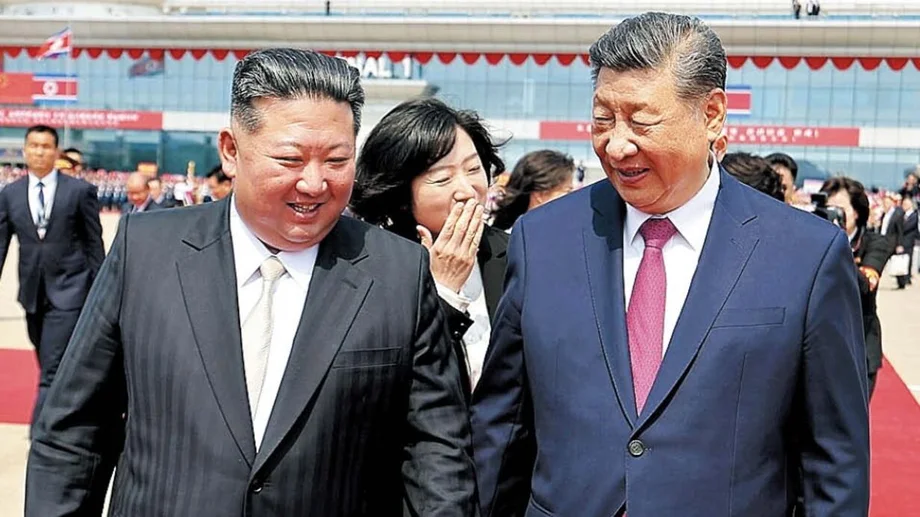
A Trip Being Watched Before December
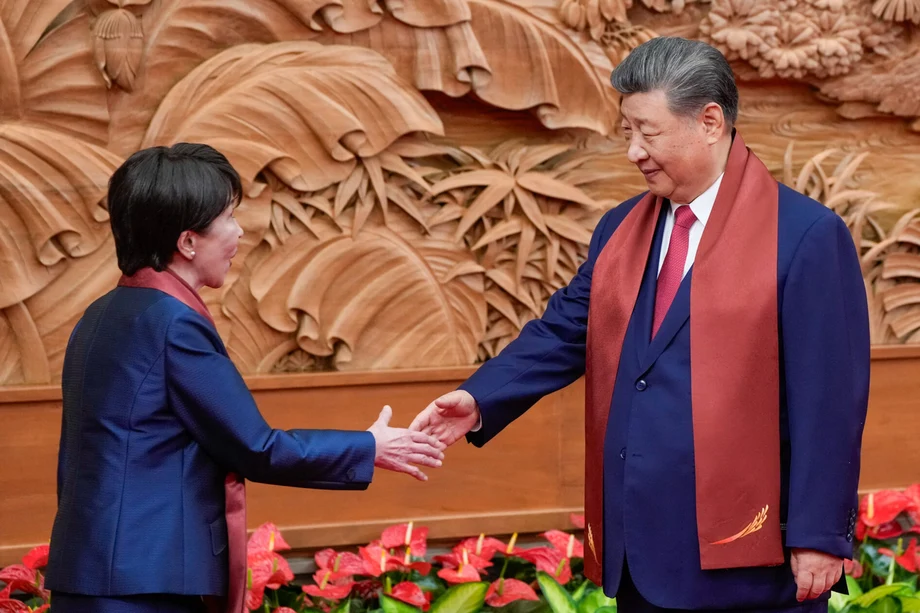
South Korea's government was watching signs on November 27 that Kim Jong Un could travel to China soon, as Beijing prepared for a December meeting between Xi Jinping and Donald Trump in Miami. A diplomatic source said Xi may have hinted to President Lee Jae Myung during the summit between South Korea and China on November 18 that the North Korean leader would visit soon. The source also said Dandong, the Liaoning border city, showed signs of an emergency standby order similar to arrangements seen when Kim visited last month.
Contents
- A Trip Being Watched Before December
- What Seoul Has Confirmed, and What It Has Denied
- The Party Channel Behind a Possible Visit
- Key Dates in the Run Up
- Why Xi's Miami Trip Matters to Pyongyang
- Kim's Case: Recognize North Korea as a Nuclear Power
- What Experts Say the Demand Really Means
- Could a Trump Kim Meeting Happen Soon?
- Nuclear Threats Toward South Korea and Japan
- Russia Ties Add Another Layer
- What a Beijing Meeting Could Change
- Key Points
Xi is due to attend the G20 (Group of Twenty) summit in Miami, Florida, on December 14 and 15 and meet Trump. Chinese leaders also usually hold the Central Economic Work Conference around December 10 to set the next year's economic policy. If Kim travels before the end of the year, those dates make the first days of December the likeliest window. No date, itinerary or meeting with Xi has been announced by China or North Korea.
What Seoul Has Confirmed, and What It Has Denied
Cheong Wa Dae, South Korea's presidential office, said the reported hint about a Kim visit was not made at the leaders' summit. It added that private leader talks are not disclosed in detail under normal diplomatic practice.
No such remarks were made during the talks." "We ask for your understanding that, in keeping with diplomatic practice, it is difficult to confirm the specific details discussed between the leaders.
Cheong Wa Dae had earlier said Xi explained developments in relations between North Korea and China to President Lee. After the new account appeared, the office said it was monitoring those relations but could confirm nothing further. A government official said there were no unusual movements in Dandong at that point. That leaves two public positions: a diplomatic source described emergency preparations, while the government said it had no current movement to confirm.
Cheong Wa Dae also said it hoped exchanges between North Korea and China would support peaceful coexistence on the Korean Peninsula and that South Korea would keep close communication with China. For ordinary people, the wording matters because a leader's visit can change the tempo of sanctions talks, military signals and emergency planning along the border.
The Party Channel Behind a Possible Visit
North Korea and China do not deal with each other only through foreign ministries. Their relationship is often handled through party channels, the Workers' Party of Korea on one side and the Communist Party of China on the other. Kim Sung-nam, the North Korean Workers' Party international secretary and international department head, visited China from November 3 to 7, stopping in Beijing, Shanghai and Qingdao. He met Liu Haiqing, head of the Communist Party's Foreign Liaison Department, and Foreign Minister Wang Yi.
That trip came after Kim's reported visit to Dandong last month. Officials saw the party contacts as possible preparation for a leader level visit. Party diplomacy matters here because Kim Sung-nam and Liu Haiqing oversee the channel that can arrange high level meetings and carry messages without a public announcement.
Key Dates in the Run Up
The sequence below uses dates made public so far.
- November 3 to 7: Kim Sung-nam visited China and met party and foreign affairs officials.
- November 16: Trump said before APEC that he might meet Kim and that it depended on Xi.
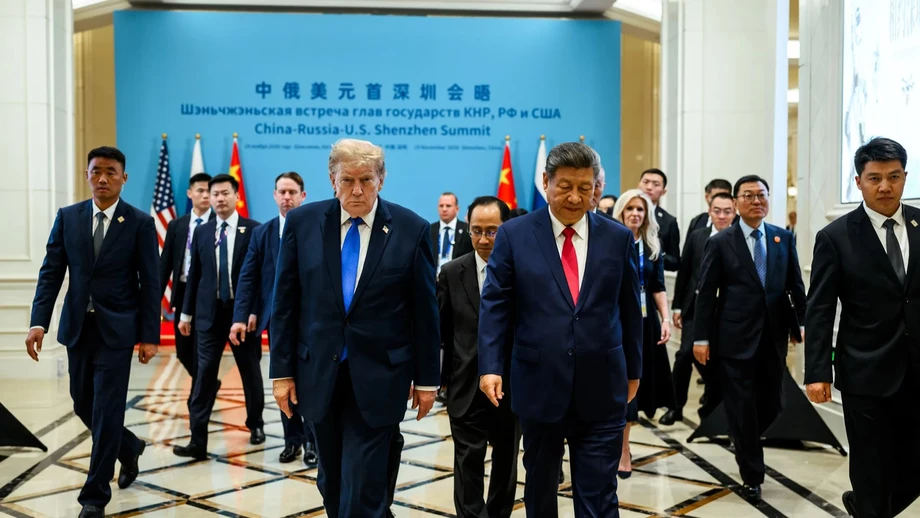
- November 18 and 19: APEC leaders met in Shenzhen, China, with a summit between the United States and China and a meeting among the United States, China and Russia.
- November 18: Xi met President Lee in Shenzhen. Cheong Wa Dae later denied that Xi raised a Kim visit.
- November 22 and 23: Kim told envoys from 10 countries that North Korea did not seek hegemony or expansion and was ready for friendly ties with countries that respected its sovereignty.
- November 25: Kim visited a nuclear facility, displayed nuclear material, warheads and nuclear power systems, and hardened his language on nuclear status.
- November 26: Kim welcomed a Russian government delegation in Pyongyang. Accounts also emerged of a March intelligence protection agreement between Russian and North Korean security bodies.
- November 27: Seoul publicly denied the reported Xi remark while continuing to monitor North Korea and China.
- December 10 and December 14 to 15: China's economic policy conference is expected around the first date, followed by the G20 summit in Miami.
The calendar matters because it leaves little room for a long public build up. A visit in the first week of December would let Xi brief Kim before China shifts to its economic conference and then to the Miami summit.
Why Xi's Miami Trip Matters to Pyongyang
Kim has reason to watch Xi's schedule closely. The APEC meeting in Shenzhen on November 18 and 19 included a summit between the United States and China and a trilateral meeting with Russia. North Korea was discussed in that setting, including non proliferation. If Kim goes to China, he is expected to hear Xi's account of those talks and compare it with his own reading of Washington.
Trump had already signaled that China could help bring him together with Kim. Speaking before APEC, the United States president described the possibility in narrow terms.
might meet North Korean leader Kim Jong-un" and "it depends on Chinese President Xi Jinping.
A meeting did not happen during APEC. The collapsed summit push had shown the scale of the gap: American negotiators considered an end of war declaration, a pause on demands for immediate total dismantlement and liaison offices, while Pyongyang sought recognition it could use to weaken sanctions.
Trump later said letters with Kim could begin again quickly. That kept a channel open, but it did not resolve the central argument. Pyongyang wants respect for what it calls its nuclear status. Washington still faces the G7's denuclearization demand, which reaffirmed the goal that North Korea give up its nuclear weapons under United Nations Security Council resolutions.
Kim's Case: Recognize North Korea as a Nuclear Power
Kim's November 25 visit to a nuclear facility was the clearest statement of what Pyongyang wants. He displayed various nuclear warheads and said the arsenal helped peace and security, while warning that anyone denying North Korea's nuclear possession would face hostility. He said the surest way to balance power and keep peace on the Korean Peninsula and in the Asia Pacific region was to respect his country's constitution.
The surest way to guarantee a balance of power and ensure peace and stability on the Korean Peninsula and in the Asia-Pacific region is to 'respect North Korea's constitution.'
North Korea revised its constitution in March, and Article 56 calls the country a "responsible nuclear power". Those constitutional changes also removed reunification from state policy and strengthened Kim's command over nuclear forces. Kim is now using that language as a legal and political shield.
Kim also attacked AUKUS, the security partnership of the United States, Britain and Australia, saying nuclear powered submarine plans in Northeast Asia were a form of nuclear proliferation. Analysts say his broader aim is treatment similar to that of the five permanent members of the United Nations Security Council, all recognized nuclear powers under the Treaty on the Non-Proliferation of Nuclear Weapons. That treaty seeks to stop the spread of nuclear weapons while recognizing five states as nuclear weapons states. India and Pakistan are often described as de facto nuclear states outside that formal list. Pyongyang wants more than that: recognition that would make it harder for other countries to punish it through sanctions.
What Experts Say the Demand Really Means
Doo Jin-ho, a visiting research fellow at Kyungnam University's Institute for Far Eastern Studies, said Kim's words about strategic stability were not a routine appeal for talks. He argued that Pyongyang was asking to join the highest tier of nuclear powers.
North Korea has stated that it will contribute to global strategic stability," "It is essentially dreaming of joining the 'nuclear club' of major powers.
Park Won-gon, a professor of North Korean studies at Ewha Womans University, said Kim was not asking for permission to possess nuclear weapons. He said Kim was asserting that the issue of nuclear proliferation, discussed at the trilateral meeting on November 19, did not apply to North Korea.
Kim Jong-un is not asking the U.S. to 'recognize nuclear possession' but rather saying, 'North Korea is already a nuclear power, so respect it,'
Kim Byung-yeon, a distinguished professor in Seoul National University's Department of Economics, put the stakes in legal terms. In his view, recognition would weaken the basis for penalties against North Korea under international law. Park In-hwi, a professor at Ewha Womans University's Graduate School of International Studies, tied Pyongyang's opening to Trump's own language, saying Trump had spoken as if he acknowledged North Korea's nuclear weapons and had criticized the non proliferation order.
Nam Sung-wook, a distinguished professor at Sookmyung Women's University, linked the timing to Trump's remaining years in office. Next year would be Trump's third year in office, and his term ends in January 2029.
For Trump, whose term ends in January 2029, next year is almost the last chance to receive the Nobel Peace Prize," "He will likely make every effort to meet Kim Jong-un once by June or July next year.
Could a Trump Kim Meeting Happen Soon?
Most experts who commented did not expect a quick meeting. Shin Beom-chul, a senior research fellow at the Sejong Institute, said Kim was keeping the door open because recognition could bring sanctions relief, but the conditions were far apart.
Once nuclear power status is secured, sanctions against North Korea will be lifted, so Kim Jong-un is leaving room for dialogue with the U.S.," "While Trump is willing to meet unconditionally, North Korea insists on some form of recognition of its nuclear power status, so the possibility of contact or progress between the U.S. and North Korea in the short term is low.
Lee Keun, a professor at Seoul National University's Graduate School of International Studies, was direct about the short term. He said Kim likely understood that Washington would not call North Korea an official nuclear power.
Kim Jong-un likely judges that the U.S. will not officially recognize North Korea as a nuclear power," "I see almost no possibility of North Korea trying to do something with the U.S. in the short term.
Park said that if a summit failed because of a North Korean demand, the most likely demand was sanctions relief before talks. Sanctions are restrictions on trade, finance and military supplies meant to pressure a government. Pyongyang wants them lifted before it gives up anything. Washington has usually wanted steps on the nuclear program first. The gap explains why the last summit push ended in deadlock and why a middle path remains hard to design.
Nuclear Threats Toward South Korea and Japan
Kim coupled his status demand with a warning aimed at South Korea. On November 25 he ordered what was described as multi domain use of tactical nuclear weapons against South Korea. Tactical nuclear weapons are usually lower yield arms intended for battlefield use, while strategic weapons are designed for longer range deterrence. Multi domain use means using land, sea and air systems together.
Nam Sung-wook said Pyongyang was trying to pressure Washington by making the danger to its allies more concrete. He said South Korea had limited space to respond and that public anxiety would deepen.
North Korea is threatening South Korea and Japan to pressure the U.S. into accepting its demands, claiming, 'The problem can only be resolved if you accept our demands quickly.'" "South Korea's room for maneuver is not large," "security instability will deepen.
Nam also described a possible form of that messaging. He said Pyongyang might show on screens, in images distributed to newsrooms, how many South Koreans could die if a tactical nuclear weapon struck a location in the Seoul metropolitan area, and what damage a strike on the United States base at Yokosuka, Japan, would cause. Such imagery would be a threat calculation, not a demonstrated attack. It is meant to make people imagine the cost of ignoring Pyongyang's demands.
Hong Min, a senior research fellow at the Korea Institute for National Unification, said the November 25 display was broader than past missile launches. He said North Korea showed warheads, propulsion systems and delivery means, the full cycle of using a nuclear weapon, all at once. He added that Kim wanted the United States to accept a changed North Korea.
North Korea is no longer what it used to be.
Russia Ties Add Another Layer
Kim also spent November 26 with a Russian government delegation led by Natural Resources Minister Alexander Kozlov. He personally welcomed the visitors in Pyongyang, attended a memorial performance by Russian artists at the East Pyongyang Grand Theatre and discussed expanding cooperation with Kozlov. The welcome came one day after his nuclear facility display.
On the same day, it was reported that Russia's Federal Security Service, known as the FSB, and North Korea's State Intelligence Agency signed a mutual protection of confidential information agreement in Pyongyang in March. Another description named the North Korean participant as the State Security Ministry. Such an agreement creates a legal basis for sharing sensitive information and can support military cooperation. The exact scope of the information covered has not been made public.
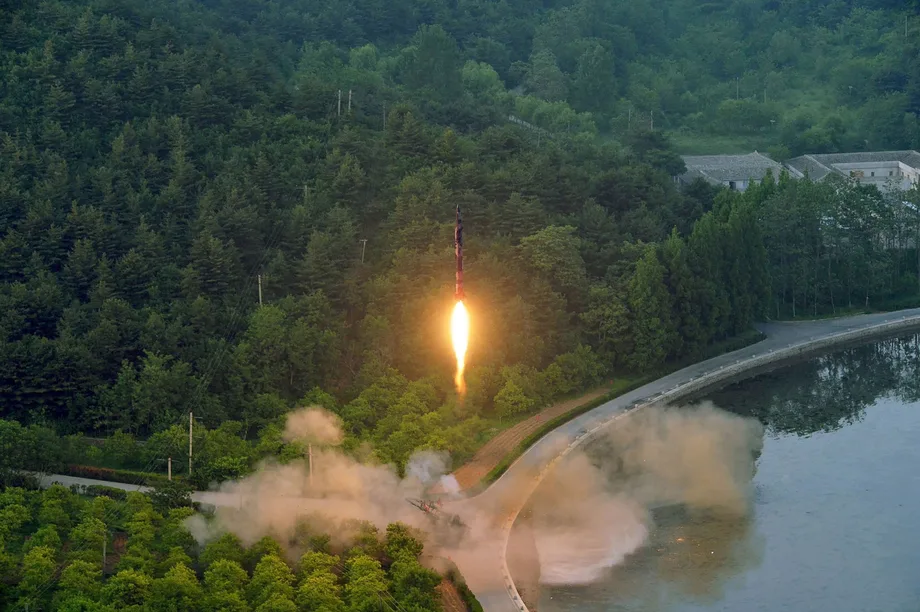
Ukraine's defense intelligence agency said in a November 26, 2026 statement that North Korea had paused supply of KN-23 short range ballistic missiles and artillery shells to Russia, barred Russian military transport aircraft from its airspace, and delayed a decision on a Russian request to increase dispatched troops from 8,500 to 50,000. A KN-23 is a short range ballistic missile, meaning it is designed for battlefield distances rather than intercontinental range. The agency said the pause followed a diplomatic dispute over Russia's approach to South Korea. Pyongyang appeared to be using its support for Russia as leverage and seeking advanced weapons technology.
The statement said North Korean Foreign Minister Choe Son Hui announced the temporary suspension. It said tensions emerged in October after Russian Deputy Foreign Minister Andrey Rudenko said the Kremlin would work to de-escalate relations between Seoul and Pyongyang. At the end of the month, Choe said such statements were inconsistent with the nature of the alliance agreements between the two countries and demanded clarification of Russia's policy toward South Korea.
According to available information, the decision was personally made by North Korean leader Kim Jong Un. The restrictions include a ban on Russian military transport aircraft using North Korean airspace, as well as the suspension of supplies of KN-23 ballistic missiles and another batch of artillery ammunition.
The statement also gave the background to the dispute. It said Russians and North Koreans held an opening ceremony on September 7, 2026 for a road bridge across the Tumen River, also called the Tumangang, on the border between the two countries. It described the bridge as an important logistics hub that could accelerate bilateral transport. Under their comprehensive strategic partnership, it said, Moscow wanted to continue receiving North Korean weapons and components, while Pyongyang expected equipment, raw materials, technology and funding from Russia, as well as experience in modern warfare.
It said deployed units of the North Korean Army's 11th Special Operations Corps continued to serve in Russia's Kursk region, as part of the second echelon of the Kursk force grouping. Since mid-summer, it added, a combined missile unit of the North Korean Army had been deployed in Russia's Voronezh region, where Russian forces used it to launch strikes against Ukraine. The unit operated as part of the 112th Missile Brigade of the 1st Tank Army of the Moscow Military District.
Thus, further expansion of military cooperation between Moscow and Pyongyang is currently being held back. Obstacles to military coordination between the North Korean contingent and the army of the aggressor state of Russia include the low level of operational interoperability between the forces, the language barrier and shortage of interpreters, as well as the lack of adequate logistical support from North Korea.
The statement said senior Russian military commanders openly displayed contempt for North Korean soldiers, viewing them as a politically imposed burden. It estimated North Korean losses in battles against Ukraine's Defense Forces in the Kursk region at 7,058 servicemen, including 2,251 killed or otherwise irrecoverable, with the remainder wounded.
The Russian delegation, the intelligence agreement and the reported pause in weapons support show a leader testing both partners. Kim wants Moscow close enough for technology and diplomatic cover, but he also wants Russia to keep distance from Seoul. Closer ties with China give him another source of backing before Xi meets Trump.
What a Beijing Meeting Could Change
A Kim visit to China would not by itself settle the nuclear dispute. It would, however, put Pyongyang's demands directly in front of Beijing just before Xi meets Trump. China could pass along what happened at the meeting between the United States and China and at the meeting with Russia. Kim could use the visit to coordinate strategy with Xi, send a message to Trump or test whether Chinese mediation could produce better terms than the failed November effort.
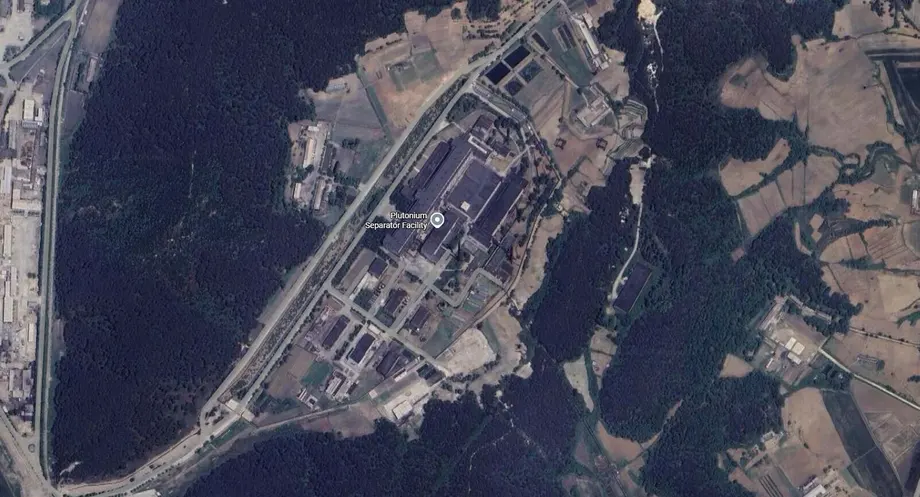
The Yongbyon enrichment expansion showed a new extension to North Korea's main uranium enrichment facility. It could add more than 35 kilograms of highly enriched uranium a year if fitted with centrifuges, which are machines that spin to concentrate uranium. Vertic estimated existing production capacity at as much as 375 kilograms a year. Highly enriched uranium is one material used to make nuclear weapon cores. A larger arsenal gives Kim more confidence when he demands recognition, and it raises the cost of any deal that leaves production untouched.
For South Korea, the immediate concern is the combination of nuclear pressure on the peninsula and great power talks that may treat North Korea's nuclear status as a bargaining chip. Cheong Wa Dae's promise of close communication with China reflects that worry. Kim's next move depends on whether Beijing sees a visit as useful before Miami, and whether Pyongyang believes the trip can shift Washington's position.
Key Points
- Seoul monitored signs of a possible Kim visit to China, including reported emergency preparations in Dandong.
- Cheong Wa Dae denied that Xi raised such a visit with President Lee and said there was nothing further to confirm.
- Kim Sung-nam's November 3 to 7 China trip and party level contacts fit a possible preparation path.
- The likely window, if the trip happens this year, is early December around China's economic conference and before the G20 summit in Miami on December 14 and 15.
- Kim is pressing for treatment as a nuclear power, with Article 56 of North Korea's constitution calling the country a responsible nuclear power.
- Experts say a meeting between Trump and Kim is unlikely soon because Washington and Pyongyang remain far apart on recognition and sanctions.
- North Korea's nuclear displays, threats toward South Korea and Japan, and closer ties with Russia are raising security pressure around any diplomacy.