Satellite Images Reveal New Construction at Yongbyon
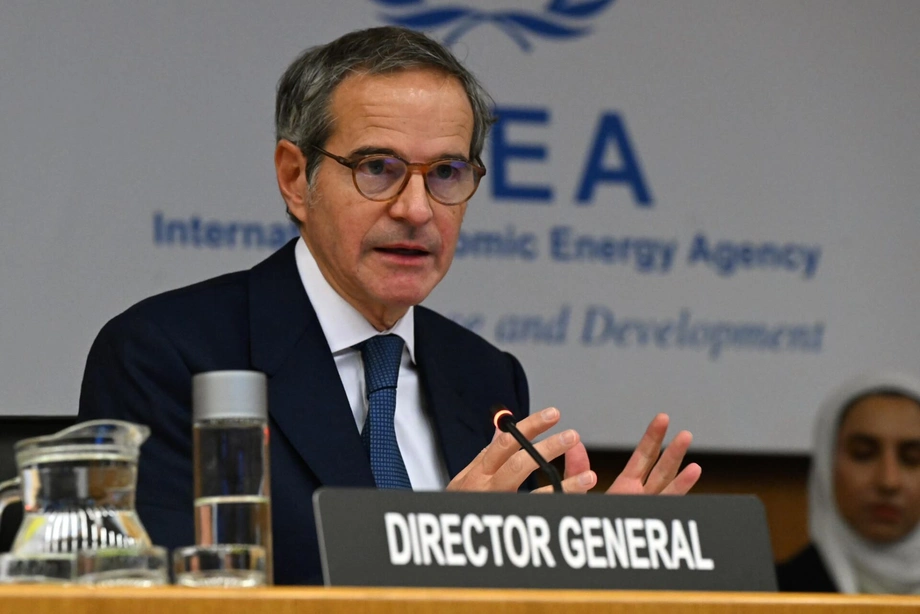
North Korea has added a fresh extension to its primary uranium enrichment facility at the Yongbyon nuclear complex. International Atomic Energy Agency Director General Rafael Grossi stated during the November 18 board of governors meeting that construction on the new building began in mid-September 2026 and finished its exterior work by late October 2026. In his opening statement to the board, IAEA Director General Rafael Grossi addressed the ongoing expansion, stating: "Since mid-September 2026, construction work has been underway on an extension to the existing enrichment facility at Yongbyon, and by the end of last month, the exterior work on the new extension building was completed." He added: "The continued expansion of North Korea's uranium enrichment program remains a matter of serious concern." A centrifuge is a machine that spins rapidly to concentrate uranium isotopes, while a cascade links many of these machines together in a sequence. Analysts using commercial satellite photographs captured on November 6, 2026, noticed that the newly built L-shaped structure connects directly to the main enrichment hall at the site.
Contents
Sam Lair, a researcher at the Foreign Policy Research Institute, explained that the awkward positioning of the addition over the original entrance points to a layout built for housing extra equipment rather than administrative offices. Lair published his findings on a military affairs blog alongside colleagues John Ford and Jeffrey Lewis. Satellite images taken while the roof was going up showed no internal walls or small partitioned rooms inside the structure, pointing toward an open floor plan typically reserved for centrifuge cascades.
The physical changes at Yongbyon follow a series of earlier developments tracked by international observers. In December 2024, North Korea began building a second, larger enrichment facility at Yongbyon that the agency assessed could hold up to 28 centrifuge cascades. Meanwhile, at the Kangson enrichment site near Pyongyang, an expanded annex began operating in January 2026. These overlapping projects show a steady build-out of North Korea's nuclear infrastructure across multiple locations.
Calculating Potential Increases in Weapon Fuel
The newly finished structure could enable North Korea to produce more than 35 additional kilograms of highly enriched uranium each year. Highly enriched uranium contains a high concentration of the uranium-235 isotope, which serves as core material for nuclear weapons. Experts calculate this output by applying the density of centrifuges found in similar North Korean buildings, such as the annex constructed at Kangson in 2024. That Kangson annex measures 9 meters wide and houses slightly under 2,000 centrifuges across a floor space of 837 square meters.
British non-profit group Vertic estimated that North Korea's existing production capacity for highly enriched uranium reaches up to 375 kilograms annually. The new Yongbyon extension measures roughly 8 to 10 meters wide and provides enough floor space to accommodate about a dozen centrifuge cascades. If fully equipped, those machines would add approximately 8,000 separative work units per year to the facility's output. Separative work units measure the effort required to separate uranium isotopes in an enrichment plant.
Plutonium production at Yongbyon continues alongside uranium enrichment, providing Pyongyang with a second pathway to bomb fuel. Grossi reported that North Korea's 5-megawatt reactor is likely operating through its seventh irradiation cycle. An irradiation cycle is the period during which nuclear fuel remains inside an operating reactor exposed to neutrons, after which the spent fuel can be chemically reprocessed to extract weapons-grade plutonium. Additionally, a light water reactor at the Yongbyon site has remained active since the end of April following an earlier period of maintenance.
Decades of Monitoring Without Ground Access
International inspectors have been unable to visit Yongbyon or other North Korean nuclear sites since authorities expelled them from the country in 2009. The agency relies instead on commercial satellite imagery, open-source data, and photographs published by state media to track developments. Grossi noted that past visits by inspectors before their expulsion allow the agency to understand the internal layout and capabilities of the facilities despite the current lack of on-site access.
North Korean leader Kim Jong Un visited the Yongbyon complex in June and instructed officials to increase the production of weapons-grade nuclear material. State media reported that the Ninth Party Congress adopted a strategic decision to expand the country's nuclear capacity. Observers note that this ongoing expansion follows the collapse of high-stakes nuclear diplomacy between Pyongyang and Washington in 2019. South Korean officials previously stated that North Korea operates multiple enrichment facilities running continuously every day.
Diplomatic Standoff and Stalled Negotiations
Diplomatic efforts to address the nuclear expansion remain deadlocked as major powers clash over security requirements and disarmament goals. Foreign Minister Choe Son Hui recently rejected demands for complete denuclearization issued by the Group of Seven, calling nuclear weapons the strongest guarantee of national sovereignty. State media also dismissed earlier disarmament appeals from international forums as familiar rhetoric.
Political signals from Washington have brought the prospect of future talks back into public discussion. U.S. President Donald Trump expressed a willingness to meet with Kim Jong Un while traveling in Asia, though U.S. Secretary of State Marco Rubio clarified that no formal meeting schedule had been established. Analysts note that as North Korea expands its uranium enrichment infrastructure, any future negotiations centering on a nuclear freeze rather than complete disarmament could leave the existing military stockpile intact while offering sanctions relief in exchange for a halt to new production.
Regional Reactions and Concerns Over Future Talks
Neighboring governments and domestic political parties are closely watching how international powers handle North Korea's growing nuclear capabilities. South Korea's Unification Ministry stated in an official briefing that it is closely monitoring the expansion of the Yongbyon nuclear facilities in cooperation with relevant agencies and intelligence authorities. In Japan, plans to update key security documents have sparked intense debate over defense spending and regional deterrence. Meanwhile, international watchdogs continue to press for renewed verification measures to ensure that nuclear material is not diverted from peaceful applications.
The sequence of key developments highlights how the infrastructure has grown over time:
- 2021 to 2022: An annex increased the original Yongbyon enrichment facility floor area by about one third.
- December 2024: Construction began on a second, separate enrichment building at Yongbyon.
- January 2026: The IAEA identified signs that an expanded annex at Kangson had begun operating.
- Mid-September 2026: Construction began on a further extension to the original Yongbyon enrichment facility.
- Late October 2026: Exterior construction on the latest Yongbyon extension was completed.
- November 18, 2026: IAEA Director General Rafael Grossi reported the expansion details to the agency board of governors.
The Essentials
- North Korea completed the exterior of a new extension at its original Yongbyon uranium enrichment plant by late October 2026.
- The addition could house new centrifuge cascades, enabling an increase in highly enriched uranium production by more than 35 kilograms per year.
- The IAEA continues to monitor the site through satellite imagery because inspectors have been barred from North Korea since 2009.
- The 5-megawatt reactor at Yongbyon shows signs of continuing its seventh fuel irradiation cycle to produce plutonium.
- Pyongyang maintains that its nuclear weapons status is absolute and has rejected external demands for complete disarmament.