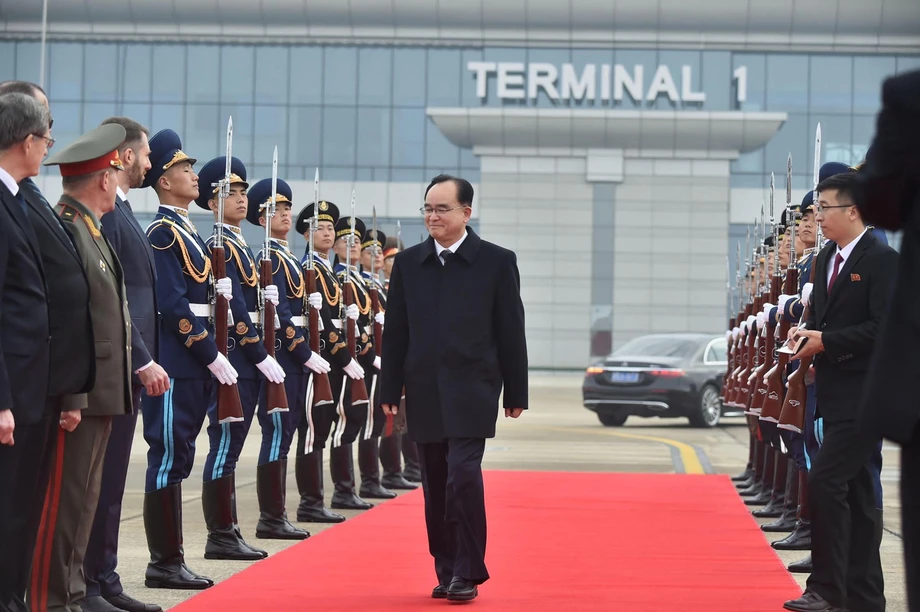
A senior envoy takes the party relationship to Moscow
Jo Yong-won, a senior Workers' Party official and one of North Korean leader Kim Jong-un's closest aides, arrived in Moscow on November 14 leading a party and government delegation invited by Dmitry Medvedev, chairman of Russia's ruling United Russia party. North Korea announced the visit on November 15, placing a powerful figure from its domestic leadership at the centre of an expanding relationship with Moscow.
Contents
- A senior envoy takes the party relationship to Moscow
- Who is Jo Yong-won?
- Senior officials mark the departure and arrival
- A treaty followed by troops and repeated visits
- Military cooperation reaches back into Asia
- Why the possible Shenzhen meeting matters
- The delegation may extend beyond party officials
- Economic ties bring scrutiny beyond diplomacy
- At a Glance
The delegation travelled by private plane from Pyongyang and was welcomed in Moscow by Andrei Klimov, a member of United Russia's Supreme Council Bureau and first deputy chairman of the State Duma's International Affairs Committee. North Korean Ambassador Sin Hong-chol and embassy staff also attended. North Korean and Russian flags flew at the airport.
Jo's journey follows the two countries' 2024 Comprehensive Strategic Partnership Treaty and North Korea's deployment of troops to support Russia's war against Ukraine. It adds a channel between the governing parties to a relationship already involving military cooperation, diplomatic exchanges and growing scrutiny of economic activity.
The timing has drawn attention because of a possible meeting involving US President Donald Trump, Chinese President Xi Jinping and Russian President Vladimir Putin around the Asia-Pacific Economic Cooperation summit in Shenzhen. Jo's position gives the visit particular weight: his responsibilities involve the organisation and personnel of North Korea's ruling party, placing him close to the leadership's most sensitive decisions.
Who is Jo Yong-won?
Jo is a secretary of the Workers' Party Central Committee and a member of its Politburo Standing Committee, a small group at the top of the party hierarchy. He is also identified as the party's organisational secretary and director of the Organization and Guidance Department.
His work concerns the officials and institutions through which Kim governs. In simple terms, this means overseeing parts of the machinery that appoints people, supervises their work and keeps the party's decisions moving through the state. Sending such an official gives Moscow access to someone closely connected to Kim's leadership circle.
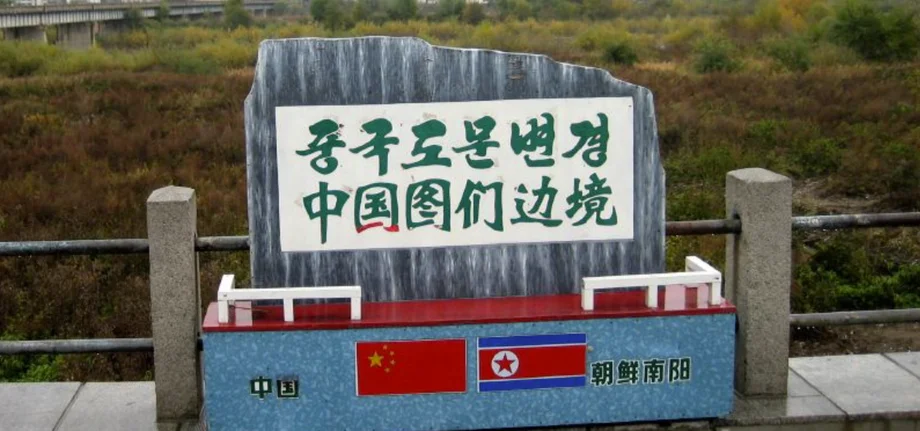
Jo's recent travel also places him alongside Kim in diplomacy beyond Russia. He accompanied the North Korean leader on an October 24 visit to China, travelling over the New Yalu River Bridge and returning the same day. His Moscow mission now extends that personal involvement in relations with North Korea's two major neighbours.
Senior officials mark the departure and arrival
Foreign Minister Choe Son-hui and party international secretary Kim Song-nam were among the officials who saw the delegation off at Pyongyang International Airport. Other senior figures present included Ju Chang-il, Sin Yong-il, Jong Kyong-thaek, Yu Kwang-u and Kim Tok-hun.
Russian Ambassador Andrei Pod'yolyshev also attended the departure. His presence in Pyongyang, followed by the reception involving Klimov and Sin in Moscow, gave the journey visible diplomatic support at both ends.
Klimov's roles connect Russia's ruling party with its parliament. The State Duma is the lower house of Russia's legislature, and its International Affairs Committee deals with foreign relations. His participation fits a visit arranged through United Russia while also involving a delegation representing North Korea's government.
Medvedev's invitation places the governing parties at the centre of the exchange. North Korea presented the visit as part of increasingly close friendship and alliance relations, using language that tied the relationship to shared ideas of independence and justice.
A treaty followed by troops and repeated visits
North Korea and Russia signed their Comprehensive Strategic Partnership Treaty in 2024. Military, security and diplomatic cooperation expanded afterward, with North Korean troops supporting Russia's war against Ukraine and senior officials travelling between the two countries.
For Russia, the relationship brings support from a government willing to commit personnel to its war effort. For North Korea, cooperation connects its leadership and military institutions more closely to a major power. The practical effects extend beyond ceremonies and political statements.
The sequence of exchanges helps explain why Jo's arrival matters:
- 2024: North Korea and Russia signed the Comprehensive Strategic Partnership Treaty.
- July: Foreign Minister Choe Son-hui visited Russia at the invitation of the Russian Foreign Ministry.
- September: A Russian deputy foreign minister said Kim Jong-un had been invited to visit Russia.
- Early November: Kim Song-nam visited Beijing, adding another senior contact with China.
- November 14: Jo's delegation left Pyongyang and arrived in Moscow.
- November 15: North Korea publicly announced the journey and reception.
Military cooperation reaches back into Asia
Russia's war in Ukraine has made the partnership consequential far beyond the two capitals. North Korean soldiers and weapons support Moscow, while experience gained through that cooperation can affect the capabilities available to Pyongyang.
Earlier coverage of Russian support for missiles examined how combat feedback and manufacturing knowledge could help North Korea improve its weapons. North Korea recorded 16 ballistic missile launches through October 12, 2026, compared with six in all of 2025 and 12 in 2024. Those figures show why South Korea has reason to follow the military side of the relationship closely.
Factory work provides another route for practical knowledge to travel. A study by the Center for Strategic and International Studies and the George W. Bush Institute examined the prospect of North Korean technicians learning assembly methods at Russia's Alabuga drone complex. Coverage of workers at Alabuga described a facility with capacity to produce more than 5,500 aircraft a month.
For people in South Korea and neighbouring countries, the concern is concrete: skills gained in producing weapons for one war can help build weapons available for another military confrontation. Jo's visit takes place within that wider relationship, although the public announcement focused on the delegation's travel and political welcome.
Why the possible Shenzhen meeting matters
The possible Trump, Xi and Putin meeting gives the Moscow visit a wider diplomatic setting. The anticipated window was November 18 to 19 around APEC in Shenzhen, with November 19 also mentioned as a potential meeting date. The leaders' meeting and its agenda had not been officially confirmed; North Korea likewise gave no detailed purpose, length of stay or timetable for Jo's delegation, or confirmation of a meeting with Medvedev.
North Korea has an interest in discussions involving those three governments because they can touch on its nuclear programme, sanctions and possible renewed talks with Washington. Russia offers Pyongyang a channel to communicate its preferences before such discussions.
Lim Eul-chul, a professor at Kyungnam University's Institute for Far Eastern Studies, said the visit could provide an opportunity to exchange views on the possible three country meeting and developments concerning dialogue between North Korea and the United States. He also suggested that preparations for a North Korea and Russia summit in the first half of the following year could be discussed.
Lim's assessment describes possible diplomatic work for the delegation. The immediate development is the arrival of a senior party figure able to carry messages between leadership circles while Moscow, Beijing and Washington consider their own contacts.
The delegation may extend beyond party officials
Yang Moo-jin, a chair professor at the University of North Korean Studies, identified Kim Hyong-sik, a vice chairman of the Supreme People's Assembly, and Kim Jong-gyu, a vice foreign minister responsible for Russian affairs, as accompanying Jo in photographs of the departure ceremony.
The Supreme People's Assembly is North Korea's legislature. The participation of an assembly official and a diplomat handling Russia would give the delegation contacts across several parts of the state, alongside Jo's authority within the party.
Yang also suggested that military personnel might be included, pointing to the presence of senior military affairs official Jong Kyong-thaek at the departure. That was his assessment of the ceremony and the possible composition of the travelling group.
Kim Song-nam's visit to Beijing earlier in November adds another element to the diplomatic activity. North Korea has been maintaining senior contacts with both China and Russia rather than concentrating its external exchanges on Moscow alone.
Economic ties bring scrutiny beyond diplomacy
North Korea's closer relationship with Russia also affects workers, companies and ports. An investigation by Global Rights Compliance examined recruitment arrangements offering Russian employers teams of 50 to 100 North Koreans for factory and agricultural work, with advertised shifts lasting 12 hours a day for 28 days a month.
Coverage of workers marketed as students described allegations that employment was being presented as education, while workers faced restrictions on their documents, living arrangements and access to wages. Those findings place the treatment of individuals alongside the strategic calculations of the two governments.
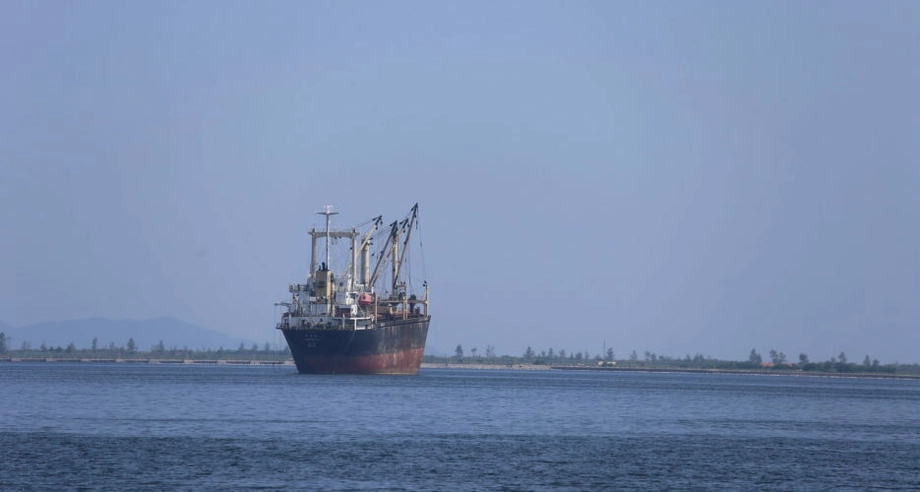
Shipping activity has attracted attention too. Earlier examination of North Korean port visits counted 14 calls at Russia's Nakhodka port in October out of 20 recorded from the start of the reporting year through early November. October therefore accounted for 70% of those visits, with at least nine vessels appearing near coal terminals.
Jo's mission brings the political leadership into a relationship whose effects are already visible across military deployments, industrial workplaces and maritime routes. The next concrete developments will be the meetings held during his stay and any decisions the two sides announce.
At a Glance
- Jo Yong-won arrived in Moscow on November 14 leading a North Korean party and government delegation.
- United Russia chairman Dmitry Medvedev invited the delegation.
- Andrei Klimov and North Korean Ambassador Sin Hong-chol welcomed the visitors in Moscow.
- The journey follows the 2024 partnership treaty, troop deployments and repeated senior diplomatic exchanges.
- A possible Trump, Xi and Putin meeting around November 18 to 19 forms part of the diplomatic setting.
- North Korea has not announced the delegation's detailed programme or length of stay.