A precise launch begins a journey lasting five years
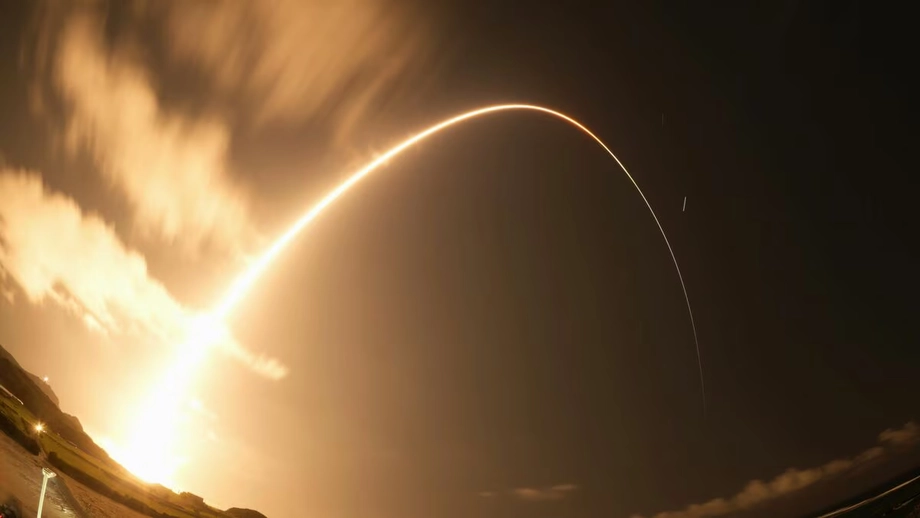
Japan's Martian Moons eXploration spacecraft lifted off from Tanegashima Space Center at 04:41:03 Japan Standard Time on October 20, 2026, beginning a mission to bring at least 10 grams of material from the Martian moon Phobos back to Earth. Its tiny cargo could help answer a much larger question: how did Mars acquire its two moons?
Contents
- A precise launch begins a journey lasting five years
- Why Japan is heading for a moon rather than Mars
- Two competing explanations for the moons
- Could the sample contain pieces of Mars?
- How the spacecraft will work near Phobos
- Collecting grains in extremely weak gravity
- An international spacecraft with a Japanese lead
- Reading Phobos from space and in the laboratory
- The milestones between launch and sample recovery
- Key Points
The Japan Aerospace Exploration Agency, JAXA, confirmed in its MMX launch result that H3 Launch Vehicle flight No.10 flew as planned. The spacecraft separated approximately 71 minutes and 13 seconds after liftoff and entered its predetermined orbit.
MMX is expected to reach Mars in August 2027, study Phobos and its companion Deimos, and deliver a sample capsule to Australia around 2031. Success would bring the first material collected by a spacecraft in the Mars system back to laboratories on Earth.
Andrew Beck, an associate professor of geology at St. Lawrence University and a member of the mission's international science team, watched the launch from an island roughly 35 miles away in southern Japan. He described the moment when the rocket illuminated the darkness:
It was very dark, but then it lit up the sky like it was daytime," Beck recalls. "You see the light, then you hear the noise, and then you can actually smell it. It was like a wave of senses.
The launch moves MMX beyond the preparations described before its planned October departure. The next major destination is Mars, where the spacecraft must survey an unfamiliar surface before attempting to collect anything.
Why Japan is heading for a moon rather than Mars
Phobos gives Japan a way to investigate the Martian system using skills developed during its asteroid missions. Hayabusa, launched in 2003, returned material from Itokawa. Hayabusa2, launched in 2014, brought samples from Ryugu. Both required operations near small bodies with very weak gravity.
Mars presents a different challenge. Its stronger gravity makes landing and launching a sample back into space technically demanding. Phobos offers a smaller body on which Japan can extend its experience while studying material that may preserve information about the planet nearby.
JAXA's MMX mission overview describes Phobos as a body thought to have changed relatively little over time. Its rocks and grains could retain clues to the formation and evolution of the Martian system.
The agency also connects the mission to a broader scientific question: how water and organic compounds moved through the early Solar System. Organic compounds are chemicals containing carbon, some of which are ingredients in the chemistry associated with life. Understanding where such materials travelled helps scientists investigate how planets acquired conditions suitable for life.
Two competing explanations for the moons
Phobos and Deimos have an unresolved origin. One explanation is that they began as asteroids and were captured by Mars's gravity. Another is that a large object struck Mars, throwing debris into orbit that later gathered into moons.
The European Space Agency's MMX factsheet explains the different evidence scientists would expect. Moons assembled from debris after a collision could contain material recording conditions on young Mars. Captured asteroids would have a different composition and could reveal how substances such as water travelled through the Solar System.
MMX will combine observations of both moons with laboratory analysis of material collected from Phobos. Cameras can map the surface, and instruments can investigate its chemistry. Returned grains allow researchers to examine individual minerals and compare their composition and history in much greater detail.
Deimos supplies another object for comparison. MMX plans to observe it from a distance and attempt observations during a flyby, while concentrating its landing and sampling operations on Phobos.
Could the sample contain pieces of Mars?
Phobos may hold material from more than its own formation. Meteorite impacts on Mars can throw fragments into space, and some of those fragments are thought to reach the surfaces of its moons. A sample from Phobos could therefore contain small pieces of the planet below.
Scientists already study Martian rocks that have reached Earth as meteorites. Those rocks survived ejection from Mars, travel through space and passage through Earth's atmosphere. Material carried home inside MMX's protected capsule could include different kinds of Martian rock, potentially widening the range available for study.
Researchers will need to identify the origin of the returned grains through analysis. Whether the collected material contains fragments from Mars, and how much, will become a laboratory question after the capsule returns.
JAXA sets the collection target at a minimum of 10 grams. Although small enough to fit easily in a person's hand, that quantity can support many measurements. Laboratories on Earth can use large instruments that would be impractical to send aboard a spacecraft, and preserved portions can be studied again as analytical techniques improve.
How the spacecraft will work near Phobos
MMX is designed to spend about three years investigating the Martian system after its arrival. Its observing route near Phobos is called a quasi-satellite orbit: the spacecraft follows a path around Mars similar to the moon's, allowing it to remain nearby for repeated observations.
JAXA plans to examine the global shape of Phobos and survey dozens of possible landing locations. Detailed measurements will assess the terrain, surface chemistry and the way materials absorb or reflect light. Those observations will help the team select a place where the spacecraft can land and collect useful material.
Idefix, a rover developed jointly by France's space agency CNES and the German Aerospace Center, DLR, is scheduled to explore the surface before the main spacecraft lands. Its instruments include cameras, a radiometer and a Raman spectrometer, which helps identify materials by examining how they scatter laser light.
Phobos's gravity creates an unusual engineering problem. ESA says the rover has a mass of 25 kilograms but would weigh the equivalent of just 15 grams on the moon. Mass measures how much matter an object contains; weight measures the pull of gravity. The rover retains its mass while experiencing an extremely small downward force.
Collecting grains in extremely weak gravity
The main spacecraft's exploration module carries four landing legs and two different sampling systems. One is a corer designed to collect material from a depth of two centimetres. The other uses pressurised gas to lift loose surface material into a container.
Those methods provide access to material in different physical settings: the corer can reach beneath the immediate surface, while the gas system gathers grains from the surface. MMX's total return target remains at least 10 grams.
Operations must account for limited propellant, temperature changes and long communication delays. JAXA gives a maximum round trip communication time of 44 minutes. A command sent from Earth and the response confirming its result can therefore take much of an hour to complete the journey.
Controllers will have to prepare operations around that delay rather than steer every movement as it happens. Navigation, control and landing systems must work together while MMX operates near a small moon in the gravitational environment of a much larger planet.
An international spacecraft with a Japanese lead
JAXA leads MMX with NASA, CNES, DLR and ESA collaborating. The spacecraft has a total mass of about 4,200 kilograms including fuel and consists of propulsion, exploration and return modules, each with a different job in the journey.
The propulsion module provides the thrust needed for travel to Mars. The exploration module carries the landing equipment, samplers and scientific instruments. The return module includes communications equipment, solar panels and its own propulsion system for later operations.
ESA supplied equipment for communication across deep space, including a transponder and a power amplifier. Its Estrack network of ground stations is also planned to send commands and receive spacecraft measurements. CNES supports planning for the mission's complex orbital and landing manoeuvres, while DLR supplied testing equipment including a drop tower and a simulator for conditions of very weak gravity.
Yasuhiro Kawakatsu, JAXA's MMX project manager, is overseeing operations. He is scheduled to discuss the mission's technical challenges at an event in Tokyo on December 11, 2026, providing an opportunity for a public explanation of the work following launch.
Reading Phobos from space and in the laboratory
Beck's scientific role centres on MEGANE, a gamma ray and neutron spectrometer that will investigate the chemical elements present on Phobos's surface. Different elements produce recognisable signals, allowing researchers to build a picture of what the surface contains before samples reach Earth.
Beck joined the international team in 2017 while working at the Johns Hopkins Applied Physics Laboratory. His work connects the interpretation of spacecraft measurements with the close examination of rocks and meteorites.
St. Lawrence University's account of Beck's role describes plans for students to help analyse mission data. Beck, the university's inaugural Dr. J. Mark Erickson Professor of Geology, explained what that participation could involve:
What's exciting is that students will be able to work with real-time data coming back from the spacecraft," Beck says. "We'll be looking at the chemical makeup of Phobos and trying to understand what that tells us about the rocks on its surface. They'll have an opportunity to contribute to the research as the mission unfolds.
Beck also anticipates student participation in examining the returned material. That work would require specialised laboratories and could involve research at institutions elsewhere in the United States or abroad.
The milestones between launch and sample recovery
The successful October 20 launch begins a mission planned to last approximately five years. JAXA's broad itinerary puts arrival near Mars about a year after departure, followed by observations, surface operations and a return flight lasting about another year.
The main public milestones are:
- October 20, 2026: H3 flight No.10 launches MMX from Tanegashima, with spacecraft separation confirmed about 71 minutes later.
- August 2027: Expected arrival at Mars, according to St. Lawrence University's mission account.
- Following arrival: Roughly three years of investigation near Phobos, including rover operations, sample collection and observations of Deimos.
- 2030: Planned departure from the Martian system in JAXA's mission flow.
- Around 2031: Planned return of the sample capsule to Earth and recovery in Australia.
JAXA's public overview describes an Earth return around 2031, while ESA expresses the target as Japanese fiscal year 2031, which runs from April 2031 through March 2032. An exact recovery date has not been given.
The return capsule is about 60 centimetres in diameter and carries a heat shield to protect its contents during entry into Earth's atmosphere. After recovery in Australia, it is to be transferred to JAXA's Institute of Space and Astronautical Science in Sagamihara, near Tokyo. Specialists will open it in a dedicated laboratory, extract and catalogue the samples, and prepare them for scientific investigation.
Key Points
- JAXA confirmed MMX launched at 04:41:03 JST on October 20, 2026, aboard H3 flight No.10.
- The mission aims to return at least 10 grams of Phobos material, with recovery planned in Australia around 2031.
- Scientists will investigate whether Mars's moons formed from collision debris or were captured asteroids.
- Phobos's surface may also contain fragments thrown from Mars by impacts.
- The Idefix rover will explore before the main spacecraft's landing and sampling operations.
- Expected arrival at Mars is August 2027, followed by several years of investigation.