A 20 Year Experiment Reaches Its Limit
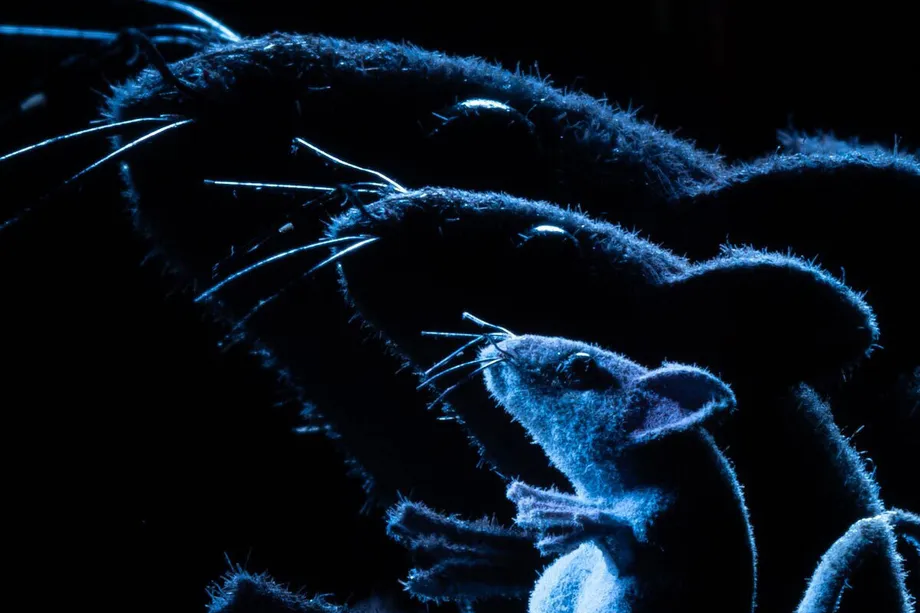
After 30,947 nuclear transfer attempts and more than 1,200 mice descended by cloning from one female, a Japanese research team reached the end of an experiment that lasted about 20 years. The five mice born in generation 58 all died the following day, ending a chain researchers once thought might continue indefinitely.
Contents
- A 20 Year Experiment Reaches Its Limit
- How Researchers Cloned a Clone
- Why the Early Results Looked Promising
- What Changed Inside the DNA?
- Larger Chromosome Changes Added to the Burden
- Why Resetting Gene Activity Was Not Enough
- Healthy Looking Mice Had Fewer Young
- Sexual Reproduction Restored Some Fertility
- What This Means for Conservation and Farming
- Key Points
The experiment, conducted from 2005 to 2025, found that repeated cloning allowed harmful changes in DNA to accumulate. Birth success initially improved, rising from about 7% in the first generation to 15.5% in generation 26. It began falling from generation 27 and eventually reached 0.6%, roughly six births for every 1,000 cloned embryos transferred to surrogate mothers.
The findings appear in Limitations of serial cloning, published in Nature Communications. The University of Yamanashi identified Associate Professor Sayaka Wakayama and Professor Teruhiko Wakayama, director of its Advanced Biotechnology Center, among the researchers in its research announcement.
The most revealing result was the contrast between appearance and reproduction. Many mice in the chain looked healthy and lived for around two years, yet later generations became increasingly difficult to reproduce, whether through cloning or ordinary mating.
Teruhiko Wakayama, a pioneer of mouse cloning at the University of Yamanashi, described the question behind the experiment through a familiar comparison:
Copying a picture on a photocopier results in slightly lower image quality. Copying that copy again makes the quality even worse,
For the mice, the changes involved both individual DNA letters and much larger pieces of chromosomes. The research connects those accumulating changes with the eventual collapse in successful births.
How Researchers Cloned a Clone
The team used somatic cell nuclear transfer. A somatic cell is a body cell, rather than an egg or sperm. Researchers removed the nucleus, which contains most of a cell's genetic instructions, and transferred it into an unfertilized egg whose own nucleus had been removed.
The egg then had to reset those instructions so that a nucleus from an adult body cell could direct the development of an embryo. Researchers transferred the resulting embryos into surrogate mothers and used cells from surviving clones to create the next generation.
The donor cells came from cumulus cells, which surround and support eggs. The original donor was a female mouse with an agouti coat, a coloring produced by bands of pigment along individual hairs. All the cloned mice were female and shared that coat color.
Researchers produced about three to four generations a year. Rather than making every mouse directly from the original donor's stored cells, they repeatedly passed the lineage through a new cloned animal. That design allowed them to follow changes carried forward from one generation to the next.
Why the Early Results Looked Promising
RIKEN's March 2013 announcement described an experiment still moving in an encouraging direction. The team had produced 581 mice across 25 generations by the paper's submission, and 598 across 26 generations by the announcement.
The researchers used trichostatin A, or TSA, a drug that helps the transferred nucleus reset its gene activity. Earlier attempts at repeated mouse cloning had reached only about six generations. With TSA and improved experimental conditions, birth success rose rather than steadily falling.
Measurements of health, fertility, lifespan and chromosome ends also looked reassuring at that stage. The researchers consequently believed the process might continue indefinitely. Following the same lineage for another decade exposed problems that were not apparent during those first 25 generations.
The main milestones show how the conclusion changed:
- 2005: Serial cloning began. The final paper dates the start to January, while RIKEN's 2013 account places it late in the year.
- March 8, 2013: RIKEN announced 598 mice across 26 generations, with birth success reaching about 15%.
- Generation 27 onward: Birth success began a sustained decline, despite variation between individual generations.
- 2025: The experiment ended at generation 58 after all five mice born in that generation died the next day.
What Changed Inside the DNA?
Genome sequencing revealed about 3,700 single nucleotide variants and 80 small insertions or deletions between generations one and 57. A single nucleotide variant, or SNV, is a change to one letter in the DNA sequence. An insertion or deletion adds or removes a small stretch of that sequence.
The paper calculated averages of 69.4 SNVs and 1.4 small insertions or deletions per generation. Many DNA changes have little effect, but some interfere with instructions needed for normal development or reproduction.
For comparison, the researchers examined two mouse lines maintained through 60 generations of mating between siblings over about 20 years. Those lines accumulated an average of 22.3 SNVs per generation. The cloning lineage's rate was therefore about 3.1 times as high, based on 69.4 compared with 22.3.
The share of small variants predicted to disrupt or alter proteins also increased. It rose from 0.52% among changes arising between generations one and 23 to 1.19% among those arising between generations 23 and 57.
Researchers also reconstructed the mice's family tree from their DNA. It matched the recorded experimental lineage, confirming that the chain had remained descended from the original donor throughout the experiment.
Larger Chromosome Changes Added to the Burden
The mice accumulated more than changes to individual DNA letters. Sequencing identified approximately 80 to 84 new structural variants, meaning larger alterations in the arrangement or amount of DNA, between generations one and 57.
Sixteen large variants involved stretches of at least 40,000 DNA letters. Among the changes were the loss of one X chromosome, a major alteration on chromosome four and an exchange of material between chromosomes seven and nine.
By generation 57, the researchers estimated that roughly 30 mutations caused a loss of gene function and about 50 changed the protein instructions encoded by genes, even before counting the loss of an X chromosome. Two large deletions also affected the same region and removed the function of both copies of a gene called Csmd1.
The authors connect the declining birth rate to the combined burden of mutations. Their explanation is that further damaging changes near the end of the experiment pushed an already heavily altered genome beyond what developing mice could tolerate.
The origin of the higher mutation rate is still unresolved. Repeated transfer of body cell nuclei may contribute, and body cells can collect mutations during an animal's lifetime. The absence of ordinary sexual reproduction also changes how those mutations pass through generations.
Why Resetting Gene Activity Was Not Enough
Cloning requires more than moving DNA into an egg. The egg must also reset chemical marks that help determine which genes are active. These marks are described as epigenetic because they regulate the use of DNA without changing its sequence.
The researchers had suspected that failures in this resetting process might worsen with every round of cloning. Their measurements instead pointed toward accumulating DNA mutations as the main explanation for the later decline.
Cloned mice had enlarged placentas, a known feature of mouse cloning. Across the experiment, placentas averaged about 0.30 grams, compared with 0.11 grams in controls produced through in vitro fertilization. Their weight, however, did not keep increasing with successive generations.
Tests of several epigenetic marks in early embryos also showed broadly similar patterns in newly produced clones and generation 51 clones. TSA continued to help: generation 51 birth success was 5.4% with treatment, compared with 1.6% without it.
Telomeres, the protective DNA sequences at chromosome ends, offered another possible explanation. The later sequencing analyses found little support for substantial shortening across the generations examined. Together, the tests directed attention toward the growing burden of changes in the DNA sequence and chromosome structure.
Healthy Looking Mice Had Fewer Young
Ordinary mating revealed a reproductive decline that was easy to miss from the mice's appearance. Generation 20 females produced an average of 9.9 pups per litter when mated with normal males, close to the 10.3 recorded in the control group.
Average litter size then fell to 2.8 pups in generation 50 and 2.2 in generation 55. The latter was about 79% lower than the control average, calculated from 2.2 compared with 10.3 pups.
The number of eggs collected after hormonal stimulation did not fall as the cloning generations advanced. Researchers therefore examined what happened to the eggs after activation or fertilization.
When eggs were fertilized in the laboratory with sperm from normal males, 97.6% of control embryos reached the blastocyst stage, an early stage before implantation. The proportion was 39.7% for eggs from generation 25 clones and 20.3% for eggs from generation 53 clones.
Experiments using generation 56 eggs found problems in both the nucleus and the cytoplasm, the material surrounding it. Replacing either component with its counterpart from a control egg still resulted in very low development rates. Both parts of the egg appeared impaired.
Sexual Reproduction Restored Some Fertility
Some offspring from late generation clones survived and reproduced more successfully. Although generation 55 cloned females averaged 2.2 pups per litter, their offspring later produced litters averaging 7.0 pups, more than three times as many.
Placentas in these grandchildren were also close in size to those from embryos produced by fertilization, rather than the enlarged placentas typical of cloned mice.
Sexual reproduction reshuffles genetic material when eggs and sperm form and combines it with DNA from another parent at fertilization. A functioning gene copy from one parent can sometimes compensate for a damaged copy from the other. Embryos with severe genetic problems may stop developing, while those with workable combinations survive.
The descendants still inherited mutations from the cloned females. Genome sequencing found variants in both offspring and grandchildren, including the exchange between chromosomes seven and nine. Researchers suggested that both altered chromosomes had been inherited together, keeping the exchange balanced.
The improvement in litter size therefore points to a partial reproductive recovery through sexual reproduction. Descendants could reproduce better while continuing to carry some of the genetic changes accumulated during cloning.
What This Means for Conservation and Farming
Cloning interests conservationists because stored cells can preserve genetic material from animals that are dead or unable to breed. In farming, it offers a way to reproduce animals with valued traits. The experiment shows why those uses require attention to the condition of donor DNA and the reproductive health of descendants.
The finding concerns repeated cloning through a long chain of successive donors. Fifty eight generations is the endpoint of this particular mouse lineage under these experimental conditions; the number of generations possible in other lineages or mammal species is unknown.
Katarzyna Malin, a developmental endocrinologist at the University of California, Davis, who was not involved in the research, said the findings favor conservation that prevents species from reaching crisis rather than depending on cloning to rescue them afterward.
Ben Novak of the conservation organization Revive & Restore highlighted the relevance of mutations that accumulate in body tissues over an animal's lifetime. A donor cell carries its own history of DNA changes, which matters when that cell becomes the starting point for another animal.
The study brings together two practical lessons. Cloning can preserve access to an animal's genetic material for many generations, yet maintaining healthy descendants also depends on what happens to that DNA over time. In this experiment, ordinary mating allowed some descendants to regain fertility after the cloning chain had approached its end.
Key Points
- Researchers made 30,947 nuclear transfer attempts and produced more than 1,200 mice from one original female through successive cloning.
- Birth success peaked at 15.5% in generation 26, then declined to 0.6% near the end of the experiment.
- All five generation 58 mice died the day after birth, ending the chain in 2025.
- The cloning lineage accumulated about three times as many single DNA letter changes per generation as the comparison lines maintained through sibling mating.
- Harmful DNA mutations and large chromosome changes accumulated, while measured epigenetic abnormalities did not progressively worsen.
- Sexual reproduction improved fertility in some descendants, although inherited mutations remained.