A gold medal that almost never happened
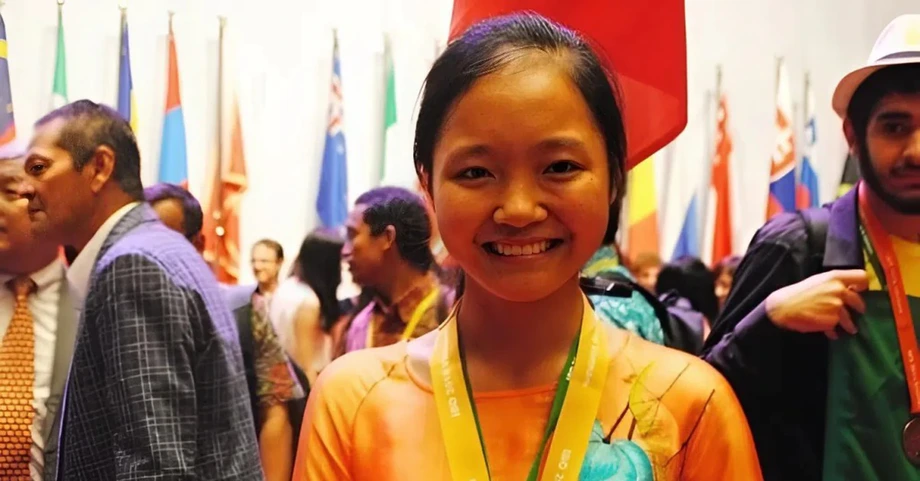
When the 27th International Biology Olympiad closed in Hanoi on July 23, 2016, Vu Thi Chinh received one of its 26 gold medals. For Vietnam, hers carried particular weight: it was the country's first gold at the competition since 2000, its second ever, and the first won by a Vietnamese female student.
Contents
- A gold medal that almost never happened
- From a farming family to a specialist school
- Fifteen minutes between celebration and withdrawal
- Fifth place meant waiting another year
- Hanoi hosts a record gathering
- What the medal figures show
- The teacher behind the second chance
- Why Chinh chose medicine
- A national milestone with a personal cost
- Key Points
Chinh had come close to leaving the school that helped prepare her for that achievement. Her parents were farmers, and supporting a daughter studying away from home in Hanoi stretched the family's finances. At the beginning of her final school year, her mother considered bringing her back to study near home.
A more recent account from her teacher, Dr. Do Thi Thanh Huyen, adds another precise moment when money nearly ended Chinh's international ambitions. In 2015, just 15 minutes after celebrating a national first prize, Chinh called to ask to withdraw from the next selection round because her family could not afford the expense.
Huyen contributed her own money, gathered support from others and persuaded Chinh to continue. A year later, the student won Vietnam's only gold at an Olympiad where all four Vietnamese contestants earned medals.
The story connects a rare national sporting-style achievement in science with something much more ordinary: the cost of living away from home. Chinh had the academic ability to compete internationally. Keeping her in a position to use it required financial help, sustained teaching and another chance after a narrow selection defeat.
From a farming family to a specialist school
Chinh grew up in the area then known as Hai Duong province. She developed an early interest in biology, particularly the human body and the natural world, and sought a place at the High School for Gifted Students under VNU University of Science in Hanoi.
Attending the specialist school meant living away from her family during her teenage years. It gave her access to advanced study, while creating education and living expenses that her parents struggled to meet through farming.
By the start of grade 12, returning home had become a serious option. Chinh agreed to her mother's proposal because she wanted to reduce the pressure on her parents, although she wished to remain at the school she had worked to enter.
Huyen, her class teacher and biology mentor, intervened with encouragement and practical support. Her involvement addressed the immediate problem facing the family: how to keep paying for Chinh's education in Hanoi.
Fifteen minutes between celebration and withdrawal
Chinh had already demonstrated her ability in grade 11. In 2015, she won first prize in the national biology competition and reached the group of 32 students eligible for the next round of selection for Vietnam's International Biology Olympiad team.
Huyen later recalled how quickly that celebration gave way to a request to stop. The teacher described Chinh's concern for her parents:
"When Chinh won First Prize, both she and I wept with joy. Yet, merely 15 minutes later, she called me asking to withdraw from the selection round due to severe family financial hardship. Sending her from her home village to study in Hanoi was already an immense effort for her parents. Chinh did not want to burden them further," Huyen recalled.
Huyen responded by promising to find the necessary financial support. She used her own money and sought contributions from individuals and organizations so that Chinh could keep studying.
The national prize and international team selection were separate stages. Winning first prize made Chinh eligible to compete for a team place, but Vietnam could send only four students to the Olympiad. She still had to pass through another demanding examination.
Fifth place meant waiting another year
Chinh finished fifth in the 2015 selection examination, one place outside the four available positions. After the effort to secure funding, missing the team discouraged her again. She worried that continuing would place more responsibility on her teacher.
Huyen persuaded her to stay with the subject. Over the following year, they continued preparing together, combining advanced biology study with support through the pressure of competition.
In grade 12, Chinh again won first prize nationally. This time, she secured a place on Vietnam's team for the 2016 International Biology Olympiad.
Her progress involved several distinct steps rather than a single breakthrough:
- 2000: Vietnam won its first International Biology Olympiad gold medal.
- 2015: Chinh won a national first prize, then finished fifth in selection for four international team places.
- 2016: She won another national first prize and qualified for the Vietnamese team.
- July 17 to 23, 2016: Hanoi hosted the 27th International Biology Olympiad.
- July 23, 2016: Chinh received gold as Vietnam finished with one gold, one silver and two bronze medals.
Hanoi hosts a record gathering
Hanoi National University of Education hosted the competition, which brought together 264 students and 238 teachers from 71 countries and territories. The numbers of delegations and contestants were records for the Olympiad at the time.
Vietnam was hosting the International Biology Olympiad for the first time. It was the country's fourth occasion hosting an international academic Olympiad, following competitions in mathematics, physics and chemistry.
Contestants completed both theoretical and practical examinations. The theory component tested their understanding of biology, while the practical component required them to apply scientific knowledge through tasks rather than written explanation alone.
Vietnamese teachers and biology scientists developed both sets of examination papers through several rounds of preparation to meet international standards. For the host country, organizing the event involved preparing the scientific contest as well as welcoming the delegations.
Chinh competed alongside Nguyen Ngoc Minh Hai of Ha Long High School for the Gifted in Quang Ninh, Nguyen Dac Hieu of Lam Son High School for the Gifted in Thanh Hoa, and Le Thi Hong Hoa of Hanoi-Amsterdam High School for the Gifted.
What the medal figures show
The organizing board awarded 26 gold, 51 silver and 74 bronze medals at the closing ceremony. Together, those amounted to 151 medals among 264 contestants. An Olympiad gold therefore belonged to a group of high achievers rather than to a single winner, with gold medals numbering roughly one for every 10 participants.
Vietnam's four contestants all won medals. Chinh took the team's only gold, while her three teammates earned one silver and two bronzes.
Before the 2016 contest, Vietnam's medal record stood at one gold, 10 silvers and 45 bronzes, a total of 56. Adding the Hanoi results brought that tally to 60 medals: two golds, 11 silvers and 47 bronzes.
Vietnam had participated since 1996, and its first gold came in 2000. Chinh's victory ended the ensuing 16 years without another gold. Her achievement also gave Vietnamese female students their first gold medal at this particular international competition.
At the closing ceremony, Deputy Prime Minister Vu Duc Dam praised the contestants' passion for science and determination to overcome difficulties. He also described their role in promoting peace and friendship, placing the academic competition within the wider international exchange taking place in Hanoi.
The teacher behind the second chance
Huyen's recollection of Chinh forms part of a longer teaching record recognized with the 2026 Vietnam Women's Award. Between 2015 and 2026, all 11 student entries she guided at the International Biology Olympiad won medals: three gold, four silver and four bronze.
At national level, she trained 120 competition entries, of which 112 received awards. Those awards comprised 23 first prizes, 52 second prizes, 21 third prizes and 16 consolation prizes. The figures count competition entries, allowing for students who may have competed in more than one year.
Huyen, a teacher at Chinh's former school, described an approach that gives students responsibility for investigating and assessing information themselves:
"The volume of knowledge today is immense. Rather than delivering lectures in the traditional passive manner, I guide students toward self-directed study and critical thinking so they can proactively explore information from diverse sources," she shared.
Her work also includes helping students manage examination pressure. In Chinh's case, teaching extended to finding funding and encouraging her to return after finishing just outside the national team.
Huyen's other honors include a Prime Minister's Certificate of Merit in 2019 and the Third-Class Labor Order in 2025. Her experience with Chinh shows how the work behind a medal can include both scientific preparation and keeping a student's education financially possible.
Why Chinh chose medicine
After the Olympiad, Chinh received an exemption from the high school graduation examination and direct university admission under the rules for students who won international Olympiad awards. She chose general medicine at Hanoi Medical University rather than study abroad.
In 2016, Chinh explained that her wish to become a doctor had grown from visits to relatives in hospital. Seeing patients in pain made her want to use scientific knowledge and medical skills to help people.
Her interest in the human body, which had drawn her toward biology at school, therefore became part of a practical career goal. She also expressed a desire to contribute to medicine in Vietnam.
Her subsequent graduation, professional qualifications and current workplace are not specified in the accounts of her achievement. The documented next step after the medal was her decision to study medicine in Hanoi.
A national milestone with a personal cost
Chinh's medal changed Vietnam's biology Olympiad record, but the decisions that made it possible happened well before the closing ceremony. Her family faced the cost of keeping her in Hanoi; her teacher found support; and Chinh returned to selection after missing the team by one place.
The fifth-place result in 2015 is especially revealing. A student who narrowly missed an international team went on to win gold the following year after receiving continued preparation and financial assistance. For Chinh, another year at school created another opportunity to compete.
Her story also gives the 2016 result a human scale. Behind one gold in a national medal table were parents considering a less expensive school, a teenager reluctant to add to their burden, and a teacher willing to help cover the costs.
Key Points
- Vu Thi Chinh won gold at the 2016 International Biology Olympiad in Hanoi, becoming the first Vietnamese female student to do so.
- Her medal was Vietnam's second biology Olympiad gold and its first since 2000.
- Financial hardship nearly forced her to leave her specialist school and withdraw from international team selection.
- Teacher Do Thi Thanh Huyen contributed money, gathered support and encouraged Chinh to continue.
- Chinh missed the 2015 team by one place before qualifying and winning gold in 2016.
- All four Vietnamese contestants won medals in Hanoi: one gold, one silver and two bronzes.
- Chinh subsequently chose to study general medicine at Hanoi Medical University.