Free books brought forward by one school year
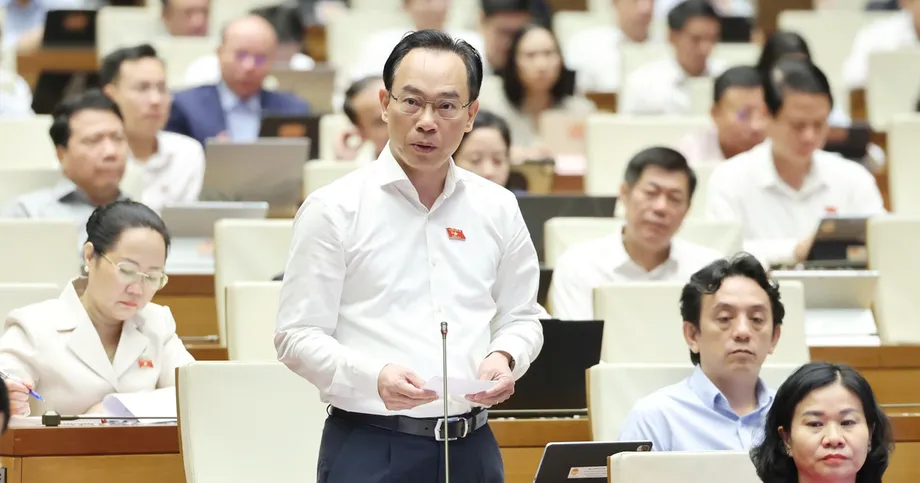
Vietnam plans to complete revisions to its school curriculum in 2026, finish a unified national textbook set in 2027 and provide the books free to students from the 2028-2029 academic year, Education and Training Minister Hoang Minh Son told the National Assembly on October 31, 2026.
Contents
- Free books brought forward by one school year
- What happens between now and 2028?
- Existing books will be revised, not replaced from scratch
- Copyright and distribution are central to free provision
- Nearly 30,000 education managers moved into teaching
- 108 boarding schools form part of the access plan
- Lawmakers press for predictable examinations
- Student safety includes platforms and school meals
- Scholarships target science and strategic skills
- Key Points
The timetable brings free provision forward by one school year. According to the Government News Portal's account of Son's remarks, the prime minister directed the earlier start, compared with the schedule in a government resolution.
Son addressed lawmakers during debate on implementation of the 2026 socioeconomic development plan and the proposed plan for 2027. His announcement linked textbook reform with teacher shortages, school construction, examination integrity, student safety and scholarships for priority university subjects.
For families, the central promise is straightforward: students would receive the textbooks used nationally without having to pay for them. Delivering that promise requires several connected changes, including revising lessons, securing publishing rights, arranging printing and getting books to schools on time.
The ministry is already developing a mechanism to hold textbook copyrights as state property and is studying whether local authorities should take responsibility for printing and distribution. Meanwhile, shortages at the start of the 2026-2027 school year have prompted orders for urgent corrective action and a review of responsibility.
What happens between now and 2028?
The Ministry of Education and Training has issued a plan to review and revise the curriculum and textbooks together. The curriculum sets out what children should learn; textbooks turn those requirements into lessons, explanations and exercises.
The announced sequence gives the curriculum revision an earlier deadline than the books, allowing the texts to be prepared against the updated learning requirements:
- 2026: Complete amendments to the 2018 general education curriculum.
- 2027: Complete revisions and preparation of the unified textbook set.
- 2028-2029 academic year: Begin nationwide use of the set and provide textbooks free to students.
The ministry says the process must allow time for writing, appraisal, final revisions, implementation preparations and guidance for teachers. Its curriculum proposals will go to the competent authority for consideration and a decision.
The timetable follows a broad school education review announced on October 13. That exercise examines developments from 2023 through September 30, 2026, including textbook content and costs, staffing and facilities. Findings are scheduled to reach the Party Secretariat on December 10, with the review to be completed before December 15.
The review therefore falls within the same year as the curriculum deadline. Its scope brings classroom capacity and affordability into the discussion alongside the content of lessons.
Existing books will be revised, not replaced from scratch
The ministry says the unified set will build on existing textbooks through review, updating, additions and adjustments. The work follows Resolution No. 71-NQ/TW and directions from senior authorities, including General Secretary and President To Lam.
Proposed changes include stronger teaching of digital skills, artificial intelligence, science and technology, and STEM. STEM connects science, technology, engineering and mathematics, often through practical tasks that draw on several subjects.
History, culture, national traditions and historical figures are also included in the review. The ministry wants content suited to each age group, alongside education in ethics, personal responsibility and citizenship.
At the same time, officials intend to reduce repeated material, excessive theory and specialist content considered unnecessary for general schooling. The practical challenge is to make room for new subjects while keeping lessons manageable for children and realistic for schools in different regions.
Teachers, students, parents, scientists and other specialists are being invited to contribute. The ministry also plans further rules on additional educational activities and learning tailored to student demand, taking account of schools that organize classes in both morning and afternoon sessions.
Copyright and distribution are central to free provision
The ministry has instructed its units to propose a legal framework under which textbook copyrights would be treated as state property. Its Project Management Board has been assigned to receive and manage the rights, including transfers from Vietnam Education Publishing House.
Copyright determines who can authorize reproduction and use of a book. Bringing those rights under ministry management would give the state a basis for organizing publication and free distribution under the planned system.
Vietnam Education Publishing House has also been instructed to ensure free access to electronic textbooks and transfer copyright under a plan approved by the minister. The wider review will examine authorship, chief editors and copyright arrangements as the books are revised.
Local authorities may be assigned printing and distribution responsibilities. The ministry wants fewer intermediary stages and lower costs for the state budget and families. A national set would standardize the books, while production and delivery could be organized locally.
The ministry has yet to announce the full financing and delivery arrangements, including whether printed books will be given permanently to students or circulated for reuse. Those details will determine how families obtain books and how schools manage replacements.
Immediate supply problems also need attention. The General Education Department has been tasked with urgent measures to resolve shortages for 2026-2027, while the personnel department has been asked to advise on identifying responsibility and taking action over incomplete supply at the start of the school year.
Nearly 30,000 education managers moved into teaching
Son said nearly 30,000 education management officials had moved into teaching duties following administrative reorganization, helping reduce teacher shortages. The ministry is also directing localities to transfer staff between areas to address places with too many teachers and others with too few.
Teacher distribution matters because a national staffing total can hide gaps at individual schools. A school may have enough staff in some subjects but still lack someone qualified to teach another part of the curriculum.
The ministry is preparing a circular to adjust staffing norms for schools and classes. These norms are the rules used to calculate how many teachers a school needs. Local authorities have been told to check and update workforce records in the education sector's database so requests for additional authorized posts can be based on accurate figures.
Son also said guidance had been issued on contracting artisans, artists and coaches to teach. Local authorities are responsible for developing suitable arrangements and policies for those contracts.
The staffing measures connect directly to curriculum delivery. New digital content, practical science and arts education all require schools to organize teaching time and secure people with the appropriate skills.
108 boarding schools form part of the access plan
Son identified sufficient schools, classrooms and teachers as the first requirement for expanding access to education. He linked investment in these resources to the goal of universal access to upper secondary education or its equivalent.
The first phase of a program for boarding schools serving several education levels has involved 108 schools, which the minister described as implemented and inaugurated. The program focuses on disadvantaged areas, including border communities.
The ministry intends to assess the first phase, guide operations and consider expansion to other disadvantaged localities beyond the border areas. Boarding schools combine education with accommodation, making their operation dependent on meals, living facilities and student supervision as well as classrooms.
School construction and equipment priorities have also been incorporated into the consolidated national target program. The ministry has proposed criteria to help direct investment toward localities needing classrooms and teaching facilities.
For students, free textbooks and a place at school address different costs and barriers. The minister's package treats books, buildings and teachers as connected requirements for making education accessible.
Lawmakers press for predictable examinations
National Assembly deputy Trinh Xuan An of Dong Nai called for an assessment of the purpose, necessity and effectiveness of the upper secondary graduation examination. He asked that it be considered alongside assessment during schooling, university admission and the routes students take into further study or work.
An urged authorities to prepare changes carefully, assess their effects and announce policies early enough for schools and families to plan. He described the uncertainty that repeated changes can create:
Students and parents should not have to anxiously await new regulations every examination season, while schools and teachers are left unprepared to organize teaching.
Son said the ministry had reviewed problems arising in practice and would introduce measures to improve examination quality while controlling cheating and misconduct. It has advised the prime minister on issuing a directive strengthening action against fraud in examinations and assessment of learning results.
The ministry also plans to study changes to teaching, assessment, examinations and admissions through a staged process. An's request places predictability alongside fairness: families need to understand the rules in time to prepare, while teachers need to know what their students will be assessed on.
Student safety includes platforms and school meals
Deputy Nguyen Van Huy of Hung Yen raised online threats to children during the October 30 debate, including grooming, intimidation, distribution of private images and the use of artificial intelligence to imitate faces or voices.
Huy called for stronger platform responsibilities, including measures to stop strangers approaching children and to deal promptly with harmful content. His proposal would place duties on service providers alongside the responsibilities of parents and schools.
Son said the government had directed the education ministry to work with the Ministry of Public Security and other agencies on legal provisions defining responsibilities for protecting students online. Network operators and online service providers are among the parties covered by that work.
The education ministry also plans to propose amendments to Decree No. 80/2017/ND-CP on safe educational environments and prevention of school violence. The changes would clarify the responsibilities of schools, local authorities, families and other parties in prevention and response.
School meals are another part of the safety agenda. The ministry has sought comments on a draft circular governing meals for students who board or remain at school during the day.
An Giang deputy Chau Quynh Dao also challenged the cost of food and drink inside school grounds. She argued that closed campuses can leave students with little choice of supplier and that rent charged for canteen premises can put pressure on meal prices.
Dao proposed changing the treatment of school service premises under public asset rules, replacing rental auctions with a limited fixed charge for wear and use, and selecting suppliers through bidding focused on service standards. Her proposal addresses affordability, while the ministry's draft meal rules address how food is provided to students.
Scholarships target science and strategic skills
Son also outlined measures intended to attract university students into basic sciences, key engineering disciplines and strategic technologies. He cited Decree No. 179/2026/ND-CP, which establishes scholarship policies for learners in those fields.
Agricultural biotechnology was raised as a field that could be considered for support. Biotechnology uses living organisms or biological processes in practical applications, including agriculture.
Ministries, sectors and local authorities can also commission training based on required graduate outcomes. In practical terms, an authority can identify the skills it needs and arrange training around what students should be able to do when they finish.
The scholarship and commissioned training measures sit at the later end of the education agenda presented to lawmakers. The school reforms seek to improve access and learning foundations, while the university measures aim to direct more students toward skills needed by the economy and individual localities.
Key Points
- Vietnam plans free provision of a unified national textbook set from the 2028-2029 academic year, one year earlier than the previous schedule.
- Curriculum revisions are due in 2026, followed by completion of textbook revisions in 2027.
- The books will build on existing materials, with updates covering digital skills, artificial intelligence, STEM, history and citizenship.
- The ministry is preparing state management of textbook copyrights and studying local responsibility for printing and distribution.
- Nearly 30,000 education management officials have moved into teaching, alongside plans to adjust staffing rules.
- The wider agenda includes boarding schools, examination integrity, online protection, school meals and scholarships for priority university subjects.