Two handshakes before a contest over Taipei's future
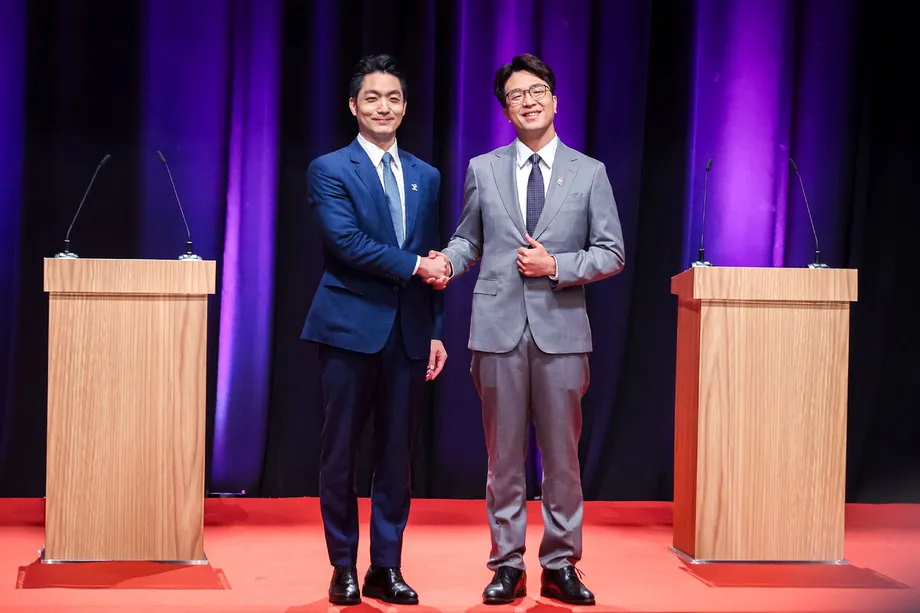
Democratic Progressive Party challenger Puma Shen and Kuomintang Mayor Chiang Wan-an shook hands twice before Taipei's first televised mayoral debate on October 31, 2026, then presented competing arguments about how the city should be run. Shen promised action on trees, child abuse and school lunches during his first 100 days in office. Chiang answered with eight promises he said he had already fulfilled.
Contents
- Two handshakes before a contest over Taipei's future
- Family encouragement and protests outside
- A debate format built for follow-up questions
- Shen puts three priorities on a 100 day clock
- Tree protection and child safety become tests of trust
- School meals expose a difference over delivery
- Chiang makes eight promises the core of his defense
- Technology, housing and the next city map
- Listening to residents versus proving a record
- Key Points
The debate began at noon at the TVBS building, jointly organized by TVBS and Sanlih Television, with 28 days remaining before the November 28 election. Each candidate had eight minutes for an opening policy statement in a broadcast scheduled to last two hours.
Shen arrived wearing a rainbow Taiwan pin in support of the Pride parade taking place that day. Chiang, seeking another term after four years as mayor, said he had largely recovered from a cold, although his throat remained slightly hoarse.
The friendly exchanges in the studio preceded a sharper political contrast. Shen argued that residents needed a city government that listened and acted quickly on everyday problems. Chiang argued that his administration's record showed it could turn promises into completed projects and public services.
Family encouragement and protests outside
Shen reached the venue first under the organizers' arrangements, while Chiang arrived at about 11:05 a.m. Wearing a dark blue suit and a tie with blue and purple dots, Chiang said he was confident and ready to discuss any issue on its merits.
Shen said his daughter had given him a hair tie as a lucky charm. His grandmother and other relatives attended, alongside supporter Lydia Lin. Chiang said his wife, Shih Fang-keng, had embraced him before he left home and his children had kissed him. Supporters at the venue included Yakira, who had also helped with a campaign number draw.
Tree protection campaigners gathered outside the building and demanded an apology from Chiang over tree cutting. Inside, the candidates checked their positions, microphones and equipment heights. They briefly spoke and shook hands twice, with Shen also giving a thumbs up.
A debate format built for follow-up questions
The organizers divided the event into four stages: opening policy statements, questions between the candidates, media questions and closing statements. The second stage included a follow-up mechanism, giving each candidate another opportunity to press an opponent after hearing an initial answer.
Each questioning sequence allowed one minute for a question, two minutes for the answer, another minute for a follow-up and 90 seconds for a further response. A complete sequence therefore lasted five and a half minutes. The format gave candidates time to ask how a proposal would work, rather than simply exchange campaign slogans.
Shen said he had practiced adjusting his speaking pace because his usual delivery resembled a university lecture. DPP Taipei chair Wu Pei-yi said on October 29 that he had prepared extensively and wanted voters to focus on policy. Chiang had acknowledged some nervousness, saying preparation time was compressed and the debate's pace would be fast.
The contest's recent timetable places the broadcast between a closely watched opinion survey and election day:
- October 20: A survey put Shen ahead in stated support, while estimates accounting for turnout suggested a much closer race.
- October 29: Wu said Shen was well prepared for a policy discussion with Chiang.
- October 31: The candidates met for the first televised debate, scheduled from noon to 2 p.m.
- November 28: Taipei voters are scheduled to elect their next mayor.
Shen puts three priorities on a 100 day clock
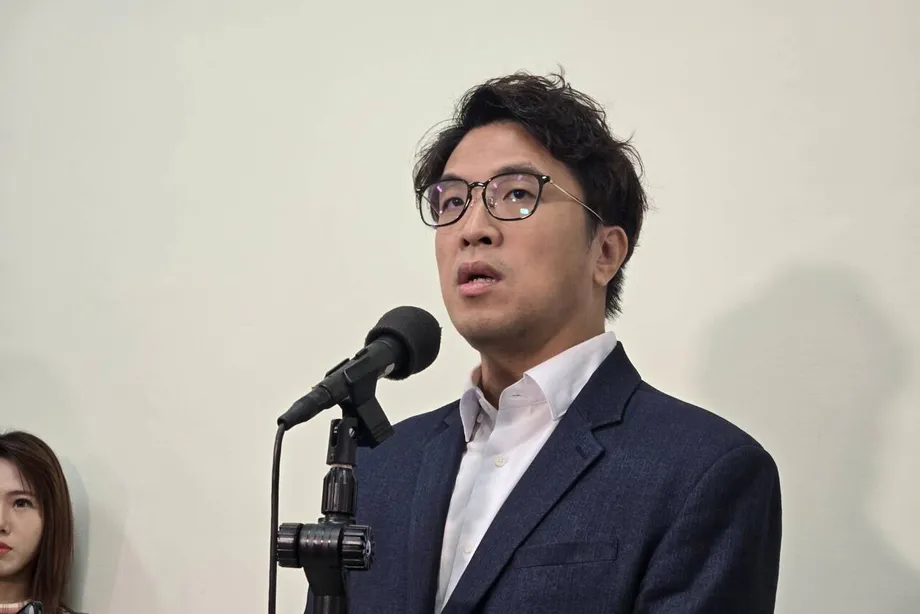
Shen said he had been campaigning for 171 days and wanted the debate to show voters the candidates' values and positions. He began by thanking Chiang for agreeing to participate despite his recent illness and wishing him a quick recovery.
His proposed first 100 days centered on restoring trees, responding to child abuse and changing school meal policy. The choices connected visible changes to the streets with services used by families every day. They also gave his campaign a short timetable against which voters could judge a new administration.
Shen described growing up in Wufenpu and watching Xinyi District change from farmland into an area of tall buildings. He linked that experience to current pressures on residents, including childcare, support for older people and the difficulty of balancing work with family responsibilities.
Tree protection and child safety become tests of trust
Shen's first promise was to plant trees again. He framed tree cutting as a problem of public trust in city government and proposed dedicated responsibilities and rules for small urban forests. These are compact planted areas intended to bring trees into the built environment.
The protest outside the debate venue showed that tree protection was already an active local dispute. Shen's proposal focused on how the city would organize and protect planting, alongside the immediate promise to restore greenery.
Child abuse was his second priority. Shen said institutions should be closed and staff suspended where established facts and violations warranted those actions. Victims should receive immediate support, he said, rather than face delays lasting hundreds of days.
Shen also said childcare personnel needed the city government behind them instead of being left to work alone. His approach paired punishment for violations with support for those responsible for children's daily care. He did not identify a particular abuse case in the opening statement described here.
School meals expose a difference over delivery
School lunches produced one of the clearest contrasts between the candidates. Chiang cited free school lunches and the city's fresh milk program among his achievements. Shen argued that improving children's nutrition required more than providing a bottle of milk each week.
Shen proposed combining meals with food and agricultural education, helping children understand what they eat and where it comes from. He also said he would ask the city council to approve an ordinance allowing school meal funding to adjust to food prices. Such a mechanism would let funding respond when ingredients become more expensive.
Teachers would no longer have to weigh food waste under his proposal. Shen described that task as unnecessary work and presented its removal as part of making school meal administration more practical.
Chiang's argument centered on benefits already reaching families, while Shen focused on meal funding, education and staff workload. Neither candidate gave detailed costs or funding arrangements for the new proposals in the opening remarks, leaving those practical questions for further discussion.
Chiang makes eight promises the core of his defense
Chiang opened by challenging Shen to confront their policy differences directly during the two hours available. He accused the challenger of offering slogans without concrete methods and made delivery the central theme of his own statement.
Chiang, the incumbent mayor and KMT candidate, described his record in a short statement translated from Chinese:
Four years ago, I made the promises. Four years later, I delivered.
He counted the opening of the Taipei Dome and development of a technology corridor north of the Keelung River among eight fulfilled commitments. He said the Dome had become a venue for major sporting events and concerts and had helped revive the eastern shopping district.
Chiang also cited an increase in the subsidy for a first child from NT$20,000 to NT$40,000. That is a doubling, or an extra NT$20,000 for an eligible family. He listed the restoration of the first 30 minutes of free YouBike use, the return of the Double Ninth Festival payment for older residents, easier requirements for publicly led urban renewal, the creation of a youth affairs department and improvements to Neihu transport.
On transport, Chiang pointed to the opening of a northbound access ramp on Tiding Boulevard and the start of construction on the metro's eastern section. His urban renewal argument concerned making it easier to begin projects to replace or improve older buildings.
Technology, housing and the next city map
Chiang placed Nvidia at the center of his economic development argument. He said the company's overseas headquarters was in the Beitou Shilin Technology Park and described securing it as requiring success in international competition, competition within Taiwan and negotiations over land use rights.
The mayor connected that achievement to his promise of a technology corridor along the Keelung River's north bank. He also proposed a Taipei AI park, extending his campaign's focus on attracting technology activity and investment.
Chiang listed transport assistance for pregnant women, housing for younger residents, a smoke free city initiative and his decision to remove Gongguan traffic circle among other measures. The range allowed him to present both large construction projects and smaller household services as parts of the same governing record.
His proposal to relocate Songshan Airport would reach beyond an individual service or building. Chiang argued that moving the airport could release development potential in surrounding areas. In his speech, that remained a proposal for Taipei's future, separate from the completed commitments he claimed.
Listening to residents versus proving a record
Shen said his team had used artificial intelligence to organize more than three million pieces of information and collected over 70,000 anonymous submissions about city concerns. He also described taking questions in markets, night markets and street appearances, acknowledging that he could not immediately answer everything residents asked.
His campaign had turned policies into activities for children and a publication for metro passengers, using poems, prose and comics to communicate its ideas. Shen said listening had to lead to action. The DPP candidate summarized his view of the mayor's relationship with residents in a statement translated from Chinese:
Citizens come before the mayor.
Shen also promised measures to reduce pressure on city employees, arguing that staff on the front line needed support to carry out policies. Chiang's case approached the same question of governing capacity from the opposite direction: voters, he argued, could judge him by projects and services delivered during four years in office.
The debate followed an October polling lead for Shen. The survey commissioned by the Taipei Xinmin Cross-Strait Research Association put him at 50.3%, against Chiang's 33.3%. Estimates accounting for turnout and commitment suggested a much narrower contest, with some scenarios giving Chiang a small advantage. The candidates therefore entered the studio with reasons to persuade residents beyond their most committed supporters.
Key Points
- Shen and Chiang shook hands twice before the October 31 debate at the TVBS building.
- The broadcast was scheduled for two hours, with opening statements, candidate questioning, media questions and conclusions.
- Shen promised action on trees, child abuse and school meals in his first 100 days.
- Chiang cited eight fulfilled commitments, including the Taipei Dome, family subsidies, YouBike benefits and transport improvements.
- The candidates offered contrasting cases based on responsiveness to residents and experience delivering city services.
- Taipei's mayoral election is scheduled for November 28.