Cases Rise 66.8% as Schools Face Growing Pressure
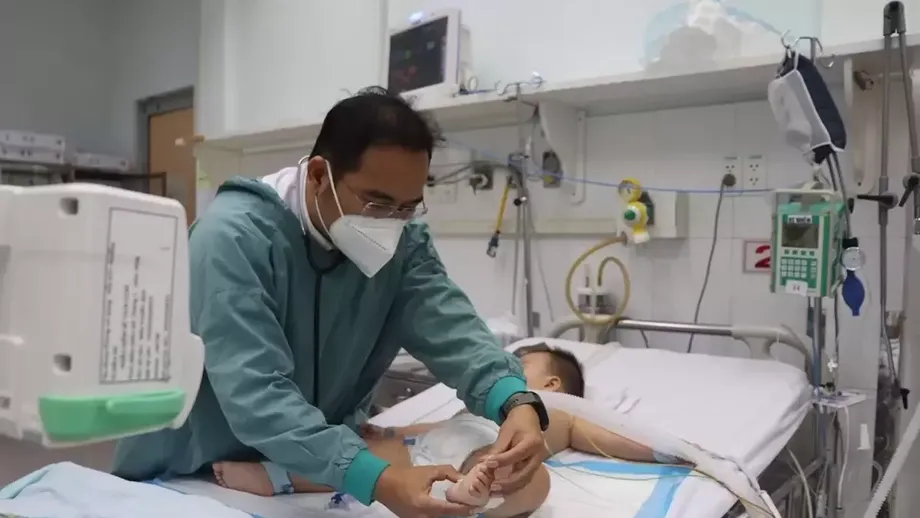
Ho Chi Minh City recorded 44,191 cases of hand, foot and mouth disease through week 43 of 2026, an increase of 17,705 cases, or 66.8%, from the same period in 2025, according to the Ho Chi Minh City Center for Disease Control (HCDC). Five people have died, and health authorities have detected more than 1,600 outbreaks, most concentrated in schools.
Contents
- Cases Rise 66.8% as Schools Face Growing Pressure
- Where the Increase Is Most Visible
- Why EV71 Needs Particular Attention
- Which Symptoms Require Urgent Care?
- Children Can Be Infected Outside School
- What Schools Must Do Before Year End
- What Protection Does the EV71 Vaccine Offer?
- Dengue Requires a Different Household Response
- Di An Takes the Campaign Into Homes and Classrooms
- Key Points
The city recorded 1,850 cases during October 19–25. Surveillance through October 18 also identified 60 samples positive for Enterovirus 71, known as EV71, a virus that can cause dangerous complications affecting the brain, breathing and circulation.
The increase comes as the city tackles another infectious disease: dengue. More than 42,500 dengue cases and 11 deaths were recorded through week 43. Together, the two diseases have prompted a campaign covering homes, preschools, childcare groups and places where mosquitoes breed.
For families, the immediate priorities are recognizing illness early, keeping sick children away from group settings under medical guidance, and maintaining handwashing and cleaning. Most children with hand, foot and mouth disease recover within seven to 10 days, but doctors warn that some can become seriously ill within the first few days.
Health officials launched a prevention campaign in Di An ward on October 31, bringing the response into neighborhoods and classrooms. The campaign combines checks on school hygiene with household visits to remove standing water, because the two diseases spread in different ways and require different prevention measures.
Where the Increase Is Most Visible
HCDC's figures show that hand, foot and mouth cases began climbing sharply in early September. Weekly infections exceeded the average for the previous five years for four consecutive weeks, indicating that the recent burden was higher than the city's usual experience.
The comparison with 2025 is substantial: cases rose from 26,486 to 44,191 over the same reporting period. That means the city recorded about 167 cases in 2026 for every 100 recorded a year earlier.
Con Dao Special Zone, Can Gio and Binh Khanh had some of the highest recorded infection rates. Their respective rates were 883, 693 and 597 cases per 100,000 residents. Using the same population size makes it easier to compare places with different numbers of people. These figures describe cumulative infection rates, rather than the number of people currently ill.
The main developments unfolded over several weeks:
- Early September: hand, foot and mouth infections began rising sharply.
- October 18: surveillance had identified 60 samples positive for EV71.
- October 19–25: the city recorded 1,850 new cases, bringing the cumulative total to 44,191.
- October 31: health officials and Di An ward authorities launched a joint prevention campaign.
- October and November: local authorities are assigned to inspect disease risk locations and expand checks at childcare facilities.
- By the end of 2026: the city aims to complete inspections of all preschools and childcare groups covered by its plan.
Why EV71 Needs Particular Attention
Hand, foot and mouth disease can be caused by several enteroviruses, a group of viruses associated with the digestive tract. EV71 is one of them. Others include Coxsackievirus A16, Coxsackievirus A6 and echoviruses.
Dr. Le Thi Giao Thi, of the Long Chau Pharmacy and Vaccination System, said most children experience mild illness and recover in about seven to 10 days. EV71 can, however, damage the central nervous system, which includes the brain and spinal cord.
Complications can include encephalitis, meaning inflammation of the brain, and inflammation of the brainstem, which helps control essential functions such as breathing. Severe illness can also affect circulation, cause fluid to build up in the lungs and lead to respiratory failure.
Dr. Nguyen Dinh Qui, head of the General Planning Department at Children's Hospital 2, warned that EV71 infections can be missed when children have few visible red spots or develop them in less obvious places. Parents therefore need to watch how a child behaves, moves and breathes, alongside checking for the familiar rash.
HCDC recorded 60 positive EV71 samples, but did not give the total number tested. The proportion of tested samples carrying this virus is therefore unknown.
Which Symptoms Require Urgent Care?
Fever, mouth sores and blisters or a rash on the palms and soles are common signs of hand, foot and mouth disease. A rash can also appear on the buttocks. Children with suspected symptoms should receive a medical assessment so caregivers know how to monitor them.
Dr. Qui advised parents to take a child to hospital immediately if any warning sign of severe illness appears. His advice includes watching for changes that may initially seem small, such as trembling while holding a toy or becoming unusually quiet and unwilling to play.
- Fever above 39 degrees Celsius, or fever continuing for two days or longer.
- Repeated sudden startling or jerking, particularly as the child begins falling asleep.
- Trembling hands, unsteady walking, or weakness in the arms or legs.
- Repeated vomiting or inability to keep food down.
- Unusual drowsiness, lethargy or much less activity than normal.
- Fast breathing, difficulty breathing or another unusual deterioration.
Dr. Du Tuan Quy, head of the Infectious Diseases and Neurology Department at Children's Hospital 1, also urged parents to act promptly when warning signs develop. Waiting until morning or until a weekend has ended can allow a rapidly progressing illness to become more dangerous.
Neither hand, foot and mouth disease nor dengue has a specific drug treatment that directly cures the infection, according to the city's health department. Medical care remains essential for assessing severity, managing illness and responding to complications.
Children Can Be Infected Outside School
Preschools and childcare groups are central to the response because children spend time together and share toys and other objects. Viruses can pass through saliva, fluid from blisters and feces, then reach another child through contaminated hands, surfaces or items.
Dr. Du Tuan Quy said children who have not yet started school can also become infected. He estimated that around 10% to 20% of people may carry the virus without symptoms, making hand hygiene important even when everyone at home appears well.
Caregivers should wash their hands with soap and clean water before preparing food or feeding children, and after changing diapers or cleaning a child. Dr. Quy also advised parents to wash their hands thoroughly before caring for children after returning home from work.
Toys, household objects and frequently touched surfaces need regular cleaning. Parents should inform a child's school about suspected illness and keep the child at home until a health professional advises that returning is safe.
The disease occurs throughout the year, with recurring increases in March to May and again from September into the final months of the year. The later rise overlaps with children returning to school, bringing more opportunities for close contact and shared handling of objects.
What Schools Must Do Before Year End
HCDC has called for daily cleaning and disinfection at least once a week at all preschools, childcare groups and facilities that vaccinate children. Cleaning and disinfection should become more frequent when cases or outbreaks occur.
Schools are expected to check attendance and children's health every day, then promptly notify the local health station about suspected cases. Floors, classroom furniture, toys and frequently touched items are among the areas requiring attention.
The inspection plan gives priority to every preschool and childcare group with a case or outbreak. Among the remaining facilities, authorities aim to inspect at least 50% during October and November and reach all facilities by the end of the year.
These targets connect daily school routines with the wider public health response. A teacher who notices a sick child can alert the health station, while inspectors can check whether the school has functioning handwashing facilities and is carrying out cleaning properly.
Medical facilities have also been asked to identify worsening illness early, consult other clinicians when needed and arrange timely transfers to hospitals able to provide more advanced care. Weekly reporting is intended to track how the campaign is being carried out.
What Protection Does the EV71 Vaccine Offer?
Vietnam approved an EV71 vaccine in 2026 for children aged two months to under six years. The vaccine, Envacgen, targets disease caused by EV71. Children can still develop hand, foot and mouth disease from the other viruses that cause it.
Dr. Le Thi Giao Thi cited a phase III clinical trial involving more than 3,000 children in Vietnam and Taiwan that found 96.8% efficacy against EV71 disease. Phase III trials test a vaccine in a larger group to assess protection and safety before wider use.
The basic schedule described by Dr. Thi consists of two doses about two months apart, with a minimum interval of 56 days. For children who receive their first dose before turning two, an additional booster is recommended 10 months after the second dose. Parents should confirm the appropriate schedule with a licensed vaccination provider and follow the product instructions.
Dr. Du Tuan Quy said vaccination can be considered after a child who previously had hand, foot and mouth disease has recovered. Infection with one virus leaves a child vulnerable to other viruses in the group, so previous illness does not remove the need for prevention.
The vaccine is being provided through paid vaccination services, with families covering the cost. HCDC advises parents to seek guidance from licensed providers while continuing handwashing, environmental cleaning and symptom monitoring.
Dengue Requires a Different Household Response
Ho Chi Minh City recorded 1,785 dengue cases during October 19–25, an increase of 9.7% from the average of the previous four weeks. The cumulative total of more than 42,500 cases and 11 deaths adds to the demands on families and health services.
Dengue spreads through infected mosquitoes. Its prevention campaign therefore focuses on water containers and other places where mosquitoes lay eggs, rather than the contact precautions used against hand, foot and mouth disease.
Residents are being asked to remove unnecessary objects that collect water, clean and cover water containers, and eliminate mosquito larvae. Larvae are the immature stage of mosquitoes that live in water before developing into flying adults.
HCDC has asked local authorities to review, classify and monitor all identified dengue risk locations during October and November. Areas with cases or outbreaks receive priority, and locations that fail inspections should be checked again.
Insecticide spraying should follow professional instructions on when, where and how to apply it safely. Removing breeding sites remains necessary because water left in containers can support another generation of mosquitoes after spraying.
Di An Takes the Campaign Into Homes and Classrooms
The October 31 launch in Di An ward brought together the Ho Chi Minh City Department of Health and the ward's People's Committee. Huynh Minh Chin, deputy director of the health department, called for routine prevention, early detection and timely action instead of waiting for outbreaks to expand.
Tran Van Dao, deputy chairman of the Di An ward People's Committee, said local mobilization would involve departments, community organizations and teams across 28 neighborhoods. Household visits would focus on removing water containers that support mosquitoes and addressing other risk locations.
Officials also inspected Thong Nhat preschool, checking toy hygiene, classroom disinfection, facilities for washing hands with soap and procedures for spotting early signs of illness. The visit put the city's prevention requirements alongside the practical conditions children encounter each day.
Di An deployed five vehicles with loudspeakers to carry prevention messages along major roads and through residential areas, workers' rented accommodation and markets. The local effort reflects the campaign's two immediate tasks: interrupting contact transmission around children and reducing mosquito breeding around homes.
Key Points
- Ho Chi Minh City recorded 44,191 hand, foot and mouth cases through week 43 of 2026, up 66.8% from the same period in 2025.
- Five deaths and more than 1,600 outbreaks were recorded, with most outbreaks concentrated in schools.
- Surveillance identified 60 samples positive for EV71 through October 18.
- Repeated startling, unusual drowsiness, trembling, unsteady walking, persistent vomiting or breathing difficulties require urgent medical attention.
- The EV71 vaccine is approved for children aged two months to under six years and protects against EV71 disease.
- Schools face daily cleaning requirements, disinfection at least weekly and inspection targets extending to the end of 2026.
- Dengue has caused more than 42,500 cases and 11 deaths, prompting parallel action to remove standing water and mosquito larvae.