A nationwide DNA survey maps a changing sea
Traces of DNA in seawater have revealed 126 fish species farther north along Japan's coast than previous records placed them, giving researchers a detailed view of changing marine habitats. The study brings together 2,672 samples collected at 316 locations between 2017 and 2024, including nearly 1,000 new samples contributed by researchers at the Okinawa Institute of Science and Technology (OIST).
Contents
- A nationwide DNA survey maps a changing sea
- How seawater reveals fish that are hard to see
- Why Japan could build a survey this large
- What the 126 northern detections mean
- Warming water and shifting currents set the scene
- Why unfamiliar catches can earn less
- Seaweed losses connect fish movements to other fisheries
- Reliable DNA results require careful checks
- From a wider map to better decisions
- Key Points
The findings, published on October 26, 2026, in Diversity and Distributions, include commercially important Japanese scad and blacktip grouper, alongside black rabbitfish, a species suspected of contributing to damage to seaweed beds. For coastal communities, the changes reach beyond the species appearing in a fishing net: they affect what businesses can sell, what families cook and which habitats support future catches.
Japan's Fisheries Agency provides a striking temperature backdrop. Its FY2024 fisheries white paper says sea surface temperatures around Japan's coast rose at a rate of 1.33 degrees Celsius per century over approximately the past 100 years through 2024. That year brought the highest annual average coastal sea surface temperature recorded.
The OIST study, titled Japan-wide eDNA Surveys Bridge Data Gaps and Reveal Novel Out-of-Range Fish Records Across Japan, uses environmental DNA, or eDNA, to help fill gaps in knowledge about fish distributions. Its central finding is evidence that 126 species may occur beyond their previously recorded northern limits, giving researchers and fisheries managers specific species and locations to investigate further.
How seawater reveals fish that are hard to see
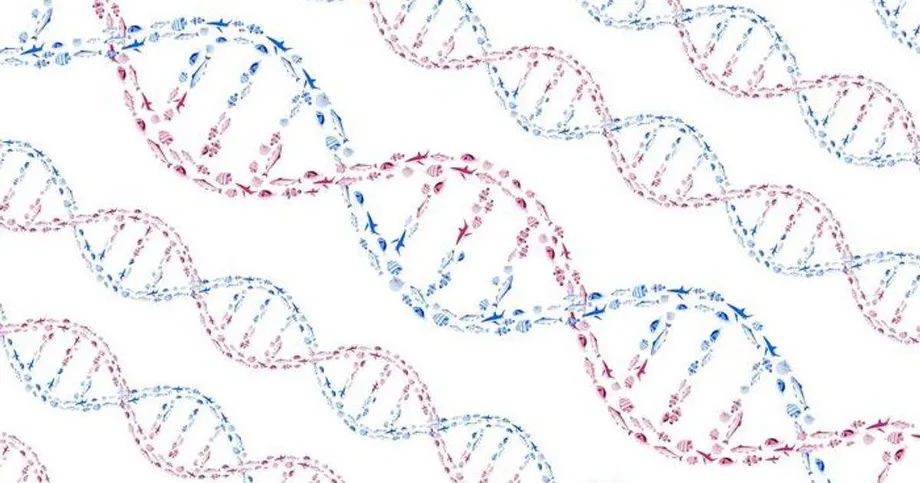
Fish leave tiny traces of genetic material in the water around them. Researchers can collect seawater, extract that DNA and read selected parts of its genetic code. They then compare the sequences with a reference library to identify the species associated with them.
A useful comparison is matching a fingerprint against a database. The seawater contains the trace, while the reference library supplies the known identities. A single sample can contain DNA from many species, allowing scientists to survey a fish community without catching or seeing every animal.
MiFish primers, developed in Japan, help make this process possible. Primers are short pieces of DNA used to target a particular genetic region so that laboratory equipment can copy it for analysis. The reference sequences are the comparison records used afterward to assign identities. Both are needed for reliable identification.
Researchers describe the project as the first application of eDNA at a national scale for this purpose. It complements established methods, including observations by volunteers, field surveys, specimen collection and predictions of suitable habitat. Each contributes different information, with costs, coverage and uncertainty shaping where it is most useful.
Why Japan could build a survey this large
Ayşe Haruka Oshima Açıkbaş, the study's first author and a former OIST doctoral student, points to Japan's investment in marine DNA research as a foundation for the work. Extensive sequencing of local marine animals has expanded the reference library available to identify fish.
Oshima Açıkbaş also described the facilities and partnerships that enabled the sampling effort:
We have access to all the necessary DNA sequencing facilities here at OIST, and, just as importantly, access to a network of marine stations and their staff throughout Japan who we can work with,
Local fisheries, environmental agencies and scientists helped provide coverage along the coastline. Combining the team's nearly 1,000 new samples with earlier collections expanded the analysis to 2,672 samples from 316 distinct locations.
The project therefore depended on both laboratory capacity and people working around the coast. A sequencing machine can identify genetic material only after someone has collected, handled and delivered a useful sample. Established marine stations helped connect those stages across a large geographical area.
What the 126 northern detections mean
Japanese scad, identified as D. maruadsi, and blacktip grouper, E. fasciatus, were among the commercially important species detected beyond their previously recorded northern limits. Their inclusion connects the survey directly to fish that can enter markets and support fishing businesses.
Black rabbitfish, S. fuscescens, brings a different concern. It is suspected of contributing to the loss of seaweed beds through feeding damage. The Japanese term isoyake describes the decline or disappearance of these underwater beds, which provide food and habitat for other marine life.
The survey identified thousands of fish species across its combined dataset. The figure of 126 refers specifically to species detected farther north than their earlier records, rather than the full diversity found in the samples.
The distances beyond those earlier limits and whether each species has established a lasting local population were not specified in the study details described publicly. Those details matter to coastal managers deciding where repeated surveys or direct observations would be most useful.
Warming water and shifting currents set the scene
Japan's fisheries white paper describes a broader change already affecting catches: fish that prefer warmer water are expanding their habitats and migration routes northward, while fewer fish that prefer colder water, including salmon, are moving south into waters around Japan.
Ocean currents also help determine where unusually warm conditions develop. The government says the Kuroshio large meander, a major bend in the route of the warm Kuroshio current, has persisted since 2017. A northward shift of the Kuroshio Extension, the current's continuation into the Pacific, contributed to record temperatures off Sanriku from autumn 2022.
The main dates show how the biological sampling overlaps with those changes:
- 2017: The sampling period began, and the Kuroshio large meander began its prolonged phase.
- Autumn 2022: A northward shift of the Kuroshio Extension contributed to record temperatures off Sanriku.
- 2024: The sampling period ended, and Japan recorded its highest annual average coastal sea surface temperature.
- October 26, 2026: The OIST study was published in Diversity and Distributions.
Temperature records describe changing physical conditions, while fish detections describe where genetic traces were found. Together, they help researchers examine how marine communities are changing across a coastline influenced by both long term warming and the movement of major currents.
Why unfamiliar catches can earn less
Timothy Ravasi, head of OIST's Marine Climate Change unit and the study's senior author, said fishing communities are already encountering changes in their catches:
Fishermen across Japan are already finding differences in the types of fish they reel in compared to a few decades ago.
Ravasi described consequences for people who may be unfamiliar with buying, cooking or eating newly arriving species. At the same time, the disappearance of familiar fish can make it harder to prepare dishes with local cultural or historical importance. Fishing businesses may also need different equipment, techniques and knowledge.
The Fisheries Agency documents a related commercial problem. Some newly caught species have sold at low prices because local consumers lack a tradition of eating them and established distribution channels are missing. A fish can be available in the sea while buyers, processors and retailers are still poorly prepared to handle it.
The government describes efforts to improve processing and distribution for these catches and encourage local consumption. The practical challenge extends from the boat to the dinner table: catching a replacement species is only one step toward earning a dependable income from it.
Seaweed losses connect fish movements to other fisheries
Seaweed beds make the ecological stakes especially concrete. The Fisheries Agency says high water temperatures and feeding damage have contributed to their decline, with consequences for species that depend on them as habitat or feeding grounds.
Japanese spiny lobsters and abalone are among the marine organisms whose catches have fallen as those beds have declined. Changes involving fish that eat seaweed can therefore matter to fisheries targeting entirely different animals.
The detection of black rabbitfish beyond earlier northern records gives researchers a species to watch alongside the condition of local seaweed beds. Tracking the fish and the habitat together can help coastal authorities identify where feeding pressure and warmer water coincide.
For fishing communities, the connection is straightforward: a change in one part of the marine food web can affect several types of catch. Monitoring only the fish being sold would leave out changes in the habitats that help sustain them.
Reliable DNA results require careful checks
Japan's Ministry of the Environment explains the strengths and limits of the method in its environmental DNA survey guide, which focuses on freshwater fish and amphibians and draws on knowledge available in fiscal 2024. It also cites marine examples demonstrating how many species the technique can detect.
One nationwide coastal fish survey cited in the guide detected 1,220 species across 521 genera and 136 families. An aquarium validation exercise detected 168 marine fish species, representing more than 90 percent of those held in the tanks. These are separate examples of the method's performance, with their own survey settings and totals.
The guide calls for close checking of species lists. Contamination during handling or laboratory work can produce a false positive, meaning DNA is assigned to a species absent from the survey site. A false negative occurs when a species present at the site goes undetected, including when its DNA is poorly matched by the primers.
Local conditions also influence results. Water flow, current direction, depth, temperature, water quality and the density of the target species can all affect detection. Substances in a sample can interfere with PCR, the laboratory process used to make enough copies of selected DNA for analysis.
For broad surveys that identify many species together, the guide says researchers cannot calculate each species' biomass from the results. Biomass means the total mass of living organisms. Fisheries managers therefore need other measurements to assess how much fish is present, alongside DNA evidence about species distribution.
From a wider map to better decisions
Oshima Açıkbaş and colleagues aim to develop predictive models explaining how and why DNA appears in particular locations. Such models would help researchers connect the detection process with the marine conditions influencing it.
Larger reference libraries and repeated sampling can make future comparisons more useful. A growing collection of records gives scientists more opportunities to follow changes at the same places, check unusual detections and identify areas needing closer field investigation.
The Environment Ministry recommends combining eDNA with conventional capture and visual surveys to obtain more information. That approach fits the decisions facing Japan's coast: where to monitor newly arriving fish, how to respond to seaweed losses and how to help fishing businesses adapt to changing catches.
The OIST research provides a broad starting map. Its value for policy lies in connecting that map with temperature records, habitat surveys and the experience of fishing communities, so that responses reflect both ecological change and the practical needs of people working at sea.
Key Points
- OIST researchers found DNA evidence of 126 fish species farther north than previous records placed them.
- The analysis combined 2,672 samples collected at 316 locations between 2017 and 2024.
- Japanese scad, blacktip grouper and black rabbitfish were among the species identified beyond earlier northern limits.
- Japan recorded its highest annual average coastal sea surface temperature in 2024.
- Unfamiliar catches can sell for less where consumer demand and distribution networks are lacking.
- Careful laboratory checks and conventional surveys help turn DNA detections into useful information for fisheries and habitat management.