
A chosen earthquake wave, then the evidence to fit it
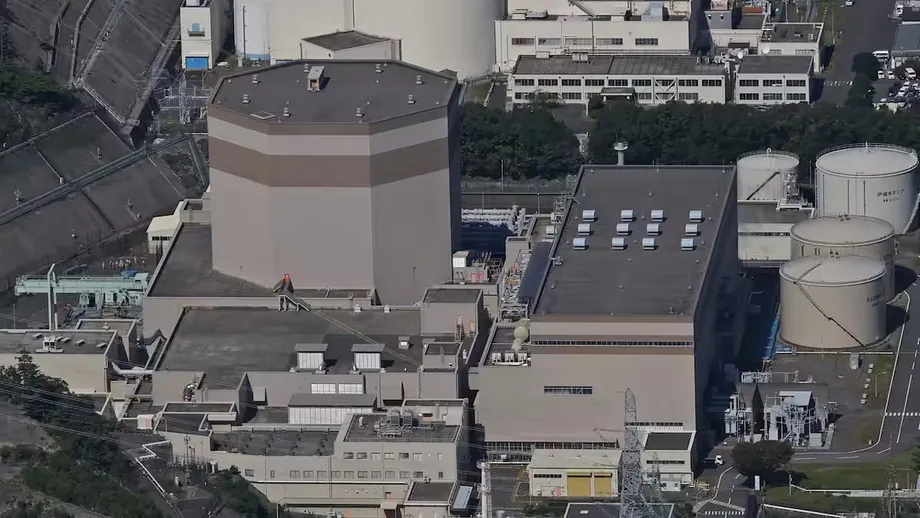
Chubu Electric Power's earthquake data scandal at the Hamaoka nuclear plant in Shizuoka Prefecture involved more than selecting a favorable calculation. Investigators found that the company chose a seismic wave it wanted to use, then assembled 19 other waves to make that choice appear consistent with the method it had described to Japan's Nuclear Regulation Authority.
Contents
- A chosen earthquake wave, then the evidence to fit it
- What the 1,200 gal figure means
- How selective calculations became fabricated support
- Restart pressure crossed departmental boundaries
- Warnings did not stop the manipulation
- The sequence from applications to resignations
- Why the committee also questioned the review
- What is settled and what remains unresolved
- Key Points
The external committee of lawyers whose report was released on September 14, 2026, traced an expanding pattern of manipulation. It began with selective use of calculations before the company's 2014 application for a safety review, developed into deliberate selection of representative waves from 2018, and continued after regulators began investigating.
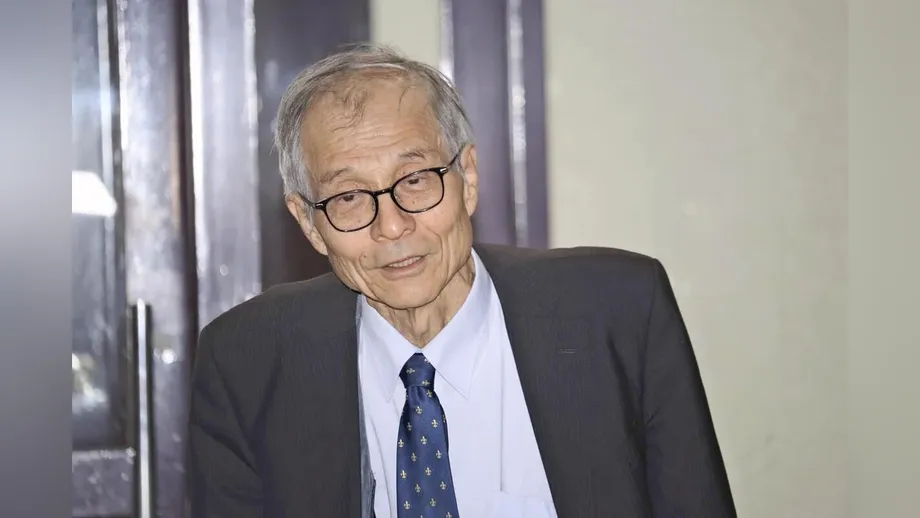
The consequences reach into the company's leadership and its effort to restart Hamaoka's reactors 3 and 4. Chubu Electric announced plans to withdraw their review applications. President Kingo Hayashi resigned effective September 30. Chairman Satoru Katsuno had also expressed an intention to resign, although a completed departure is not established in the accounts of the announcement.
The report also introduced a separate, sensitive argument about the review itself. While sharply criticizing Chubu Electric's conduct, the committee suggested that assessing uncertain earthquake risks can produce excessively conservative demands. Its closing observations raised the possibility of balancing nuclear safety requirements against energy security and decarbonization.
Those are distinct issues. Whether a regulator's technical requirements are proportionate is a legitimate subject for discussion. Whether a utility accurately describes how it produced its safety evidence is a basic condition of a credible review. The Hamaoka investigation shows how the second issue can undermine any serious discussion of the first.
What the 1,200 gal figure means
When Chubu Electric submitted the applications for reactors 3 and 4 in 2014 and 2015, it proposed a maximum design basis earthquake motion of 1,200 gal. A gal measures acceleration: one gal equals one centimeter per second squared. The figure describes shaking used in engineering assessments, not earthquake magnitude.
Design basis earthquake motion is the assumed shaking against which the resistance of buildings and equipment is assessed. Choosing the underlying seismic wave matters because engineers need more than a single maximum number. A wave represents how shaking develops over time, providing information used to evaluate structural and equipment responses.
Chubu Electric told the regulator that it would generate 20 sets of earthquake waves using randomized calculations and select the one closest to their average as the representative wave. In that procedure, the selection should follow the calculations. The investigation found instances in which the desired selection came first and the supporting group was arranged afterward.
The 1,200 gal figure therefore serves as both an engineering reference and a clue to the reported motive. Investigators said the company wanted to avoid calculated shaking far above its assumptions, which could require construction work and disrupt restart targets. The findings do not establish a corrected maximum shaking value, nor do they demonstrate that every structure or component would fail under a different calculation.
How selective calculations became fabricated support
The committee described an earlier practice that already departed from a straightforward application of the stated method. Before the 2014 review application, the company generated numerous groups of calculations and selected a group whose representative wave was not extreme. Its concern was that relying on a single group could produce an extreme result.
The approach changed after regulators requested that additional faults be included in the earthquake assessment. The report says the existing method then produced representative waves the company regarded as undesirable. From 2018, it adopted a method involving deliberate selection of the representative wave.
This reversal is central to the case. A result presented as the outcome of a statistical selection procedure was instead made the target of that procedure. By choosing the other 19 waves to fit it, the company could create the appearance that its preferred wave was closest to the average.
The committee also found that data were created afterward for regulatory review meetings to make the selection appear to have followed the declared method. This was not simply a disagreement over which scientific assumptions were appropriate. It involved presenting an account of the calculation process that did not match what had happened.
Restart pressure crossed departmental boundaries
The investigation connected the manipulation to concern about the practical consequences of stronger earthquake assumptions. Larger calculated shaking could create a need for additional work and interfere with the timetable for restarting the reactors. That gave the selection process a commercial and operational dimension as well as a technical one.
In 2019, the department responsible for earthquake assumptions showed trial calculations to the department responsible for the seismic design of buildings and equipment and sought its views. When those results indicated seismic resistance problems, calculations were sometimes repeated and a different representative wave candidate selected.
Communication between those departments is not inherently improper. Engineers assessing earthquake hazards and engineers assessing structural resistance need to exchange information. The concern identified here is that resistance problems became a reason to revisit the chosen input, rather than simply a finding to be addressed through the safety assessment.
The report strongly criticized the company's reasoning, describing a distinctive theory of justification through which improper practices were accepted. That finding points beyond a single erroneous calculation. It concerns how an organization could continue treating a preferred outcome as defensible while its explanation to the regulator became inaccurate.
The extent of senior management involvement remains a separate question. Regulatory commissioners raised the possibility that higher executives were involved. Their comments should not be treated as a completed finding that particular executives directed the manipulation.
Warnings did not stop the manipulation
An internal report in 2021 provided an opportunity to examine the calculation practices. Instead, the committee found that additional data were created in responding to that report. The same underlying problem therefore appeared in both the preparation of regulatory evidence and the handling of an internal warning.
The Nuclear Regulation Authority learned of the issue through an external tip in February 2025. The investigation report says improper activity continued from May 2025 onward, after the regulator had begun investigating, including the creation of data that made it appear the correct method had been used.
Chubu Electric publicly disclosed the misconduct in January 2026 and established the external investigation committee. The distinction between those dates matters: the regulator had been alerted almost a year before the public announcement, and the later findings concerned conduct that continued after regulatory scrutiny began.
At a July 1, 2026, press conference, Nuclear Regulation Authority Chairman Shinsuke Yamanaka said he suspected concealment. In remarks translated from Japanese, he questioned whether the failure went beyond deterioration of the organization's safety culture:
I suspect this was an attempt to hide misconduct. This is a problem that comes before deterioration of safety culture as an organization. Perhaps a loss of ethics among engineers had occurred collectively. It is very regrettable.
His statement distinguishes an organization's general commitment to safety from the more basic professional obligation to present evidence honestly. Continuing to manipulate data after investigators started asking questions makes the case more serious than an undisclosed technical shortcut that stopped when challenged.
The sequence from applications to resignations
The record spans more than a decade. Its chronology shows several points at which the company could have reconsidered its practices, including new regulatory requirements, an internal warning and an external investigation.
- Before 2014: The company generated multiple groups of earthquake calculations and selected groups that produced less extreme representative waves.
- 2014 and 2015: Chubu Electric applied for reviews of Hamaoka reactors 3 and 4 using a maximum design basis earthquake motion of 1,200 gal.
- From 2018: After requests to include additional faults, deliberate selection of representative waves was adopted.
- 2019: Earthquake assessment staff sought feedback from seismic design staff and sometimes recalculated after resistance problems were identified.
- 2021: Additional data were created in responding to an internal report.
- February 2025: An external tip alerted the Nuclear Regulation Authority.
- From May 2025: Improper data preparation continued after regulatory investigation had begun, according to the committee.
- January 2026: Chubu Electric publicly disclosed the misconduct.
- July 1, 2026: The regulator described continued manipulation, and Yamanaka publicly criticized the conduct.
- September 14, 2026: The external investigation report was released, alongside plans to withdraw the reactor review applications and announcements of intended leadership departures.
- September 30, 2026: Hayashi resigned as president.
The February and May 2025 references describe different stages, rather than necessarily conflicting dates. February marks the regulator's receipt of an outside warning. The report's reference to conduct from May concerns the period after investigation activity had started.
Why the committee also questioned the review
The report's closing section moved beyond corporate misconduct to discuss the difficulty of evaluating earthquake risks. The committee acknowledged that the subject contains substantial uncertainty and does not always have a single unambiguous answer. It also noted that resentment remained within Chubu Electric over investigative demands the company considered unrealistic.
In observations presented as the committee's impressions, it said regulatory demands could become excessively conservative. It accepted that strictness follows from legal requirements, while suggesting that another view is possible: regulators need not require proof of zero risk and could seek a balance with social necessity and usefulness.
In this discussion, the claimed usefulness of nuclear power concerns energy security and decarbonization. These observations were the investigation committee's policy reflections. They were not a new regulatory standard, a ruling on the acceptability of Hamaoka's earthquake assumptions or permission to substitute preferred calculations for the method described to reviewers.
The distinction matters because the committee criticized the utility's conduct while also recognizing a difficult technical debate. It did not need to assume that every regulatory demand was beyond dispute to conclude that misleading explanations and data manipulation were unacceptable.
The original discussion frames this tension against Japan's description of its nuclear standards as among the world's strictest. Strict requirements alone cannot make a review reliable if the evidence submitted under them is not trustworthy. Equally, the discovery of false evidence does not by itself settle how every uncertain earthquake assumption should be assessed.
What is settled and what remains unresolved
The investigation establishes a reported pattern of selective calculations, deliberate wave selection and subsequent preparation of supporting data. It also documents failures to stop the conduct following an internal warning and the start of regulatory investigation. Hayashi's resignation is a completed leadership consequence.
Other points remain unresolved in the reported record. Chubu Electric announced an intention to withdraw the applications for reactors 3 and 4, but that announcement should not be confused with confirmation that withdrawal had been completed. Katsuno's stated intention to resign likewise does not establish his departure date.
No replacement earthquake assessment, revised maximum shaking figure or new restart timetable is given. Nor is there a stated date for a new application or a final regulatory decision arising from these findings. The information does not establish the full extent of individual responsibility at senior levels.
For Hamaoka, the immediate issue is the credibility of the process used to support its restart applications. Any subsequent assessment would have to confront the difference between a wave produced by the declared selection method and one chosen because its engineering consequences were more acceptable to the company. The committee's debate about regulatory proportionality is separate from that factual problem.
Key Points
- Chubu Electric described a selection method using 20 earthquake wave sets, but investigators found that preferred waves were chosen and supporting data arranged afterward.
- The 2014 and 2015 applications used a maximum design basis earthquake motion of 1,200 gal. No corrected maximum is established here.
- The committee traced increasingly improper practices from before 2014 through the period after regulators began investigating in 2025.
- The regulator received an external tip in February 2025. Chubu Electric disclosed the misconduct publicly in January 2026.
- The September 14, 2026, report accompanied plans to withdraw the review applications for reactors 3 and 4.
- President Kingo Hayashi resigned on September 30. Chairman Satoru Katsuno had announced an intention to resign.
- The committee questioned aspects of conservative safety review while strongly criticizing the company's manipulation of evidence.
- A revised earthquake assessment, a new restart schedule and the full extent of senior management responsibility remain unresolved in the reported record.