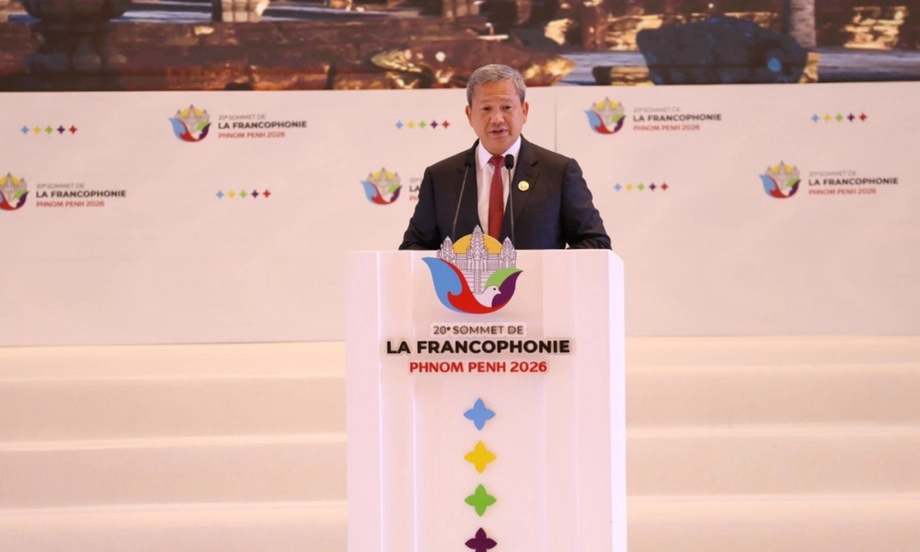
A fragile ceasefire takes centre stage in Phnom Penh
Cambodian Prime Minister Hun Manet called for joint surveying and demarcation of the border with Thailand to resume, telling international leaders in Phnom Penh on November 15, 2026, that about 20,000 Cambodians remained unable to return home after fighting in 2025. Thousands of soldiers were still facing each other along the frontier, he said.
Contents
- A fragile ceasefire takes centre stage in Phnom Penh
- For displaced families, the priority is returning home
- What restarting land demarcation would involve
- How the conflict reached this point
- A separate legal process is moving at sea
- Closed crossings show the strain on daily relations
- Hun Manet proposes a Francophone mediation network
- Cambodia connects the summit to its recovery from war
- Jobs, education and technology form the wider agenda
- Key Points
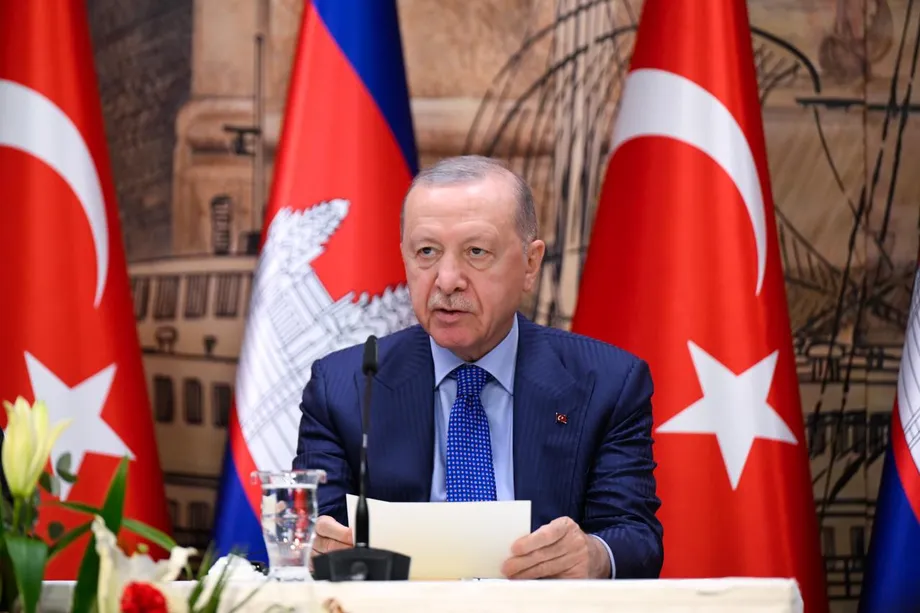
Opening the 20th Francophonie Summit, Hun Manet accused Thai forces of continuing to occupy several areas of Cambodian territory and maintained that Cambodia had not fired first in either of the two rounds of armed clashes in 2025. He described the ceasefire agreed on December 27, 2025, as holding, while warning that conditions remained complex and fragile.
Cambodia's government news agency, Agence Kampuchea Presse, recorded his call to respect existing agreements and restart border work in its summit opening account. The statement also confirmed that Cambodia was pursuing a separate legal process over disputed waters, with Thailand participating.
The November 15–16 gathering at the Chroy Changvar convention and exhibition centre in Phnom Penh brought together representatives of 81 countries and territories. French President Emmanuel Macron and International Organisation of La Francophonie Secretary General Louise Mushikiwabo were among those attending.
Hun Manet used that audience to connect three immediate concerns: getting displaced families home, restarting practical work on the land boundary and sustaining negotiations at sea. His wider message was that stopping gunfire must be followed by agreements that make daily life safer and allow relations between the two neighbours to recover.
For displaced families, the priority is returning home
About 20,000 Cambodians remained displaced at the time of the summit, according to Hun Manet. He made their return a central measure of progress, rather than treating the ceasefire alone as the end of the crisis.
Hun Manet, speaking as Cambodia's prime minister, described what his government wanted for those families:
About 20,000 Cambodians are still unable to return home. Their return, in safety and dignity, remains our priority.
The fighting in 2025 killed people and forced families to leave their communities. Earlier in the crisis, China's ceasefire diplomacy followed renewed violence that had killed at least 101 people and displaced more than half a million civilians. Those figures describe the scale of that earlier emergency; Hun Manet's 20,000 figure concerns Cambodians still unable to go home in November 2026.
For the families still away, a ceasefire and a safe return are separate practical steps. Troops facing each other and unresolved control of territory leave civilians waiting for security conditions that allow them to resume life at home.
What restarting land demarcation would involve
Hun Manet called on Cambodia and Thailand to honour all existing agreements and resume joint surveying and demarcation. Surveying measures and checks the terrain. Demarcation marks an agreed boundary on the ground, including through boundary pillars.
Cambodia's position, as he presented it, is that the land boundary was already defined more than a century ago within the framework of international law. His request was to restart joint work on that existing line.
Hun Manet said the principle applied beyond the immediate dispute between the two countries:
No border shall be changed by force or faits accomplis. Respect for international law safeguards the security of all States, large and small.
The phrase "faits accomplis" refers to actions that create a situation on the ground and then ask others to accept it as settled. In this dispute, Hun Manet was arguing that military control of an area should not determine where the international boundary lies.
How the conflict reached this point
Cambodia and Thailand fought twice in 2025, first in July and again in December, before agreeing to the December 27 ceasefire. The following months brought diplomatic meetings, but also continuing disagreements over troop positions, territory and the implementation of commitments.
- July 2025: Heavy border fighting killed people and displaced large numbers of civilians. A ceasefire followed on July 28.
- December 2025: Fighting resumed before a new ceasefire was agreed on December 27.
- October 14–18, 2026: Cambodia and Thailand held maritime conciliation talks in The Hague and agreed on measures intended to build trust.
- October 31, 2026: Thai Prime Minister Anutin Charnvirakul said all seven border checkpoints and crossings would remain closed.
- November 15, 2026: Hun Manet urged renewed land demarcation work at the Francophonie Summit.
- November 24–27, 2026: The next maritime conciliation meeting was scheduled to take place in Kuala Lumpur.
Hun Manet described the ceasefire as holding, while implementation remained contested. Cambodia continued to accuse Thailand of occupying its territory, and thousands of troops remained deployed opposite each other. The practical challenge was to turn the halt in fighting into agreed arrangements along the frontier.
A separate legal process is moving at sea
Cambodia is pursuing compulsory conciliation under the United Nations Convention on the Law of the Sea, known as UNCLOS, over the maritime dispute. Hun Manet described Thailand's participation as a hopeful sign.
Conciliation brings the parties before a commission that examines their positions and helps them seek an agreement. The word "compulsory" concerns the procedure for bringing the dispute into that process; the task is to work toward a negotiated settlement through legal and technical discussion.
The sea talks have already produced some practical commitments. During the October 14–18 meeting at the Peace Palace in The Hague, the two governments agreed on maritime trust measures. The commission also urged them to carry out earlier arrangements that remained incompletely implemented.
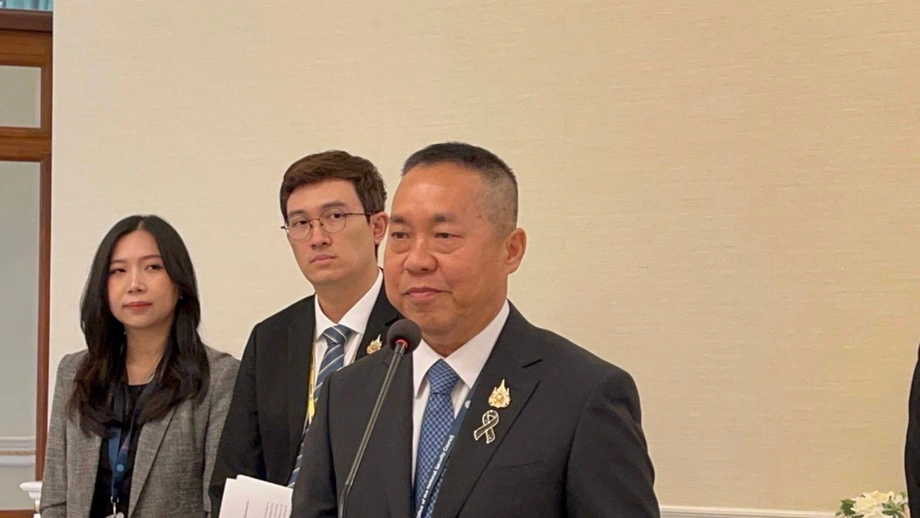
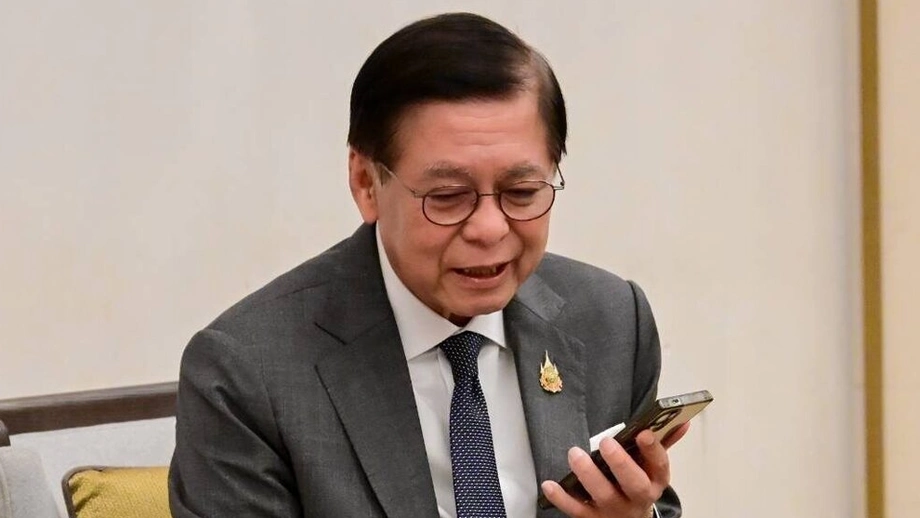
Cambodian Foreign Minister Prak Sokhonn led his country's delegation, while Thai Foreign Minister Sihasak Phuangketkeow headed Thailand's team. Both sides presented evidence and legal arguments concerning their overlapping claims in the Gulf of Thailand.
Cambodia has sought either a treaty establishing a single maritime boundary or an interim arrangement for joint development and resource sharing. Thailand has put settling the boundary first. The next meeting, scheduled for November 24–27 in Kuala Lumpur, gives the two governments a concrete opportunity to continue that work.
Closed crossings show the strain on daily relations
Thailand's border policy illustrates how far relations remained from normal despite the ceasefire and maritime negotiations. On October 31, Prime Minister Anutin said Thailand would keep seven crossings closed to people and goods.
The complete closure began in June 2025 and had lasted about 16 months by his announcement. Anutin linked any reopening to progress on land and maritime disputes, scam networks and the safety of Thai citizens.
People seeking ordinary cross border travel and businesses moving goods therefore remained affected by a dispute extending beyond military positions. Anutin gave no reopening date, while Hun Manet's summit address gave no date for restarting joint land surveys or completing the return of displaced families.
The two leaders were presenting different immediate priorities. Hun Manet focused on territorial claims, legal mechanisms and civilian returns. Anutin tied access through the crossings to a wider package of security and diplomatic concerns. Any improvement in daily relations will require practical decisions on those issues as well as continued negotiations.
Hun Manet proposes a Francophone mediation network
Hun Manet asked the Francophonie to develop a prevention and mediation network bringing together diplomats, experts and institutions. Its purpose would be to support dialogue before disputes turn violent, with assistance offered at the request of the states involved.
The Cambodian prime minister set out the proposal in his opening address:
I propose a Francophone prevention and mediation network. At the request of states, it could support dialogue before violence flares up.
He argued that preventing conflict costs less than rebuilding after fighting. That proposal connected Cambodia's immediate border concerns with the summit's broader focus on peace, shared prosperity and lasting stability.
Thailand had objected to Cambodia raising the border issue at the gathering. The dispute was therefore also about where and how the two governments should discuss their disagreements. During the October maritime talks, Thailand had stressed restraint in public accusations, while Cambodia had defended the right to answer statements it considered inaccurate.
Hun Manet thanked ASEAN and friendly countries for supporting the ceasefire and dialogue based on international law. His proposed Francophone network would add another channel of diplomatic assistance to those existing efforts.
Cambodia connects the summit to its recovery from war
Phnom Penh's role as host carried particular historical meaning in Hun Manet's address. He recalled the forced evacuation of the capital under the Khmer Rouge and the work of families who later returned to rebuild homes, schools and markets.
Hun Manet described the period following the end of Cambodia's war in 1998 as the country's longest stretch of peace in modern history. The deaths and displacement caused by the 2025 border fighting, he said, showed how quickly that security could be disrupted.
Cambodia's links with the Francophonie also stretch back decades. King Father Norodom Sihanouk was among the founding figures of the institutional Francophonie in Niamey in 1970. Cambodia became a full member in 1993.
The Phnom Penh gathering was the second Francophonie Summit held in Asia, following Hanoi in 1997, a gap of 29 years. Hun Manet said he wanted the Cambodian capital to connect Asia more closely with the French speaking world.
Delegates were due to consider three documents: the Phnom Penh Declaration, a resolution on crisis situations and the Phnom Penh Appeal to protect cultural heritage. Together, those planned texts placed security, cooperation and cultural protection on the summit agenda.
Jobs, education and technology form the wider agenda
Hun Manet also proposed a Francophone programme to prepare young people for artificial intelligence through training, university connections and shared resources in French. He called for particular attention to countries with fewer resources.
Cambodia is working with the French Development Agency to prepare a National Centre for Artificial Intelligence and Data Science, he said. That effort would create a domestic institution alongside the international educational cooperation he proposed.
Businesses were another part of his agenda. Hun Manet called for stronger links between ASEAN and the Francophone world, connecting his peace message with investment, employment and education.
Hun Manet explained the everyday results he wanted peace to deliver:
Peace must make a real difference in people's lives. It must mean jobs, income and schools for their children.
The address placed immediate security needs alongside longer term ambitions. Families displaced by the border conflict need conditions that allow them to return home. Students and businesses need stable relationships that support education and commerce. Renewed surveying, continued maritime talks and decisions on border access are the practical steps now facing the two governments.
Key Points
- Hun Manet said about 20,000 Cambodians remained unable to return home after the 2025 border fighting.
- He urged Cambodia and Thailand to resume joint land surveys and demarcation and respect existing agreements.
- Cambodia accused Thai troops of occupying parts of its territory, while thousands of soldiers remained facing each other.
- Both countries were participating in maritime conciliation under UNCLOS, with the next meeting scheduled for November 24–27 in Kuala Lumpur.
- Thailand's seven border checkpoints and crossings remained closed, with no reopening date announced.
- Hun Manet proposed a Francophone mediation network and cooperation on artificial intelligence, education and business.