Three Years After Mass Returns, Families Still Await Answers
Many North Koreans forcibly returned from China remain unaccounted for three years after mass repatriations resumed, independent United Nations human rights experts warned on October 21, 2026. They urged Beijing to stop sending people into danger and called on Pyongyang to reveal where returnees are and protect them.
Contents
- Three Years After Mass Returns, Families Still Await Answers
- How the Returns Resumed
- What the Numbers Reveal
- Why China Must Assess the Risk of Return
- Kim Cheol-ok's Case Puts a Family Behind the Figures
- Reported Executions Deepen the Concern
- Women Face Danger on Both Sides of the Border
- Surveillance Makes Escape Harder
- A Warning Repeated Since 2014
- Key Points
The warning includes the case of Kim Cheol-ok, who lived in China for about 25 years before Chinese authorities detained her in April 2023 without access to a lawyer and forcibly returned her that October. Her fate and whereabouts remain unknown. The UN Working Group on Arbitrary Detention has found her detention by both China and North Korea arbitrary, meaning it lacked a valid legal basis or violated fundamental protections.
The experts' October 2026 statement, published by the UN Human Rights Office, describes continuing obstacles to finding people returned to the Democratic People's Republic of Korea, North Korea's official name. Independent monitoring is absent in both countries, leaving families unable to obtain reliable information.
The signatories include Elizabeth Salmón, the special rapporteur on human rights in North Korea, and Grażyna Baranowska, chair of the Working Group on Enforced or Involuntary Disappearances. Together with experts on torture, executions, trafficking and discrimination against women, they described the dangers facing people whose location remains hidden.
"For as long as their fate and whereabouts remain unknown, returnees are deprived of essential safeguards against enforced disappearance, arbitrary detention, execution, torture, forced labour, sexual and gender-based violence and other serious human rights violations," the experts said.
How the Returns Resumed
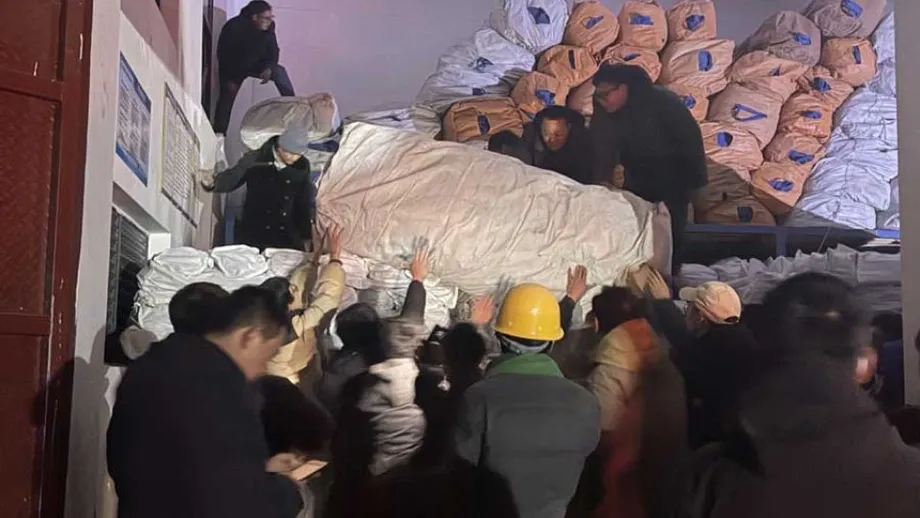
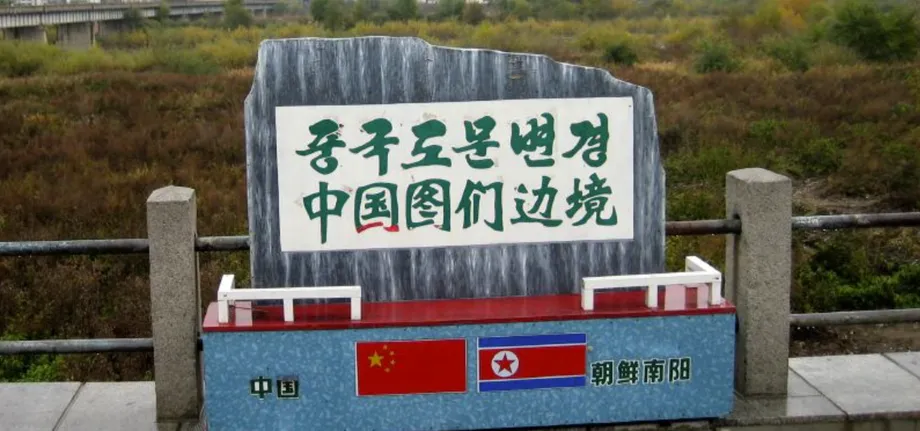
North Korea reopened its border in August 2023 after restrictions imposed during the COVID-19 pandemic. Large groups of North Koreans held in China were subsequently sent back, including hundreds transported across the border on October 9.
Stephen Kim, a South Korean underground missionary with extensive contacts in China and North Korea, described vehicle convoys passing through five border crossings that night. Some detainees reportedly persuaded Chinese guards to telephone relatives in South Korea before their removal.
The sequence shows how the reopening changed the situation for people already in Chinese custody:
- July 2021: Nearly 50 North Koreans were forcibly returned from China.
- August 29 and September 18, 2023: Further returns involved 80 people and 40 people, respectively.
- October 9, 2023: Hundreds were transported into North Korea in a mass operation.
- November 6, 2024: Seven UN experts sought information from North Korea about reported executions and life sentences imposed on returned women.
- October 15, 2025: Human Rights Watch documented at least 406 forced returns since the start of 2024.
- October 21, 2026: UN experts renewed their demand for information about missing returnees and protection for those still at risk.
What the Numbers Reveal
Human Rights Watch's October 2025 findings put the number of forced returns since 2020 at at least 1,076. The organization based its count of 406 returns since 2024 on information from a contact identified by the pseudonym Stephen Kim, whose network it said it had long found credible. Official detention and deportation totals were unavailable.
The documented cases included 108 overseas workers returned from Helong in Jilin province in January 2024, 60 people returned from Jilin and Liaoning provinces that April, and 212 trafficked women returned during 2024. Those women had been detained in Kunming in Yunnan, Nanning in Guangxi and Pinxiang in Jiangxi.
The 212 trafficked women account for just over half of the 406 returns documented since 2024. Their number shows how closely the repatriation policy is connected to the treatment of trafficking victims.
The US Congressional-Executive Commission on China, or CECC, recorded as many as 600 returns in October 2023. Its analysis also cited more than 200 people returned from a Jilin detention center in April 2024, alongside Human Rights Watch's estimate of about 60 returns from Jilin and Liaoning that month. The estimates describe different documented accounts, and there is no public official register to reconcile them.
Why China Must Assess the Risk of Return
China routinely classifies undocumented North Koreans as illegal economic migrants and returns them under bilateral border arrangements. The UN experts say every person at risk needs access to a fair procedure that examines whether returning them would expose them to serious abuse.
Article 33(1) of the 1951 Refugee Convention sets out the principle of non-refoulement: a refugee must not be sent to a territory where their life or freedom would be threatened on specified grounds, including political opinion or religion. The Convention Against Torture separately prohibits returning anyone where there are substantial grounds to believe they would face torture. China is a party to both treaties.
A person's reason for originally leaving North Korea is only part of that assessment. Someone who left to find food or work may later face persecution because the authorities consider their departure, activities abroad or attempt to reach South Korea a political offense. The term refugee sur place describes someone who becomes a refugee because of circumstances arising after departure.
The October 2026 statement addresses that point directly. Salmón, Baranowska and the other signatories said a lack of immigration papers leaves the protection obligation intact.
"Irregular migration status does not diminish the obligation to respect the principle of non-refoulement," the experts said.
Research by the Database Center for North Korean Human Rights, or NKDB, found that Chinese authorities systematically classify escapees as illegal economic migrants without conducting refugee status procedures or allowing that classification to be reviewed. Such procedures would give individuals an opportunity to explain the danger they face before removal.
Kim Cheol-ok's Case Puts a Family Behind the Figures
Kim Cheol-ok fled North Korea during the famine of the 1990s and was reportedly trafficked into China as a child. According to the UN experts, she was forced into marriage at 14 and subjected to sexual violence and forced pregnancy.
About 25 years in China brought family ties but no secure immigration status. The experts said she experienced harassment and restrictions before her detention in April 2023 and return six months later. The Transitional Justice Working Group campaigned for her rights through a petition to the UN Working Group on Arbitrary Detention.
Her sister, Kim Kyu-li, who lives in London, has asked governments to help locate her and others. The CECC's analysis of repatriations records her appeal for information and international action.
There are hundreds of North Koreans like my sister held in some prisons in that country (China). The US, the UK and other nations should come forward to ask North Korea and China to release them and tell us where they have kept our loved ones.
The family's immediate need is concrete: confirmation of where Kim is, what has happened to her and whether she can communicate with relatives. The experts' demand that North Korea disclose returnees' fate and whereabouts addresses that same need across many families.
Reported Executions Deepen the Concern
Seven UN experts wrote to North Korea on November 6, 2024, seeking information about two women, aged 43 and 39, reportedly executed after being returned from China in October 2023. Nine other women reportedly received life sentences and subsequently disappeared.
The communication described a public trial in Chongjin on August 31, 2024, followed by executions that day. The CECC analysis gives August 31, 2023, for the executions, a date that precedes the women's stated return; the UN communication places them in 2024.
The reported accusations included helping North Korean escapees reach South Korea, operating an adult entertainment venue, prostitution and insulting the dignity of the people. The experts said the alleged offenses fell outside the international standard limiting capital punishment to the most serious crimes and that the women had no opportunity to appeal before execution.
Human Rights Watch said in October 2025 that neither government had reportedly replied to the November 2024 communication. The CECC also recorded seven reported deaths among people returned in October 2023, linked to serious abuse in North Korean detention, including at least one reported suicide.
The experts asked North Korea to treat possible trafficking victims as people needing protection. For women who had already experienced coercion in China, interrogation and punishment after return could extend a chain of abuse across the border.
Women Face Danger on Both Sides of the Border
North Korean women in China can face trafficking, forced marriage and sexual exploitation while also fearing deportation. Human Rights Watch documented 20 of 22 women detained in Inner Mongolia being forcibly returned between December 2024 and July 2025. The other two, both pregnant trafficking victims, were sent to the homes of the Chinese men to whom they had been sold.
More than 100 North Korean women were being held in detention centers in southern China as of July 2025. They had children, had experienced trafficking into forced marriages and were trying to reach a safe third country. Human Rights Watch said at least 28 were subsequently sent back to the men in China.
Undocumented status also restricts daily survival. The CECC documented women excluded from medical services and COVID-19 vaccinations. It cited a written submission by researcher Lee Sang Yong describing eight North Korean women who died during flooding in Huludao, Liaoning, in August 2024. According to that submission, their deaths were omitted from the official toll because they lacked legal status.
Pregnant returnees face particular risks in North Korea. The 2014 UN Commission of Inquiry documented forced abortions and infanticide involving women pregnant by Chinese men. Human Rights Watch's 2025 findings cited former North Korean officials describing especially harsh treatment of women who became pregnant under coercive conditions in China.
Surveillance Makes Escape Harder
NKDB research describes cooperation between Chinese and North Korean public security, internal affairs, state security and military bodies through successive bilateral agreements dating back to the 1950s. A companion study describes biometric registration and digital surveillance used to locate and control North Koreans remaining in China.
Temporary residence permits offer some women limited local employment and transport access, according to the CECC, while requiring registration with police. Testimony collected by NKDB describes reporting to local public security officials once or twice a month and continuing surveillance using the personal information recorded.
The CECC also recorded testimony from a woman identified as Ms. B about a friend required to wear a monitoring device resembling a wristband after registering for a permit. Other measures included cameras, additional fencing and rewards for informants. An October 2023 banner photographed in Longjing, Jilin, offered 2,000 to 20,000 yuan for reporting people who crossed the border illegally.
NKDB put brokers' fees for escape at 20 million won per person before the pandemic and 50 million won by early 2023. That is a rise to two and a half times the earlier price. People seeking safety therefore face both a greater chance of detection and a much larger financial burden.
A Warning Repeated Since 2014
The UN Commission of Inquiry released its findings on February 17, 2014. It concluded that North Korea committed systematic, widespread and gross human rights violations, many amounting to crimes against humanity.
The CECC's March 2014 analysis explains that the inquiry also examined China's detention operations, restrictions on access to foreign embassies and the UN Refugee Agency, and reported physical and sexual abuse. The inquiry warned that sharing information about escapees with North Korean authorities could amount to aiding and abetting crimes against humanity.
China rejected the criticism. Foreign Ministry spokeswoman Hua Chunying described North Koreans entering China illegally as illegal border crossers rather than refugees. Beijing maintained its opposition to ending forced returns during its 2024 Universal Periodic Review, the UN process through which governments examine one another's human rights records.
The 2026 experts are asking for practical changes: protection assessments before removal, an end to returns into serious danger, and disclosure by North Korea of returnees' location and condition. Lina Yoon, Human Rights Watch's senior Koreas researcher, has also called for UN Refugee Agency access and publication of detention and deportation data.
Those measures would give people a chance to seek protection before crossing the border and give families a way to trace relatives afterward. For Kim Cheol-ok's family and others still waiting, knowing where a loved one is remains the most immediate demand.
Key Points
- UN experts warned on October 21, 2026, that many North Koreans forcibly returned from China remain unaccounted for.
- Kim Cheol-ok was returned in October 2023 after about 25 years in China; her fate and whereabouts remain unknown.
- Human Rights Watch documented at least 1,076 forced returns since 2020, including 406 since the start of 2024.
- UN experts sought answers about two reported executions and nine life sentences involving returned women.
- Trafficking, forced marriage, surveillance and lack of legal status leave North Korean women especially vulnerable.
- The experts called on China to assess protection needs and stop returns into danger, and on North Korea to locate and protect returnees.