Mountain and Pier Features Point to Muncheon
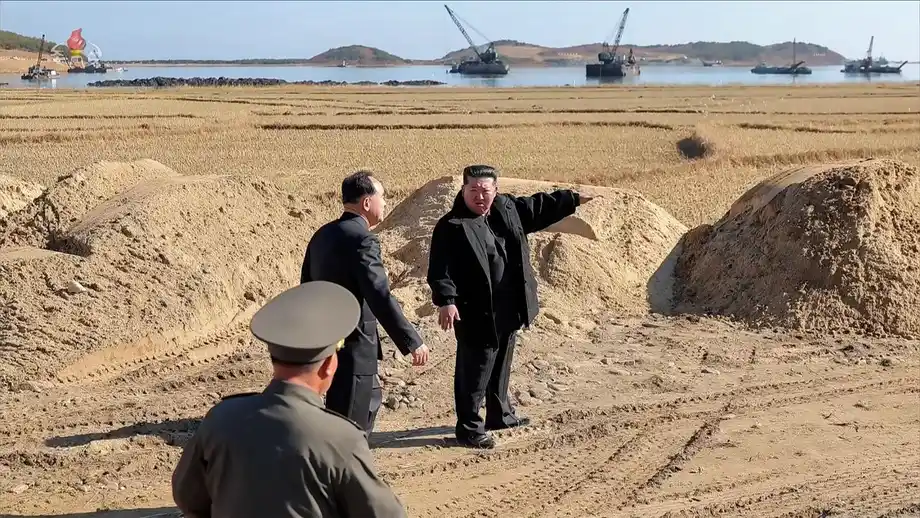
A mountain peak, a ridgeline and pine trees behind a pier point to Dapchon Port in Muncheon, Kangwon Province, as the location of a naval base that North Korean leader Kim Jong Un inspected on November 11, 2026. Those features in Korean Central Television footage match the landscape visible in Google Earth imagery of the area.
Contents
- Mountain and Pier Features Point to Muncheon
- What the Images Add
- Kim Orders More Workers and Stronger Construction Management
- A Waterfront With Changing Priorities
- Why Jangjon Was Suggested
- What a Naval City Would Include
- Base Construction Accompanies New Ships and Weapons
- Fortification and South Korea's Response
- New Homes Accompany the Military Project
- Key Points
The visual match gives a specific location for a project that North Korea has described as an important naval base on its east coast. It also connects Kim's visit with satellite observations of apparent construction worker accommodation, road preparation and work to repair and expand existing piers around Dapchon.
The Korean Central News Agency (KCNA) announced the inspection on November 12. It said Kim ordered the project completed within the period set by the Workers' Party Central Committee and at the quality level it demanded. North Korea has not officially identified the precise location or released the completion date, construction progress, base dimensions or number of vessels it will accommodate.
Dapchon is in Wonsan Bay and forms part of a naval facility that formerly housed North Korea's East Sea Fleet Command. Its identification would place the construction at a location with an established military role, rather than at a previously undeveloped stretch of coast.
An alternative location, Jangjon Port, also called Goseong Port, has been suggested because Kim visited housing in Tongchon County on the same day. The two location assessments rest on different evidence: the Dapchon assessment uses landscape matching and construction imagery, while the Jangjon suggestion draws on Kim's travel and that port's military history.
What the Images Add
The Dapchon identification rests on comparing views taken from different directions. Television footage shows the landscape behind the pier where Kim appeared. Satellite imagery provides a view from above, allowing the mountain's position and the shape of the surrounding ridge to be compared with the broadcast scene.
The mountain peak, ridgeline and pine trees together form the basis of the match. This process is called geolocation: finding where an image was taken by comparing visible features with a known place. Here, the assessment places the construction near Dapchon in Muncheon, also written as Munchon.
Commercial satellite imagery examined in October showed buildings that appeared to be accommodation for construction workers across several parts of the Dapchon Port area. Other observed changes included cleared ground for new roads and the beginning of repairs and expansion at existing piers.
The combination matters because the television footage and satellite observations answer different parts of the story. The landscape helps locate Kim's inspection, while the accommodation, road preparation and pier work show how construction is spreading around the waterfront.
Kim Orders More Workers and Stronger Construction Management
Kim received a briefing from commanders on construction progress during the November 11 visit. Pak Jong Chon, vice chairman of the Workers' Party Central Military Commission, accompanied him, along with senior party officials and people responsible for design. Party secretary Jo Yong Won was also identified among those attending.
KCNA attributed the following instruction to Kim, North Korea's leader, linking the construction deadline with the standard expected by the party leadership:
it must be completed unconditionally within the period set by the Party Central Committee and at the qualitative level demanded by the Party Central Committee.
Kim also directed officials to strengthen construction management and increase the workforce. His instructions covered the arrangement of facilities needed to modernize the base, give it several functions and fortify it against attack.
The presence of design officials alongside military commanders fits the range of decisions involved. The project concerns how the base will operate, how its buildings and waterfront facilities fit together, and how construction teams will deliver them.
A Waterfront With Changing Priorities
Dapchon's recent history shows how North Korea's plans for the waterfront have shifted. In 2018, Kim ordered the port to be used as a large commercial fishing pier. The naval construction now taking shape suggests military requirements have again become a priority there.
Kim visited a coastal site in September 2024 to discuss the need for a base capable of operating modern large warships. Satellite analysis subsequently identified that location as Dapchon. The current terrain match and construction activity connect the November inspection with that earlier naval proposal.
Several dated developments show how the project moved from a stated requirement toward work on the ground:
- 2018: Kim ordered Dapchon Port to be used as a large commercial fishing pier.
- September 2024: Kim inspected a site later identified through imagery as Dapchon and called for a base to operate modern large warships.
- February and June 2026: Party meetings approved construction of modern naval bases on both coasts.
- July 9, 2026: Kim signed seven military orders, including measures for modern naval base construction and shipyard expansion and upgrading.
- October 2026: Satellite analysis identified apparent worker accommodation, road preparation and pier construction around Dapchon.
- November 11 and 12, 2026: Kim inspected the east coast construction site, and North Korea announced the visit the following day.
The sequence links the waterfront project to decisions on both bases and shipyards. North Korea is developing places to support warships while also seeking greater capacity to build them.
Why Jangjon Was Suggested
Jangjon Port entered discussion because Kim also inspected a new housing district in Tongchon County on November 11. His presence in that area prompted suggestions that the naval project might involve Jangjon or an expansion of an existing military harbor nearby.
Jangjon was once North Korea's southernmost naval base on the east coast, with warships and small submarines stationed there. In the late 1990s, the start of Mount Kumgang tourism brought South Korean cruise ships to the port. It became a harbor serving both civilian and military uses, and visits by North Korean warships declined.
North Korean naval vessels were observed appearing more frequently at Jangjon from 2019. That activity made the harbor a plausible candidate for renewed military investment. The more specific evidence pointing to Dapchon is the match between the inspection footage and the terrain near Muncheon, supported by visible construction around its piers.
What a Naval City Would Include
Kim described an ambition to create a center for naval command, naval culture and naval combat power. KCNA also referred to his vision of a modern naval city. The language presents the project as a larger undertaking than a place where ships can tie up.
A functioning naval base needs facilities for directing operations, maintaining vessels, delivering fuel and supplies, and housing personnel. Command facilities allow officers to organize missions and communicate with ships. Maintenance and supply facilities keep vessels ready to sail again after a deployment.
Cheong Seong Chang, deputy director of the Sejong Institute, interpreted the inspection as a commitment to expand naval support infrastructure alongside the growth of larger warships. He identified berthing, maintenance, supplies and command systems as essential to bringing new destroyers into service.
The practical connection is straightforward: a larger fleet creates more demands ashore. Larger vessels need suitable places to dock, crews need accommodation, and ships returning from operations need repairs and replenishment. The pier work and road preparation at Dapchon address parts of that physical network.
Base Construction Accompanies New Ships and Weapons
North Korea's naval construction is advancing alongside shipbuilding and underwater weapons development. The country has identified the destroyers Choe Hyon and Kang Kon, each described as belonging to the 5,000 ton class, for deployment on the west and east coasts respectively.
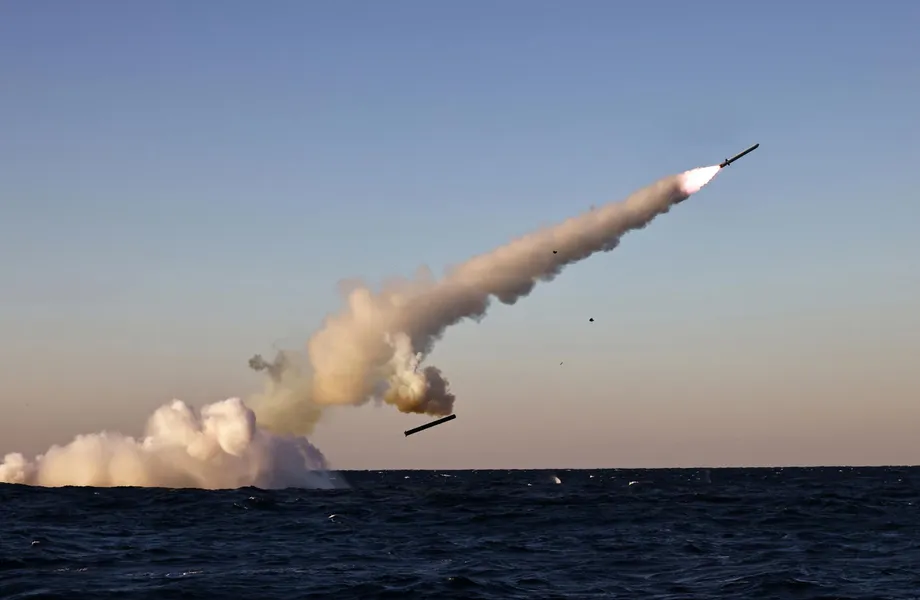
On November 4, North Korea displayed a new warship under construction at Nampo Shipyard that was estimated to belong to the 10,000 ton class. On November 9, it conducted a test of a new high speed torpedo in the sea off its east coast. Those events preceded Kim's base inspection by seven days and two days respectively.
A ship's tonnage is commonly used to describe its size through displacement, the weight of water it pushes aside. A vessel estimated at 10,000 tons would be roughly twice the displacement of the 5,000 ton destroyers described in the naval expansion plans. Larger ships generally place greater demands on docking, repair and supply infrastructure.
Yu Ji Hoon, a research fellow at the Korea Institute for Defense Analyses, assessed that North Korea is seeking to move beyond a focus on coastal defense and small vessels toward larger surface warships and submarines, with a wider operating range and greater ability to strike from the sea.
Fortification and South Korea's Response
Kim's instruction to fortify the base adds a protective purpose to the construction. Fortification means arranging and strengthening facilities to help them withstand attack and allow military activity to continue during a conflict.
Lim Eul Chul, a professor at Kyungnam University's Institute for Far Eastern Studies, assessed that a fortified naval base could improve survival during an initial strike and help preserve the ability to retaliate. He also saw a possible aim of discouraging the approach of South Korean and American naval forces, including American strategic submarines.
North Korea has also pursued submarine projects. In 2023, it unveiled the Kim Kun Ok Hero, which it described as a submarine for tactical nuclear attack, and it has presented plans for submarines powered by nuclear reactors. The vessels eventually assigned to the new base and the support facilities built there will determine its operational role.
South Korea's Joint Chiefs of Staff said it was monitoring the construction and modernization. Colonel Jang Do Young, head of its Public Affairs Office, described the military's response at a briefing:
We are closely watching the process of North Korea constructing and modernizing the naval base, and we are constantly monitoring and tracking it. We are operationally analyzing this matter and conducting an assessment.
New Homes Accompany the Military Project
Kim's visit also brought attention to more than 1,000 newly completed homes in Tongchon County. North Korea said the housing had been built in just over two months and was approaching the stage when residents would move in.
North Korean statements linked the housing construction to families whose homes were to be demolished for a major policy project, saying replacement homes had been built first. For affected residents, the construction involves a concrete change of address and living conditions alongside the military development.
Kim praised the layout of the new housing, including the arrangement of buildings of different heights and attention to interior convenience. He connected it with the Regional Development 20×10 Policy, which calls for development projects in 20 cities and counties each year.
He also criticized design and construction supervision officials for continuing practices he described as formalistic and focused on appearance rather than practical results. The housing inspection therefore combined praise for rapid construction with demands for better design, materials and supervision, the same broad concerns about delivery and quality evident at the naval site.
Key Points
- Terrain visible in television footage matches the Dapchon Port area in Muncheon, pointing to the location of Kim Jong Un's November 11 inspection.
- Satellite observations around Dapchon show apparent worker accommodation, road preparation and repairs and expansion at piers.
- Kim ordered completion on the party leadership's schedule, more construction workers and measures to modernize and fortify the base.
- Jangjon Port has also been suggested because of Kim's Tongchon visit and the harbor's military history.
- The construction accompanies plans for larger warships and expanded naval infrastructure on both coasts.
- Kim also inspected more than 1,000 new homes in Tongchon, including housing linked to relocation before major construction.
- South Korea's military says it is tracking and assessing the base's construction and modernization.