Switzerland Adds North Korean Youth Facility to Sanctions List
Switzerland has officially expanded its measures against North Korea by placing the Songdowon International Children's Camp on its sanctions list. The Federal Department of Economic Affairs, Education and Research (WBF) adjusted the sanctions lists on November 3, 2026, following a decision by the Swiss Federal Council on November 4, 2026, to adopt the European Union's 21st sanctions package against Russia and Belarus. The changes entered into force on November 4, 2026, at 23:00, with sectoral measures taking effect the following day. This move follows actions taken by the United Kingdom in May 2026 and the European Union in September 2026, creating a broader European coalition targeting the facility.
Contents
The coastal facility, located in Wonsan in Kangwon Province, North Korea, is now subject to asset freezes and financial prohibitions in Switzerland. Swiss authorities explained that the decision stems from evidence showing the camp's participation in an organized program alongside Russian-linked forces to transfer children from Russian-occupied territories of Ukraine to North Korea. While European Union sanctions do not apply automatically in Switzerland due to its non-member status, the Swiss government adopts such measures independently when responding to severe violations of international law.
Understanding the Songdowon Camp and Its History
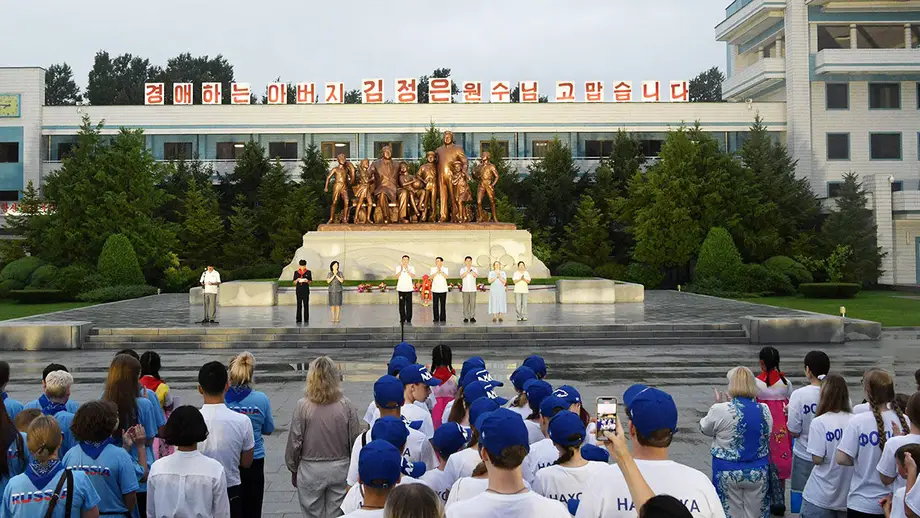
Songdowon International Children's Camp is a massive youth complex situated near the coast in Wonsan, spanning a 300,000-square-meter site with a total building floor area of 40,000 square meters. Originally opened on August 17, 1960, as the Songdowon Central Children's Camp and later reopened in April 1993 following modernization, the facility was designed to promote the superiority of the North Korean political system to youth from pro-North Korean countries. Over the decades, it has hosted international youth gatherings, including a summer camp held from July 22 to August 2, 2024, which brought together students of Russian and Chinese nationality.
The complex features extensive recreational and educational amenities, including an international friendship children's palace, an indoor swimming pool, water slides, sports fields, and themed dining halls. Former participants and human rights researchers have documented the regimented daily life inside the camp. For instance, Yuri Frolov, a Russian visitor who stayed at the facility in 2014, reported being placed under strict surveillance and separated from local North Korean children until the final day of his stay. He described early morning routines requiring children to clean monuments dedicated to North Korean leaders, participate in political songs, and engage in computer games depicting hostile narratives.
Human rights advocates have raised serious concerns regarding the recent transfer of Ukrainian minors to this environment. Kateryna Rashevska, a lawyer with the Ukrainian human rights organization Regional Center for Human Rights, testified before the United States Senate subcommittee on December 3, 2025, detailing specific cases of Ukrainian children brought to the facility. According to her findings, a 12-year-old boy named Misha from occupied Donetsk and a 16-year-old girl named Liza from Simferopol in Crimea were transported approximately 9,000 kilometers from their homes to the North Korean camp. Investigations indicate these minors were exposed to ideological education, militarized instruction, and meetings with veterans such as Pak In Ho, a naval commander associated with the 1968 capture of the United States Navy ship Pueblo.
International Legal Framework and Human Rights Concerns
The transfer of minors from occupied territories has drawn severe condemnation from international bodies, who classify such actions under unlawful deportation and forced assimilation. The United Nations and the European Parliament have emphasized that these programs violate the Fourth Geneva Convention and the Convention on the Rights of the Child, which guarantee special protection for minors in conflict zones. The European Parliament adopted a resolution on November 12, 2026, with 536 votes in favor and 8 votes against, condemning the systematic transfer and ideological indoctrination of Ukrainian children by Russia, Belarus, and North Korea. The resolution noted that by September 2026, authorities had recorded over 20,651 cases of deported or forcibly transferred Ukrainian children.
Legal experts note that while direct physical coercion by Russian operatives is sometimes difficult to prove due to prolonged exposure to occupying educational systems, the psychological impact and systematic nature of these programs constitute grave violations. Human rights advocates have urged the international community to utilize targeted financial sanctions as an effective tool to disrupt the networks facilitating these transfers. Previous actions successfully deterred similar movements toward Belarus, prompting authorities to extend restrictive measures to facilities in other allied nations involved in processing displaced minors.
Broader European Enforcement and the New EU Sanctions Office
The inclusion of the North Korean camp in European sanctions lists coincides with structural enhancements within the European Union to close enforcement gaps and prevent sanctions evasion. The European Commission announced the establishment of the EU Sanctions Office, scheduled to officially open on January 16, 2027. Operating under the Secretariat-General of the Commission, this dedicated body will oversee the entire lifecycle of sanctions policy, from design and implementation to blocking circumvention and coordinating with third countries. While its initial focus centers on measures against Russia and Belarus, the office will encompass all European Union sanctions regimes, including those targeting North Korea and Iran.
To further strengthen diplomatic and economic enforcement, the European Commission appointed Lars Danielsson, a veteran Swedish diplomat who served as Sweden's ambassador to South Korea from 2011 to 2015 and later as Sweden's ambassador to the European Union, as the new international special envoy for sanctions implementation. His term begins on February 6, 2027, succeeding David O'Sullivan. The special envoy's core mission involves direct consultations with non-European nations to ensure that trade routes, financial channels, and procurement networks are not exploited to bypass restrictions.
Diplomatic Dynamics and Luxury Goods Prohibitions
The expansion of sanctions against North Korean entities occurs amid shifting diplomatic engagements. Last month, Switzerland opened a diplomatic office in Pyongyang, with Swiss Foreign Minister Ignazio Cassis visiting the North Korean capital to meet with senior officials, including Workers' Party Secretary Jo Yong-won and Foreign Minister Choe Son-hui. Despite the reestablishment of diplomatic channels, Bern's decision to independently adopt European Union sanctions against the Songdowon facility demonstrates that European nations continue to hold North Korea accountable for its involvement in the Ukraine conflict.
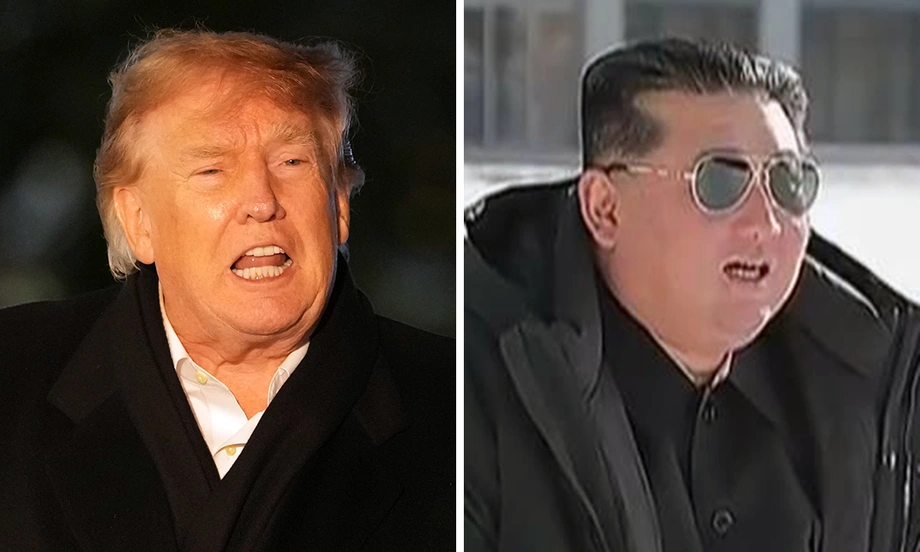
International investigators also monitor compliance with existing United Nations Security Council resolutions regarding prohibited items. Concerns regarding luxury goods arose following public appearances where North Korean leadership figures utilized high-end recreation equipment, such as skis manufactured in Switzerland and Austria. Under United Nations Security Council Resolution 2270, adopted on March 2, 2016, recreational sports equipment of this nature is classified as a luxury good and is strictly banned from being imported into North Korea. Representatives for the manufacturing companies stated that they maintain no business relationships with North Korea and cannot verify the distribution channels or authenticity of the items, highlighting the ongoing challenges of preventing third-party intermediaries and smuggling networks from undermining international sanctions.
The Bottom Line
- Switzerland added the Songdowon International Children's Camp to its sanctions list on November 3, 2026, following similar actions by the United Kingdom in May and the European Union in September.
- The sanctions freeze the facility's assets in Switzerland and prohibit financial transactions, responding to its role in transferring and indoctrinating Ukrainian children from occupied territories.
- Legal experts and human rights organizations have documented instances of minors from Donetsk and Crimea being transported to the North Korean facility for ideological training.
- The European Union will launch the EU Sanctions Office on January 16, 2027, to improve enforcement and prevent the circumvention of measures targeting Russia, Belarus, and North Korea.
- Diplomatic and monitoring efforts continue as international bodies work to address unlawful child transfers and enforce prohibitions on luxury goods under United Nations frameworks.