Diplomatic Push Ends in Deadlock
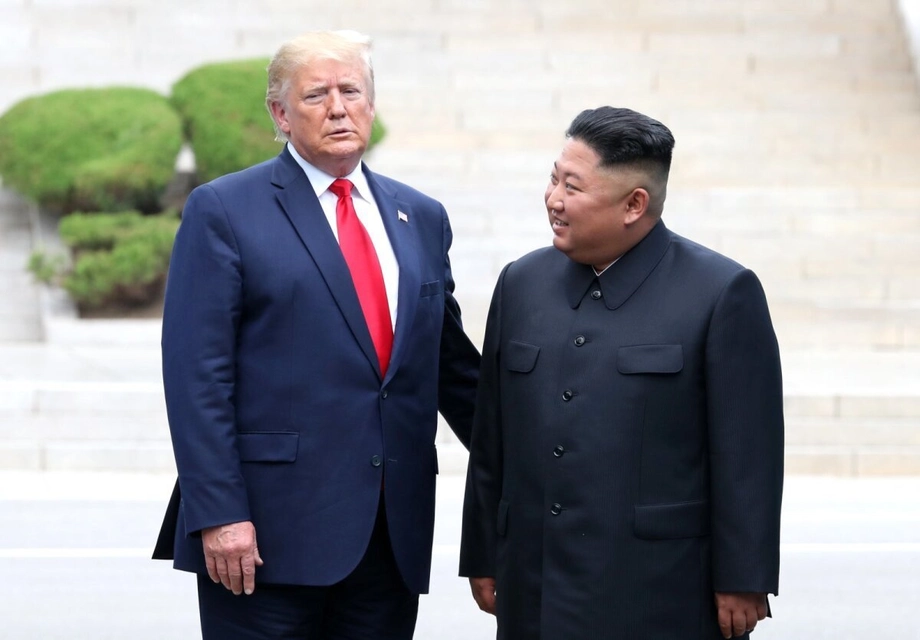
United States President Donald Trump attempted to arrange a high-stakes meeting with North Korean leader Kim Jong Un during his Asian tour in November 2026, but the effort collapsed when Pyongyang put forward terms Washington could not accept. The diplomatic maneuvering unfolded around the Asia-Pacific Economic Cooperation summit held on November 18 and 19, 2026, in Shenzhen, China. President Trump hoped to secure a breakthrough following a difficult domestic political cycle that included losses in the US midterm elections. Yet the outreach failed to bridge a wide gap between Washington and Pyongyang, leaving the regional security situation in a familiar state of deadlock. White House officials and diplomatic observers noted that President Trump arrived in Asia eager to reengage with the North Korean leadership. He had publicly mentioned the possibility of a meeting before leaving the United States, pointing to past encounters such as their 2018 Singapore summit and the 2019 brief meeting at the demilitarized zone. However, the political landscape in Pyongyang had shifted significantly since those early interactions, giving Kim Jong Un far less incentive to rush into talks.
Contents
Contemplating Major Policy Shifts
American negotiators discussed several sweeping concessions to entice North Korea back to the negotiating table, according to reports published by the Wall Street Journal on November 21, 2026. Among the proposals under review was a formal declaration to end the 1950-1953 Korean War, an objective Pyongyang has pursued for decades as a symbol of reduced hostility. Washington also explored issuing a joint statement that would stop short of officially granting North Korea nuclear-armed status while temporarily setting aside demands for immediate total denuclearization. Under that contemplated arrangement, the United States would have focused on restricting North Korean nuclear tests and missile launches rather than forcing the dismantling of existing arsenals. Negotiators additionally weighed the establishment of diplomatic liaison offices as a step toward normal relations. Such measures would have represented a profound departure from long-standing American policy, which has consistently demanded the complete, verifiable, and irreversible dismantlement of North Korea's nuclear weapons program.
A Cold Reception in New York
Efforts to restart communication channels faced immediate resistance before the leaders ever reached a summit venue. President Trump attempted to contact Kim through existing telephone networks and diplomatic conduits, but those messages went unanswered. The White House then resorted to unconventional delivery methods, sending officials to the Permanent Mission of the Democratic People's Republic of Korea to the United Nations in Manhattan to hand-deliver a presidential letter to a North Korean diplomat. That diplomatic gesture ended abruptly when the diplomat later dropped the unopened envelope onto a table directly in front of the American delegation during a United Nations meeting. North Korea also signaled its refusal to engage through military actions rather than words. On the eve of President Trump's arrival in South Korea, Pyongyang launched a series of cruise missiles off its western coast, boasting of major advancements in practical nuclear capabilities.
President Donald Trump made his intentions clear regarding diplomatic outreach while speaking to reporters on November 16, 2026.
Kim Jong Un can also be met. That would be nice.
Expanding Nuclear Arsenal and Capabilities
The strategic balance on the Korean Peninsula has shifted dramatically since the two leaders last met in 2019. North Korea has expanded its estimated nuclear warhead stockpile from roughly 20 to 30 warheads up to approximately 60 today. Furthermore, the country has deployed solid-fuel intercontinental ballistic missiles capable of reaching the continental United States. Kim Jong Un has insisted that the international community recognize North Korea as a nuclear-armed state. In a speech delivered in February 2026, Kim stated that Washington faced a stark choice between peaceful coexistence based on mutual recognition of nuclear status or eternal confrontation. This buildup is supported by closer military cooperation with Russia and China, as well as substantial revenue generated from overseas cryptocurrency thefts. Experts warn that even entertaining talks without demanding immediate denuclearization risks alienating close regional allies such as South Korea and Japan.
Domestic Priorities and Regional Reactions
While international media focused on potential diplomatic breakthroughs in Shenzhen, North Korean state media reported that Kim Jong Un inspected construction sites for educational facilities on November 20, 2026, choosing to focus on domestic manufacturing rather than meeting with foreign leaders. The inspections took place in Pyongyang at the School Fixtures Factory and the Educational Apparatus Factory under construction, according to the Korean Central News Agency. The timing coincided with the conclusion of the Asian tour by United States President Donald Trump. While international attention focused on high level diplomatic meetings in Shenzhen, North Korean state media published photographs of the leadership examining teaching equipment and science class materials. The official reports omitted any mention of potential meetings with American officials, signalling a clear preference for internal economic projects over foreign engagement. President Trump concluded his trip to Asia on November 19, 2026, following a trilateral summit that included Chinese President Xi Jinping and Russian President Vladimir Putin. During the visit, the American leader repeatedly suggested that another meeting with Kim was possible, telling reporters that he and the North Korean leader would eventually talk. No such meeting materialized during the tour. Analysts point out that Pyongyang has remained silent regarding these overtures, choosing instead to highlight domestic accomplishments and educational infrastructure.
The Essentials
- President Donald Trump attempted to arrange a summit with North Korean leader Kim Jong Un during his November 2026 Asian tour.
- The diplomatic push collapsed because Pyongyang demanded conditions that Washington refused to accept.
- American officials considered offering a formal Korean War ending declaration and pausing demands for immediate denuclearization in exchange for missile testing limits.
- North Korea has expanded its nuclear arsenal to approximately 60 warheads and deployed solid-fuel intercontinental ballistic missiles since 2019.
- Kim Jong Un ignored presidential phone calls and had an unopened letter returned by a diplomat at the United Nations.
- Kim directed his attention inward toward domestic school fixture construction rather than engaging with foreign leaders.