Market Turmoil and Emergency Intervention
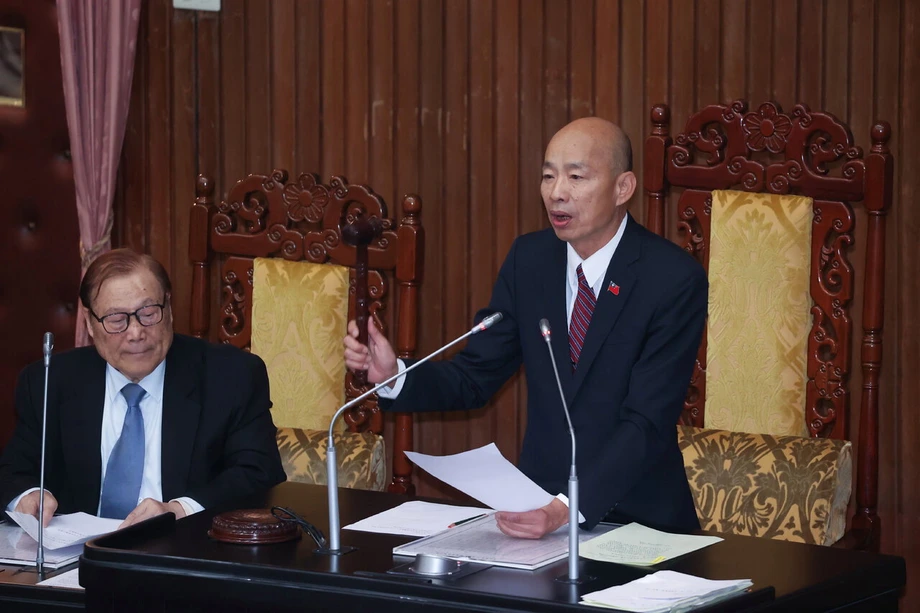
Taiwan financial markets experienced extreme volatility as the Taiwan Stock Exchange Index dropped 7,641.83 points in the preceding week, marking a 17.5 percent decline that represented the largest weekly percentage fall in 35 years. The severe contraction wiped NT$25 trillion, approximately $759.6 billion, from market value and reduced total market capitalization to NT$118.0992 trillion on November 20. In response to the historic selloff, Taiwan Premier Cho Jung-tai convened emergency consultations with finance and economics ministers on Saturday, November 21, issuing four directives to strengthen corporate financing, support credit guarantees, bolster market stabilization forces, and stabilize foreign exchange.
Contents
- Market Turmoil and Emergency Intervention
- Dramatic Intraday Rebound and Heavyweight Performance
- Global Technology Rout and Semiconductor Selloff
- Leadership Developments at Nvidia and Political Repercussions
- Macroeconomic Fundamentals and Government Assessment
- Foreign Exchange Stability and Currency Intervention
- Deleveraging and Regional Market Divergence
- Analyst Perspectives on Technical Bottom Formation
- The Bottom Line
Simultaneously, Taiwan's Financial Supervisory Commission announced five stabilization measures effective November 23, including a comprehensive ban on short selling below the previous close, a rise in the minimum margin requirement for short sales from 130 percent to 150 percent, and the suspension of put warrant applications. The National Stabilization Fund confirmed its active entry into the market with approximately NT$500 billion, equivalent to $15.2 billion, in available funds.
Dramatic Intraday Rebound and Heavyweight Performance
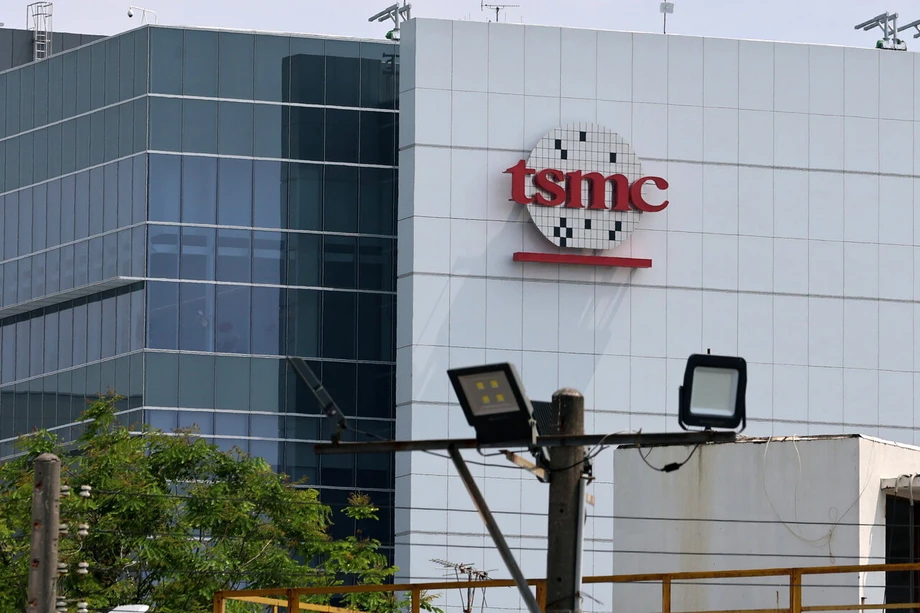
The Taiwan Stock Exchange Index opened on Monday, November 23, down 133.81 points at 35,899.48 before extending losses to a session low of 35,442.41, a drop of 590.88 points. Bargain hunters and state-backed buying triggered a sharp V-shaped reversal that pushed the index to a high of 36,655.48, creating a morning trading swing of 1,213.07 points and reclaiming the 36,000 level. Heavyweight technology equities drove the recovery, with Taiwan Semiconductor Manufacturing opening down NT$10 at NT$1,990 and falling to NT$1,970 before rising to an intraday high of NT$2,045, up NT$45.
United Microelectronics surged to its daily limit-up price of NT$88.3 on heavy volume. MediaTek reached an intraday high of NT$3,505, up NT$160, while Hon Hai rose as much as NT$4 to NT$214. The electronics subindex gained 0.8 percent, whereas the financial subindex declined about 1 percent, and the TPEx Index for small and mid-cap stocks fell 2.48 percent to 255.49, indicating capital concentration in large-cap liquidity havens.
Global Technology Rout and Semiconductor Selloff
The domestic market turbulence followed a broad global selloff on Friday, November 20, driven by escalating investor doubts regarding the financial returns on massive artificial intelligence infrastructure investments. Wall Street indices closed sharply lower, with the Nasdaq Composite plunging 1,261.47 points, or 5.28 percent, to 22,617.73, and the Philadelphia Semiconductor Index shedding 1,011.13 points, or 10.73 percent, to 8,408.59. The Dow Jones Industrial Average fell 949.73 points, or 1.93 percent, to 48,147.33, and the S&P 500 dropped 265.44 points, or 3.70 percent, to 6,910.39, with both the Dow and S&P 500 entering correction territory.
Semiconductor equities suffered indiscriminate liquidations globally. Advanced Micro Devices fell more than 13 percent, Broadcom tumbled over 12 percent, Applied Materials slid 10.75 percent, and Nvidia dropped 14.01 percent in a single session. Memory chip manufacturers experienced even steeper declines, as Micron Technology crashed 13.86 percent, SanDisk plunged 16.03 percent, Western Digital fell 11.92 percent, and Seagate sank 12.24 percent.
Leadership Developments at Nvidia and Political Repercussions
Market sentiment found partial stabilization following developments surrounding artificial intelligence chip leader Nvidia, whose former chief executive officer, Jensen Huang, resigned on November 12. U.S. Treasury Secretary Scott Bessent stated in a television interview on Sunday, November 22, that Huang is now an outsider and did not explicitly oppose his return to the company, provided export control compliance responsibilities are clarified. U.S. President Donald Trump also expressed a desire for Huang to return to Nvidia subject to a public apology, while prediction-market odds for Huang's reinstatement rose to 14.4 percent from 11.7 percent.
Despite the political softening, Nvidia board Chairman Harvey Jones stated during a November 17 earnings call that the board does not plan to reinstate Huang. Congressional scrutiny remains high ahead of scheduled closed-door transcribed interviews for Huang before three United States House committees on December 1, followed by Nvidia General Counsel Tim Teter on December 2.
Macroeconomic Fundamentals and Government Assessment
Premier Cho Jung-tai addressed the economic outlook on Monday by highlighting four macroeconomic indicators to counter market panic. Cho noted that October's composite business monitoring score stood at 41 points, registering a red light for the tenth consecutive month, which is the longest expansionary streak since 1984. October exports reached a record monthly high of $122.3 billion, representing 21 months of positive growth, while capital equipment imports surged 75.1 percent year-on-year, reflecting ongoing semiconductor capacity expansion. Additionally, the seasonally adjusted manufacturing Purchasing Managers Index reached 62.5 in October, indicating strong industry optimism for the subsequent six months.
The Ministry of Economic Affairs reported that consultations with eight major business and industry associations confirmed that current equity volatility has not affected underlying corporate orders, with total exports projected to surpass $1 trillion in 2027. However, analysts noted that macroeconomic data reflect historical performance prior to the recent stock price collapse, leaving short-term market trajectory dependent on international stability and foreign institutional investor behavior.
Foreign Exchange Stability and Currency Intervention
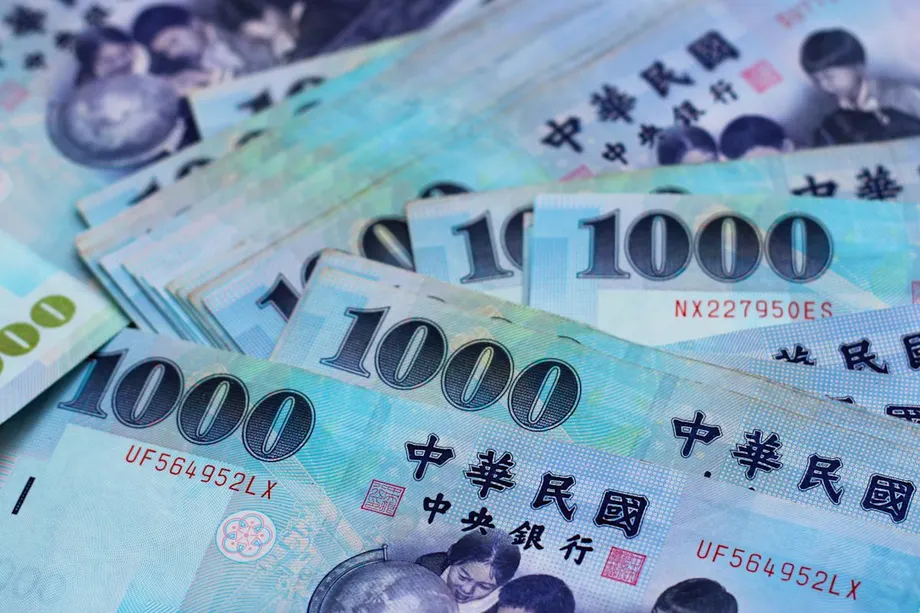
The foreign exchange market experienced simultaneous pressure as the New Taiwan dollar traded near the 33-dollar threshold. The currency opened at 32.95 against the U.S. dollar and weakened to an intraday low of 32.999, remaining just 0.001 short of the 33 level amid capital outflows from foreign equity reductions. Supported by central bank intervention, robust exporter dollar-selling, and retail liquidation of foreign currency holdings, the New Taiwan dollar stabilized to close the morning session at 32.99, down 5.4 cents, with a total morning turnover of $9.84 million.
Central bank foreign exchange bureau officials indicated that foreign capital outflow momentum has gradually moderated this year, while export-related dollar conversions have increased by 50 percent compared to the previous year, maintaining overall market liquidity balance despite regional currency depreciation across Asia.
Deleveraging and Regional Market Divergence
Stock market data revealed extensive deleveraging of leveraged retail funds through margin financing. Listed stock margin balances fell by NT$49.141 billion from November 19 to NT$435.227 billion on November 20. From the index peak of 49,968.92 on October 6 through November 20, total margin balances dropped by NT$202.43 billion, marking a 31.7 percent decline that outpaced the broader market's 27.6 percent correction over the same interval.
Regional Asian stock markets diverged during Monday trading. Japanese financial markets remained closed for the Labor Thanksgiving Day holiday, temporarily shielding domestic investors from the prior Friday's 5.06 percent drop in the Nikkei 225 index. In South Korea, the KOSPI opened down 2.77 percent and extended losses to 3.79 percent, driven by declines in Samsung Electronics and SK hynix amid regional spillovers from U.S. technology sector weakness.
Analyst Perspectives on Technical Bottom Formation
Investment advisory institutions offered varied assessments regarding whether the market correction had reached a definitive bottom. CTBC Investments Advisory President Chen Po-chou stated that Taiwan Semiconductor Manufacturing shares dipped below the psychological threshold of NT$2,000 to touch NT$1,970, revealing long-term investment value that attracted institutional bargain-hunting capital supported by state stabilization measures. He recommended an incremental accumulation strategy divided into three to five tranches.
Conversely, investment expert Chuang Wen-tsung advised caution, noting that the benchmark index fell below the lower Bollinger Band at 37,020 points and must reclaim that level alongside the 5-day moving average at 39,157 points to confirm structural stabilization. Chuang emphasized that investors should avoid mistaking an oversold technical bounce for a confirmed market bottom while foreign institutional selling and margin liquidation remain active.
The Bottom Line
- Taiwan Stock Exchange Index experienced a volatile session with a 1,213-point intraday swing, briefly reclaiming the 36,000 level after dropping 7,641 points the previous week.
- Financial Supervisory Commission enacted a third round of stabilization measures effective November 23, banning short selling below the previous close and raising short sale margin requirements to 150 percent.
- National Stabilization Fund deployed resources from its NT$500 billion war chest to support heavyweight equities including Taiwan Semiconductor Manufacturing and United Microelectronics.
- Premier Cho Jung-tai cited robust October macroeconomic indicators, including record exports of $122.3 billion and a manufacturing PMI of 62.5, to affirm domestic economic stability.
- New Taiwan dollar currency held the 32-dollar tier at 32.99 against the U.S. dollar at midday following central bank foreign exchange interventions and exporter dollar sales.