Taiwan Markets Navigate Steep Declines Amid Global Tech Slump
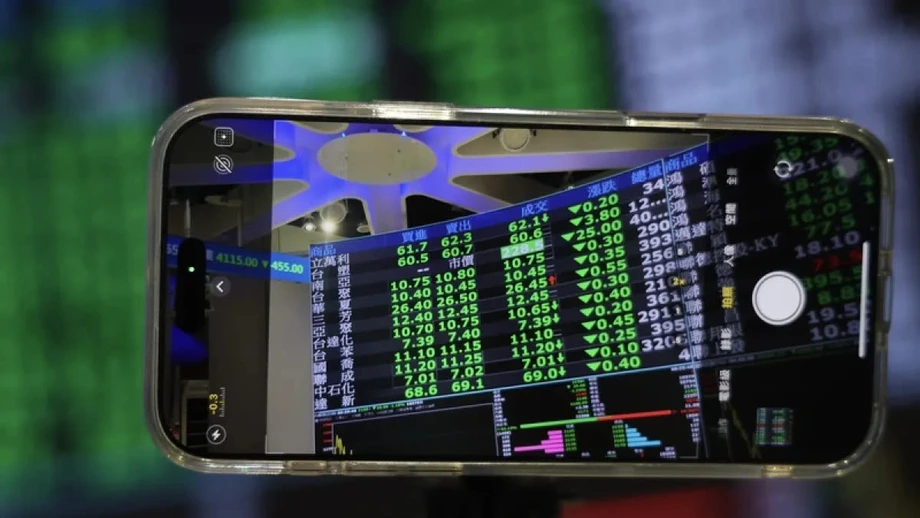
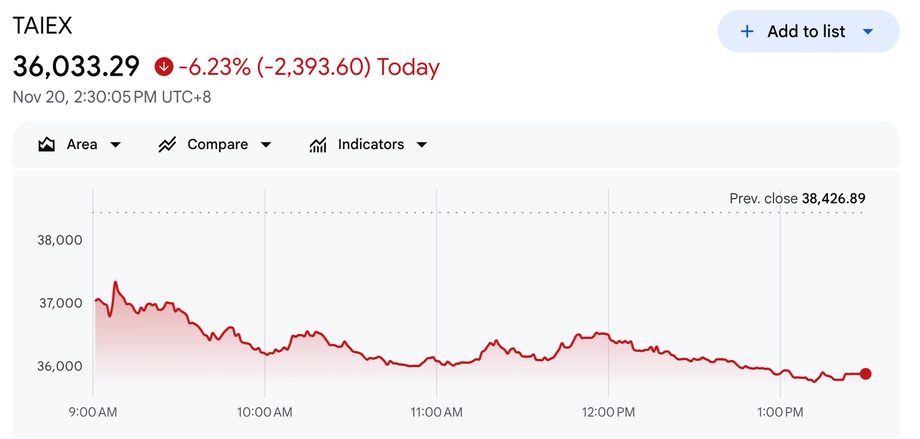
Taiwan financial markets experienced severe downward pressure recently after international technology shares and the Philadelphia Semiconductor Index suffered sharp losses. The benchmark weighted stock index dropped 2,635.04 points on November 16 to close at 41,040.08 points, marking a single day decline of 6.03 percent. The downward trend continued with subsequent volatility, prompting financial regulators and government agencies to step in with stabilization measures and reassurances regarding the island economic health. Market participants reacted to a combination of international technology stock corrections and shifting expectations surrounding global artificial intelligence infrastructure investments.
Contents
Financial Supervisory Commission officials reported that trading volume reached approximately 9617.95 billion New Taiwan Dollars during the heightened volatility. The regulatory body noted that the market price to earnings ratio stood at approximately 24.92 times by the end of October, with a cash dividend yield of 1.63 percent, or 1.67 percent when including stock dividends. Credit transactions in the centralized market maintained an aggregate collateral maintenance ratio of 165.98 percent, staying well above the 130 percent minimum margin call threshold. Borrowed stock sales accounted for 1.76 percent of total market turnover.
Regulatory Actions and Five Stabilization Measures
Financial authorities implemented targeted intervention policies beginning November 9 to maintain market order and protect investor interests. The Financial Supervisory Commission introduced five specific stabilization measures, which include reducing daily intraday short sale borrowing quotas, raising margin requirements for short selling, and broadening the scope of acceptable collateral for margin call payments. Regulators also strongly encouraged listed companies to evaluate share buyback programs and proactively host investor conferences to communicate their current operational status.
Taiwan Stock Exchange officials emphasized their ongoing commitment to monitoring international political and economic developments, as well as trading dynamics. The exchange stated it would supervise listed companies to ensure timely and thorough disclosure of material information. If non-rational continuous declines or abnormal market fluctuations occur, authorities stand ready to implement additional stabilization steps in cooperation with government policies.
Strong Economic Fundamentals and Export Momentum
Government ministries and economic planners highlighted robust macroeconomic indicators to counter panic among investors. Ministry of Economic Affairs data showed that third quarter manufacturing output reached 7.5079 trillion New Taiwan Dollars, representing a 43.09 percent increase compared to the same period in the previous year and marking eleven consecutive quarters of positive growth. This expansion was driven by surging demand for artificial intelligence, high performance computing, and cloud services, which boosted semiconductor and server supply chains.
Export performance demonstrated similar strength, according to Ministry of Finance statistics released on November 9. Total exports for October reached 967.6 billion New Taiwan Dollars, setting a new monthly record with a 58.9 percent annual increase and extending a streak of 36 consecutive months of positive growth. Cumulative exports for the first ten months of the year reached 7.5829 trillion New Taiwan Dollars, representing a 47.7 percent increase. Listed companies also reported aggregate revenues of 6.3269 trillion New Taiwan Dollars for October, bringing the ten month cumulative total to 51.5306 trillion New Taiwan Dollars.
Semiconductor Clusters and Science Park Growth
Industrial development remains anchored by high technology manufacturing hubs across the island, with science parks reporting substantial revenue gains. National Science and Technology Council figures indicate that the three major science parks had approved 264 semiconductor firms by the end of September. Southern Taiwan Science Park emerged as the world largest semiconductor manufacturing cluster, spanning from Chiayi and Tainan to Kaohsiung and Pingtung.
The Southern Taiwan Science Park alone has approval for 46 semiconductor firms, generating 2.1995 trillion New Taiwan Dollars in integrated circuit revenue during the first eight months of the year, which accounts for over half of the total revenue across all three science parks. Individual park figures for the first eight months show the Hsinchu Science Park reaching 1.2011 trillion New Taiwan Dollars with a 43.9 percent annual increase, the Central Taiwan Science Park recording 764.2 billion New Taiwan Dollars with a 32 percent growth rate, and the Southern Taiwan Science Park achieving 2.1995 trillion New Taiwan Dollars with a 38.2 percent increase. Total integrated circuit revenue across all parks reached 4.1649 trillion New Taiwan Dollars, representing a 38.6 percent annual rise and making up over 83 percent of total science park revenue.
Global Research and Supply Chain Integration
International research organizations continue to project substantial expansion in artificial intelligence infrastructure spending. Gartner predicted on November 12 that global artificial intelligence infrastructure expenditure will reach 2.397 trillion United States Dollars in 2027, representing a 53 percent annual increase. Morgan Stanley research published on November 15 suggested that the global capital expenditure cycle for artificial intelligence remains intact, projecting a 13 percent profit growth for companies within the MSCI All Country World Index in 2027.
Deepu Talla, who serves as Vice President of Robotics at NVIDIA, emphasized during the US Taiwan High Tech Forum that Taiwan is an indispensable part of the supply chain. He reaffirmed the long standing and close partnership between the firms involved. International Data Corporation assessments noted that recent executive personnel changes at NVIDIA would have limited impact on infrastructure demand in upcoming quarters, as demand from hyperscale cloud providers continues to outstrip supply.
The Bottom Line
- The weighted stock index declined 6.03 percent to close at 41,040.08 points following international tech sector weakness.
- Financial regulators instituted five stabilization measures, including tighter short sale rules and relaxed collateral requirements for margin accounts.
- Taiwan October exports reached 967.6 billion New Taiwan Dollars, setting a monthly record with a 58.9 percent annual increase.
- The Southern Taiwan Science Park consolidated its position as the world largest semiconductor cluster, generating over half of the total science park integrated circuit revenue in the first eight months of the year.
- Total integrated circuit revenue across Taiwan science parks reached 4.1649 trillion New Taiwan Dollars from January to August, growing 38.6 percent year over year.