Emergency Measures Set in Motion
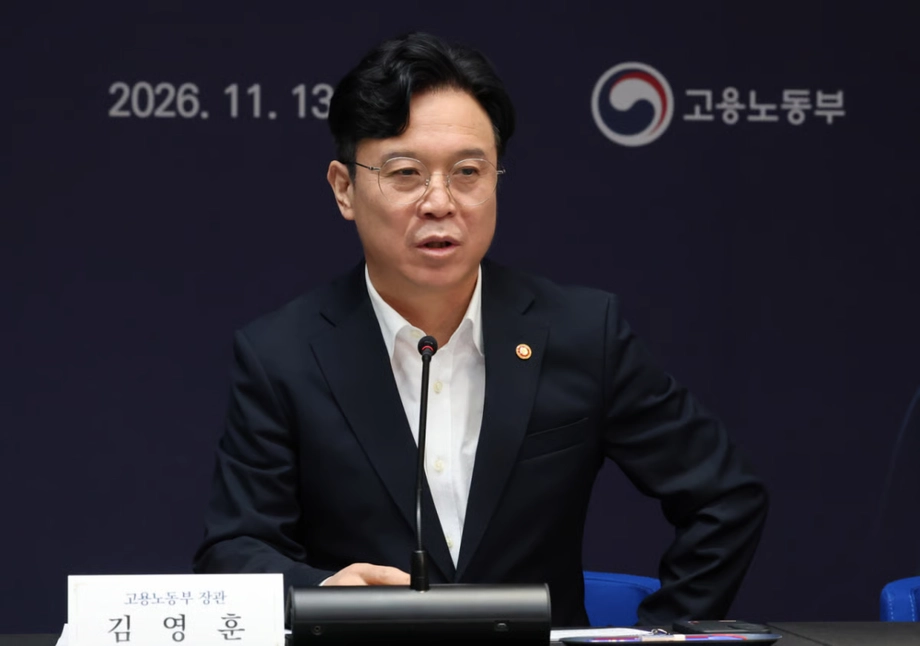
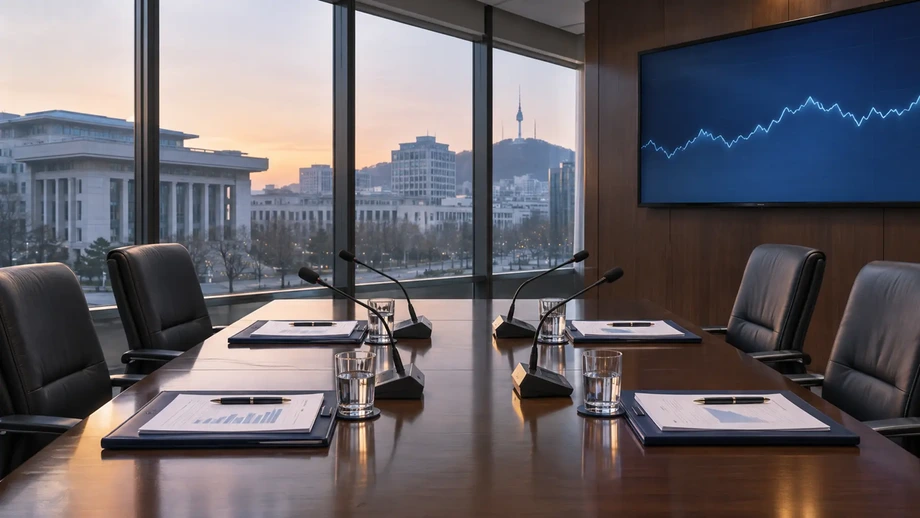
South Korean financial authorities are preparing to deploy a stock market stabilization fund for the first time since the global financial crisis. Deputy Prime Minister and Finance and Economy Minister Lee Hyoung-il led an emergency market monitoring meeting at the Government Complex Seoul on November 22, 2026. The high-level gathering brought together top economic policymakers known as the F4 group, including Bank of Korea Governor Shin Hyun-song, Financial Services Commission Chairman Lee Eok-won, and Financial Supervisory Service Governor Lee Chan-jin. The meeting concluded with a sweeping set of interventions designed to calm jittery investors and prevent a severe sell-off as the domestic market prepared to open.
Contents
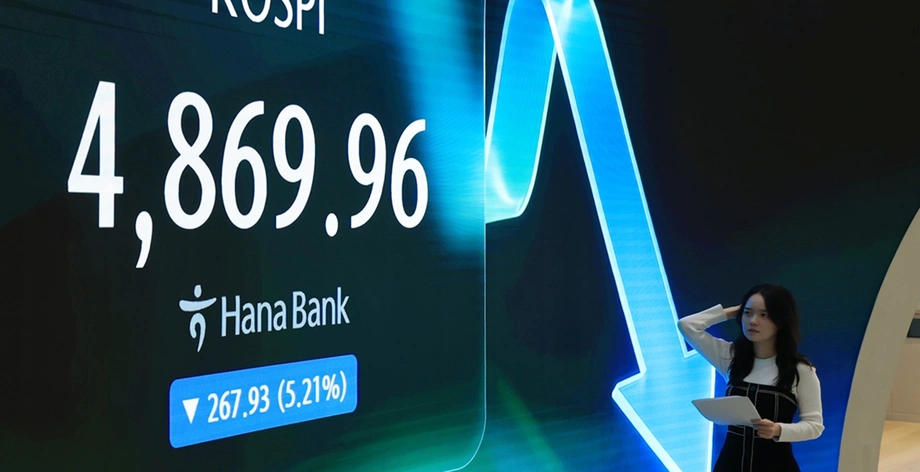
Global technology stocks suffered a massive wave of selling late last week, dragging down major indices across the United States and spilling over into Asian markets. On Friday, November 20, 2026, the benchmark Kospi index dropped 5.21 percent to close at 4,869.96 points. The broader decline pushed the Kospi below the 5,000 threshold for the first time in three trading sessions and marked a more than 40 percent drop from its peak in June, when the market had surged past 9,100 points driven by a boom in semiconductor manufacturing led by companies such as Samsung Electronics and SK Hynix. At the same time, the Kosdaq index fell 5.71 percent to drop below the 650 level.
The sharp downturn in Seoul mirrored a brutal session on Wall Street. On November 20, 2026, the Dow Jones Industrial Average fell 1,261.47 points, or 5.28 percent, to close at 22,617.73. The S&P 500 dropped 3.70 percent to 6,910.39, while the tech-heavy Nasdaq Composite plunged 5.28 percent. Semiconductor stocks experienced particularly devastating losses, with Nvidia plunging over 14 percent to reach a 52-week low. Other chipmakers saw double-digit drops, including Advanced Micro Devices down 13.25 percent, Broadcom down 12.19 percent, Micron Technology down 13.89 percent, and SanDisk down 16.05 percent. The Philadelphia Semiconductor Index slid 10.73 percent, while shares of artificial intelligence startup Anthropic stumbled on their second day of public trading, falling 8.50 percent and slipping near their initial offering price.
Understanding the Root Causes of Market Volatility
Financial officials meeting in Seoul traced the root of the recent turmoil to growing uncertainties surrounding the artificial intelligence and semiconductor sectors. Policymakers noted that questions regarding the profitability and capital financing of artificial intelligence initiatives have begun to weigh heavily on investor sentiment. Additional pressures have emerged from tightening regulations on data centers in the United States, alongside stricter semiconductor export controls affecting shipments to overseas markets. Market watchers also pointed to recent reports regarding chip shipment restrictions to Chinese customers, which added further friction to global technology supply chains.
Political leaders in Seoul had urged swift executive action prior to the market opening. People Power Party floor leader Jeong Jeom-sig warned that the steep losses on Friday threatened to trigger an even worse downturn at the start of the week. Lawmaker Na Kyung-won echoed those concerns, calling on financial authorities to disclose the precise scale and timing of any government intervention before trading resumed.
Despite the severe short-term turbulence, the economic officials emphasized that the medium- to long-term growth trajectory for the artificial intelligence industry remains fundamentally sound. Authorities cautioned market participants against panic selling driven by emotional reactions, arguing that the underlying economic drivers of technological innovation are still intact even as valuations undergo a painful correction.
Activating the Stabilization Fund After Eighteen Years
As part of the defensive strategy, the government initiated preparations to activate the securities market stabilization fund if conditions continue to deteriorate. The stabilization fund pools capital from financial institutions and industry organizations to purchase equities directly, injecting liquidity and restoring confidence when market supply and demand fall out of balance. While a similar 10.76 trillion won vehicle was established during the COVID-19 pandemic in 2020 and a 10 trillion won fund was prepared at various points, actual capital deployment has been exceedingly rare. The last time money was actively drawn from the fund and deployed into the stock market was during the global financial crisis, when 515 billion won was invested between November 2008 and March 2009. If authorities trigger the fund in the coming days, it will mark its first active deployment in 18 years.
South Korea is not alone in turning to state-backed financial backstops. Regional neighbors have also stepped in to defend their financial systems. In Taiwan, financial authorities ordered tighter short-selling restrictions, while the Taiwanese finance ministry announced that its 15 billion dollar stock stabilization fund had already entered the market to support asset prices and maintain order.
Easing Corporate Share Buybacks and Curbing Abuses
To provide an immediate cushion for falling share prices, the government will temporarily loosen regulations governing corporate share repurchases. Starting on November 24, 2026, and running for a period of three months, listed companies will benefit from relaxed limits on their daily self-purchase orders. Under standard regulations, a company seeking to buy back its own shares is subject to strict caps based on either 10 percent of the shares specified in a buyback filing or 25 percent of the average daily trading volume over the preceding month, with a total purchase limit of no more than 1 percent of total outstanding shares. Temporarily raising these limits allows corporations to absorb excess selling pressure and signal confidence in their own underlying value during periods of extreme market stress.
Regulators are also turning their attention to predatory trading practices that often accompany steep market declines. The Financial Supervisory Service and the Korea Exchange will establish a special three-month inspection period dedicated to uncovering and penalizing illegal short selling. Authorities promised strict legal enforcement against any market participants attempting to manipulate prices or spread false information designed to exploit investor anxiety.
Protecting Retail Investors from Forced Liquidations
Beyond institutional interventions, policymakers moved to shield individual investors from cascading liquidations. Margin trading and leveraged investments can accelerate market declines when falling asset values trigger automatic debt calls. When a borrower's collateral value drops below a required threshold, brokerage firms issue margin calls or execute forced sales to recover lent funds, creating a self-reinforcing downward spiral.
To prevent this chain reaction, financial regulators agreed to monitor margin loans, deferred payment transactions, and forced liquidation trends closely. Brokerage firms will be required to strengthen advance notifications before executing forced sales, giving investors additional time to manage their portfolios. These measures build upon earlier relief provided on November 6, 2026, when financial authorities temporarily waived the requirement for securities firms to maintain strict margin loan collateral ratios for a three-month window.
Looking ahead, the government plans to establish a dedicated Capital Market Reform Task Force to address structural imbalances over the long term. This panel will evaluate tax policies and institutional frameworks designed to encourage sustained domestic investment. Policymakers also intend to press the National Assembly for legislative action on several key initiatives, including updates to inheritance and gift tax valuation methods for listed equities, the creation of a productive finance individual savings account, the introduction of an independence fund for minors, and the expansion of retirement pension programs.
Timeline of Events
- November 6, 2026: Financial authorities temporarily waive margin loan collateral ratio maintenance rules for three months.
- November 20, 2026: The benchmark Kospi index plunges 5.21 percent to close at 4,869.96 points, while the Kosdaq falls 5.71 percent. U.S. markets suffer heavy losses as the Nasdaq drops 5.28 percent.
- November 22, 2026: Finance Minister Lee Hyoung-il convenes an emergency F4 meeting with the heads of the Bank of Korea, Financial Services Commission, and Financial Supervisory Service.
- November 24, 2026: The government implements a three-month relaxation of corporate share buyback limits and launches a special monitoring period for illegal short selling.
The Bottom Line
- The South Korean government is preparing to deploy its stock stabilization fund for the first time in 18 years following a steep market decline.
- The benchmark Kospi index dropped 5.21 percent on Friday, closing below the 5,000 threshold amid a broader global sell-off in technology and artificial intelligence shares.
- Listed companies will receive a three-month reprieve with relaxed daily limits on corporate share buybacks starting November 24, 2026.
- Financial regulators are launching a three-month special inspection period to crack down on illegal short selling and price manipulation.
- Authorities are stepping up oversight of margin loans and forced liquidations to protect individual investors from cascading losses.