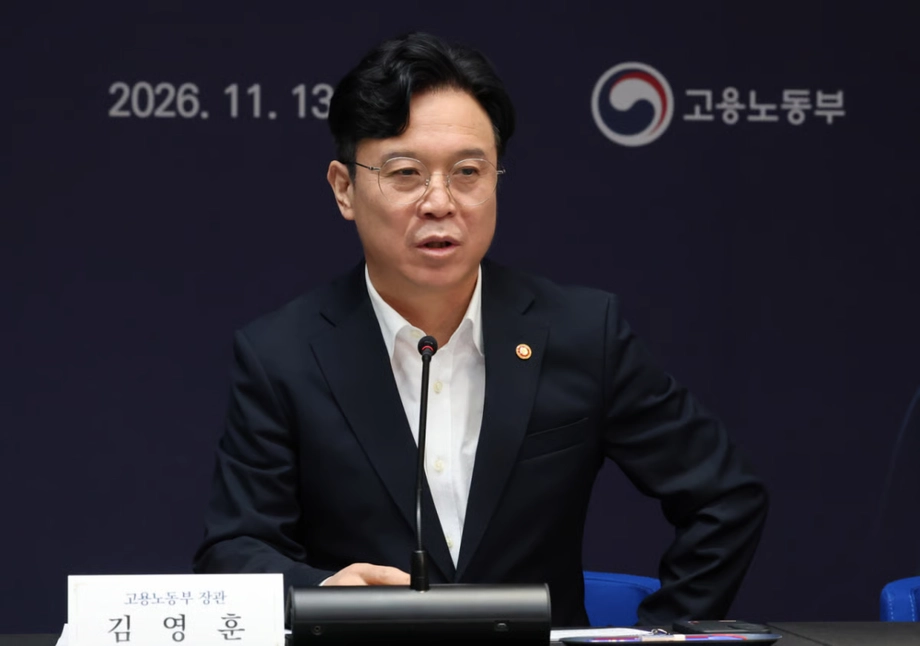
Government Pressure Mounts as Deadline Approaches
South Korea faces a pivotal moment in its labor policies as the debate over extending the legal retirement age reaches a critical juncture. Kim Young-hoon, Minister of Employment and Labor, announced that the government will step in with its own official proposal if lawmakers and negotiating parties fail to reach an agreement during an upcoming committee session. The official stance was detailed by the Ministry of Employment and Labor in an official press release outlining the government strategy for the negotiations. The policy discussion centers on amending current regulations to address demographic shifts in the workforce.
Contents
- Government Pressure Mounts as Deadline Approaches
- A Decade of Legislative Gridlock and Stalled Negotiations
- Core Issues Dividing Labor and Management
- Addressing the Senior Influx into the Self-Employment Market
- Protecting Youth Employment Through Policy Packages
- Upcoming Schedule and Legislative Outlook
- The Bottom Line
Minister Kim appeared on the Korea Broadcasting System program KBS Sunday Diagnosis Live on November 22, 2026, to outline the administration position. During the broadcast, he stressed that the legislative process must conclude before the end of the year to provide certainty for both employers and aging employees. The current statutory retirement age stands at 60 years old under the Elderly Employment Act, a threshold that has remained unchanged since it was fully implemented across all businesses in 2017 after taking effect for large companies in 2016.
A Decade of Legislative Gridlock and Stalled Negotiations
The Democratic Party established a special committee dedicated to the retirement age extension with the original ambition of passing legislation by the end of the previous year. However, persistent disagreements between labor unions and business associations delayed the timeline repeatedly. Officials pushed the target date to the second half of the year following the local elections held in June. Despite holding separate consultation meetings with the Korean Confederation of Trade Unions and major business representatives in April, substantive progress stalled for roughly ten months.
Minister Kim explained why the administration has largely remained on the sidelines until now, noting that the legislative committee functions much like a miniature tripartite council involving labor, management, and government. He rejected criticism that the ministry was simply standing by to avoid difficult choices. Speaking directly about the political and social pressure surrounding the stalled talks, Minister Kim offered a firm assessment of the situation.
Some people say the government is hiding behind labor-management negotiations and acting cowardly, but I have no intention of being cowardly. We are here to facilitate an agreement, but when things simply do not work out, the time has come for the government to step up responsibly.
Core Issues Dividing Labor and Management
Negotiations have remained deadlocked due to fundamental differences in how labor and management view the implementation of a higher retirement age. Labor groups demand an immediate and universal adjustment of the mandatory retirement age from 60 to 65. Representatives argue this change is necessary to close the income gap for workers born during the second demographic boom, specifically those born between 1964 and 1974, who face a prolonged financial void before they become eligible to receive the national pension.
Business associations express deep concern over rising labor costs and the potential impact on youth employment opportunities. Employers advocate for corporate autonomy, suggesting that companies should have the flexibility to implement continued employment models such as post-retirement re-hiring rather than a blanket age extension. Furthermore, management has requested relaxed procedures for altering employment rules without requiring the consent of a majority of workers, a proposal that labor unions fiercely oppose as an infringement on collective bargaining rights.
Addressing the Senior Influx into the Self-Employment Market
Minister Kim highlighted the broader economic risks of failing to extend the retirement age during the current legislative term. South Korea maintains a high rate of elderly poverty, a statistic directly linked to workers being pushed out of their primary jobs long before they secure stable alternative incomes. Without institutional changes to extend working lives, millions of aging citizens face bleak economic prospects.
Addressing the consequences of inaction, Minister Kim outlined the pressure on the retail and service sectors.
In a society experiencing rapid aging, if retirement age extensions do not happen, the second baby boomers born between 1964 and 1974 will be forced into the self-employment market. When involuntary self-employment grows, small business owners and merchants who are already struggling with saturated markets will face a situation where consumers shrink and competitors multiply.
The Democratic Party committee has reportedly considered a phased approach that would gradually increase the retirement age to 65 by the year 2039. This compromise model envisions adjusting the retirement age upward by one year every two or three years starting in 2029, paired with a two-year re-hiring system.
Protecting Youth Employment Through Policy Packages
Concerns regarding generational conflict in the labor market remain a major hurdle. A survey published by the Federation of Korean Industries on November 22, 2026, revealed that 61.9 percent of surveyed university students and graduates believe that extending the retirement age to 65 will reduce new hiring opportunities for young job seekers. The same research noted that 45.1 percent of respondents found the current job market more difficult than the previous year, with average preparation times stretching beyond one year for many candidates.
To mitigate these anxieties, the Ministry of Employment and Labor plans to introduce a comprehensive youth employment package alongside any official retirement age policy. Minister Kim noted that the vast majority of South Korean workplaces do not rely on traditional seniority-based pay scales known as hobong systems, which account for only about 14 percent of the wage structure. He argued that the remaining vast majority of workplaces lack standard seniority systems entirely, creating an extreme wage dual structure that requires targeted government support alongside any demographic adjustments.
Upcoming Schedule and Legislative Outlook
The immediate focus shifts to the upcoming meeting scheduled for November 27, 2026. A subcommittee of the parliamentary retirement age committee will convene with deputy-level representatives from both major labor umbrella organizations and key business federations. Negotiators will review a preliminary draft prepared by the ruling party to test whether consensus remains possible.
- November 22, 2026: Labor Minister Kim issues an ultimatum during a broadcast interview
- November 27, 2026: Special committee subcommittee resumes negotiations with labor and management
- Post-November 27: Ministry of Employment and Labor prepares to issue its official stance if talks fail
- Pending Schedule: Parliamentary committee review scheduled through the Climate, Energy, Environment, and Labor Committee
If the November 27 session concludes without a breakthrough, the ministry intends to release its definitive position shortly thereafter. Following legislative review by the parliamentary committee, the ruling party hopes to advance the bill through the regular legislative session, though tight calendar constraints and deep partisan divides mean final passage remains uncertain.
The Bottom Line
- Labor Minister Kim Young-hoon announced that the government will publish its own policy proposal if the special parliamentary committee fails to reach a consensus by November 27, 2026.
- Current statutory regulations set the mandatory retirement age at 60, leaving a growing gap for aging workers who retire before drawing national pensions.
- Labor advocates for an immediate shift to 65, while business owners push for re-hiring flexibility and protections against soaring labor costs.
- Government officials plan to bundle youth employment support measures into the final retirement package to counter fears of reduced hiring for younger generations.