A stronger forecast, powered by a narrow engine
South Korea's economy could grow close to 4% in 2027 as global demand for artificial intelligence chips boosts exports and investment. The Korea Development Institute (KDI) now expects growth of 3.9%, up from its August forecast of 2.2%. Citi raised its estimate to 4.1%, while the International Monetary Fund (IMF) forecasts 3.3%.
Contents
- A stronger forecast, powered by a narrow engine
- Why are growth estimates rising so quickly?
- How can chips move the whole GDP figure?
- Why might export strength leave consumers behind?
- What could derail the forecasts?
- What might the Bank of Korea do?
- Can the government spread the gains?
- Key dates in the outlook
- The Bottom Line
The spread between those estimates reflects how much each forecaster expects the semiconductor boom to contribute, and how long it will last. The government's current official forecast, issued in July, is 2.2%. It is preparing a 2027 economic growth strategy for release near the end of this year, and is considering whether to raise its projection substantially, potentially into the 4% range.
The strength behind the revisions is visible in trade figures. South Korea's exports passed US$1 trillion on Nov. 19, with semiconductors accounting for about 43% of shipments during the first 10 months of the year. September exports reached a record US$120.9 billion, including more than US$60 billion in semiconductor exports. October exports were US$115.3 billion, up 93.7% from a year earlier.
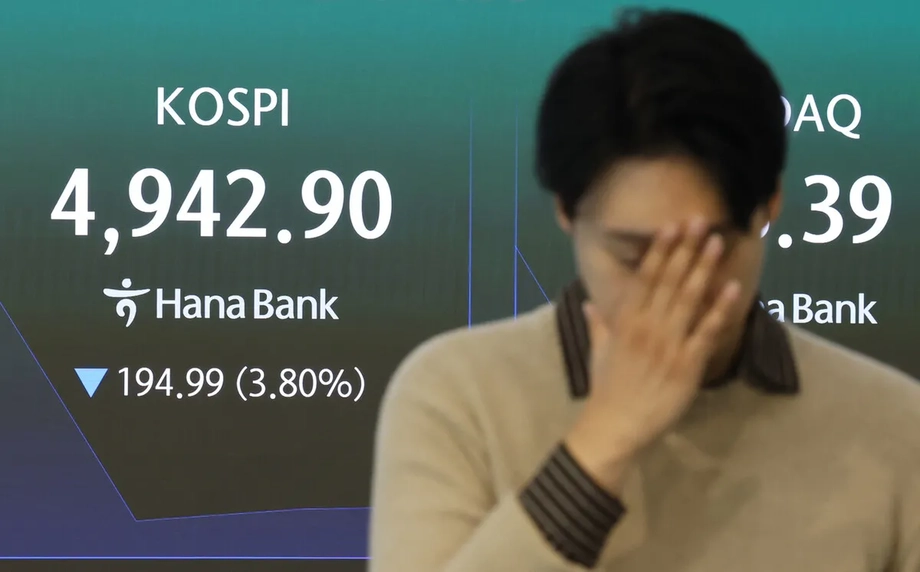
Those figures describe an export boom, not an equal rise in incomes across the country. The same figures that lift forecasts also show how much the outlook depends on one industry, while household spending and some other businesses remain much weaker.
Why are growth estimates rising so quickly?
KDI's November outlook puts growth at 3.8% this year and 3.9% next year. It raised the estimates by 0.6 percentage point for this year and 1.7 points for 2027 compared with its August outlook. KDI expects exports to grow 8.1% next year, after 10.3% this year. It forecasts private consumption to rise 2.4% and business facility investment to grow 8.1% in 2027.
Citi raised its 2027 estimate from 3.3% to 4.1%. It expects semiconductor exports to increase 38% next year, following a projected 203% jump this year. The IMF, after reviewing stronger than expected third quarter data and export figures, forecasts growth of 3.3% in 2027. It raised its 2026 estimate to 3.9%.
The third quarter helps explain the IMF's revision. South Korea's gross domestic product, or GDP, grew 1% from the previous quarter, compared with the Bank of Korea's earlier estimate of 0.3%. GDP measures the value of goods and services produced in the economy. The IMF mission chief, Corinne Delechat, said the stronger figures and export data led the fund to revise its estimate.
Delechat said the global AI investment cycle was giving South Korea an exceptional lift through semiconductor exports. She also said population aging was weighing on the country's longer term ability to grow. The IMF estimates that AI investment could help potential growth reach 2% to 2.5%, but says lasting productivity gains would require wider use of AI and improvements in how efficiently businesses produce goods and services.
"The global AI upcycle is providing an exceptional boost to the Korean economy through record-high semiconductor exports, driving strong corporate earnings and fiscal revenue," the IMF team said.
How can chips move the whole GDP figure?
Semiconductors are becoming a much larger part of the economy, so changes in chip production can move the national growth figure more than they did a few years ago. South Korea calculates real GDP growth using a chain weighted method. In simple terms, industries with a greater share of the economy receive more weight when the total growth rate is calculated.
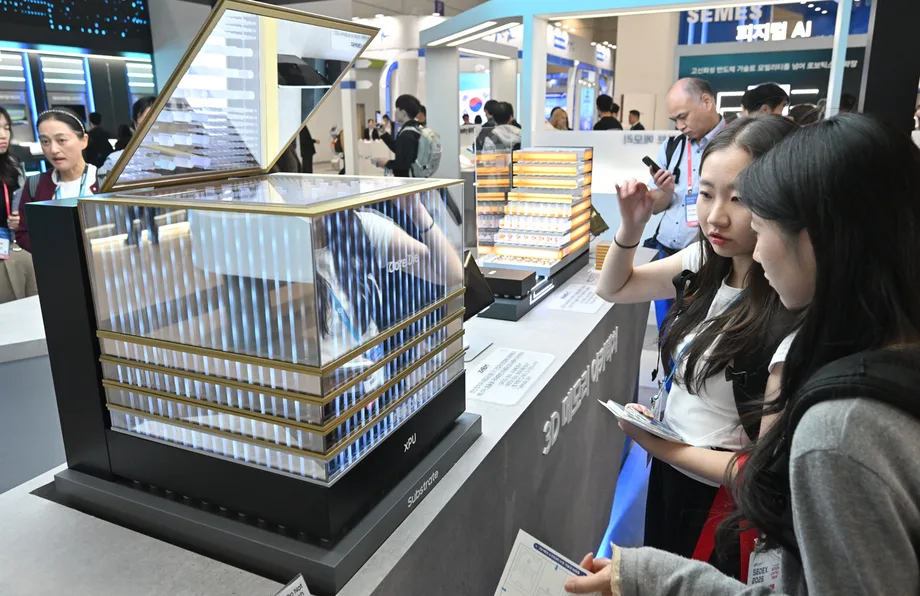
The computer, electronic and optical equipment industry, which includes semiconductors, accounted for an average 7.5% of nominal GDP value added from 2022 to 2025. Its share reached 20.7% in the first half of 2026, according to figures cited by KDI. Citi estimates a related but broader IT manufacturing measure rose from 9% in 2025 to about 20% in the first half of this year, and could reach 31% in 2027. The figures use different industry definitions and time periods, but each points to a much heavier economic weight for technology manufacturing.
KDI estimates that a one percentage point change in real growth in the computer, electronic and optical equipment sector could shift South Korea's total annual growth by 0.2 to 0.3 percentage point. It also estimates semiconductor related production, equipment spending and factory construction will account for about two thirds of growth next year, compared with about half this year.
Bloomberg Economics economist Kwon Hyo-sung offers a lower baseline estimate of 3.6% for 2027, with 3.8% growth this year. That forecast assumes semiconductor value added grows 10%, contributing about 2 percentage points to overall growth, while the rest of the economy grows 2%, contributing about 1.6 points. If chip production grows 15%, Kwon estimates total growth could reach about 4.6%.
Why might export strength leave consumers behind?
South Korea's third quarter showed the gap directly: GDP rose 1% from the previous quarter, while private consumption fell 0.2%. That was the first decline in private consumption since the final quarter of 2022. KDI expects spending to improve next year, but its forecast of 2.4% growth is still a separate part of the story from the much stronger export and facility investment figures.
One reason is that semiconductor manufacturing uses large amounts of equipment and investment but employs relatively few people. The Hyundai Research Institute has said the industry generates comparatively few jobs and has weak channels for carrying a boom through to employment and income. IT manufacturing employed about 390,000 people in South Korea in 2025, or 1.9% of the workforce. In Taiwan, the comparable sector employed about 910,000 people, or 10.6% of the workforce.
The contrast also appears in household spending. Private consumption in Taiwan grew 5.4% year on year in the first three quarters of this year, compared with 2.1% in South Korea. A strong export sector can lift company earnings and national income without giving most households the same immediate boost, especially when the industry's workforce is relatively small.
Some suppliers and transport businesses also say they have seen little benefit. At Incheon New Port, container traffic increased only 2% to 3% in the first 10 months of the year, and a terminal official said profitability had fallen. The official said some routes to the Americas carrying semiconductors operate through Busan, while disruption to used car exports to the Middle East had cut cargo handling and storage revenue at Incheon.
What could derail the forecasts?
The higher growth estimates depend heavily on continued global spending on AI infrastructure, including data centers and the equipment needed to run them. KDI warns that a slowdown in that investment could reduce chip demand and pull growth below its forecast. It also points to uncertainty over US tariff policy and tensions in the Middle East, which could disrupt energy supplies and push prices higher.
Chip prices and production matter as well as export volumes. Semiconductor export prices averaged 147% higher in January to October than in the same period a year earlier, according to Bloomberg Economics. If prices fall or new investment slows, the sector's contribution to GDP and exports could weaken quickly because its share has grown so much.
Kwon has also cautioned that the boom has so far had limited spillover into jobs and consumer spending. Citi expects household consumption to remain relatively weak, citing household debt, housing costs and the accumulated effect of higher interest rates. The strength of corporate exports therefore does not automatically mean that families will feel equally confident or able to spend.
Inflation is another consideration for policy makers. KDI forecasts consumer prices will rise 2.4% in 2027 and core prices, which exclude food and energy, will rise 2.5%. The IMF expects inflation of 2.3% next year. KDI recommends keeping monetary policy tight for now and managing public spending flexibly as officials assess inflation and the durability of tax revenue from the chip boom.
What might the Bank of Korea do?
The Bank of Korea is due to make its next rate decision on Nov. 26. Citi economist Kim Jin-wook expects a quarter percentage point increase at that meeting and another increase in February, taking the policy rate to 3.5%. Kwon also expects a quarter point increase on Nov. 26, followed by a rise to 3.5% in the first quarter of next year. Those are forecasts, not announced decisions.
The policy question is how much of the export boom is reaching domestic demand and prices. Stronger spending and inflation could support further rate increases, while weak household demand would make it harder to judge the economy by headline growth alone. KDI's advice is to keep policy tight while watching inflation, and to avoid locking in inflexible spending based on tax receipts that may fluctuate with chip earnings.
Can the government spread the gains?
The government's year end economic strategy is expected to combine its growth outlook with measures to reduce inequality and raise the economy's ability to grow over time. Its stated priorities include housing, jobs and finance for ordinary households, alongside support for new industries, business investment and innovation, and stronger service industries.
A planned 162.3 trillion won Future Response Fund is intended to support future growth industries, young people, regional development and education. The IMF has welcomed a government Future Fund financed by additional tax revenue from the semiconductor boom, describing it as a way to stabilize public finances. The government's challenge is to turn temporary gains from strong chip sales into investment and opportunity across more industries and communities.
Trade Minister Kim Jung-kwan has warned that a change in AI investment could affect semiconductor export demand. He said the government would look at ways to grow exports beyond semiconductors and spread the benefits to other industries. The export record, then, is both a source of higher growth estimates and a reminder of how concentrated that growth has become.
"If artificial intelligence (AI) investment is adjusted, demand for semiconductor exports will also be affected," Kim said.
Key dates in the outlook
Nov. 17: The IMF raises its 2026 growth forecast to 3.9% and forecasts 3.3% growth in 2027.
Nov. 18: KDI raises its 2027 forecast to 3.9%, from 2.2% in August.
Nov. 19: South Korea's exports pass US$1 trillion for the year.
Nov. 26: The Bank of Korea is scheduled to announce its next interest rate decision.
Near the end of 2026: The government aims to publish its 2027 economic growth strategy. It has not yet announced a revised official growth forecast.
The Bottom Line
KDI forecasts South Korean growth of 3.9% in 2027, Citi 4.1%, Bloomberg Economics 3.6% in its baseline, and the IMF 3.3%.
Semiconductor exports made up about 43% of exports in the first 10 months of 2026, and the sector's growing share of GDP makes chip production a major influence on total growth.
Household spending has lagged: private consumption fell 0.2% in the third quarter even as GDP grew 1% from the previous quarter.
The government is preparing a 2027 economic strategy, while global AI investment, trade policy and energy prices remain key risks to the forecasts.