Emergency Meetings Convened Amid Historic Market Plunge
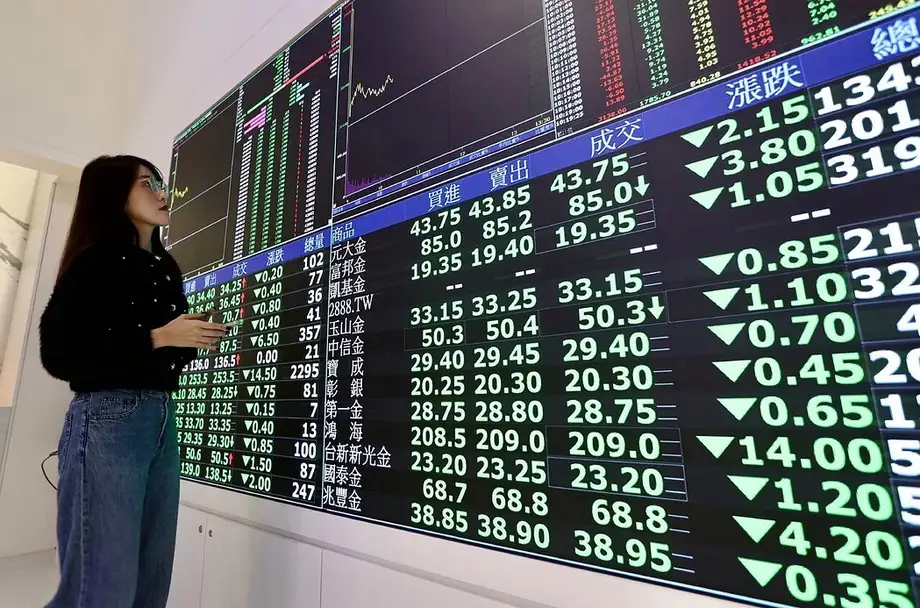
Taiwan's financial markets experienced an unprecedented downturn as the Taiwan Stock Exchange convened an emergency meeting on November 22 with ten large brokerages to address severe volatility. The gathering took place in the wake of a brutal market slide, which saw the benchmark index drop by 2,393.6 points on November 20 to close at 36,033.29 points, marking a single day loss of 6.23 percent. Over the course of the preceding week, the market suffered a staggering loss of 7,641.83 points, wiping out 25 trillion New Taiwan Dollars in total market value and pushing the weekly decline to 17.5 percent.
Contents
- Emergency Meetings Convened Amid Historic Market Plunge
- Timeline of Market Intervention Measures
- Brokerages Agree to Lower Margin Maintenance Threshold
- The Debate Over National Stabilization Fund Capacity
- Official Responses and Legislative Reform Plans
- Tightened Short Selling Restrictions and Market Impacts
- The Essentials
The steep descent triggered widespread margin calls and forced liquidations across the financial sector. Data from the Taiwan Stock Exchange showed that the total margin purchase balance dropped to 4352.27 billion New Taiwan Dollars by November 20, representing a single day reduction of 491.41 billion New Taiwan Dollars. From the market peak on October 6 until November 20, the cumulative decrease in margin debt reached 2024.3 billion New Taiwan Dollars, reflecting a sharp 31.7 percent drop that outpaced the decline of the stock index itself. Market participants faced immense financial pressure as non-rational selling swept through trading desks.
Timeline of Market Intervention Measures
- November 16: The benchmark index dropped 2,635.04 points to close at 41,040.08 points, prompting regulatory authorities to closely monitor international financial fluctuations.
- November 19: Regulatory authorities announced the second wave of market stabilization rules, introducing conditional short selling bans for stocks falling over 3.5 percent.
- November 20: The benchmark index suffered its third largest historical drop of 2,393.6 points, closing at 36,033.29 points while margin balances contracted by nearly 500 billion New Taiwan Dollars in a single session.
- November 21: Government authorities declared that the National Stabilization Fund had entered the market to provide active support.
- November 22: The Taiwan Stock Exchange met with ten major brokerages and reached a consensus to lower the margin maintenance ratio requirement.
Brokerages Agree to Lower Margin Maintenance Threshold
During the emergency discussions, representatives from the ten participating brokerages reached a key consensus with the Taiwan Stock Exchange to lower the required margin maintenance ratio from 130 percent down to 120 percent. This adjustment, pending formal confirmation by financial regulators, is designed to give retail investors more breathing room and prevent a cascading wave of forced share liquidations. Market data leading up to the meeting indicated that while the overall reported market maintenance ratio stood comfortably above the old threshold, specific portfolios heavily exposed to volatility were already slipping below critical levels.
Brokerage representatives explained that the proposed reduction sits within a manageable risk tolerance level for financial institutions given the severity of the market overshoot. By relaxing the strictness of the collateral requirement, authorities aim to relieve the immediate cash demands placed on investors who use borrowed money to buy stocks. However, industry leaders noted that while this change offers temporary relief for existing borrowers, it does not solve the fundamental need for fresh buying power to enter the market and establish a solid price floor.
The Debate Over National Stabilization Fund Capacity
Beyond the margin rule adjustments, the meeting produced two additional core agreements among the participating brokerages. Financial institutions reported that their proprietary trading desks currently hold very low inventory levels and will begin stepping in to make selective purchases. At the same time, industry executives raised serious concerns regarding the financial firepower of the government backstop mechanism.
With the total market capitalization of listed companies hovering at 118.09 trillion New Taiwan Dollars and daily trading volumes regularly surpassing one trillion New Taiwan Dollars, the existing financial ceiling of the state intervention fund was described as insufficient. Executives pointed out that recent single day net selling by foreign institutional investors has exceeded 300 billion New Taiwan Dollars, vastly overshadowing the historical 200 billion New Taiwan Dollars borrowing limit traditionally utilized by the state fund during past crises.
Official Responses and Legislative Reform Plans
In response to the growing funding concerns, high-level government and legislative officials are moving to prepare statutory amendments that will increase the financial capacity of the state intervention fund beyond its current 500 billion New Taiwan Dollars limit. Committee reports emphasize that the sheer scale of the domestic capital market has expanded dramatically since the fund was established, with foreign ownership currently accounting for 46.85 percent of the market and daily trading turnover multiplying tenfold compared to historical baselines.
Government ministries have urged investors to maintain confidence, pointing to the underlying strength of the industrial economy and robust corporate revenues. Despite heavy foreign capital outflows, economic planners note that overall export orders and semiconductor manufacturing fundamentals remain solid, with projected long-term technology infrastructure spending providing a firm foundation for future growth.
Tightened Short Selling Restrictions and Market Impacts
The regulatory response has also involved aggressive restrictions on short selling activities to curb downward momentum. Authorities implemented successive waves of control measures, culminating in rules that prohibit short selling at prices below the previous day closing level for stocks experiencing a decline of 3.5 percent or more. Daily borrowing limits for short sales have also been restricted significantly across the board.
While these restrictive measures aim to suppress aggressive bearish speculation, financial analysts have voiced mixed opinions regarding their overall effectiveness. Pessimistic observers caution that heavy restrictions on short selling can lead to liquidity squeezes and make it difficult for investors to hedge existing portfolios, potentially driving further cash selling by participants seeking to reduce risk. Conversely, optimistic market watchers anticipate that once panic selling fully exhausts itself, the reinforced regulatory boundaries will help establish a durable market bottom.
The Essentials
- The Taiwan Stock Exchange met with ten major brokerages to formulate emergency market stabilization measures following a historic weekly drop of 7,641.83 points.
- Participating brokerages agreed to lower the margin maintenance ratio from 130 percent to 120 percent to alleviate investor pressure and reduce forced liquidations.
- Industry leaders and executives called for an urgent expansion of the National Stabilization Fund, arguing that its current 500 billion New Taiwan Dollars limit is too small to counter modern trading volumes and massive foreign capital outflows.
- Regulatory bodies have enforced strict limitations on short selling, including conditional bans on trades executed below the previous day closing price for declining equities.
- Government officials continue to emphasize strong corporate revenue fundamentals and long-term industrial growth trends, urging market participants to rely on economic data rather than panic.