Singapore Maintains Neutral Tech Stance
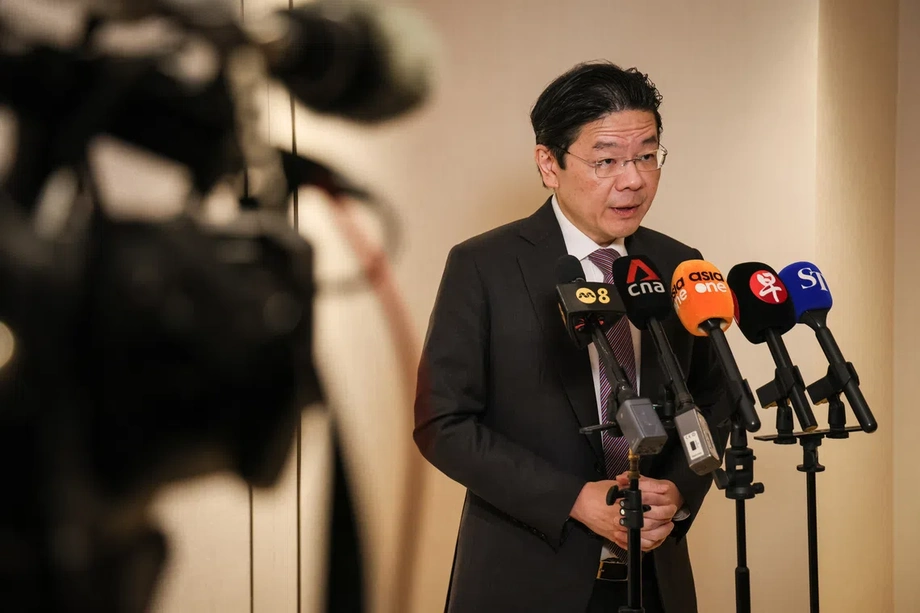
Prime Minister Lawrence Wong announced on November 21, 2026, that Singapore intends to remain an open testing ground for American, Chinese, and global technologies. Speaking to the media at the conclusion of a four-year working visit to China that included stops in Shenzhen and Beijing, he outlined a strategy to utilize the best innovations available regardless of their geographic origin. While acknowledging that some technological separation remains inevitable in sensitive, high-end fields like advanced microprocessors, Mr. Wong expressed hope that other sectors will stay accessible. To illustrate this openness, he pointed to the transportation sector, noting that Chinese autonomous vehicle firms Pony.ai and WeRide are currently conducting commercial self-driving trials in Singapore, while American autonomous vehicle company Waymo plans to launch commercial ride-hailing services in the country in 2028. This philosophy extends to trade data released by Enterprise Singapore, which showed a 79.8 percent surge in non-oil domestic exports for October 2026 driven by ship structures and pharmaceuticals, even as policymakers monitored tightening trade controls.
Contents
- Singapore Maintains Neutral Tech Stance
- Navigating Semiconductor and Transshipment Scrutiny
- Advancing Artificial Intelligence Governance and Collaboration
- Upgrading the China-Singapore Free Trade Agreement
- Deepening Government-to-Government and Regional Projects
- Expanding Cooperation in Transport and Green Industries
- Preparing for the 22nd Joint Council for Bilateral Cooperation
- Strengthening ASEAN Integration and Multipolar Diplomacy
- The Essentials
Navigating Semiconductor and Transshipment Scrutiny
Singapore authorities are studying the impact of recent United States export controls on advanced semiconductor chips, which serve as the physical building blocks for modern computing and artificial intelligence systems. The issue gained international attention through investigations involving Singapore-based cloud computing firm Megaspeed, which faced inquiries from the United States Department of Commerce and Department of Justice regarding the potential diversion of advanced Nvidia hardware. Addressing these developments during his trip to China, Mr. Wong acknowledged that while the vast majority of Chinese investments are genuine and benefit the local economy by employing domestic workers, the risk of actors abusing Singapore status as a trusted business hub is a real concern. Because many semiconductor shipments recorded as sales to Singapore are actually transshipped directly to other destinations without physically entering the country, local authorities lack visibility over their final use. During his briefing in Beijing, Prime Minister Lawrence Wong explained the jurisdictional limits faced by local enforcement:
We have no control, no visibility over how these chips are used in their destination countries. We can not enforce on their behalf, especially not in these other countries. But we can be helpful.
Mr. Wong confirmed that Singapore is cooperating by sharing information to help foreign partners conduct their own enforcement while ensuring local companies comply with the rule of law.
Advancing Artificial Intelligence Governance and Collaboration
Artificial intelligence cooperation formed a central pillar of discussions between Singapore and Chinese leaders. The Infocomm Media Development Authority (IMDA) and the China Academy of Information and Communications Technology completed an exercise mapping their respective artificial intelligence governance frameworks. According to an IMDA factsheet, this comparison shows how safeguards under the Singapore AI Verify Testing Framework correspond to Chinese industry standards, helping businesses operating in both markets avoid duplicating compliance efforts while deploying the technology safely. Furthermore, Singapore has mapped its testing framework against the United States National Institute of Standards and Technology AI Risk Management Framework.
Upgrading the China-Singapore Free Trade Agreement
During a 25-minute bilateral meeting at Kylin Villa in Shenzhen on November 20, 2026, Prime Minister Wong and Chinese President Xi Jinping officially launched negotiations to upgrade their bilateral free trade agreement to CSFTA 4.0. As detailed in earlier trade negotiations, the memorandum of understanding was signed by Singapore Deputy Prime Minister and Minister for Energy, Trade and Industry Gan Kim Yong and China Minister of Commerce Wang Wentao. The proposed upgrade covers the digital economy, cross-border data flows, government procurement rules, and artificial intelligence innovation. Bilateral merchandise trade reached 162.9 billion Singapore dollars in 2025, accounting for 11.7 percent of Singapore's global merchandise trade, while Singapore has remained China's largest source of foreign direct investment by annual flows since 2013.
Deepening Government-to-Government and Regional Projects
Singapore and China continue to build on existing flagship initiatives that have guided their bilateral relations for decades. These include the Suzhou Industrial Park focused on industrial growth, the Tianjin Eco-City advanced sustainable urban development, and the Chongqing Connectivity Initiative improving regional links. During his meetings with Beijing party secretary Yin Li on November 20, 2026, Mr. Wong discussed expanding the Tianjin Eco-City project to tap opportunities across the wider Beijing-Tianjin-Hebei region, including the Xiong'an New Area. Similarly, the Chongqing Connectivity Initiative has expanded through the International Land-Sea Trade Corridor, linking western China with South-east Asia.
Expanding Cooperation in Transport and Green Industries
New agreements signed during the visit aim to deepen practical cooperation between Singapore and China across multiple sectors. Singapore ministries announced memorandums of understanding covering transport, green industry development, and educational technology. The transport agreement supports the rollout of green and digital shipping corridors, intelligent transport systems, and artificial intelligence, overseen by a joint committee meeting every two years. Meanwhile, an agreement with China's National Development and Reform Commission establishes a framework for policy exchanges in clean energy, circular economy, and biodiversity conservation. On the education front, the National University of Singapore AI Centre for Educational Technologies and East China Normal University Shanghai Institute of AI for Education will lead collaborative testing of artificial intelligence teaching tools.
Preparing for the 22nd Joint Council for Bilateral Cooperation
Diplomatic momentum continued as Chinese Vice Premier Ding Xuexiang traveled to Singapore for the 22nd Joint Council for Bilateral Cooperation meeting held on November 22 to 23, 2026. Co-chaired by DPM Gan Kim Yong and Vice Premier Ding, the apex annual platform is expected to conclude more than 20 deliverables spanning trade digitalisation, financial integration, and research in healthcare and education. These developments reflect the steady evolution of bilateral ties since the annual mechanism was established in 2004.
Strengthening ASEAN Integration and Multipolar Diplomacy
Addressing geopolitical shifts, Prime Minister Lawrence Wong cautioned against viewing the world through the lens of a rigid bipolar divide or a Group of Three order following a trilateral summit among Chinese, American, and Russian leaders in Shenzhen. He emphasized that the international environment is too complex for a handful of nations to decide global outcomes. For Singapore, this reinforces the importance of strengthening the Association of Southeast Asian Nations (ASEAN) as an economic center in its own right. With a combined economy valued at 4.5 trillion dollars that is projected to reach 10 trillion dollars by the early 2040s, ASEAN is pursuing closer integration and exploring potential free trade agreements and summits with the European Union, Canada, India, and the Gulf Cooperation Council. Singapore will advance these cooperative efforts when it assumes the rotating chairmanship of ASEAN in 2027.
The Essentials
- Prime Minister Lawrence Wong concluded a four-day working visit to China on November 21, 2026, after attending the APEC Economic Leaders Meeting in Shenzhen and meeting President Xi Jinping and Premier Li Qiang.
- Singapore and China launched negotiations to upgrade their bilateral free trade agreement to CSFTA 4.0, focusing on the digital economy, cross-border data flows, and government procurement.
- The Infocomm Media Development Authority completed an exercise mapping its AI Verify Testing Framework against Chinese industry standards to help businesses streamline compliance.
- Singapore ministries signed new memorandums of understanding on November 21, 2026, covering green shipping, environmental protection industries, and artificial intelligence in education.
- The 22nd Joint Council for Bilateral Cooperation convened in Singapore on November 22 to 23, 2026, co-chaired by DPM Gan Kim Yong and Chinese Vice Premier Ding Xuexiang, delivering over 20 new cooperation agreements.