Navigating the Global Technology Divide
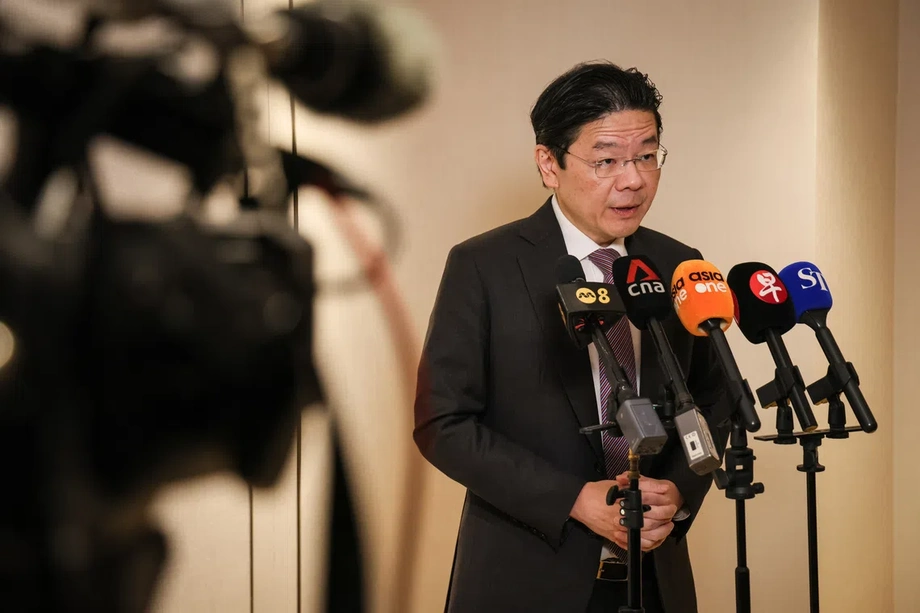
Prime Minister Lawrence Wong stated on November 21, 2026, that Singapore intends to remain a neutral ground where American, Chinese, and other foreign technologies can be tested and deployed. Speaking to the Singapore media at the conclusion of a four-day working visit to China, he outlined the country's strategy to use the best available technologies regardless of their origin. As intensifying technological rivalry between the United States and China threatens to split the global economy into competing ecosystems, Singapore is working to preserve open channels for trade and innovation. While acknowledging that some separation may be unavoidable in sensitive, high-end sectors such as advanced microprocessors, Mr. Wong expressed hope that other industries will remain accessible to global participants. He pointed to the autonomous vehicle sector as a practical example of this openness. Chinese self-driving firms Pony.ai and WeRide are currently conducting commercial trials in Singapore, while American autonomous vehicle company Waymo plans to launch commercial ride-hailing services in the country in 2028. This approach builds on Navigating Global Tensions and Technological Shifts, where leaders previously emphasized the importance of maintaining trade bridges across competing power blocs.
Contents
Balancing Genuine Investment and Transshipment Concerns
While Singapore welcomes legitimate foreign investments that contribute to its local economy and employ domestic workers, the government has raised alarms regarding the abuse of its trusted position to bypass export restrictions. The United States recently classified Singapore alongside Malaysia, Indonesia, Thailand, and Brazil as a higher-risk transshipment destination, requiring special export licenses to prevent the diversion of advanced semiconductors. These semiconductor components, which serve as the essential physical building blocks for modern computing and artificial intelligence systems, have become central to international trade disputes. The issue gained widespread attention through the ongoing investigation into Megaspeed International, a Singapore-incorporated cloud computing firm scrutinized by the United States Department of Commerce and Department of Justice. Singapore police and Customs have investigated Megaspeed since February 2025 regarding suspected export control breaches. Alice Huang, the former chief executive of Megaspeed, was barred from re-entering Singapore after misleading local authorities about her role in the company. Separate concerns regarding corporate structuring surfaced when Chinese-founded artificial intelligence start-up Manus moved its headquarters to Singapore in 2025 prior to a proposed acquisition by Meta valued at 2 billion dollars, a transaction that Beijing ultimately blocked in April 2026. Addressing the tracking of high-end hardware, Mr. Wong explained that while local deployments can be monitored easily, authorities lack visibility over items recorded as sales within Singapore but re-exported elsewhere without physically entering the country.
Addressing the complex enforcement landscape, Prime Minister Lawrence Wong explained the jurisdictional limits faced by local authorities during his briefing in Beijing:
We have no control, no visibility over how these chips are used in their destination countries. We can't enforce on their behalf, especially not in these other countries. But we can be helpful.
Cooperating on Artificial Intelligence Governance
Singapore is working to keep its artificial intelligence ecosystem open by helping businesses navigate divergent regulatory standards established by different superpowers. Artificial intelligence refers to computer systems designed to perform tasks that typically require human intelligence, such as visual perception, speech recognition, and decision-making. To reduce bureaucratic hurdles, the Infocomm Media Development Authority and the China Academy of Information and Communications Technology have completed an exercise mapping their respective artificial intelligence governance frameworks. This harmonization effort helps businesses operating in both markets avoid duplicating compliance work while deploying software safely. Furthermore, Singapore aligned its AI Verify Testing Framework with the United States National Institute of Standards and Technology AI Risk Management Framework. These initiatives parallel broader economic strategies explored in Xi and Wong Launch Singapore-China FTA Upgrade Talks in Shenzhen, where both nations sought deeper regulatory alignment.
Expanding Bilateral Agreements and Trade Links
Prime Minister Wong met Chinese Premier Li Qiang at the Diaoyutai State Guesthouse in Beijing on November 21, 2026, following earlier discussions with Chinese President Xi Jinping in Shenzhen. During these high-level meetings, both governments welcomed the formal launch of negotiations to upgrade the China-Singapore Free Trade Agreement. The proposed updates focus on government procurement, digital economy expansion, and cross-border data flows. Bilateral cooperation also extends to established government-to-government projects, including the Suzhou Industrial Park, the Tianjin Eco-City, and the Chongqing Connectivity Initiative. Meeting with Beijing Communist Party secretary Yin Li, Mr. Wong discussed extending opportunities from Tianjin Eco-City into the wider Beijing-Tianjin-Hebei region, including the Xiong'an New Area. Additionally, the International Land-Sea Trade Corridor connecting western China with Southeast Asia could soon link with infrastructure projects such as the Pinglu Canal in the Guangxi region. Newly released government factsheets confirmed additional pacts covering green shipping, clean energy, recycling, and environmental protection.
Navigating the Multipolar World Order
Addressing the broader geopolitical landscape, Mr. Wong cautioned against viewing international diplomacy through the lens of a narrow club of major powers. His comments followed a trilateral meeting in Shenzhen between the leaders of the United States, China, and Russia. He noted that while dialogue among major capitals is encouraging, the contemporary global order is too complex for a handful of nations to dictate international outcomes. This multipolar reality reinforces the strategic necessity of strengthening the Association of Southeast Asian Nations as an independent economic center. Singapore prepares to assume the rotating ASEAN chairmanship, with active discussions underway regarding potential summits and free trade agreements with the European Union and Canada, alongside deeper commercial ties with India and the Gulf Cooperation Council. As detailed in Singapore's October Non-Oil Exports Surge 79.8% as Shipments to US and China Soar, robust trade performance underscores the country's capacity to maintain economic momentum despite external volatility. Prime Minister Wong emphasized that as long as the world's primary superpowers avoid direct conflict, sufficient diplomatic and commercial space will remain for nations everywhere to conduct business globally.
At a Glance
- Prime Minister Lawrence Wong concluded a four-day working visit to China on November 21, 2026, advocating for technological openness.
- Singapore police and Customs have investigated cloud computing firm Megaspeed since February 2025 over semiconductor export controls.
- The Infocomm Media Development Authority completed an artificial intelligence governance mapping exercise with its Chinese counterparts.
- Negotiations were launched to upgrade the bilateral free trade agreement to cover government procurement and the digital economy.
- Singapore is scheduled to take over the rotating chairmanship of the Association of Southeast Asian Nations, opening avenues for broader regional trade pacts.