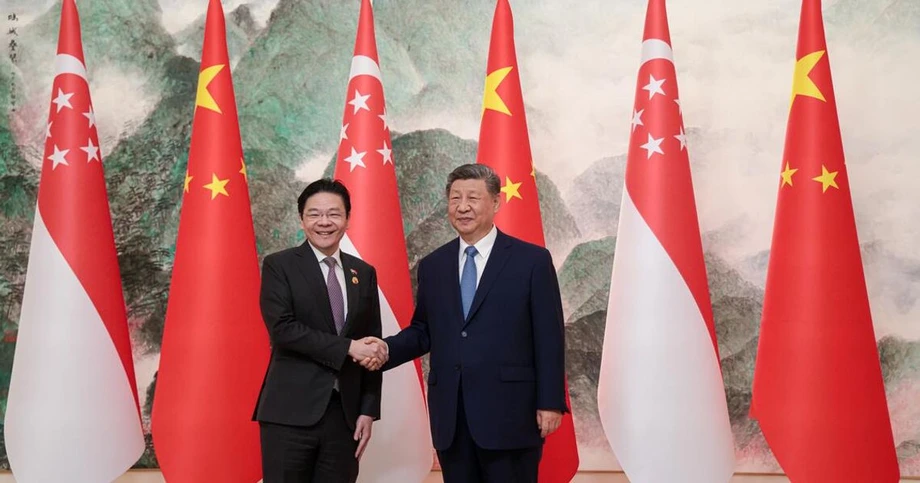
A trade negotiation begins as regional leaders seek closer ties
Singapore and China have launched negotiations to upgrade their free trade agreement, opening talks on digital trade and government procurement as Prime Minister Lawrence Wong met Chinese President Xi Jinping in Shenzhen on November 20, 2026. The meeting at Kylin Villa, a state guesthouse, also covered artificial intelligence, Taiwan Strait tensions and cooperation across Asia.
Contents
- A trade negotiation begins as regional leaders seek closer ties
- What will the FTA upgrade cover?
- Trade ties give the negotiations a large base
- AI cooperation is a second major focus
- What did the leaders say about Taiwan?
- Singapore plans a larger ASEAN role in 2027
- Singapore will join a China-led global initiative group
- Key dates and next steps
- Key Points
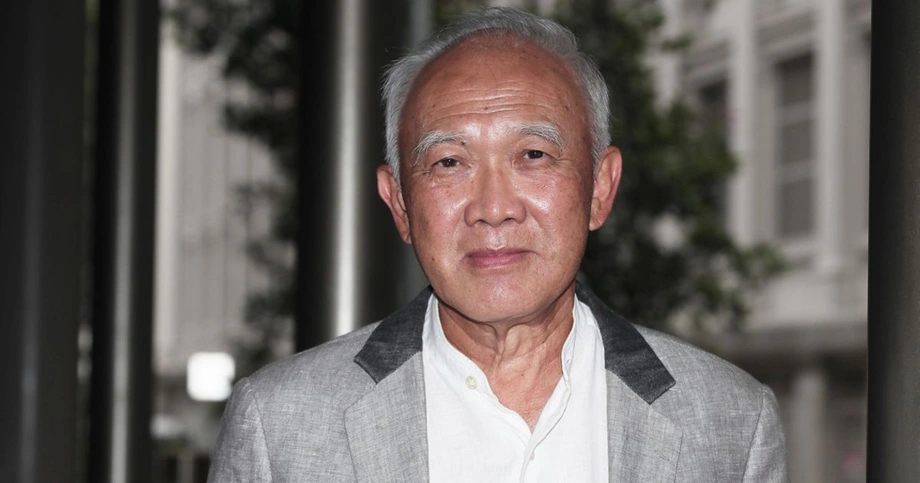
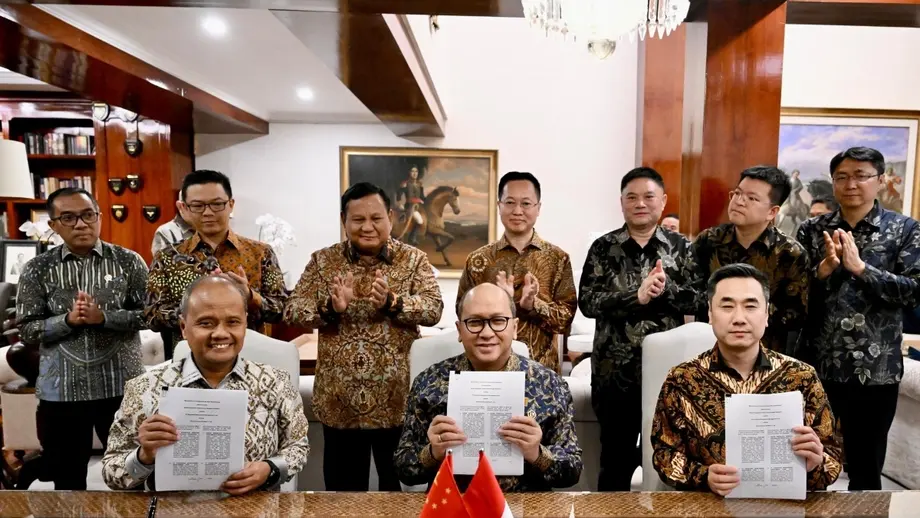
The agreement to start negotiations was formalised in a memorandum of understanding signed by Singapore Deputy Prime Minister Gan Kim Yong and Chinese Commerce Minister Wang Wentao. The proposed fourth upgrade, known as CSFTA 4.0, is intended to create new market opportunities and make it easier for Singapore businesses to operate in China. No negotiating timetable or final terms have been announced.
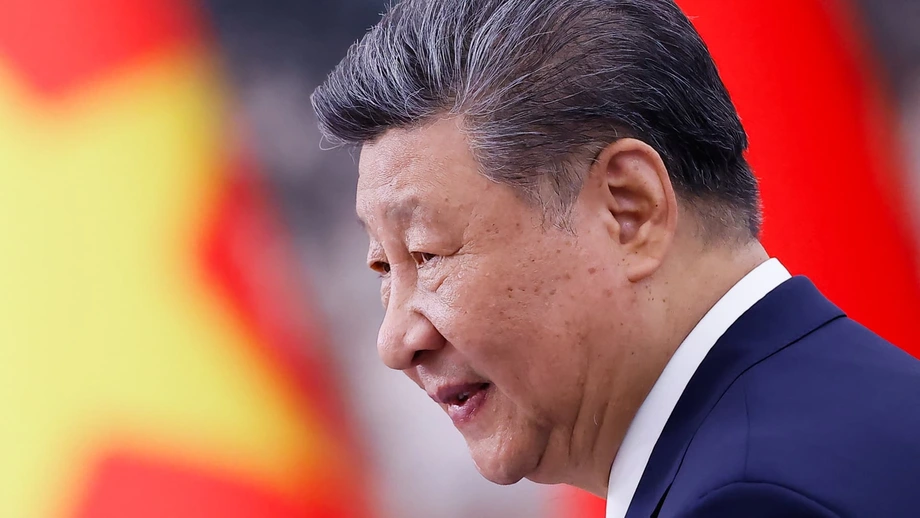
Wong and Xi met for about 25 minutes. It was their third bilateral meeting since Wong became prime minister in May 2024, following meetings in Peru in November 2024 and Beijing in June 2025. Their discussion came after China hosted the Asia-Pacific Economic Cooperation Economic Leaders' Meeting in Shenzhen, where leaders of 21 economies considered regional trade, innovation and growth.
In its Singapore MFA statement, the ministry said the leaders agreed to build on the countries' All-Round High-Quality Future-Oriented Partnership and widen cooperation to meet changing priorities. Xi called for stronger strategic communication as technology and industry change rapidly, while Wong described a relationship that has continued to deepen as the international environment has grown more complex.
For Singapore, the talks connect commercial goals with diplomacy. The two governments want businesses to gain more room to trade and cooperate, while also seeking alignment on regional issues at a time of sharper international tensions.
What will the FTA upgrade cover?
The China-Singapore Free Trade Agreement took effect in January 2009. It was the first comprehensive bilateral free trade agreement China concluded with an Asian country. The agreement was upgraded in 2011 and 2019, and a later upgrade protocol took effect in 2024. The new negotiations are a further step in that process.
The next version is expected to examine digital economy cooperation and government procurement. Government procurement means the way public agencies buy goods and services. Rules in this area can affect whether companies from the other country can compete for public contracts and how they qualify to do so.
Digital trade can involve services and information moving across borders online. Wong has said the upgrade could support cross-border data flows, while the governments say it should improve the business environment and open opportunities for companies. The details will depend on the final agreement, which has yet to be negotiated.
The agreement is one of several long-running projects that connect the countries. Their government-to-government initiatives include Suzhou Industrial Park, Tianjin Eco-City and the Chongqing Connectivity Initiative. The two leaders also pointed to cooperation under China's Belt and Road Initiative, alongside potential projects in digital services, green development and AI.
Trade ties give the negotiations a large base
Merchandise trade between Singapore and China reached S$162.9 billion in 2025, equal to 11.7 per cent of Singapore's total merchandise trade. China was Singapore's largest merchandise trading partner from 2013 through 2024. Singapore, in turn, has been China's largest source of foreign investment by annual flows since 2013.
Those figures help explain why both governments are seeking to update the rules between them. A free trade agreement sets terms for economic exchange, but an upgrade can address newer areas of business that were less prominent when earlier versions were negotiated. Digital services, data movement and access to public contracts are among the subjects now on the table.
The leaders described their cooperation as having brought tangible benefits to people in both countries. For businesses, the practical value of the talks will depend on the rules eventually agreed, including how they affect market access and the costs of doing business. No specific new market opening or contract access has been announced yet.
AI cooperation is a second major focus
Wong and Xi also discussed cooperation in artificial intelligence and other emerging technologies. Both countries are investing in AI, which refers to computer systems designed to perform tasks such as recognising patterns, generating text or helping make decisions. The leaders' stated areas of interest include helping businesses innovate and raise productivity, and preparing workers for jobs that may change as the technology spreads.
The FTA talks could provide a framework for some parts of digital cooperation, but the governments also discussed AI beyond the trade agreement. Xi called for signature projects in AI, digital development and green growth. Their stated aim is to make cooperation more innovative and support economic change in both countries.
Wong said the two countries could learn from each other on using AI in business and preparing workers. That places workforce readiness alongside commercial development: companies may adopt new tools, while workers need skills suited to changing tasks and jobs. The meeting did not announce a specific AI programme, funding amount or launch date.
What did the leaders say about Taiwan?
The leaders discussed developments across the Taiwan Strait. Wong reiterated Singapore's longstanding One China policy, opposed Taiwan independence and opposed unilateral moves to change the status quo. He also said Singapore supports the peaceful development of cross-strait relations.
The position combines Singapore's stated policy with a call for restraint and peaceful relations. It was raised during a meeting focused largely on bilateral cooperation, showing how regional security questions remain part of Singapore-China diplomacy.
Wong also congratulated Xi on a trilateral summit involving China, the United States and Russia. Wong said dialogue among major powers could help understanding and stability. The summit took place amid a wider APEC gathering that put trade and cooperation alongside strategic concerns.
Earlier in the week, Chinese and Japanese leaders had a brief greeting at the Shenzhen APEC summit amid continuing strain over Taiwan. The brief Xi-Takaichi encounter illustrated how Taiwan-related differences can shape diplomatic contact even at a regional economic meeting.
Singapore plans a larger ASEAN role in 2027
Wong updated Xi on Singapore's priorities for its 2027 chairmanship of the Association of Southeast Asian Nations, or ASEAN. The priorities include regional integration and stronger supply chain resilience, meaning the ability to keep goods and essential inputs moving when disruptions occur.
Wong also looked to closer ASEAN-China cooperation on shared challenges, including energy security through the ASEAN Power Grid. The project aims to connect electricity networks across Southeast Asia, allowing countries to trade power and support one another's supply. Its development involves coordination among participating countries, as well as the infrastructure needed to connect their grids.
Xi called for closer coordination in APEC, ASEAN-China mechanisms and other multilateral forums. APEC brings together 21 economies to discuss economic cooperation. Its leaders' decisions are generally made by consensus, so cooperation depends on governments agreeing on common directions rather than following a binding regional law.
China's Shenzhen summit also featured a broader argument for openness and cooperation. Wong had warned during the APEC meeting against the region splitting into competing economic blocs. The concern is that barriers between groups of economies could make trade and cooperation harder across the region.
Singapore will join a China-led global initiative group
Wong said Singapore would join the Group of Friends for China's Global Governance Initiative, while supporting China's global initiatives where Singapore's interests and principles align. Singapore is already a member of the Group of Friends for the Global Development Initiative.
The Global Governance Initiative, proposed by Xi in 2025, concerns how international rules and institutions are shaped. Its stated aims include giving developing countries a greater voice and strengthening the role of the United Nations. Singapore's decision to join the group adds a new channel for discussion, alongside its existing participation in the development initiative.
Xi also urged the countries to deepen political trust, share experience on governance and expand exchanges between political parties and between their people. Such exchanges can include official visits and cultural or educational contact. The leaders presented them as ways to build public support for friendly relations, alongside the more measurable work of trade and investment.
Key dates and next steps
The meeting sits within a sequence of trade and diplomatic milestones. The next major bilateral review was expected later in November, when the countries planned to hold the 22nd Joint Council for Bilateral Cooperation. That council is their top-level mechanism for reviewing cooperation and setting its direction.
January 2009: The China-Singapore Free Trade Agreement took effect.
2011 and 2019: The agreement was upgraded; a later upgrade protocol took effect in 2024.
November 18 and 19, 2026: China hosted the APEC Economic Leaders' Meeting in Shenzhen.
November 20, 2026: Wong and Xi met in Shenzhen, and Gan Kim Yong and Wang Wentao signed the memorandum launching CSFTA 4.0 negotiations.
Later in November: The 22nd Joint Council for Bilateral Cooperation was expected to meet in Singapore.
2027: Singapore is due to chair ASEAN, with regional integration, supply chain resilience and the ASEAN Power Grid among its priorities.
Wong left Shenzhen for Beijing on November 20. He was expected to meet Chinese Premier Li Qiang the following day. The immediate task for trade officials is to turn the memorandum into detailed negotiations. The subjects have been identified, but the schedule, final rules and resulting business opportunities remain undecided.
Key Points
Singapore and China have opened negotiations for a fourth upgrade of their free trade agreement.
The talks will cover areas including the digital economy and government procurement, with the aim of improving market opportunities and business conditions.
Bilateral merchandise trade reached S$162.9 billion in 2025, or 11.7 per cent of Singapore's total merchandise trade.
Wong reiterated Singapore's One China policy, opposed Taiwan independence and unilateral changes to the status quo, and backed peaceful cross-strait relations.
Singapore will join the Group of Friends for China's Global Governance Initiative and chair ASEAN in 2027.