A $50 billion urban plan leads four agreements in Shenzhen
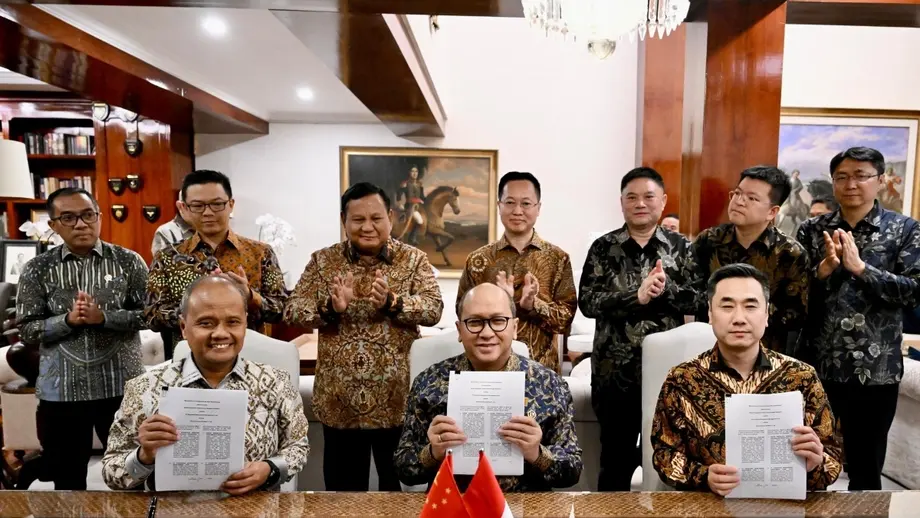
Indonesia and China announced investment and cooperation commitments worth $71.8 billion in Shenzhen, Guangdong, on November 18, 2026, with almost 70% of the package directed toward developing 10 smart cities. President Prabowo Subianto witnessed the exchange of agreements during his visit for the Asia-Pacific Economic Cooperation summit.
Contents
- A $50 billion urban plan leads four agreements in Shenzhen
- What the $71.8 billion covers
- What would the smart cities contain?
- Hisense links a major factory plan with Indonesian research
- An earlier Hisense meeting laid the groundwork
- Infrastructure financing is a separate $10 billion partnership
- Why Pertamina is pursuing coal conversion technology
- Jobs and technology sit alongside a widening trade gap
- Key Points
The presidential palace put the package at more than Rp1,300 trillion. Its four components are a $50 billion smart city partnership, a $10 billion commitment involving appliance manufacturer Hisense, $10 billion in infrastructure financing cooperation, and a $1.8 billion project to develop technology that converts coal into ethanol.
Danantara Indonesia, the country's sovereign investment fund, is central to the first three partnerships. The fourth brings together the Ministry of Higher Education, Science, and Technology, state energy company Pertamina, and Beijing Petrochemical Engineering Co., Ltd.
Investment and Downstreaming Minister Rosan Roeslani, who also heads Danantara, said construction of the smart city project was planned for early next year, meaning early 2027. The package combines physical construction with manufacturing, research, training and financing, giving the announced cooperation a reach beyond a single industry.
The figures describe investment commitments and cooperation agreements, including memorandums of understanding. A memorandum of understanding, often called an MoU, sets out what partners intend to pursue. Turning those intentions into operating factories, urban services and industrial production requires further work on financing, design and construction.
What the $71.8 billion covers
The four announced amounts add up to $71.8 billion. At an exchange rate of Rp18,250 per US dollar, that is approximately Rp1,310 trillion. The smart city programme alone accounts for about 69.6% of the package, making urban development its largest component by a wide margin.
- $50 billion for 10 initial smart city locations through Danantara affiliated PT Kota Masa Depan Indonesia and a consortium led by Shaanxi Construction Engineering Group Corporation Limited.
- $10 billion for Hisense cooperation involving appliance manufacturing, joint research laboratories and workforce development.
- $10 billion for infrastructure financing through Danantara and a consortium led by State Development and Investment Corporation, known as SDIC.
- $1.8 billion for coal to ethanol technology cooperation involving Pertamina, the higher education ministry and Beijing Petrochemical Engineering.
The Hisense and infrastructure partnerships each represent about 13.9% of the total, while the coal conversion project represents about 2.5%. Those proportions show how strongly the package depends on the urban programme, even though its smaller components cover distinct industrial and technology goals.
What would the smart cities contain?
PT Kota Masa Depan Indonesia and the Shaanxi led consortium plan to develop 10 initial locations. Earlier in November, Danantara had described a broader ambition to build a dozen smart cities across Indonesia. The Shenzhen agreement therefore covers 10 initial locations within a wider urban development agenda.
Danantara's earlier description combined homes with universities, hospitals, shopping centres and urban infrastructure. Shaanxi Construction Engineering Group president Yang Haisheng also described plans for transport, clean water management, energy, public spaces and digital infrastructure.
A smart city, in this proposal, means more than installing internet connections or digital screens. The aim is to plan housing and essential services together, with digital systems supporting the way the urban area operates. For a family living there, the practical issues would include access to water, education, healthcare and transport.
Rosan Roeslani, speaking as investment minister and Danantara chief executive, described the project's intended significance and timetable:
It will become one of the most historic projects to be developed early next year.
The public announcement left several practical details open: the locations of the 10 sites, the funding schedule and financing terms, construction completion dates, factory capacity, job numbers, and the production scale of the ethanol project. Early 2027 is the stated target for starting smart city construction.
Hisense links a major factory plan with Indonesian research
Hisense's $10 billion commitment brings together the company, Danantara and the Ministry of Higher Education, Science, and Technology. It covers household appliance manufacturing, joint research and development laboratories, and the development of technical skills.
Hisense Group chairman Jia Shaoqian said the planned Indonesian appliance factory would be the company's largest outside China. The facility is intended to supply both Indonesian customers and export markets, giving the manufacturing proposal a role in domestic production as well as overseas sales.
Institut Teknologi Bandung, also known as the Bandung Institute of Technology, is expected to participate in the collaboration. Its involvement would connect manufacturing with applied research and workforce development. Applied research means using scientific and engineering knowledge to solve practical problems, such as improving a product or its production process.
The laboratory and training elements are central to the government's stated technology transfer goal. In practical terms, technology transfer involves sharing technical knowledge and skills so Indonesian researchers and workers can take part in developing and operating industrial processes.
An earlier Hisense meeting laid the groundwork
Prabowo had previously received a Hisense delegation at his Kertanegara residence in Jakarta. At that meeting, Danantara and Hisense signed an MoU that State Secretary Prasetyo Hadi described as an initial step toward exploring technology cooperation.
The signatories were Rosan Roeslani, Danantara chief technology officer Sigit Puji Santosa and Hisense chairman Jia Shaoqian. Prasetyo said Hisense was interested in supporting investment and Indonesia's domestic industrial ecosystem. The Shenzhen commitment gives that earlier engagement a stated value and a more detailed scope, including laboratories, training and appliance production.
The sequence of announced developments is:
- Before the Shenzhen agreements: Danantara and Hisense signed an initial technology cooperation MoU at Prabowo's Jakarta residence.
- Earlier in November 2026: Danantara outlined plans for a dozen integrated smart cities across Indonesia.
- November 18, 2026: Prabowo witnessed the four partnerships worth $71.8 billion in Shenzhen.
- Early 2027: Rosan said smart city construction was expected to begin.
Infrastructure financing is a separate $10 billion partnership
Danantara's agreement with the consortium led by SDIC concerns infrastructure financing. Its announced value is $10 billion, equal to the Hisense commitment and one fifth of the smart city package.
Infrastructure financing is the money needed to build assets and services that can take years to complete and operate. The Shenzhen announcement describes a financing partnership, while the Shaanxi agreement identifies a specific urban development programme. Each has its own stated value and partners.
Danantara's presence in both agreements places the fund at the centre of Indonesia's effort to connect investment capital with development projects. It also participates in the Hisense partnership, linking the fund's role in urban development and financing with manufacturing and research.
Why Pertamina is pursuing coal conversion technology
Pertamina's $1.8 billion agreement focuses on developing technology to convert coal into ethanol. The Ministry of Higher Education, Science, and Technology and Beijing Petrochemical Engineering are the other partners named in the cooperation.
Ethanol is an alcohol used in industrial applications and as a fuel component. Producing it from coal involves chemical processing. The project fits Indonesia's stated downstreaming agenda, which seeks to process raw materials into products with greater value rather than relying only on sales of the raw resource.
The cooperation is also intended to develop technology and transfer knowledge to Indonesia. It brings an energy company and an engineering partner together with the ministry responsible for higher education and science, connecting an industrial proposal with research and technical capabilities.
For Indonesia, the stated objective is to broaden the use of domestic energy resources while building the ability to process them. The announced value makes this the smallest of the four partnerships, although it addresses a different industrial task from building cities or manufacturing appliances.
Jobs and technology sit alongside a widening trade gap
Rosan said the agreements reflected confidence in Indonesia's investment prospects and would support employment and technical capabilities. In his role as investment minister and Danantara chief executive, he described the intended benefits:
It will also positively impact our job creation and encourage transfer of technology.
The package contains several possible routes toward those goals: construction at the urban sites, manufacturing at the proposed Hisense facility, research in joint laboratories, and technical work linked to coal processing. The training and university elements give the technology ambitions a concrete place within the announced cooperation.
Indonesia's economic relationship with China also provides context for the agreements. Government figures cited for January through September 2026 put combined investment from mainland China and Hong Kong at $17.8 billion. Over the same period, Indonesia's trade deficit with China reached $21.2 billion, an increase of almost 49% from a year earlier. A trade deficit means the value of imports exceeds the value of exports.
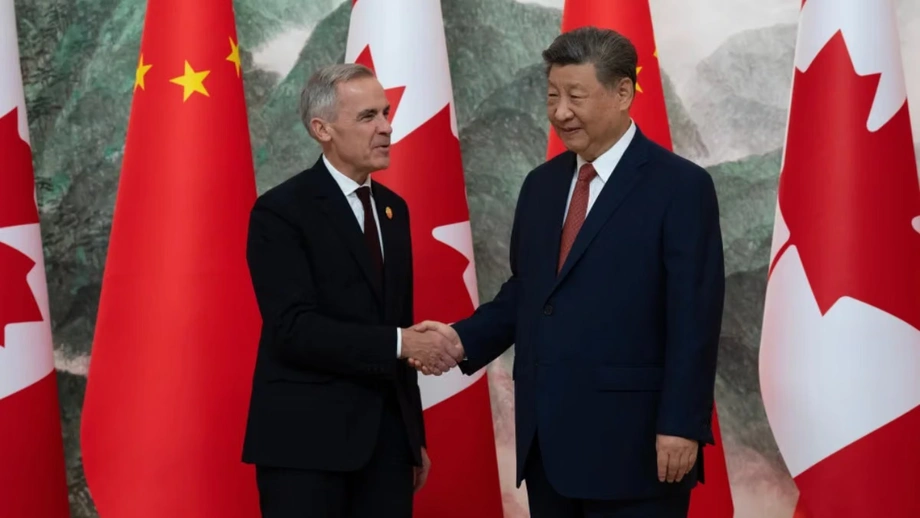
The Hisense plan to serve export markets is relevant to that trade picture because it includes producing goods in Indonesia for sale abroad. Prabowo was also expected to meet Chinese President Xi Jinping during the Shenzhen visit, with discussions on a bilateral free trade agreement anticipated.
Senior Indonesian officials accompanying Prabowo included Airlangga Hartarto, Bahlil Lahadalia, Arrmanatha Nasir and Brian Yuliarto, alongside Cabinet Secretary Teddy Indra Wijaya and Ambassador to China Djauhari Oratmangun. The next stated project milestone is the planned start of smart city construction in early 2027.
Key Points
- Indonesia and China announced four investment and cooperation commitments worth $71.8 billion in Shenzhen on November 18, 2026.
- A $50 billion programme for 10 initial smart city locations accounts for almost 70% of the package.
- Hisense's $10 billion commitment includes appliance manufacturing, laboratories, training and cooperation with Institut Teknologi Bandung.
- Danantara and an SDIC led consortium agreed on $10 billion in infrastructure financing cooperation.
- Pertamina, the higher education ministry and Beijing Petrochemical Engineering are partners in a $1.8 billion coal to ethanol technology agreement.
- Smart city construction is targeted to begin in early 2027.