Why having enough income may still leave buyers without a mortgage
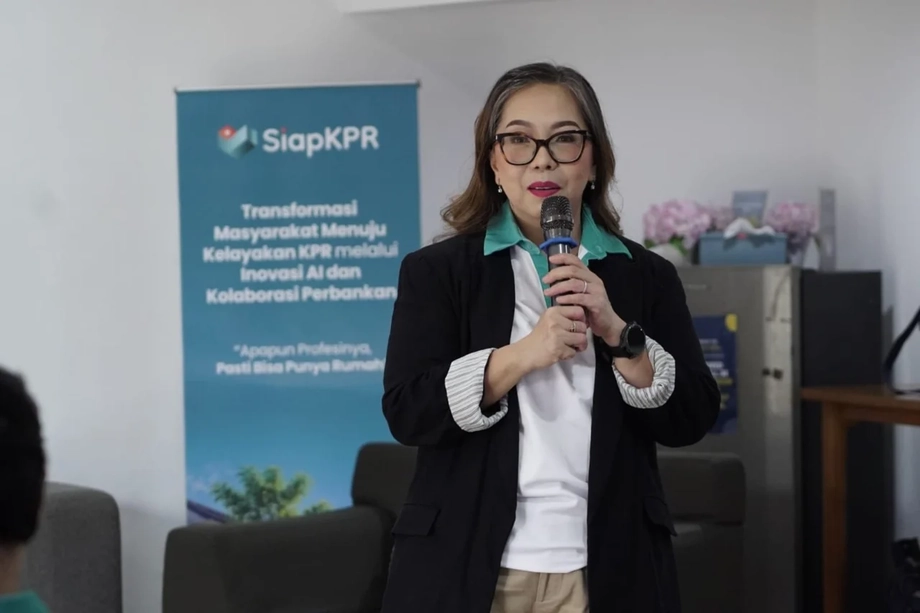
Unpaid digital loans and missing income records are stopping prospective Indonesian homebuyers before many mortgage applications reach a bank. Marine Novita, CEO of PT Melayani Sepenuh Hati, the company behind SiapKPR, described rejection levels of 50% to 70%; at the platform's launch in Kemang, South Jakarta, on November 17, 2026, she cited a wider range of 50% to 80%, including buyers stopped during initial screening.
Contents
- Why having enough income may still leave buyers without a mortgage
- Housing access is improving, but millions remain outside
- What banks see in a borrower's credit record
- Paylater changes both credit history and monthly affordability
- Informal workers face a paperwork problem on a huge scale
- Young buyers must save for more than the deposit
- What SiapKPR plans to do before applications reach banks
- Renting toward ownership offers another route
- Checking the record and avoiding false shortcuts
- The dates shaping mortgage preparation
- Key Points
The obstacles range from overdue paylater bills of Rp150,000 to Rp300,000 to earnings that arrive in cash and leave little documentary evidence. Freelancers, motorcycle taxi drivers, small business owners and some contract employees can earn enough to make repayments while struggling to present the records lenders require.
Indonesia's housing figures show the scale of the challenge. Statistics Indonesia, known as BPS, recorded 9.29 million households without their own homes in March 2026. Another housing indicator covered about 18.01 million households owning homes that fell short of habitability standards.
Marine's rejection estimates describe problems encountered among prospective property buyers, including screening by developers. A national rejection rate calculated from all banks' formal mortgage applications was not provided.
SiapKPR is offering financial preparation before buyers apply for a Kredit Pemilikan Rumah, or KPR, the Indonesian term for a home mortgage. Its approach brings together three tasks that households often tackle separately: documenting income, addressing existing debts and saving the cash needed to complete a purchase. Banks retain the final lending decision.
Housing access is improving, but millions remain outside
The Ministry of Housing and Settlement Areas' housing statistics release says BPS published its first Housing Statistics publication on August 13, 2026. It combines the National Socioeconomic Survey, or Susenas, with administrative information from ministries, local governments and other housing bodies.
The ownership figures refer to March 2026, rather than August, when the publication appeared. The share of households without their own homes fell from 13% in March 2025 to 12.39% a year later. The total declined by about 350,000 households to 9.29 million.
Housing quality improved too. The share of households owning inadequate homes fell from 25.33%, or 18.77 million households, in 2025 to 24.03%, or about 18.01 million, in 2026. That is a reduction of approximately 760,000 households. Thirty seven of Indonesia's 38 provinces recorded improvement in this measure.
BPS assesses housing through building durability, sufficient floor space per person, suitable sanitation and electricity access as a supporting component. The ministry identified sanitation as an area still needing attention. A separate measure, access to adequate housing, rose from 68.40% in 2025 to 70.30% in 2026.
These figures describe two concrete needs: helping households obtain homes of their own and improving homes people already own. Mortgage preparation addresses the first problem, while renovation assistance and infrastructure also matter for the second.
What banks see in a borrower's credit record
Bank Tabungan Negara explains in its SLIK guidance article that the Financial Services Authority, or OJK, took over the former BI Checking system in 2018. The replacement, the Financial Information Services System, is widely known as SLIK.
SLIK gives lenders information about borrowing, outstanding credit, payment performance and arrears. Banks use that history alongside income, existing obligations and their own lending policies. OJK describes the information as neutral and leaves credit decisions to individual financial institutions.
Marine said many buyers encounter difficulties because their records show collectibility category 5, commonly called Kol 5, meaning bad debt. She linked some cases to small unpaid paylater bills, online borrowing and allowing relatives to obtain credit using another person's identity card.
A borrower whose identity appears on a loan can face consequences when somebody else uses the money and fails to repay. Marine said banks may reject an application even when the person's current earnings and cash flow have improved.
OJK's 2026 SLIK policy adds a detail to the discussion of small debts: from July 1, displayed credit information covers amounts above Rp1 million, with credit limits, outstanding balances and accumulated records considered under the applicable policy. Buyers therefore need to examine the full facility and record, alongside the amount of an individual overdue bill.
Paylater changes both credit history and monthly affordability
OJK's Regulation of the Board of Commissioners Members Number 2 of 2026, established on May 4, requires financing companies providing buy now, pay later services to warn customers about SLIK recording, debt accumulation and possible difficulty obtaining other finance when repayments become problematic.
Existing instalments also reduce the money available for a mortgage. Banks examine the debt burden ratio, or DBR, which compares total monthly debt payments with monthly net income. Marine said applicants may need to reduce the amount they want to borrow or settle existing debts before their application fits a bank's assessment.
A person earning Rp6 million a month and paying Rp1.5 million toward paylater already commits 25% of that income to those repayments. Adding a mortgage instalment of Rp2 million would raise monthly debt payments to Rp3.5 million, or 58.3% of income. Only Rp2.5 million would remain for food, transport, utilities and other needs.
The BNPL regulation sets repayment assessment limits for financing companies at 40% of income in 2027 and 2028, falling to 30% from 2029. Bank mortgages follow the relevant banking requirements and each lender's credit assessment. For households, the practical calculation is how much remains after every instalment has been paid.
Preparation guidance commonly suggests keeping total instalments around 30% to 40% of monthly income. The amount a particular bank will approve depends on the applicant, the loan and the lender's rules.
Informal workers face a paperwork problem on a huge scale
Informal employment accounts for roughly three fifths of Indonesia's workers. Junaidi Abdillah, chairman of the Indonesian Housing and Settlement Developers Association, or Apersi, cited 83.42 million informal workers in 2024. Figures cited from BPS's February 2025 labour survey put the number at around 86 million.
Marine described the central difficulty as a missing financial trail. A driver may receive payments daily, a trader may rely on cash, and a freelancer may earn different amounts each month. Without orderly records of money coming in and going out, a lender has less evidence for assessing a repayment commitment lasting many years.
Documents commonly requested from employees include their latest three months of salary slips and an employment letter. Entrepreneurs may be asked for financial statements covering two years and a business permit. Identity, tax and property documents also form part of the application.
Salaried employment can bring its own difficulties. Marine said banks examine the employer and industry, how long an applicant has worked and the terms of employment. Contract workers may face closer checks even when they receive regular monthly pay.
For applicants, keeping business and personal cash flows understandable, retaining transaction records and preparing the documents requested by the intended lender are concrete steps toward making income easier to assess.
Young buyers must save for more than the deposit
Figures cited at SiapKPR's launch put the share of Generation Z Indonesians wanting their own home at 45%. Marine also pointed to routine spending on coffee, streaming subscriptions and food delivery that can reach Rp1.5 million to Rp2 million a month.
At those amounts, a full year of spending totals Rp18 million to Rp24 million. The calculation helps explain why repeated small purchases can slow deposit saving, especially for someone whose income varies. Buyers also face property prices growing faster than earnings, according to the accounts surrounding the launch.
The deposit is only one cash requirement. Mortgage preparation guidance describes signing and associated costs that can reach 5% to 10% of the approved loan, depending on the financing and charges involved. These can include administration, provision fees, insurance and notarial work.
A household must therefore budget for the purchase itself and the costs of arranging it. The same guidance recommends a reserve equal to six to 12 months of instalments to help manage interruptions to income.
OJK chair Friderica Widyasari Dewi addressed financial responsibility at SMA 33 Tangerang on November 16. She warned students about spending driven by social media and urged care with personal information. OJK figures put financial inclusion among school and university students at 92.76%, compared with financial literacy of 62.72%, a gap of 30.04 percentage points between access and understanding.
What SiapKPR plans to do before applications reach banks
SiapKPR aims to assist 25 to 50 clients a month in 2027, concentrating on homes priced below Rp1 billion. The company says it uses artificial intelligence to assess financial readiness, identify credit obstacles and help prepare application documents.
Participants undergo screening and periodic evaluation with developer and banking partners. Support includes payment reminders, checks and corrections to financial documents, credit profile assessment and help choosing a home. The stated service extends from consultation to the mortgage application, signing and handover.
Marine described preparation periods of three to six months for subsidised homes and six to 12 months for commercial homes below Rp1 billion. Those periods give applicants time to organise records, address debts and demonstrate regular saving.
One proposed arrangement lets a buyer pay a deposit equal to 5% of the home's price to the developer over 12 months. For an illustrative home costing Rp500 million, that would mean a Rp25 million deposit, or roughly Rp2.08 million a month. The payment record would become part of the buyer's preparation for a mortgage application.
SiapKPR says six developers support its platform. Named developers include Pesona Kahuripan, MASGroup, Delta Group and Kemang Eminence. Its stated banking network includes BTN or BSN, Bank Mandiri and Bank Nobu, with plans to expand partnerships.
The company earns commissions from developers when participants proceed with purchases and from banks when referred borrowers meet mortgage financing criteria. Its financial preparation service is therefore connected to completed property sales and lending referrals. Approval remains subject to the bank's assessment.
Renting toward ownership offers another route
Apersi has proposed rent to own arrangements for households with limited deposits or irregular earnings. Under the model described by Junaidi, a household rents first, potentially for two years, while part of its rent is accumulated toward a deposit for a subsidised mortgage.
The arrangement allows a family to occupy the home during the saving period. Its structure differs from paying a developer a deposit in instalments: rent provides current accommodation, and an agreed portion goes toward a later purchase.
Public programmes are also expanding access. The housing ministry recorded 91,531 homes financed through FLPP, Indonesia's subsidised housing liquidity facility, in the first half of 2026. Housing Programme Credit reached 95,878 borrowers, with financing of approximately Rp20.58 trillion.
Renovation and local government support address other costs. The ministry recorded 88,635 homes under the home improvement programme, 4,014 housing units supported by provincial budgets and building approval fee exemptions covering 101,201 units. The target for the BSPS housing improvement assistance programme rose from about 45,000 to 400,000 units.
Checking the record and avoiding false shortcuts
BTN says individuals can request their credit information online through OJK's iDebKu service or visit an OJK office with identification. Its guidance says online results are emailed no later than one working day after registration and verification. Applicants who find inaccurate information can contact the financial institution that reported it.
OJK's 2026 policy requires repayment status updates within three working days after a loan is settled. Earlier borrowing and payment history remain part of the information lenders assess, so applicants need to check both settlement status and the wider record.
Agusman, OJK's executive responsible for supervising financing institutions and other financial services businesses, warned in a written statement on November 16 that using intermediaries promising to help borrowers evade online loan repayments leaves their obligations and default records in place.
OJK said borrowers aged 19 to 34 accounted for 50.69% of online lending funding in default under the TWP90 measure, which tracks repayment problems exceeding 90 days. The regulator plans stronger supervision and better lending analysis, monitoring and education.
Fraud creates another risk for people seeking financial help. From January through September 2026, OJK's task force stopped 1,489 illegal financial entities. The Indonesia Anti-Scam Centre received more than 741,000 reports, blocked around 748,000 accounts involving Rp970.3 billion and returned Rp210.75 billion to victims.
The dates shaping mortgage preparation
The changes span credit reporting, housing statistics and new preparation services. The next stated milestones are SiapKPR's 2027 client target and the scheduled BNPL repayment assessment limits.
- August 4, 2025: Apersi described renting first and accumulating part of the rent toward a subsidised mortgage deposit.
- May 4, 2026: OJK established its BNPL regulation requiring warnings about credit reporting and borrowing risks.
- July 1, 2026: The revised SLIK display policy took effect.
- August 13, 2026: BPS released the Housing Statistics publication, including March ownership figures.
- November 16 and 17, 2026: OJK issued consumer warnings, and SiapKPR presented its preparation programme in Jakarta.
- 2027 and 2028: The BNPL financing company repayment assessment ceiling is 40% of income; it falls to 30% from 2029.
For prospective buyers, the immediate work is practical: obtain the credit record, organise proof of earnings, calculate every existing instalment and budget for the deposit and signing costs before submitting a mortgage application.
Key Points
- SiapKPR's CEO described rejection estimates ranging from 50% to 80%, including initial screening.
- Indonesia had 9.29 million households without their own homes in March 2026, about 350,000 fewer than a year earlier.
- Overdue debts, heavy monthly repayments and incomplete income records can obstruct mortgage applications.
- Informal workers account for roughly three fifths of employment, making income documentation a widespread challenge.
- SiapKPR targets 25 to 50 clients a month in 2027, while banks retain lending authority.
- Buyers need cash for deposits, signing costs and reserves, alongside enough income for monthly repayments.